 comparison
Electropoint vs Smarthomecharge: Which EV Charger Installer Suits You?
Table of Contents
- Electropoint vs Smarthomecharge: Quick Comparison
- What Each Installer Offers
- EV Charger Installation Cost: What You'll Actually Pay
- Installation Process and Timeline
- Tethered vs Untethered EV Charger: Which Type Do They Offer?
- OZEV Approved Installers: Accreditation and Certifications
- Key Differences: Support, Warranty, and Post-Installation Care
- Which Installer Should You Choose?
Last Updated: August 21, 2026
Electropoint vs Smarthomecharge: Quick Comparison
Choosing between Electropoint and Smarthomecharge means deciding between two installers with different service models, coverage areas, and support structures. Both operate across the UK, but their strengths diverge when you examine installation timelines, warranty frameworks, and post-installation care. The real difference emerges when you look beyond headline features and into how each handles the unexpected, a delayed installation, a technical fault at month six, or a question about load balancing with your solar system.
This comparison cuts through marketing claims and focuses on what actually matters: which EV charger installer will show up on time, finish the job properly, and answer your calls when something goes wrong. We've examined service coverage, installation processes, certification standards, and the often-overlooked question of long-term support. Here's what separates them.
What Each Installer Offers
Electropoint: Service Range and Coverage
Electropoint operates as a national EV charger installer with a focus on rapid deployment across mainland UK locations. Their service model emphasises speed and standardisation, they handle design, electrical works, and installation in a structured process. The company works with multiple charger manufacturers and positions itself as a one-stop installation partner for residential and commercial properties.
The installer specialises in straightforward installations where the electrical infrastructure is already suitable. Their strength lies in properties where the groundwork is minimal and the installation timeline can be compressed. They maintain a network of certified technicians and offer post-installation support, though many customers report communication can slow after the initial booking phase.
Electropoint's pricing structure varies by charger type and property complexity. For standard installations on properties with adequate electrical capacity, costs sit within the typical market range, but upgrades to electrical panels or ground works push quotes higher. The company provides transparent quotes once they've assessed your property, but front-facing pricing information is limited online.
Smarthomecharge: Service Range and Coverage
Smarthomecharge operates similarly to Electropoint, offering nationwide EV charger installer services with an emphasis on customer service and communication. They work with a range of charger brands and handle the full installation spectrum, from initial survey to electrical certification. The company has built a reputation for responsive communication and detailed project management throughout the installation process.
Where Smarthomecharge differentiates itself is in support continuity. Customers report faster response times to questions and clearer timelines communicated upfront. The installer also integrates charger selection guidance into their service, helping homeowners choose between tethered and untethered models based on their specific use case rather than pushing a single product line.
Like Electropoint, Smarthomecharge pricing depends on property complexity, charger type, and electrical upgrades needed. They provide detailed quotes after a site survey and are generally transparent about what drives costs. The company's strength lies in properties requiring moderate electrical work and customers who value clear communication throughout the process.
EV Charger Installation Cost: What You'll Actually Pay
Installation cost breaks into three components: the charger hardware itself, electrical work, and certification.
Hardware costs depend on charger type and brand. Both Electropoint and Smarthomecharge work with multiple manufacturers, so you're not locked into premium brands.
Electrical work is where costs diverge most. If your consumer unit (fuse box) has spare capacity and your wiring is suitable, installation labour runs. But if you need a new circuit, upgraded earthing, or a larger consumer unit, costs jump. This is where the initial survey matters, a thorough assessment prevents expensive surprises mid-project.
Certification and testing adds to the cost. Both installers must provide an EICR (Electrical Installation Condition Report) and certification that the installation meets Building Regulations (gov.uk). This is non-negotiable and protects your property insurance validity.
Neither Electropoint nor Smarthomecharge publishes fixed pricing online, which is standard practice, every property is different. Request a detailed quote that breaks down hardware, labour, and certification separately. This lets you understand where money is actually going and identify where you might reduce costs (e.g., choosing a non-smart charger if app control isn't essential).
Installation Process and Timeline
Both installers follow a similar workflow: survey, quote, scheduling, installation, and certification. The real difference is in how reliably they stick to timelines and how clearly they communicate throughout.
Initial survey takes 30-60 minutes. The surveyor assesses your electrical panel capacity, earthing arrangements, cable routing, and charger placement options. Both companies offer free surveys, though Smarthomecharge tends to provide more detailed written reports post-survey, whereas Electropoint often delivers verbal summaries and quotes within days.
Installation day typically runs 4-8 hours depending on complexity. This includes running cable, installing the wall-mounted unit, upgrading circuits if needed, and testing. Both installers aim to complete most domestic installations in a single visit. Where complications arise, undersized earthing, unexpected wiring faults, or building regulation queries, the job extends into a second visit.
Certification and handover happens within 48 hours post-installation. You receive the electrical safety certificate, Building Regulations completion, and manufacturer documentation. Both companies handle this, though Smarthomecharge explicitly communicates timelines upfront, while Electropoint sometimes leaves customers waiting for paperwork.
Timeline reality: expect 4-8 weeks from survey to completion. This includes scheduling delays, supply chain factors for the charger unit, and Building Control processing. Electropoint occasionally delivers faster (3-5 weeks) for straightforward jobs, but Smarthomecharge's communication makes the wait feel more manageable.
Tethered vs Untethered EV Charger: Which Type Do They Offer?
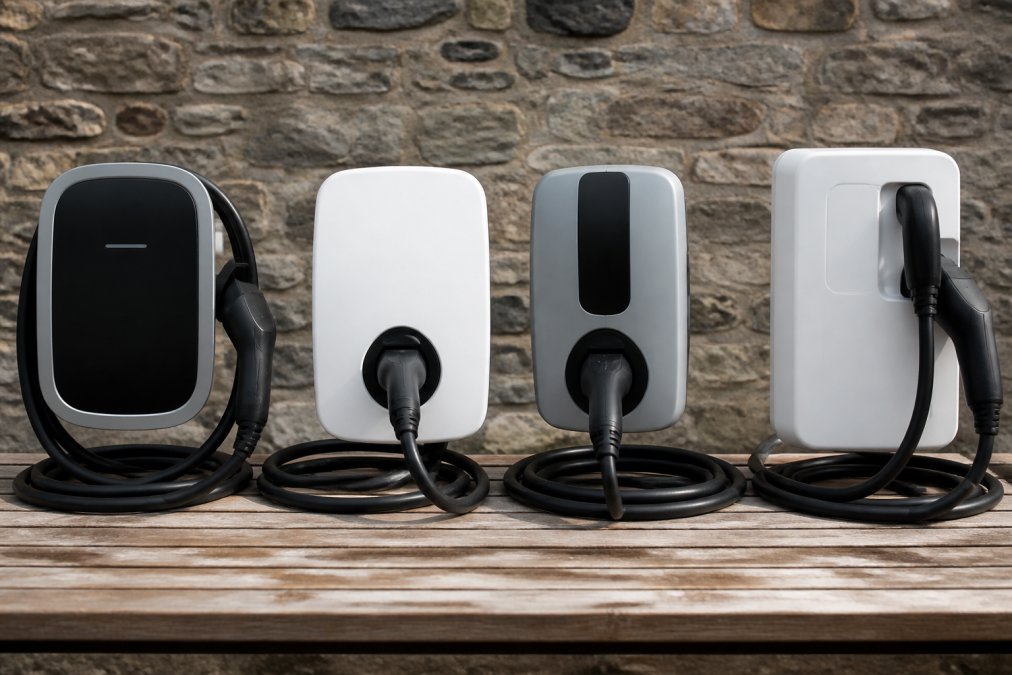
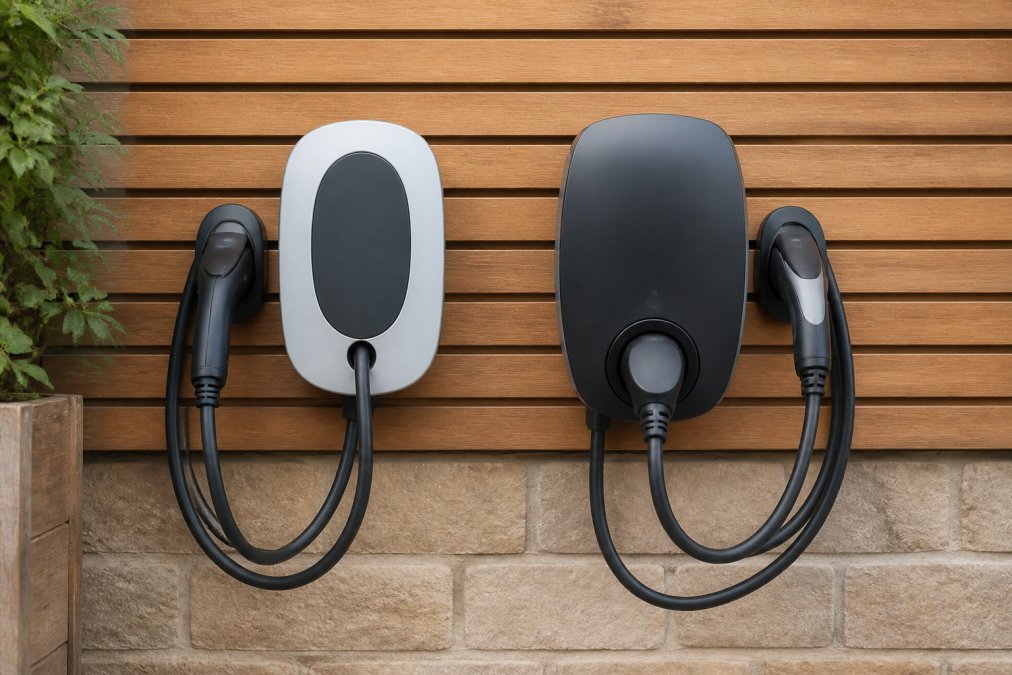
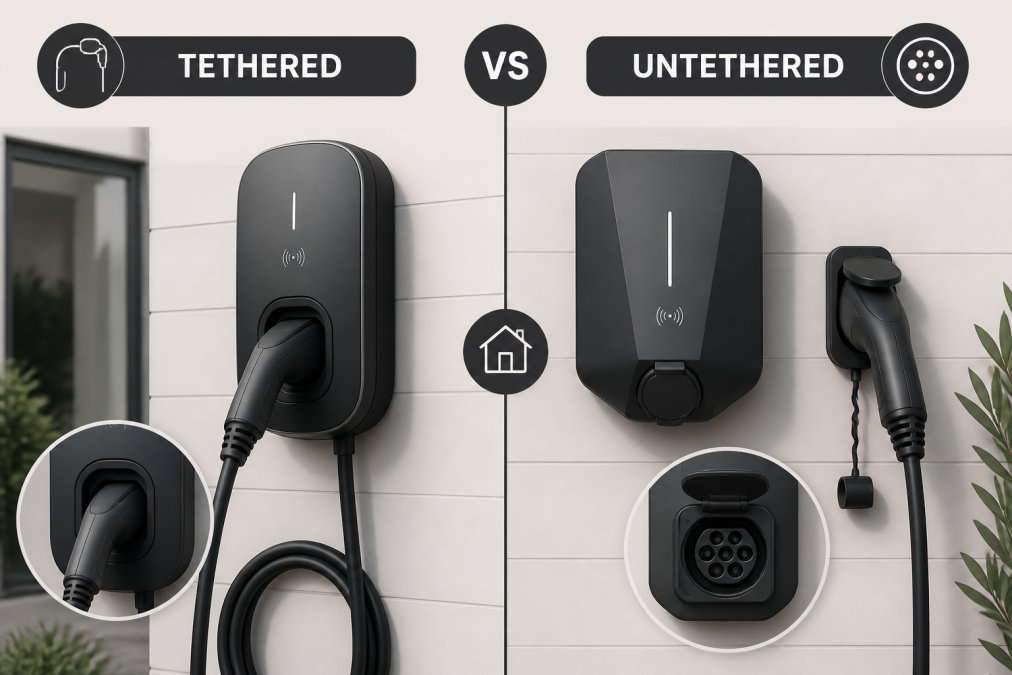
Tethered chargers come with a permanently attached cable. You plug the charger into your car every time, the cable doesn't detach. They're cheaper, more compact, and ideal for single-vehicle households or properties where the charger is positioned exactly where you park.
Untethered chargers require you to bring your own cable or purchase one separately. The charger itself is just the connection point. They cost more upfront but offer flexibility: if you own multiple vehicles or charge different cars at different times, an untethered setup lets you use the same charger with different cables.
Click HERE for your FREE SURVEY today →
Both Electropoint and Smarthomecharge offer both types. The choice depends on your situation. If you own one car and park in the same spot, tethered is simpler and cheaper. If you have a second vehicle, frequently charge guests' cars, or want future flexibility, untethered makes sense despite the higher cost.
The decision also affects charging speed. Both tethered and untethered chargers can deliver 7.4kW (single-phase) or 11kW (three-phase) power, so charger type doesn't determine speed, electrical supply does (peer-reviewed research). What matters is which model your installer recommends for your specific parking setup and vehicle compatibility.
OZEV Approved Installers: Accreditation and Certifications
The Office for Zero Emission Vehicles (OZEV) administers the Electric Vehicle Homecharge Scheme (EVHS), which offers £350 grants for eligible installations. To claim this grant, your installer must be OZEV-approved (gov.uk). This accreditation matters because it signals compliance with safety standards and installation best practices.
Both Electropoint and Smarthomecharge are OZEV-approved installers, meaning they meet the required competency standards and can process grant claims on your behalf. The approval isn't trivial, it requires demonstrable installation experience, insurance, and adherence to BS 7909 (the standard for EV charger installation).
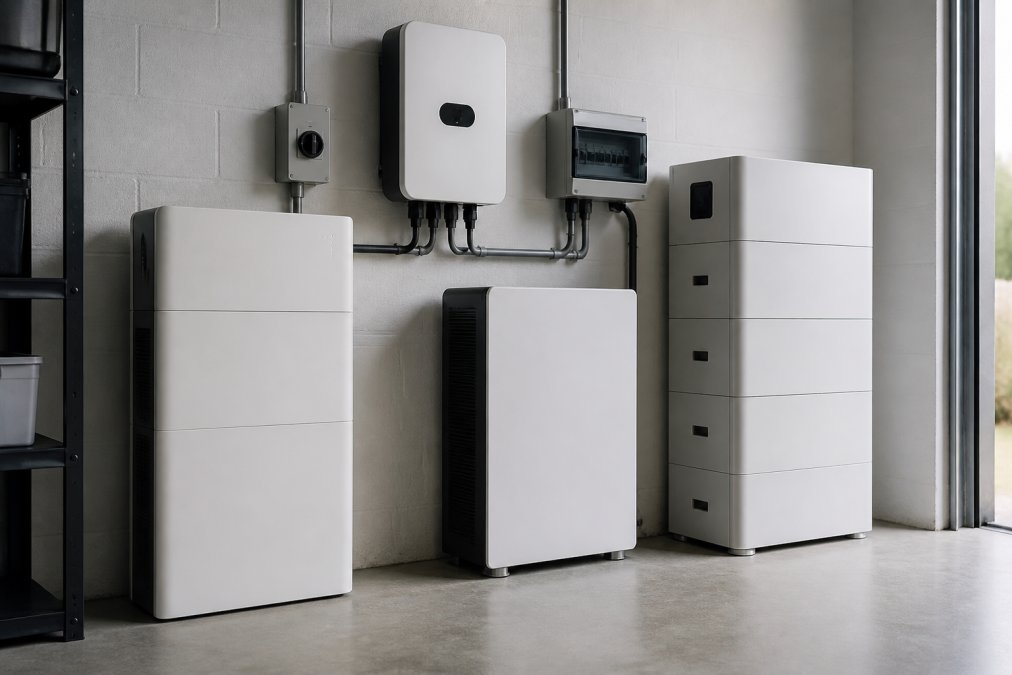
Beyond OZEV approval, look for MCS (Microgeneration Certification Scheme) accreditation if you're planning solar or battery storage alongside your charger. This matters because integrated systems, where your charger, solar, and battery work together, require coordinated design. Smarter Utility, for instance, holds full MCS accreditation for solar and battery, which becomes relevant if you want your charger to charge preferentially from solar generation.
OZEV approval is table stakes for any legitimate installer. Both companies meet this standard. The differentiator is whether the installer has broader renewable energy credentials (solar, battery, load balancing) that let them design your charger into a larger energy system rather than as an isolated installation.
Key Differences: Support, Warranty, and Post-Installation Care
This is where the comparison gets practical. Installation day is one afternoon. The next five years are what matter.
Warranty coverage differs subtly. Both installers provide 12-month workmanship warranties on labour, if the installation fails due to poor workmanship, they'll fix it free. Charger manufacturers typically offer 5-10 year warranties on the hardware itself. What's less clear with either installer is what happens in year two if your charger develops a fault. Do they troubleshoot? Do they arrange replacement? Smarthomecharge explicitly states they'll support fault diagnosis; Electropoint's post-warranty support is less documented.
Maintenance and support is where Smarthomecharge edges ahead. They offer optional annual maintenance checks. Electropoint doesn't advertise similar packages. For a safety-critical installation like an EV charger, periodic testing catches faults before they become dangerous.
Communication and responsiveness matters more than most homeowners expect. Smarthomecharge customers report faster response times to questions about charging performance, app connectivity, or technical faults. Electropoint's support can be slower, some customers report waiting weeks for responses to non-urgent queries. For a device you rely on daily, this difference accumulates.
Load balancing and smart charging support is increasingly important if you're integrating your charger with solar or battery systems. Both installers can set up chargers with load balancing (ensuring your charger doesn't overload your electrical panel), but Smarter Utility's integrated approach means they design the charger into your broader energy system from day one, rather than treating it as a standalone installation.
Which Installer Should You Choose?
Choose Electropoint if: you need a rapid installation on a straightforward property, you're price-sensitive and willing to accept minimal post-installation support, or you specifically want one of their preferred charger brands. They excel at fast turnaround for properties with good electrical infrastructure.
Choose Smarthomecharge if: you value responsive communication, you want ongoing support and optional maintenance checks, or your property requires moderate electrical upgrades. They're the safer choice for customers who prefer clear timelines and accessible support.
Choose Smarter Utility if: you're combining your EV charger with solar PV and battery storage. Their integrated approach means your charger is designed to work with your broader energy system, load balancing, solar prioritisation, and battery integration are built in from the start, not added later. They're the only option here that treats your charger as part of a complete energy solution rather than a standalone installation. As Scotland's leading installer of solar, battery, and EV charging solutions, Smarter Utility offers a free, no-obligation survey that assesses your entire property energy needs, not just charging. Their MCS accreditation for solar and battery, combined with OZEV approval for charging, means they can design systems where all three technologies work together seamlessly.
| Aspect | Electropoint | Smarthomecharge | Smarter Utility |
|---|---|---|---|
| Installation Speed | Fast (3-5 weeks typical) | Standard (4-8 weeks) | Integrated design (4-8 weeks) |
| Post-Installation Support | Basic | Responsive, optional maintenance | Comprehensive, integrated energy design |
| Charger Types Offered | Multiple brands, tethered & untethered | Multiple brands, tethered & untethered | Multiple brands, integrated with solar/battery |
| OZEV Approval | Yes | Yes | Yes |
| Solar/Battery Integration | No | No | Yes (MCS accredited) |
| Best For | Fast, simple installations | Communication-focused customers | Integrated renewable energy systems |
The choice between these installers ultimately depends on your property complexity, timeline, and whether you're thinking beyond the charger itself. For a straightforward installation where speed matters most, Electropoint delivers. For responsive support and clear communication, Smarthomecharge wins. For customers planning solar or battery storage alongside their charger, Smarter Utility's integrated expertise and free survey provide genuine added value.
Get started with Smarter Utility and design an EV charger system that works with your solar and battery storage. Click HERE for your FREE SURVEY today.
Frequently Asked Questions
What should I look for when choosing an EV charger installer?
Prioritise OZEV approved installers with current accreditation and proven track records. Check their warranty coverage, response times for post-installation support, and whether they offer a site survey before quoting. Ask about installation timelines, reputable installers should provide clear scheduling. Verify they work with your chosen charger type (tethered or untethered) and can handle your property's electrical requirements. Request references from recent customers and confirm they're insured and certified for electrical work.
How much does EV charger installation cost, and what affects the price?
EV charger installation cost varies based on electrical upgrades needed, distance from your consumer unit, charger type, and whether ground works are required. Pricing depends on your property's existing electrical infrastructure and the specific charger model. Request a free survey from your chosen installer to receive an accurate quote tailored to your home's requirements rather than relying on generic price estimates.
What's the difference between tethered and untethered EV chargers?
A tethered EV charger has a permanently attached cable, while an untethered charger requires you to supply your own cable or use a Type 2 connector. Tethered chargers are more convenient for daily charging but less flexible if you own multiple vehicles with different connector types. Untethered models offer flexibility. Your choice depends on your vehicle type, frequency of use, and whether you plan to charge different EVs. Both types are safe when installed by OZEV approved installers.
Are there government grants available for home EV charger installation?
The Office for Zero Emission Vehicles (OZEV) grant scheme previously provided support for residential charger installations, though eligibility and availability change periodically. Current grant schemes may be limited or have specific criteria. Contact your installer or check current government energy schemes to confirm what support exists for your property. Your installer can often advise on available funding options and help with applications, so ask during your initial survey.
This article was written using GrandRanker