 ultimate-guide
Solar Panel Payback Period in Scotland: What to Expect
Quick Summary
The average solar panel payback period in Scotland generally falls between 6 and 10 years, according to installer estimates, with a typical well-sited home using most of its own generation reaching break-even in 7 to 9 years. Payback is the number of years for cumulative savings to equal the upfront cost, so the result depends heavily on system price and how much electricity you generate and use yourself.
- Installed systems in Scotland typically cost £5,000 to £7,000 after VAT for a standard residential setup.
- Annual electricity savings for residential systems are commonly estimated at £500 to £700.
- Export income from the Smart Export Guarantee is a key reason homeowners reach a 7 to 9 year payback.
- Some typical homes reach 11 to 12 years depending on consumption patterns and system efficiency.
- Check your supplier's current export tariff and run the calculation with your own tariff and usage.
Table of Contents
How Long Solar Panels Take to Pay for Themselves in Scotland
The average solar panel payback period in Scotland generally falls between 6 and 10 years, according to installer estimates compiled by Thermal Care (2026). JME Green Energy (2026) narrows that to a typical 7 to 9 years for a well-sited home that uses most of its own generation.
The payback figure is simply the number of years it takes for cumulative savings to equal the upfront cost. Two things move that number most: the price you paid for the system, and the value of every kilowatt-hour you generate.
How Solar Panel Payback Is Calculated, Step by Step
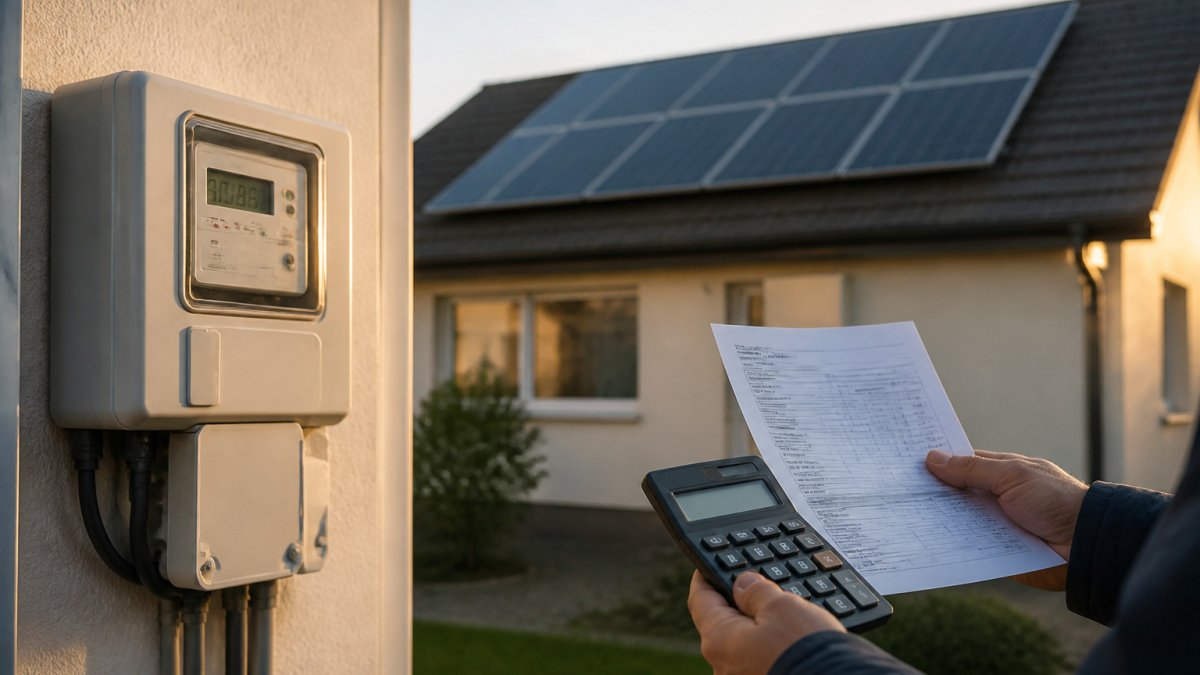
Payback is calculated by dividing the net installation cost by the annual financial benefit. The method is simple, but the inputs need care. Energy Saving Trust (2026) notes that payback periods depend on fuel prices and export payments, and that typical systems take over a decade to break even where usage is low.
Work through it in this order:
- Establish the net cost. Take the total installed price, then subtract any grants or incentives you qualify for.
- Estimate annual generation. Multiply system size by the expected yield for your location and roof orientation.
- Split generation into self-consumed and exported. Electricity you use directly avoids a purchase at your tariff rate. Electricity you export earns a payment instead.
- Calculate annual benefit. Add avoided electricity costs to export income.
- Divide cost by benefit. The result is your payback period in years.
Annual electricity savings for residential systems are commonly estimated at £500 to £700 (Renewable Energy Hub, 2026). Plugging that range into a £5,000 to £7,000 installed cost gives a payback in the high single digits, which matches the figures above. Our recommendation is to run this calculation with your own tariff and usage rather than relying on any average.
Solar Panel Installation Costs and System Price
Installed prices in Scotland typically range from £5,000 to £7,000 after VAT for a standard residential system (Thermal Care, 2026). A UK-wide benchmark from Energy Saving Trust (2026) puts the average closer to £7,600, so the local figure sits at the lower end of the national picture.
Watch out: a quote that looks cheap can hide a smaller system or lower-specification panels. Compare the kilowatt peak rating and the warranty terms alongside the total price, not the price alone.
Smart Export Guarantee Rates and Export Income
Export income is one of the biggest swing factors in payback. Under the Smart Export Guarantee, suppliers pay for electricity your system sends back to the grid, and JME Green Energy (2026) identifies this income as a key reason homeowners reach a 7 to 9 year payback. Rates are set by each supplier and change over time, so check your provider's current export tariff rather than assuming a figure.
Export is most valuable when you use little of your own generation during the day. Households at home through daylight hours will self-consume more and export less, which shifts the balance toward avoided electricity costs.
Click HERE for your FREE SURVEY today →
Factors That Shift Payback Time in Scotland
Several variables pull payback earlier or later. Energy Saving Trust (2026) highlights fuel prices and export payments as the main drivers, while Eco Vision (2026) reports that some typical homes reach 11 to 12 years depending on consumption patterns and system efficiency. That contrarian estimate is a useful reminder that a high-usage household and a low-usage one can get very different results from the same panels. Maintaining peak output requires consistent attention to system maintenance, as regular cleaning solar panels ensures that debris does not impede the energy generation necessary to shorten your financial return.
The main factors are:
- Daytime usage: the more you consume while the sun shines, the more each kilowatt-hour is worth.
- System size relative to demand: an oversized array exports more and earns less per unit.
- Roof orientation and shading: south-facing, unshaded roofs generate more per kilowatt peak.
- Electricity tariff: higher unit rates increase the value of every unit you avoid buying.
How Battery Storage Changes the Payback Picture
Adding a battery typically lengthens the initial payback period slightly, because it adds cost. Midland Solar (2026) observes that the battery can still raise the total long-term financial benefit, since it lets you store daytime generation and use it in the evening instead of exporting it at a lower rate.
It helps to judge battery economics separately from the solar system. A battery's worth depends on how much evening consumption it can cover and how your tariff rewards shifting usage.
Booking Your Free Survey to Check Your Own Payback Figure
Every payback figure in this guide is an average, and your own result depends on your roof, your usage and your tariff. The fastest way to find your number is a site survey. Smarter Utility offers a free, no-obligation home survey.
Ready to see your own figure? Click here for your FREE SURVEY today.
Frequently Asked Questions
How long does it take for solar panels to pay for themselves in the UK?
Most UK homes see payback in roughly 6 to 10 years, and Scottish estimates from installers commonly fall in a 7 to 9 year window. The exact figure depends on the installation cost, how much of the electricity you use yourself, and export income under the Smart Export Guarantee. Systems with a 25 to 30 year lifespan therefore keep producing savings long after the initial outlay has been recovered. Use a payback calculation with your own bills and quote to get a figure that reflects your home rather than an average.
Does battery storage affect solar panel payback time?
Adding a battery can lengthen the initial payback period slightly because it increases the upfront cost. However, a battery lets you store daytime generation and use it in the evening, which raises self-consumption and reduces the electricity you buy from the grid. Over the full system life this can increase total long-term financial benefit. Whether it pays off depends on your daily usage pattern, so it is worth modelling with and without a battery before deciding.
Are solar panels effective during winter months in Scotland?
Solar output in Scotland is lower in winter because of shorter days and more cloud cover, so generation is concentrated in spring and summer. This is why payback figures are calculated on annual generation and annual savings rather than on any single season. A well-designed system still produces useful electricity through the winter months. Roof orientation and pitch also influence how much you generate across the year.
What is the average lifespan of a modern solar PV system?
Modern solar PV systems typically last 25 to 30 years or more, which is the industry standard used in most payback estimates. Panels continue to generate electricity over this period, though output gradually declines as they age. Inverters often need replacing before the panels do. Because payback is usually reached well inside the system life, the remaining years of generation represent the bulk of the lifetime savings.
Smarter Utility designs solar PV, battery storage and EV charging systems for homes and businesses across Scotland. Our free survey gives you a tailored payback estimate, so the decision rests on your numbers rather than an average.