 ultimate-guide
Do Solar Panels Work on Cloudy Days in Scotland?
Last Updated: November 3, 2026
Quick Summary
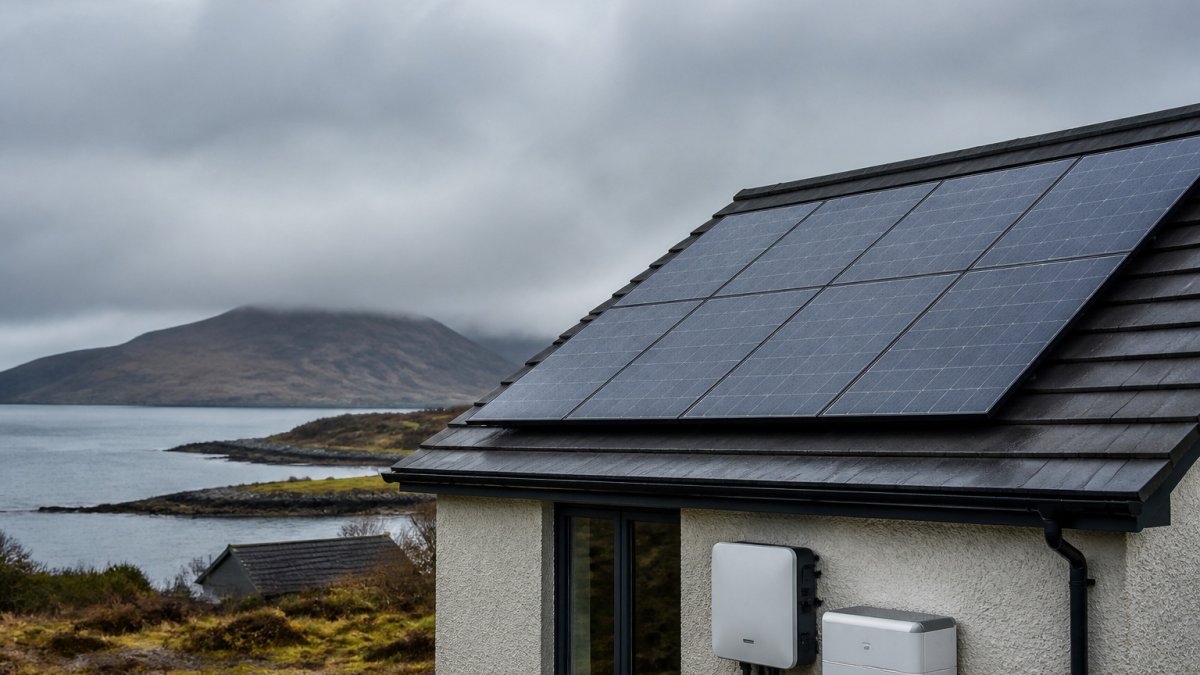
Yes, solar panels do work on cloudy days in Scotland because they generate electricity from daylight rather than direct sunshine. Output typically drops to 10-25% of peak capacity on cloudy days in Scotland, but that still offsets a meaningful share of household consumption.
- Heavy, low cloud can cut production by up to 60%, while thin cloud causes only minor reductions.
- Winter output falls mainly due to shorter daylight hours, not cold, which actually helps efficiency.
- Battery storage shifts modest grey-day generation to the evening peak, cutting expensive imports.
- Keep panels clean, clear shading, set the right tilt and monitor inverter data to maximise output.
- Rain helps clean panels but does not remove sticky deposits, so occasional cleaning still matters.
Table of Contents
- Do Solar Panels Work on Cloudy Days in Scotland?
- What Solar Panel Output on Cloudy Days Really Looks Like
- Do Solar Panels Work in Winter in Scotland?
- Solar Panels and Battery Storage: Making Grey Days Count
- How to Maximise Solar Panel Efficiency in Scottish Weather
- Myths About Solar in a Cloudy Climate
- Book Your Free Home Survey and Size Your System Properly
- Frequently Asked Questions
Do Solar Panels Work on Cloudy Days in Scotland?
Yes, solar panels do work on cloudy days in Scotland. They generate electricity from daylight rather than direct sunshine, so a grey sky reduces output but rarely stops it. According to Smarter Utility's guide to solar panel efficiency in Scottish weather, panels typically deliver 10-25% of their peak capacity on cloudy days, which is still enough to offset a meaningful share of household consumption.
This guide from Smarter Utility explains what that means in practice: how cloud density changes output, what winter does to generation, and how battery storage turns grey-day production into usable evening power.
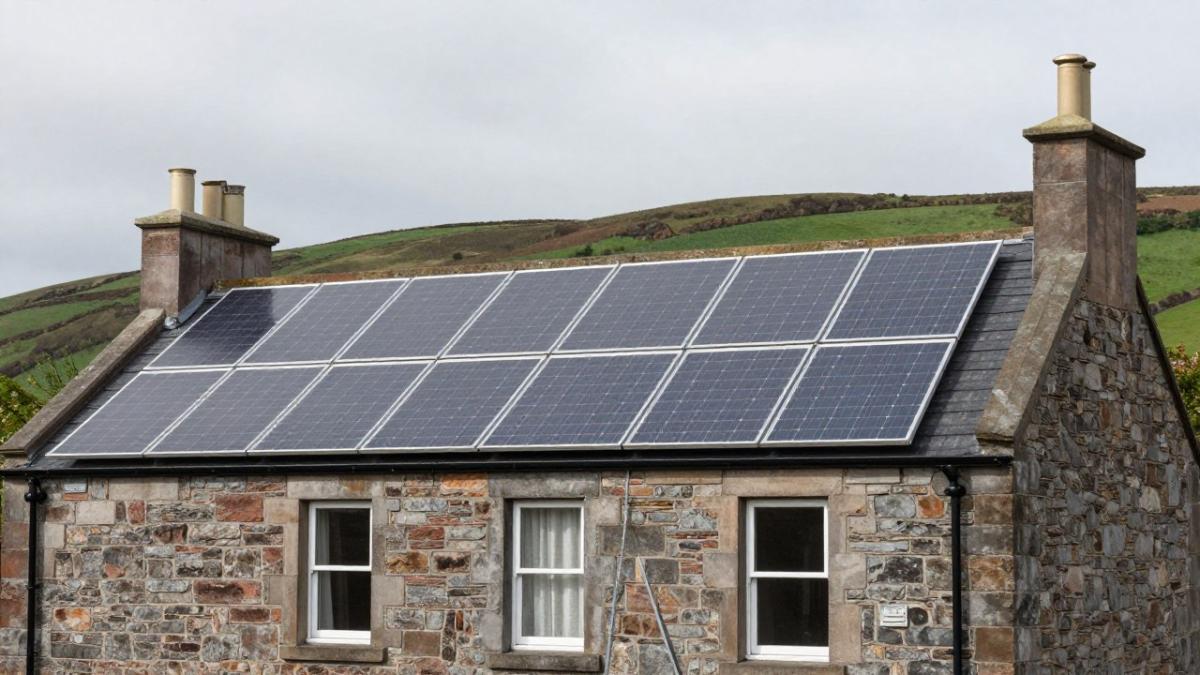
Daylight, Not Direct Sunlight, Is What Panels Need
Photovoltaic cells convert light into direct current, and they respond to the full solar spectrum, not just the beam you feel on a bright day. The Energy Saving Trust's explanation of how solar PV generates electricity makes the point plainly: panels generate from daylight, not heat. Diffuse sunlight scattered by cloud still carries energy, which is why a Scottish roof produces on days that feel flat and dull.
How Cloud Density Changes What Your Panels Produce
Thin cloud is a minor tax. Partly cloudy skies reduce output, though cool air can improve efficiency.
Heavy, low cloud is a different matter. A review of solar panel efficiency in different weather conditions found output drops of 20-60% depending on cloud density, with the worst overcast conditions cutting production by up to 60%. For the fuller technical picture, read Solar Panel Efficiency in Scottish Weather: A Complete Guide.
Here are the key figures on how cloud cover affects solar output in Scotland.
| Condition | Effect on output | Note |
|---|---|---|
| Cloudy days | 10-25% of peak capacity | Still offsets a meaningful share of consumption |
| Thin cloud | Minor reduction | Cool air can improve efficiency |
| Heavy, low cloud | Drops of 20-60% | Worst overcast cuts production by up to 60% |
| Winter months | Less than summer | Mainly due to shorter daylight hours |
| Cold temperatures | Helps efficiency | Constraint is daylight, not temperature |
| Snow on array | Blocks light | Until it clears |
What Solar Panel Output on Cloudy Days Really Looks Like
Expect a broad range rather than a single figure, because cloud cover, panel orientation and inverter efficiency all move the number. On an overcast day, output falls well below peak capacity; broken cloud allows it to recover. Over a year, those grey hours still add up, and peak sun hours in Scotland are concentrated in spring and summer when daylight hours are long. Tilt angle and panel orientation matter more here than in sunnier regions, which is why system design should follow the roof you actually have.
Do Solar Panels Work in Winter in Scotland?
They do, and the seasonal drop is smaller than most people assume. Scottish systems generate less during winter months than in summer, mainly because of shorter daylight hours. The constraint is daylight hours around the winter solstice, not temperature; cold actually helps efficiency.
Weather resilience is the real winter issue. Snow sitting on an array blocks light until it clears, and low sun angles mean shading from trees and chimneys bites harder. Practical winter care matters, so see how to maintain solar panels in Scottish winter, and if snow is your concern, do solar panels work during Scottish snow answers it directly.
Solar Panels and Battery Storage: Making Grey Days Count
Battery storage is what turns a cloudy climate from a physics question into a financial one. On a grey day your array may generate steadily but modestly across daylight hours, peaking around midday when household demand is often low. Without storage, that generation is exported to the grid for a modest rate and bought back in the evening at a higher one. With storage, it is shifted.
The mechanism is straightforward: the battery charges from surplus solar during the day, then discharges into your home during the evening peak. That reduces the kilowatt-hours you import, and because energy consumption in most homes peaks between late afternoon and bedtime, the overlap with grey-day generation is better than it first appears. A well-sized battery also smooths the rapid swings of broken-cloud days, absorbing bursts of output that would otherwise be lost to export limits or inverter clipping.
Click HERE for your FREE SURVEY today →
Sizing is the part most guides skip, and it is where the money is made or lost. A battery that is too small wastes generation on bright days and leaves you importing on dull ones; one that is too large costs more than it returns over its warranted life. Storage is often sized around evening and overnight consumption rather than total daily generation, since that is the load the battery serves.
Several factors affect whether storage pays in a Scottish context:
- The gap between your import tariff and your export rate. The wider that spread, the more each stored kilowatt-hour is worth. Time-of-use tariffs widen it further by making evening imports more expensive.
- Round-trip efficiency. No battery returns every unit it stores; some energy is lost when a battery stores and releases power, and that should be factored into any payback estimate.
- Cycles per year. A battery that cycles most days earns its keep faster than one that sits full through summer. In a cloudy climate, steady low-level generation actually suits daily cycling well.
Storage can also provide a degree of backup power, which some homeowners value, particularly in exposed areas.
Storage can be designed around your consumption pattern, with payback modelled against your tariffs. You can see the full service on our solar PV and battery storage page.
How to Maximise Solar Panel Efficiency in Scottish Weather
Four levers do most of the work:
- Keep panels clean. Bird droppings and grime cost more output in low-light conditions, where every photon counts.
- Clear shading. Even partial shade on one panel drags down a whole string, so trim growth and check chimney shadow across seasons.
- Set the right tilt. A steeper angle sheds rain and snow and catches the low winter sun.
- Monitor system performance. Inverter data shows when output drifts below expectation, which usually points to soiling or a fault.
Myths About Solar in a Cloudy Climate
The most persistent myth is that solar does not work here. Modern technology has made solar generation practical in many UK climates, including cloudy ones.
The second myth is that rain washes panels clean. It helps, but it does not remove sticky deposits. The third is that cloud means no output at all; the atmospheric conditions that reduce irradiance do not switch generation off. What actually decides your return is system design, orientation and storage, not the weather alone.
Book Your Free Home Survey and Size Your System Properly
The honest answer to whether solar pays in Scotland depends on your roof, your usage and how you store what you generate. That is a calculation, not a guess, and it starts with a survey.
Smarter Utility is a fully accredited and approved MCS solar and battery storage installer. Our free, no-obligation home survey is designed to tailor a system to your property before you commit. Read what the free solar home survey involves before you book.
Solar works on cloudy days. The question is whether it works for your property, and that is what we measure. Get started with Smarter Utility and see your tailored design before you decide.
Frequently Asked Questions
Do solar panels work on cloudy days in Scotland?
Yes. Panels generate from daylight rather than direct sun, so they keep producing whenever there is light. On overcast days in Scotland, output falls well below peak capacity. On partially cloudy days output recovers considerably. The system never switches off entirely, it simply produces less, which is why system sizing and battery storage matter so much here.
How much electricity do solar panels generate on an overcast day?
Expect roughly 10-25% of peak capacity in thick, uniform cloud, rising to 50-70% when cloud is broken and the sun breaks through intermittently. Output drops noticeably depending on cloud density, so the practical answer is that generation continues at a reduced rate you should factor into your expectations.
Do solar panels work in winter in Scotland?
They do, though daylight hours are short around the winter solstice. Systems generate less during winter months than in summer. Cooler temperatures actually help efficiency, so a crisp, clear winter day can be surprisingly productive. The main constraint is the number of daylight hours, not the cold. Pairing panels with battery storage lets you capture whatever winter generation you get and use it during the evening peak.
Can a battery store electricity generated on cloudy days?
Yes, and this is where solar panels and battery storage work well together in Scotland. A battery captures surplus generation during daylight hours, even modest cloudy-day output, and releases it when your home needs it in the evening. That reduces how much you draw from the grid at peak times. Correct sizing matters: an undersized battery wastes potential savings, so a survey should match capacity to your actual consumption pattern rather than a rough rule of thumb.