 ultimate-guide
What are the real benefits of solar export tariffs?
Last Updated: October 26, 2026
Quick Summary
Solar export tariffs pay you for surplus electricity your panels generate and send back to the grid. As of 2026, Scottish households received an average of approximately 4.99p per kWh, with total payments reaching £56.97 million annually according to Sunsave's analysis.
- The Smart Export Guarantee requires major energy suppliers to offer transparent, non-discriminatory export rates to eligible generators
- Your system must be installed by an MCS-certified engineer to qualify for SEG payments under Ofgem requirements
- Export earnings depend on system size, location, and surplus generation; rates fluctuate based on wholesale electricity prices and supplier competition
- A battery may deliver more value than exporting all surplus if your import rate exceeds your export rate, after accounting for round-trip losses
- Scottish households should confirm metering capability and check planning consent requirements before installation, particularly in listed buildings or conservation areas
Table of Contents
- How solar export tariffs work for Scottish homeowners
- Understanding the Smart Export Guarantee in Scotland
- Current solar export tariff rates and payment terms
- How to get paid for solar electricity you generate
- Solar battery and export tariff: which saves more money
- Eligibility and practical steps to start earning from exports
- Getting your free solar survey and system design
- Frequently Asked Questions
How solar export tariffs work for Scottish homeowners
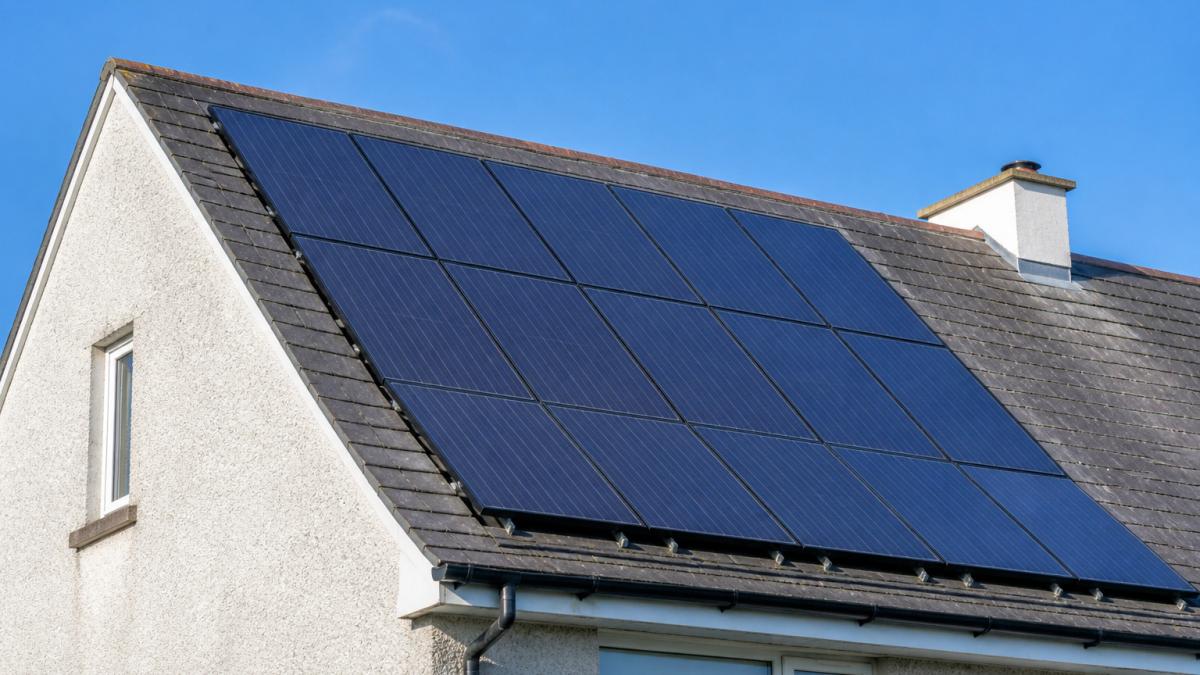
Solar panels generate electricity from sunlight.
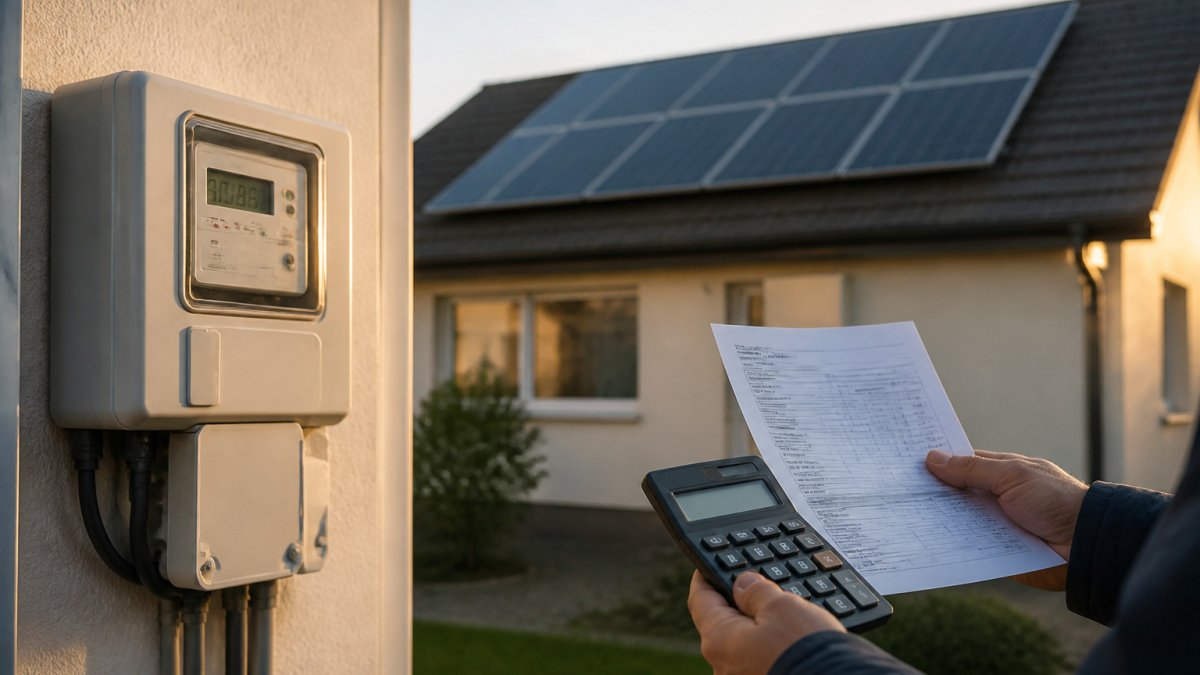
Your smart meter records how much electricity you send back, and your supplier credits your account at the agreed export tariff rate.
What makes this worthwhile is the scale. According to Ofgem's Smart Export Guarantee guidance, households with solar export tariffs can earn meaningful amounts annually.
Understanding the Smart Export Guarantee in Scotland
The Smart Export Guarantee (SEG) requires major energy suppliers to pay households and small businesses for exported renewable electricity.
The SEG replaced the Feed-in Tariff, which combined generation and export payments; SEG pays purely for export.
According to UK Government guidance on the Smart Export Guarantee, suppliers must offer a rate to all eligible generators. That rate can be fixed or variable, and it must be transparent and non-discriminatory. In practice, this means you can shop around between suppliers to find the best export tariff rates available.
Current solar export tariff rates and payment terms
Export tariff rates fluctuate based on wholesale electricity prices and supplier competition. As of 2026, households on export tariffs received £56.97 million in total payments, with an average of approximately 4.99p per kWh, according to Sunsave's comprehensive tariff analysis. This represents an 86% increase on payments from the previous year, reflecting both growing solar adoption and rising electricity prices.
What matters for your decision is understanding the tariff types available:
| Tariff Type | How It Works | Best For |
|---|---|---|
| Fixed-rate tariff | Rate locked for contract term (typically 1-5 years) | Predictable income planning |
| Variable tariff | Rate changes monthly with wholesale prices | Maximising earnings during high-price periods |
| Time-of-use tariff | Different rates for peak/off-peak hours | Households with battery storage or flexible usage |
| Agile tariff | Half-hourly pricing that follows grid demand | Advanced users wanting real-time optimisation |
Read the contract carefully.
How to get paid for solar electricity you generate
Getting paid involves three steps: installation, supplier registration and ongoing monitoring.
First, you need a solar export tariffs system installed by an accredited installer. Ofgem's installer accreditation requirements specify that your system must be installed by an MCS-certified engineer to be eligible for SEG payments. This isn't bureaucracy, it's quality assurance. Accredited installers follow strict standards for safety and performance.
Get a free solar home survey to understand whether your roof, orientation, and shading are suitable for export earnings.
Solar battery and export tariff: which saves more money
Many homeowners assume exporting every surplus kilowatt-hour is optimal. The arithmetic rarely supports that, but a battery isn't automatically better either. The answer depends on four variables: how much you export, the import cost you avoid, the battery's cost, and your export tariff conditions.
The core trade-off in plain terms
Every kilowatt-hour of solar electricity can do one of three things:
Click HERE for your FREE SURVEY today →
- Be used in the home at the moment it is generated, avoiding an import at your unit rate.
- Be exported immediately at your export tariff rate.
- Be stored and used later, avoiding an import at whatever the unit rate is when you use it.
Exporting only beats self-consumption if the export rate exceeds the import rate you'd otherwise pay, rare on a standard variable tariff. The comparison is "export rate versus avoided import," not "export rate versus nothing."
A worked example with clear assumptions
Assume a household with a 4 kWp system generating 16 kWh on a typical sunny summer day, of which 6 kWh is used directly in the home and 10 kWh is surplus. Assume an import unit rate of 24.5p per kWh and an export rate of 5p per kWh. These are illustrative figures; substitute your own.
| Strategy | What happens to the 10 kWh surplus | Daily value |
|---|---|---|
| Export everything | 10 kWh exported at 5p | £0.50 |
| Battery, all surplus stored | 8 kWh used later (round-trip losses), avoiding 24.5p import; 2 kWh still exported | £1.96 avoided + £0.10 exported = £2.06 |
| Battery, half stored, half exported | 4 kWh stored (3.2 kWh usable), 6 kWh exported | £0.78 avoided + £0.30 exported = £1.08 |
The battery case looks stronger, but that's before capital cost, degradation and any change to export tariff terms.
What the headline comparison hides
- Lost export income is real. Every kilowatt-hour diverted to the battery is a kilowatt-hour not sold. If you are on a generous fixed export rate, the gap between exporting and storing narrows.
- Round-trip losses. No battery returns 100% of what it stores.
- Tariff conditions. Some export tariffs require you to take the supplier's import tariff as well. If that import tariff is uncompetitive, the apparent export gain can be wiped out. Check the contract before modelling.
- Time-of-use import tariffs change the maths. If you can charge the battery on cheap overnight electricity and use it during an expensive evening peak, the value of storage rises beyond solar self-consumption alone.
- Seasonality. A Scottish household will see far more surplus in May to July than in November to January. Annual averages smooth over months where the battery barely cycles and months where it cycles fully.
A decision framework
Use this sequence rather than starting from the export rate:
- Establish your baseline. From your smart meter or inverter app, find annual generation, export and import. Without a full year, use installer modelling plus a few months of real data.
- Value self-consumption first. Multiply the kilowatt-hours you could realistically use at home by your import rate, the benefit you capture without any hardware.
- Value export second. Multiply remaining surplus by your export rate.
- Only then test storage. Subtract round-trip losses, apply usable capacity, and multiply by the import rate at discharge times.
- Check the contract. Confirm whether the export tariff is fixed or variable, whether it requires a matching import tariff, and what happens to the rate if you add a battery.
Why Install Home Battery Storage in Scotland: 2026 Guide provides detailed analysis of battery economics and how to size a system for your needs.
Eligibility and practical steps to start earning from exports
Most guidance treats eligibility as a UK-wide checklist and stops there. Scottish households face practical differences in installation, metering and consumer support worth knowing before you commit.
The UK-wide eligibility baseline
- Installed by an MCS-certified installer (or an equivalent certification recognised by the scheme).
- A capacity of 50kW or less, domestic systems qualify comfortably.
- A smart meter capable of recording exports, or an approved export meter.
- Registered with a licensed supplier that offers a SEG tariff.
What is different in a Scottish context
- Installation standards and consent. Domestic installations generally proceed without planning permission, but listed buildings, conservation areas and flats can require consent. Check with your local planning authority before signing a contract, particularly in older tenement or stone-built properties where mounting and cable routes need more thought.
- Metering and communications. Smart meter rollout has not reached every property, and some rural or older properties have weaker communications signal for smart metering. If your meter cannot record exports reliably, your supplier may require an alternative approved meter before payments begin. Raise this at survey stage rather than after installation.
- Consumer support and advice. Scotland has a distinct consumer-advice landscape, including dedicated energy advice services and home-energy support that can help with tariff comparison and eligibility questions. Use these alongside supplier information, especially if you are on a low income or considering grant support.
- Grant and loan support. Support schemes differ across the UK. Check current Scottish grant and loan options before assuming the upfront cost, as they can materially change payback.
Practical steps, in order
- Survey before you buy. Confirm roof orientation, pitch, shading and electrical capacity. A south-facing roof at around 30-40 degrees is ideal, but east/west arrays can still export usefully, particularly with a battery.
- Confirm metering early. Ask the installer and your supplier whether your existing meter can record exports or whether an upgrade is needed, and who arranges it.
- Get the MCS certificate. You will need it for registration. Keep it with your handover pack.
- Compare export tariffs before registering. Rates, contract length, payment frequency and whether an import tariff is required all vary. A higher headline rate on a short fixed term may be worth less than a slightly lower rate with better terms.
- Register and submit evidence. Most suppliers handle this online; you will provide the MCS certificate, meter details and proof of installation.
- Monitor and reconcile. Check your first few statements against your inverter or meter data. Errors in export readings are easier to correct early.
Get a Free Solar Home Survey to understand your roof orientation, shading, and realistic generation potential.
How to Apply for Scottish Solar Panel Grants in 2026
Getting your free solar survey and system design
Your first step is finding out whether solar export tariffs make financial sense for your property.
At Smarter Utility, we provide free surveys with no obligation.
Frequently Asked Questions
Can you get paid for solar electricity without a battery?
Yes. The Smart Export Guarantee allows you to earn money by exporting surplus electricity to the grid whether or not you have a battery. Your solar panels generate electricity throughout the day; any surplus not used in your home is exported and you receive payment based on your chosen export tariff rate. A battery is optional and works differently, it stores electricity for later use rather than sending it to the grid, which can reduce export income but increase self-consumption savings.
How much can you earn by exporting solar electricity?
Earnings depend on your system size, location, usage patterns and the export tariff rate you choose. Households across the UK received an average of about 4.99p per kWh in export payments, with total payments reaching £56.97 million, an 86% increase year-on-year. Your actual income varies based on how much surplus electricity you export. A free home survey from Smarter Utility will estimate your potential earnings based on your roof, local weather patterns and household consumption.
Does a battery increase the benefits of a solar export tariff?
A battery changes how you benefit, rather than simply increasing earnings. Adding battery storage typically reduces the amount of electricity you export (because more is stored and used at home), which lowers export income. However, using your own stored solar electricity instead of importing from the grid often saves more money overall than the export tariff would earn. The net benefit depends on your electricity usage patterns, import tariff rates and the battery cost. A professional assessment helps determine whether exporting surplus or storing it delivers better value for your household.
Which Smart Export Guarantee tariff is best?
The best tariff depends on your household's electricity usage and when you use it. Fixed-rate tariffs offer certainty but may not reflect market changes. Variable tariffs track wholesale prices and can offer higher rates when demand is low. Time-of-use and agile tariffs reward you for exporting during peak demand periods (typically early evening), which suits households that generate surplus electricity at those times. Compare available tariffs from different suppliers using your postcode, then choose based on your usage pattern and preference for rate stability versus flexibility.
Solar export tariffs represent genuine opportunity for Scottish homeowners to earn from renewable energy while supporting grid stability. The real benefit isn't just the export income, it's the combination of reduced electricity bills through self-consumption, export earnings from surplus generation, and long-term protection against rising energy costs. Get your free survey today to understand your specific financial opportunity and begin your transition to sustainable energy.