 ultimate-guide
Benefits of Battery Storage for Scottish Farms
Table of Contents
- Why Battery Storage Makes Financial Sense for Farm Operations
- Solar PV and Battery Storage Integration on Working Farms
- Grid Balancing Services for Farms: Earning Revenue from Your Battery
- Agricultural Energy Storage Grants and Funding Options
- Planning Permission, Regulatory Compliance, and Maintenance
- Battery Storage and Net Zero: Environmental Impacts for Agriculture
- Powering Heat Pumps, EV Charging, and Farm Equipment
- Conclusion
Last Updated: August 18, 2026
Why Battery Storage Makes Financial Sense for Farm Operations
Energy costs represent one of the most significant and least controllable overheads for agricultural businesses in rural Scotland. Battery Energy Storage Systems (BESS) give farm operators direct control over when they buy electricity, how they use it, and whether they can generate revenue from it. The case for battery storage on farms is grounded in practical realities: unpredictable energy bills, unreliable grid connections in remote locations, and renewable generation assets that go to waste without storage.
Reducing Energy Bills Through Load Shifting and Arbitrage
Load shifting delivers the most immediately tangible financial benefit. Farm operations have pronounced peaks in electricity demand: morning milking, refrigeration cycles, grain drying, irrigation pumping. With a battery system, you charge during off-peak periods when electricity is cheaper, then discharge during high-demand windows. Time-of-use tariffs create a price spread between cheap overnight rates and expensive daytime peaks, which a well-sized BESS captures automatically. Farms with substantial daytime loads, particularly those running solar PV, tend to see the strongest results.
Financial ROI and Typical Payback Periods
Payback periods vary depending on system size, existing energy infrastructure, and whether the battery is paired with renewable generation. Larger systems paired with on-site generation deliver faster payback because they displace both grid electricity costs and peak tariff charges simultaneously. Farms with high daytime energy consumption, such as those running refrigeration, processing equipment, or heat pumps, are particularly well-positioned. Modern lithium iron phosphate batteries reach 15 years or more, so financial assessments should cover that full period. For system-specific return calculations, request a tailored survey from a qualified installer.
| Benefit Area | Mechanism | Financial Impact |
|---|---|---|
| Load shifting | Charge off-peak, discharge at peak demand | Reduces peak tariff exposure |
| Solar PV integration | Store excess generation for evening use | Reduces grid import to near zero in summer |
| Grid services | Frequency response, demand response | Generates direct revenue |
| EV and heat pump support | Avoids grid spikes from high-draw equipment | Flattens demand charges |
| Energy security | Backup power during outages | Avoids costly downtime |
Solar PV and Battery Storage Integration on Working Farms
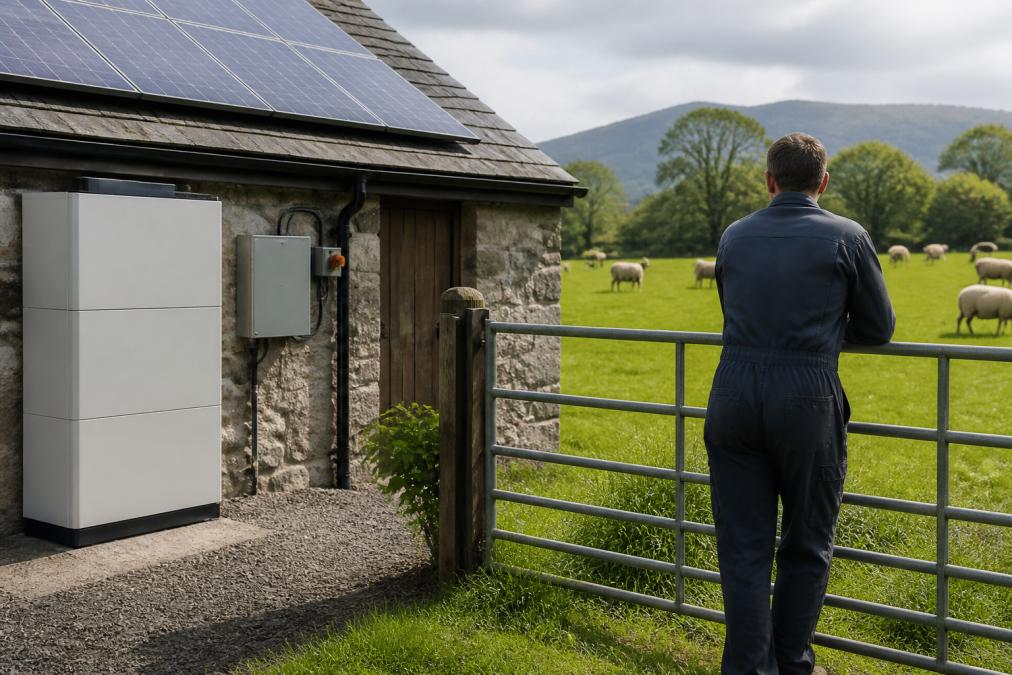
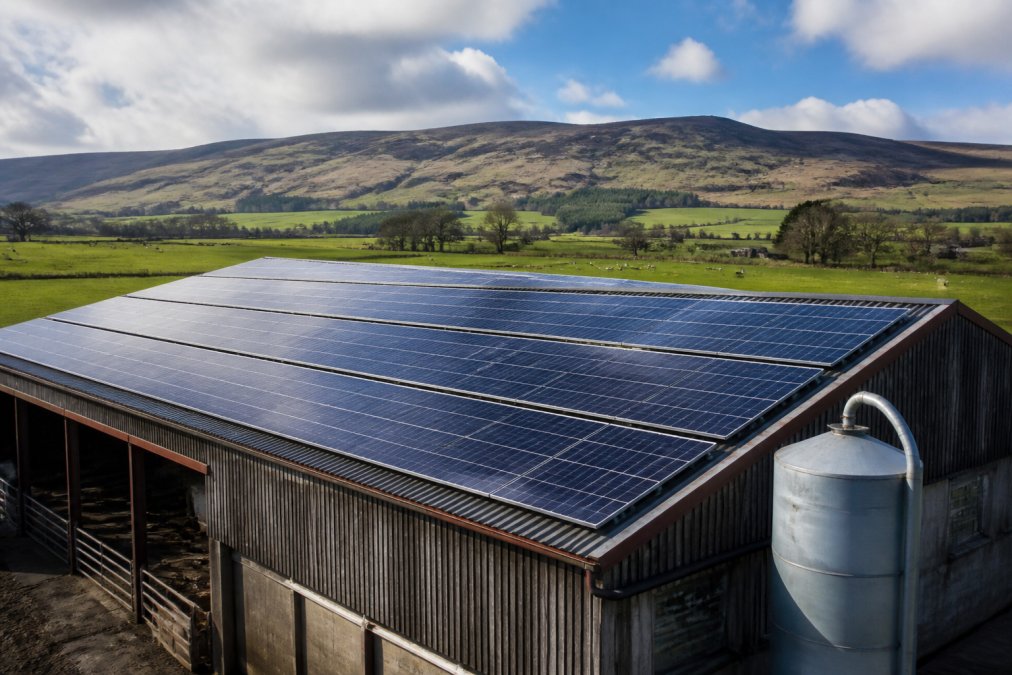
Solar PV and battery storage integration is where farm energy management becomes genuinely compelling. A solar-only system generates electricity when the sun shines, which rarely aligns with peak farm demand. Add a battery, and that mismatch disappears. The combination allows farms to capture generation during the day, store it, and deploy it during evening milking, overnight refrigeration, or early morning operations.
Storing Excess Renewable Energy from Solar and Wind
Many Scottish farms already have onshore wind turbines or solar PV arrays installed. Without storage, excess energy generated beyond immediate on-site demand is either exported to the grid at low rates or curtailed. A battery system stores excess renewable energy that would otherwise be wasted, ready for use when generation falls. For farms with both solar and wind assets, this creates energy independence difficult to achieve any other way.
Integrating BESS with Existing Farm Infrastructure
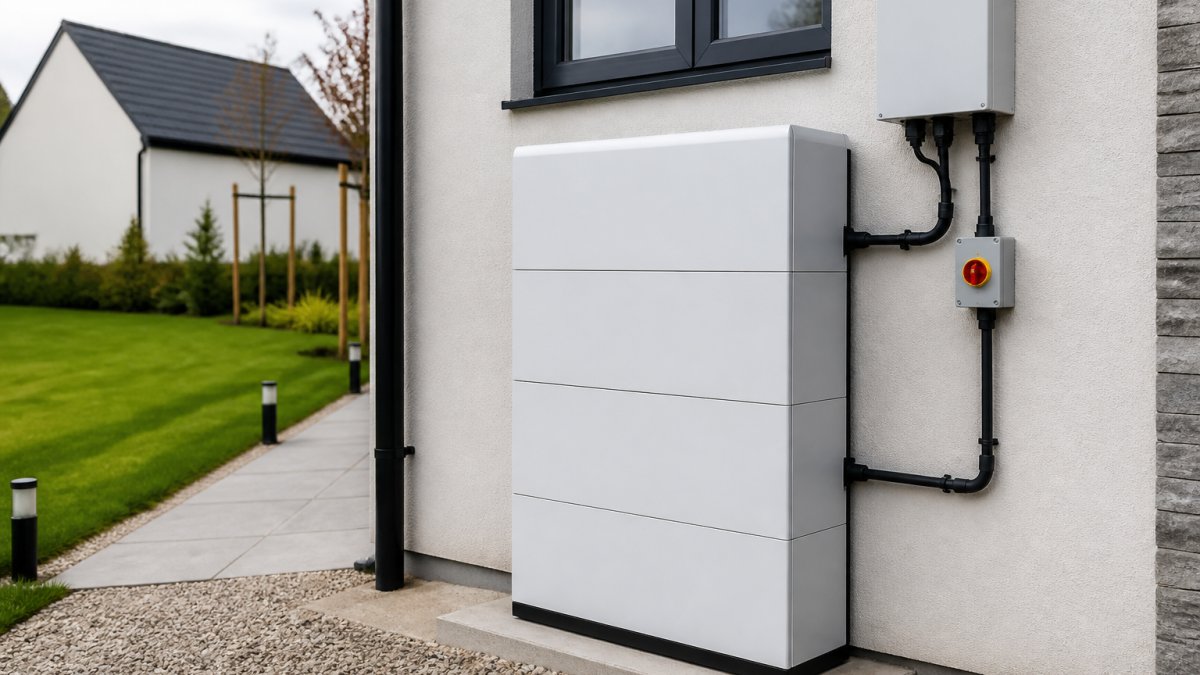
Modern BESS units communicate with inverters, solar generation assets, and energy management systems through standard protocols. A well-designed installation incorporates the existing solar PV array, wind generation, consumption profile, and grid connection parameters into a single coordinated system. The energy management software then optimises dispatch automatically. The grid connection is often the binding constraint in rural areas; a battery allows farms to stay within connection limits while capturing full generation value.
Grid Balancing Services for Farms: Earning Revenue from Your Battery
Battery storage systems can participate in frequency response markets operated by National Grid ESO, earning revenue by providing flexibility to the electricity system.
Grid services relevant to farm-scale BESS include:
- Frequency response: The battery responds automatically to grid frequency deviations, charging or discharging in seconds to stabilise the system.
- Demand response: Agreeing to reduce consumption or increase export during system stress, in exchange for payments.
- Capacity market: Larger installations can contract to provide capacity during peak demand periods.
Revenue depends on system size, response capability, and market conditions. Smaller farm-scale systems can participate through aggregation platforms that pool multiple batteries together.
Agricultural Energy Storage Grants and Funding Options
Agricultural energy storage grants make battery installations significantly more accessible. The Scottish Government's Rural Payments and Services portal provides information on current capital grant schemes for agricultural businesses, including energy efficiency and renewable energy infrastructure. The UK Government's capital allowances regime allows businesses to offset qualifying energy storage investments against taxable profits, with full expensing rules enabling deduction of the full BESS cost in the year of purchase.
Key funding routes to investigate:
- Scottish Government rural capital grant schemes
- UK-wide capital allowances and full expensing
- Shared Prosperity Fund allocations administered through local authorities
- Grid services revenue contracts as ongoing income offset
Work with an installer who actively tracks available support and can incorporate it into a financial model at the survey stage.
Planning Permission, Regulatory Compliance, and Maintenance
Planning Considerations for Rural Battery Installations
Battery storage systems on agricultural land generally benefit from permitted development rights under the Town and Country Planning (Scotland) Act 1997, but this is not universal. System size, siting, and proximity to listed buildings or protected landscapes all affect whether formal planning application is required. For most farm-scale BESS installations housed within or adjacent to existing agricultural buildings, permitted development applies. Larger ground-mounted systems, or those in National Scenic Areas or National Parks, are more likely to require consent. Consult your local planning authority for site-specific guidance.
Click HERE for your FREE SURVEY today →
Electrical installation work must comply with BS 7671 (the IET Wiring Regulations) and be carried out by a qualified electrician. Grid-connected systems require notification to the Distribution Network Operator (DNO), and larger systems require a formal connection agreement. MCS certification of the installer is standard for any installation eligible for export tariffs or grant funding.
Maintenance and Lifecycle Management for Farm BESS
Modern BESS units are reliable but not maintenance-free. Battery performance degrades gradually over time, typically measured as reduced usable capacity. Well-managed systems with appropriate thermal management and charge cycle optimisation retain the majority of rated capacity across a 15-year lifespan.
Maintenance priorities for farm BESS:
- Annual inspection of electrical connections, enclosures, and cooling systems
- Firmware updates to the battery management system and inverter
- Monitoring of state-of-health metrics via the energy management platform
- Thermal management checks, particularly for systems in agricultural buildings subject to temperature extremes
- Review of grid services contract performance against benchmarks
Battery Storage and Net Zero: Environmental Impacts for Agriculture
Battery storage supports agricultural decarbonisation in two ways. First, it maximises the value of on-site renewable generation, reducing dependence on grid electricity. Second, it enables electrification of farm processes currently relying on fossil fuels, from heating to vehicle charging, by ensuring sufficient low-carbon electricity is available when needed. Distributed energy resources like farm-scale BESS contribute to grid balancing, reducing the need for carbon-intensive peaking plant. Sustainable agriculture increasingly means energy-efficient agriculture, and farms investing in energy infrastructure now will be best positioned for the regulatory and market environment ahead.
Powering Heat Pumps, EV Charging, and Farm Equipment
Heat pump integration and EV charging infrastructure are significant emerging energy loads on modern farms, both interacting directly with battery storage.
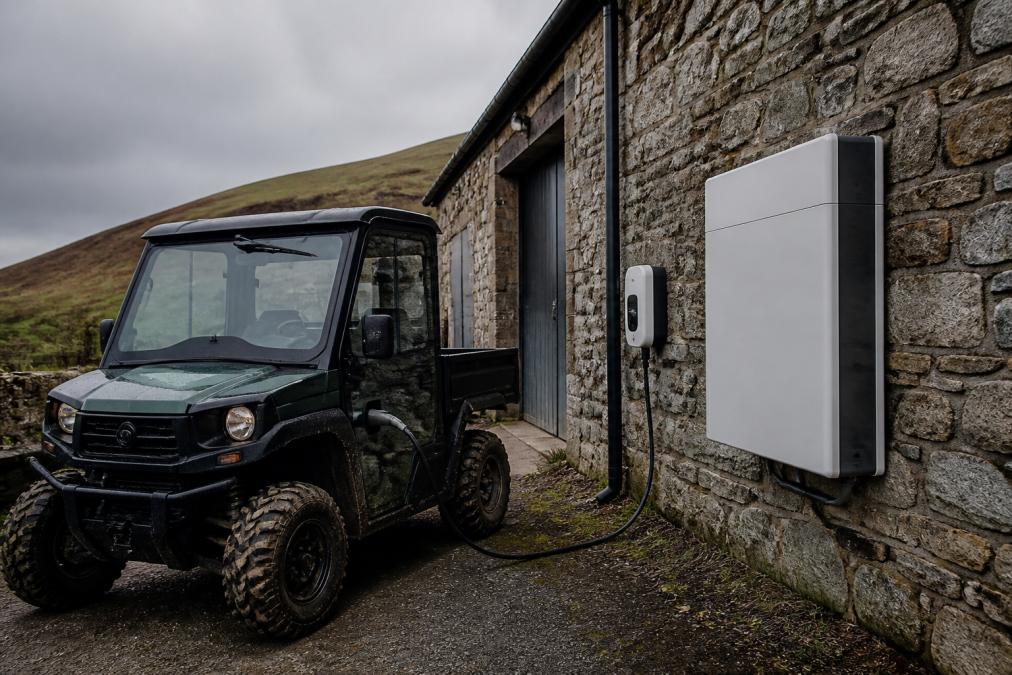
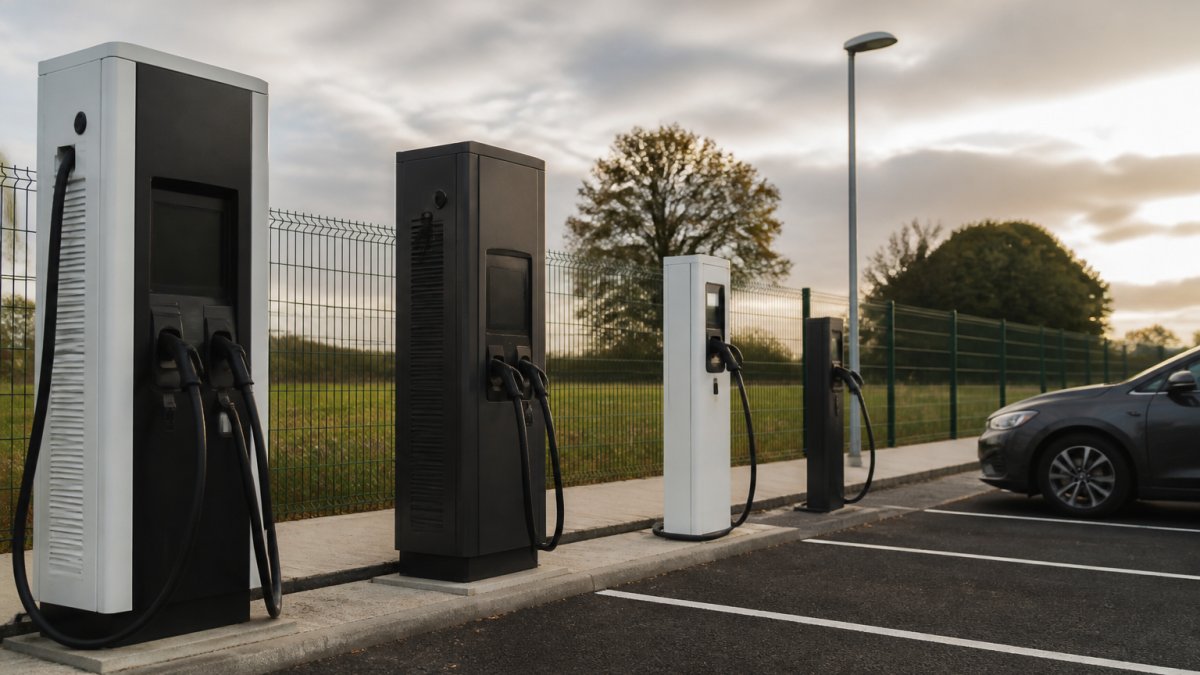
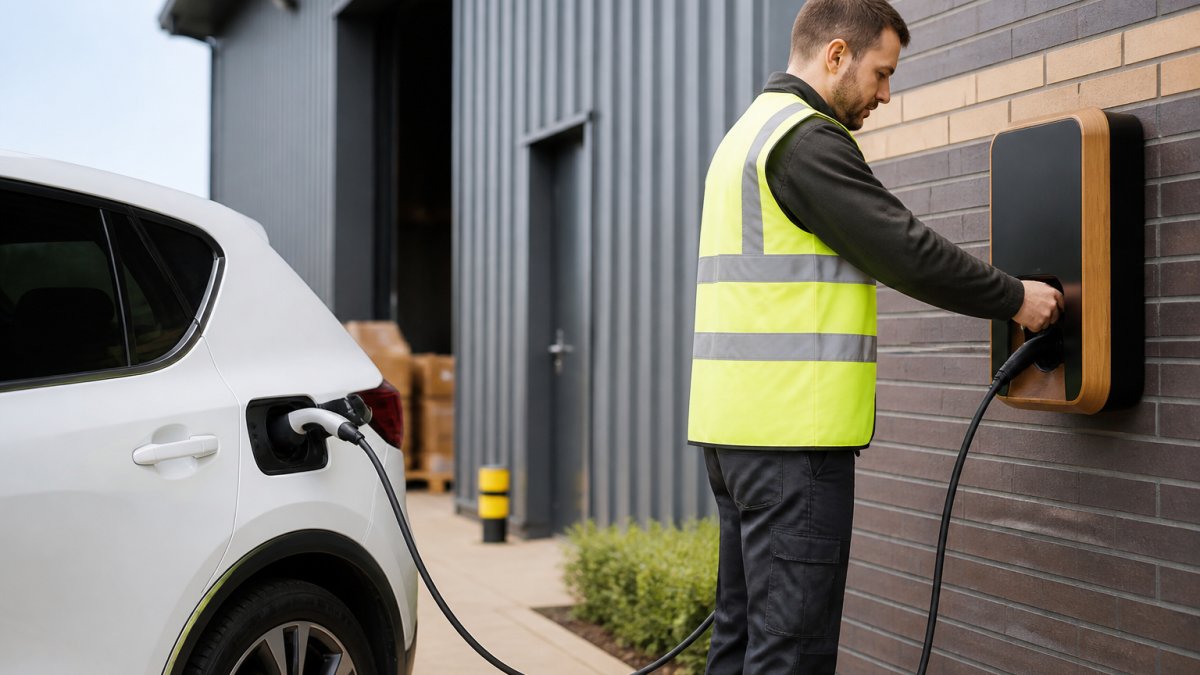
Heat pumps draw substantial power at startup and during defrost cycles. Without storage, this creates demand spikes that increase grid charges and stress older rural grid connections. A battery system buffers these spikes, supplying the heat pump from stored energy. EV charging infrastructure presents a similar challenge at larger scale. A farm operating a commercial vehicle fleet can generate demand profiles that push against connection limits. Battery storage allows EV charging to be managed intelligently, drawing from stored energy during peak grid periods and recharging from cheap overnight rates or daytime solar generation.
The benefits of battery storage for Scottish farms are most fully realised when the battery is part of a whole-system design rather than a standalone addition. Integrated approaches to on-site generation, storage, and flexible loads represent the most effective pathway to energy cost reduction and decarbonisation for agricultural premises.
Managing energy costs across a working farm is complex, and the gap between a system that performs well and one that underdelivers often comes down to the quality of initial design. Smarter Utility is Scotland's leading installer of solar PV, battery storage, and EV charging solutions, with full MCS accreditation and a free, no-obligation survey process that ensures every installation is sized and configured for your site's specific demands. Click HERE for your FREE SURVEY today and find out exactly what battery storage could deliver for your operation.
Frequently Asked Questions
How does battery storage help manage peak energy demand on farms?
A battery energy storage system (BESS) charges during off-peak hours when grid electricity is cheapest, then discharges during peak demand periods such as morning milking or grain drying. This load shifting avoids costly peak-rate tariffs and reduces the risk of tripping a farm's maximum demand threshold, which can trigger significant charges on half-hourly metered supplies. Farms with solar PV can also draw from stored energy rather than the grid during high-demand windows.
What are the financial incentives for installing battery storage on agricultural land?
Agricultural energy storage grants are available through several UK and Scottish Government schemes, including the Farming and Food Production Future Fund and support via the Rural Payments and Services portal. The UK Smart Export Guarantee (SEG) allows farms to earn payments for surplus electricity exported to the grid. Energy storage paired with solar PV may also qualify for zero-rate VAT under current HMRC rules. Contact Smarter Utility for a free survey to identify which funding routes apply to your farm.
Can battery storage systems be integrated with existing wind or solar installations?
Yes. A BESS can be retrofitted alongside an existing solar PV array or onshore wind turbine without replacing the generation equipment. An inverter upgrade or additional hybrid inverter is typically required to connect generation, storage, and the grid correctly. The key step is sizing the battery capacity to match the farm's actual generation profile and consumption patterns. A professional survey assesses the existing grid connection, metering setup, and generation output before specifying the right system.
Are there specific planning considerations for battery storage on rural properties?
Permitted development rights in Scotland allow some battery storage installations without a full planning application, particularly when the system is ancillary to an existing solar or wind installation. However, larger BESS units, those sited in conservation areas, or installations near listed buildings may require prior approval or full planning permission under the Town and Country Planning (Scotland) Act 1997. Grid connection agreements with the relevant Distribution Network Operator (DNO) are also required before commissioning.
This article was written using GrandRanker