 ultimate-guide
Alternatives to Public EV Charging for Small Businesses
Table of Contents
- Why Small Businesses Are Moving Away from Public EV Charging
- Workplace Charging Scheme Eligibility: What Your Business Needs to Qualify
- Commercial EV Charger Installation Costs: Budgeting for Your Site
- EV Charging Revenue Models for Businesses: Turning Charging into Income
- Choosing the Right Charging Hardware for Small Commercial Sites
- Load Balancing and Grid Capacity: Managing Site Power Without Upgrades
- Integrating Solar and Battery Storage with EV Charging
- Common Mistakes Small Businesses Make with EV Charging
- Frequently Asked Questions
Last Updated: September 29, 2026
Why Small Businesses Are Moving Away from Public EV Charging
Public charging was never designed for the daily rhythm of a working fleet. It was built for drivers passing through, not vans returning to base every evening. That mismatch is why so many small businesses are now exploring alternatives to public EV charging for small businesses, and why this guide from Smarter Utility focuses on what happens on your own site rather than at a motorway services.
The core problem is control. When your vehicles depend on a shared public network, you inherit its queues, its downtime and its pricing. A charger out of service on a Monday morning is not an inconvenience; it is a van that cannot do its rounds.
UK government guidance on electric vehicle charging infrastructure sets out the national picture, but the practical decision for most operators is simpler: what can we install, run and afford on our own premises?

Workplace Charging Scheme Eligibility: What Your Business Needs to Qualify
The Workplace Charging Scheme is a government grant that reduces the upfront cost of installing charge points at your premises. It is the single most useful starting point for any small business weighing up on-site charging.
Eligibility is narrower than many assume. A common mistake is applying after the work is finished; the voucher must be claimed and approved before installation begins, and the installer must be authorised under the scheme. You will also need to demonstrate a genuine need for charging, typically by showing current or planned electric vehicles in your operation.
Check current voucher values and the full eligibility criteria directly with the Office for Zero Emission Vehicles, because the scheme terms are reviewed periodically and the figures change.
Commercial EV Charger Installation Costs: Budgeting for Your Site
Installation costs vary enormously, and any guide quoting a single figure is misleading you. The variables that actually move the number are cable runs, whether your existing supply can cope, groundworks, and whether you need load management hardware.
Rather than chase a headline price, budget in three layers:
- Hardware: the charge points themselves, which scale with the number of sockets
- Electrical work: cabling, protection, and any distribution board changes
- Enabling works: trenching, ducting, signage and surfacing
The hidden cost most quotes omit is the supply upgrade. If your incoming capacity is tight, a network operator upgrade can dwarf the charger cost. Load balancing usually avoids that expense entirely, which is why it belongs in the budget conversation from day one.
EV Charging Revenue Models for Businesses: Turning Charging into Income
A well-run charging point can be a cost centre or a modest revenue stream, and the difference is usually the tariff structure rather than the hardware.
Three models dominate. Free-to-use charging works as a staff benefit and recruitment tool but exposes you to the full energy cost. Cost-recovery charging passes electricity costs to the driver without generating profit. Commercial charging adds a margin, and that is where payment processing and access control become essential.
The tax treatment of charging you provide to employees is a genuine gap in most guides. Free workplace charging is generally treated as a benefit, and the rules around reporting it are specific. Speak to an accountant before you set your policy, because the administrative burden can outweigh the benefit for smaller teams.
| Model | Who pays | Best for | Main drawback |
|---|---|---|---|
| Free to use | Business | Staff retention, simple setup | Full energy cost sits with you |
| Cost recovery | Driver | Mixed fleets, fairness | Needs payment or access control |
| Commercial margin | Driver | Sites with visitor footfall | More admin and maintenance |
Choosing the Right Charging Hardware for Small Commercial Sites
Hardware choice comes down to four questions: how many vehicles, how long they sit idle, what power your supply can actually deliver, and who manages the software. Get those wrong and you either overspend on speed you never use or under-spec a unit that cannot keep up with your rounds.
Click HERE for your FREE SURVEY today →
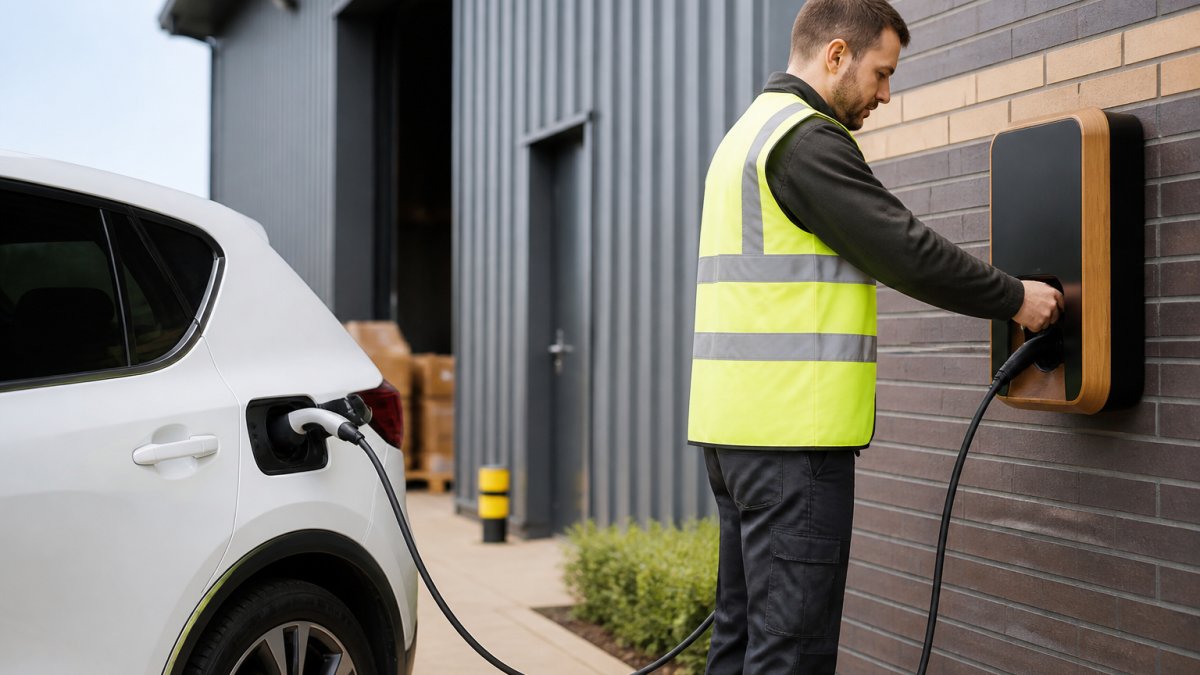
Start with the charging mode, because it dictates everything downstream. Mode 2 (a portable connector into a domestic-style socket) is not appropriate for commercial use, it is slow, offers limited protection, and is not designed for repeated daily cycles. Mode 3 is the standard for fixed AC charge points and is what almost every small business should be installing. Mode 4 is DC rapid charging, which requires a far heavier supply and is rarely justified on a depot site.
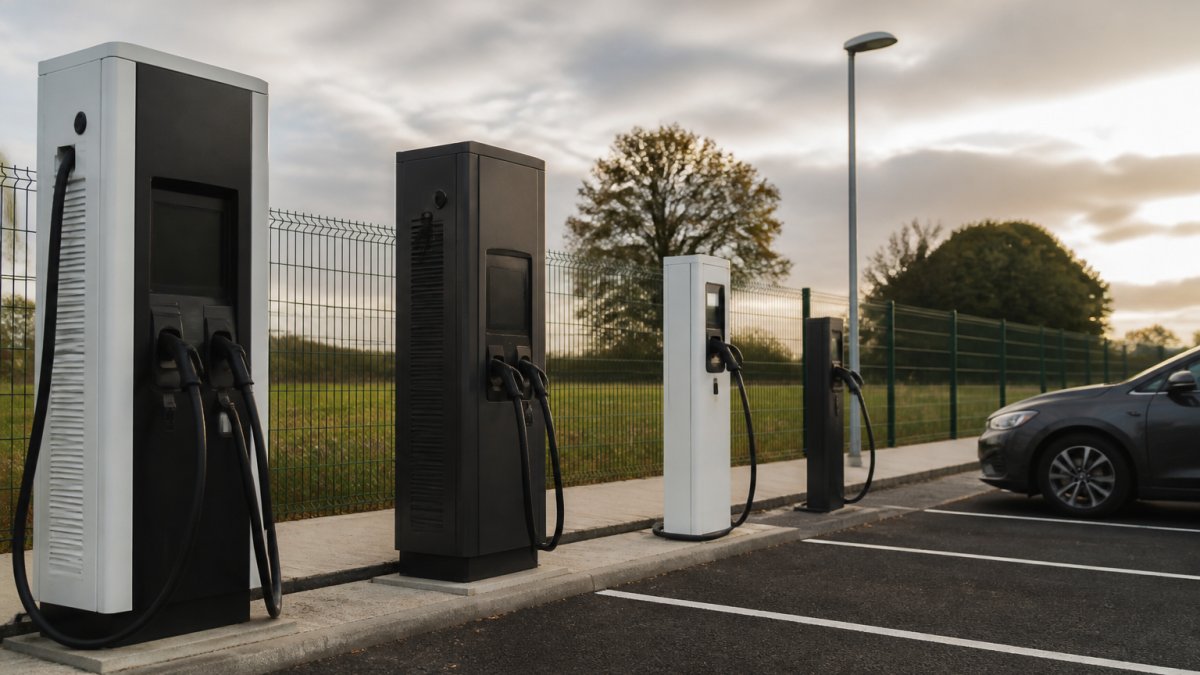
For overnight depot charging, 7kW single-phase units are almost always sufficient and far cheaper to install than three-phase or rapid alternatives. A van parked for ten hours at 7kW recovers roughly 70kWh, comfortably more than a typical daily round consumes. Step up to 22kW three-phase only if you have confirmed three-phase supply and genuinely short dwell times. Rapid charging belongs on routes and retail forecourts, not in a yard where vans sit idle overnight. This is the single most common specification error.
Connector type matters too. Most current passenger EVs and light commercial vehicles use Type 2 for AC charging, and that is the socket to specify for new AC installations. Older vehicles may use Type 1, so check your actual fleet before ordering. For DC rapid units, CCS is now the dominant standard, with CHAdeMO largely legacy.
On the software side, managed platforms such as ChargePoint's commercial charging solutions and Pod Point's business charging range offer cloud dashboards, access control, RFID or app authentication, and per-driver reporting.
One further consideration competitors rarely raise: if you plan to let neighbouring businesses, staff guests or the public use your points, the hardware must support authentication and session logging from day one. Retrofitting access control onto a basic untethered unit is rarely cost-effective, and without it you have no way to apportion liability if a third-party vehicle is damaged while charging.
Load Balancing and Grid Capacity: Managing Site Power Without Upgrades
Load balancing is the technology that lets you install multiple chargers without triggering an expensive supply upgrade. It monitors your site's total demand and throttles charging when other equipment needs power.
Integrating Solar and Battery Storage with EV Charging
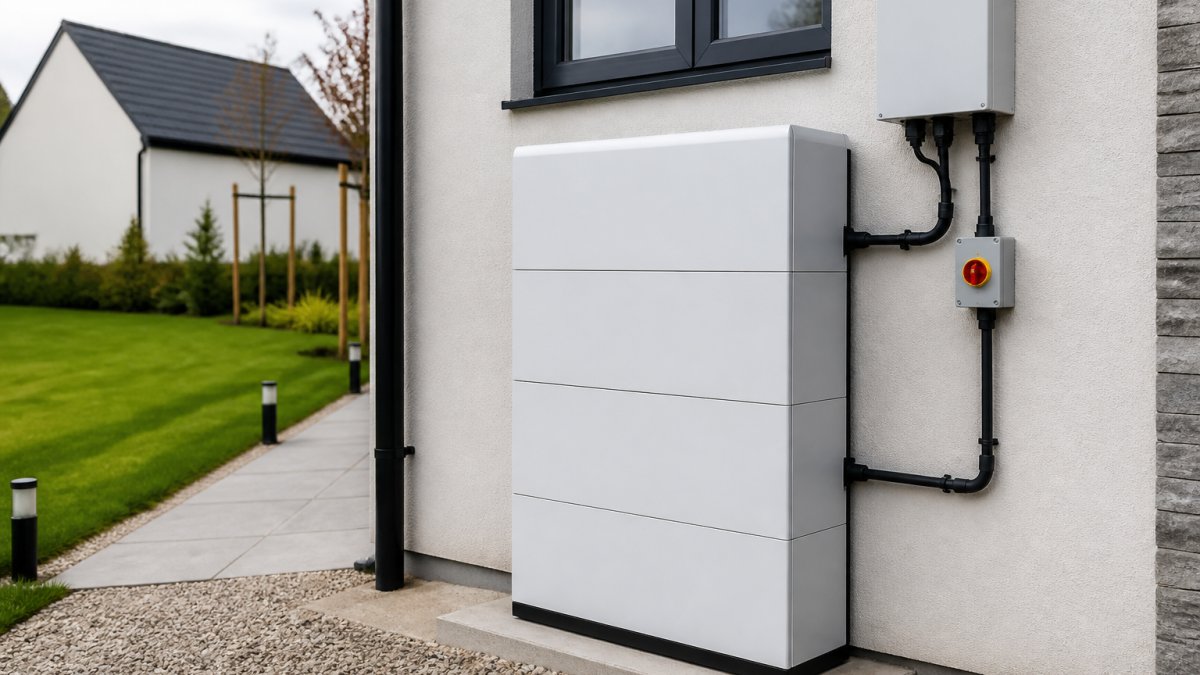
Battery-buffered charging is the other under-discussed option. A stationary battery at the charge point can absorb cheap overnight grid energy or solar surplus and release it to vehicles without ever stressing your incoming supply. On constrained sites, this can be the difference between installing four chargers and installing none, and it often avoids the network operator upgrade that would otherwise dwarf the hardware cost.
Common Mistakes Small Businesses Make with EV Charging
The most expensive mistakes are made before installation, not after.
- Buying rapid chargers for a depot. You pay for speed you will never use.
- Ignoring load management. The supply upgrade dwarfs the charger cost.
- Claiming the grant late. Vouchers must be approved before work starts.
- Forgetting maintenance. Uptime depends on a service contract, not hope.
- Overlooking cable management. Untidy, trip-hazard cabling fails inspections and shortens hardware life.
Frequently Asked Questions
Is it worth installing EV chargers at my small business?
For many small businesses, yes. Off-peak electricity rates and workplace charging can cut transport costs compared with public rapid charging, and a workplace charging scheme can attract staff and visitors. However, the return depends on your mileage, site power capacity, and how often vehicles are parked. A free site survey will show whether your building can support the load and what hardware suits your fleet.
What are the tax benefits for businesses installing EV chargers?
Businesses can often claim capital allowances on charging equipment, and there may be benefit-in-kind advantages for company EV charging. The Workplace Charging Scheme provides a grant toward purchase and installation, but eligibility rules apply. Always check current HMRC guidance or speak to an accountant, as treatment varies by ownership model and whether charging is provided free or paid for by employees.
Can small businesses generate revenue from private EV chargers?
Yes. You can set tariffs for staff, visitors, or the public using back-office software, or join a roaming network. Revenue models include pay-as-you-go, subscription, or a mix of free and paid sessions. Keep in mind that selling electricity may have tax and regulatory implications, and you will need a charge point management system to handle payments and access control.
Do I need planning permission for commercial EV charger installation?
In many cases, wall-mounted or freestanding chargers on existing commercial property fall under permitted development, but this is not guaranteed. Listed buildings, conservation areas, or sites with restricted parking may need permission. Check with your local planning authority before installing, and your installer should be able to advise based on your specific site.
What is the difference between workplace and public EV charging?
Workplace charging is typically for staff and visitors, often at lower power and not advertised publicly. Public charging is open to any driver, usually with payment and higher power. For small businesses, workplace charging can be simpler and cheaper to run, while public charging may require more robust hardware, payment systems, and maintenance. Some sites operate a hybrid model with restricted hours for public access.