 how-to
Get a Free Solar Home Survey: Step-by-Step Guide
Table of Contents
- What to Expect From a Free Solar Home Survey
- Eligibility Criteria for Solar Grants in Scotland
- How to Apply for Your Free Survey
- Is Solar Worth It in Scotland? Understanding the Benefits
- Choosing MCS Certified Solar Installers
- What Happens After Your Survey
- Roof Requirements and Technical Considerations
- Conclusion
Last Updated: August 19, 2026
What to Expect From a Free Solar Home Survey
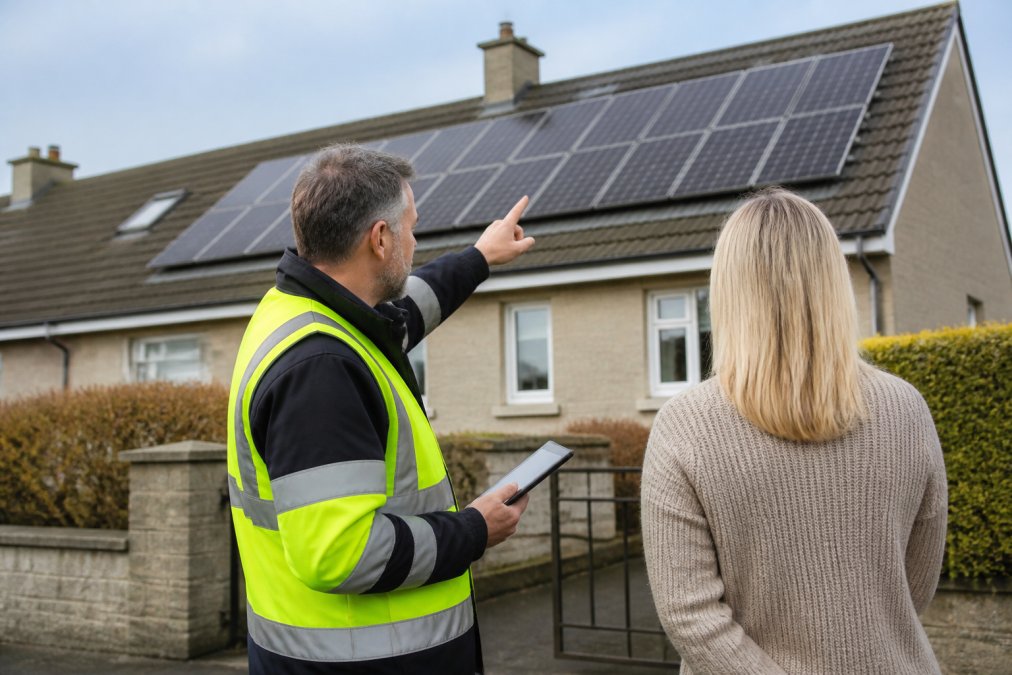
A free solar home survey is a no-obligation assessment of your property's suitability for solar panel installation. During this visit, a qualified surveyor evaluates your roof structure, orientation, shading patterns, and electrical infrastructure to determine how much solar energy your home can generate. The surveyor also discusses your energy consumption patterns and explores whether battery storage or EV charging solutions would complement a solar system.
Most surveys take between 60-90 minutes and involve both indoor and outdoor inspection. The surveyor will photograph your roof, check your current electrical panel, and gather information about your household's typical energy usage. At Smarter Utility, we use this data to create a personalised design proposal showing potential energy savings and system specifications tailored to your specific property.
The survey is completely free and carries no obligation to proceed. You'll receive a detailed report within 5-10 working days that outlines the technical feasibility, estimated energy generation, and the next steps if you decide to move forward. This upfront clarity helps you make an informed decision about whether solar is right for your home without any financial commitment.
Eligibility Criteria for Solar Grants in Scotland
Understanding your eligibility for solar panel grants and funding schemes is crucial before investing in a system. Several government and non-government schemes exist to help Scottish homeowners transition to renewable energy, but eligibility varies based on income, property type, and energy performance.
Many homeowners qualify for support through energy efficiency improvement schemes, though specific eligibility depends on your household income, whether you own or rent your property, and your current energy performance certificate (EPC) rating. Properties with lower EPC ratings often qualify for additional funding support, as these homes typically benefit most from renewable energy installation.
Tenants may have different eligibility criteria than homeowners, and some schemes specifically target fuel poverty or low-income households. Your property must be your primary residence in most cases, and the building must be structurally suitable for solar installation. A free solar home survey helps determine whether your property meets the technical requirements that underpin eligibility for various schemes.
The surveyor conducting your free solar home survey will discuss which schemes you might qualify for and explain how solar installation could improve your property's energy performance certificate rating. This conversation is essential context for understanding the true financial benefit of going solar.
How to Apply for Your Free Survey
Getting a free solar home survey is straightforward. The process typically involves an initial online form, a brief phone conversation, and scheduling your appointment.
Step 1: Check Your Property Suitability
Before booking a survey, do a quick self-assessment of your property. Your roof should have reasonable southern, south-easterly, or south-westerly exposure to maximise solar generation. Significant shading from tall trees, buildings, or chimneys can reduce performance, though it doesn't necessarily disqualify your property.
Consider whether you own the property outright or have a mortgage, as some lenders require notification before renewable energy installation. If you rent, check your tenancy agreement, some landlords restrict modifications. Your electrical panel should be in reasonable condition, though older properties can often accommodate solar systems with minor upgrades.
Step 2: Complete Your Online Application
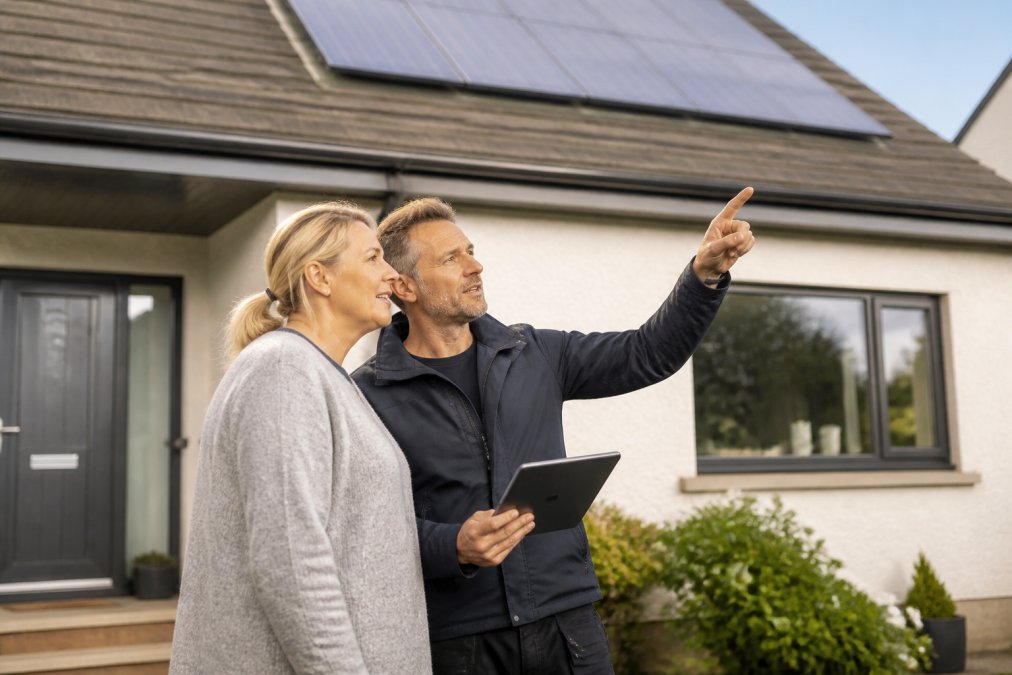
Visit Smarter Utility's website and complete the online survey request form. You'll be asked basic questions about your property: postcode, property type (detached, semi-detached, terrace, flat), roof orientation, and current energy supplier. This information helps the team prepare for your visit and ensures they bring the right equipment.
The form takes roughly five minutes to complete. You'll also be asked about your motivation for solar, whether you're interested in reducing electricity bills, lowering your carbon footprint, powering an EV charger, or a combination of these. This context helps the surveyor tailor their recommendations to your specific priorities.
Step 3: Schedule Your Survey Appointment
After submitting your form, you'll receive a phone call within 24-48 hours to confirm your details and book an appointment. The team will discuss any specific concerns about your property and answer initial questions about solar technology or the process.
Survey appointments are typically available within 2-4 weeks, depending on local demand. You'll receive a confirmation email with your appointment time, the surveyor's details, and a checklist of information to have ready (recent energy bills, mortgage details if applicable, and access to your electrical panel).
Is Solar Worth It in Scotland? Understanding the Benefits
Whether solar is worth installing depends on your property's suitability, your energy consumption, and your financial priorities. Scotland receives less annual sunshine than southern England, but solar panels still generate meaningful energy even on cloudy days.
The primary benefit for most homeowners is reducing electricity bills. A well-designed solar system can offset 40-70% of typical household electricity consumption, depending on system size and your usage patterns. Additional benefits include increased property value, reduced carbon footprint, and protection against rising electricity prices.
Battery storage amplifies these benefits by allowing you to store excess solar energy generated during the day for use during evening peak-demand hours. This shift in when you consume your own generated energy typically increases the financial return on your investment. Many households also benefit from improved energy resilience, if the grid experiences an outage, a battery system with proper backup capability can keep essential circuits running.
For households planning to install an EV charger, solar becomes particularly valuable. Charging your vehicle with solar-generated electricity dramatically reduces transport costs and carbon emissions. A solar system sized to cover both household consumption and EV charging requirements requires careful design, which is exactly what a professional free solar home survey provides.
The return on investment typically spans 8-12 years, after which the system generates essentially free electricity for its remaining 25+ year lifespan. Government incentives and energy savings schemes can significantly shorten this payback period, making the financial case stronger for eligible households.
Choosing MCS Certified Solar Installers
The Microgeneration Certification Scheme (MCS) is the industry standard for solar installers in the UK. MCS certification ensures that installers meet rigorous technical and professional standards, and it's a prerequisite for accessing most government funding schemes.
Click HERE for your FREE SURVEY today →
When evaluating solar installers, verify their MCS accreditation and check that it covers both solar PV panels and battery storage if you're interested in both. MCS-certified installers must follow strict installation protocols, provide comprehensive warranties, and maintain professional indemnity insurance.
Smarter Utility holds full MCS accreditation for solar PV and battery storage installation, alongside professional installation standards for EV charging solutions. This accreditation reflects our commitment to technical excellence and customer protection. MCS-certified status also means your installation qualifies for most available funding schemes and grants, removing a significant barrier to going solar.
Beyond certification, evaluate installers based on their experience with properties similar to yours, the clarity of their design proposals, and their track record with timely project completion. Ask for references from recent customers and check independent reviews. A reputable installer should be transparent about timelines, costs, and any potential complications your specific property might present.
What Happens After Your Survey
Once your free solar home survey is complete, you'll receive a detailed report within 5-10 working days. This report includes a site assessment summary, proposed system design, estimated energy generation figures, and a personalised quotation.
The design proposal specifies the number of panels, inverter type, battery capacity (if included), and expected annual energy output. You'll also receive an estimate of potential energy bill savings and information about any grants or schemes you might qualify for. This documentation gives you everything needed to make an informed decision.
If you decide to proceed, the next phase involves finalising your order, arranging any necessary planning permissions or building control approvals, and scheduling installation. Most installations take 2-3 days once work begins, though this varies based on system complexity and roof configuration.
During installation, the surveyor's recommendations guide every step. Your electrical panel may require upgrades to accommodate the solar inverter and battery storage, and your roof will be inspected more thoroughly to ensure it can safely support the panel weight and mounting structures. The installer will also arrange grid connection with your electricity supplier, which typically takes 4-8 weeks after physical installation is complete.
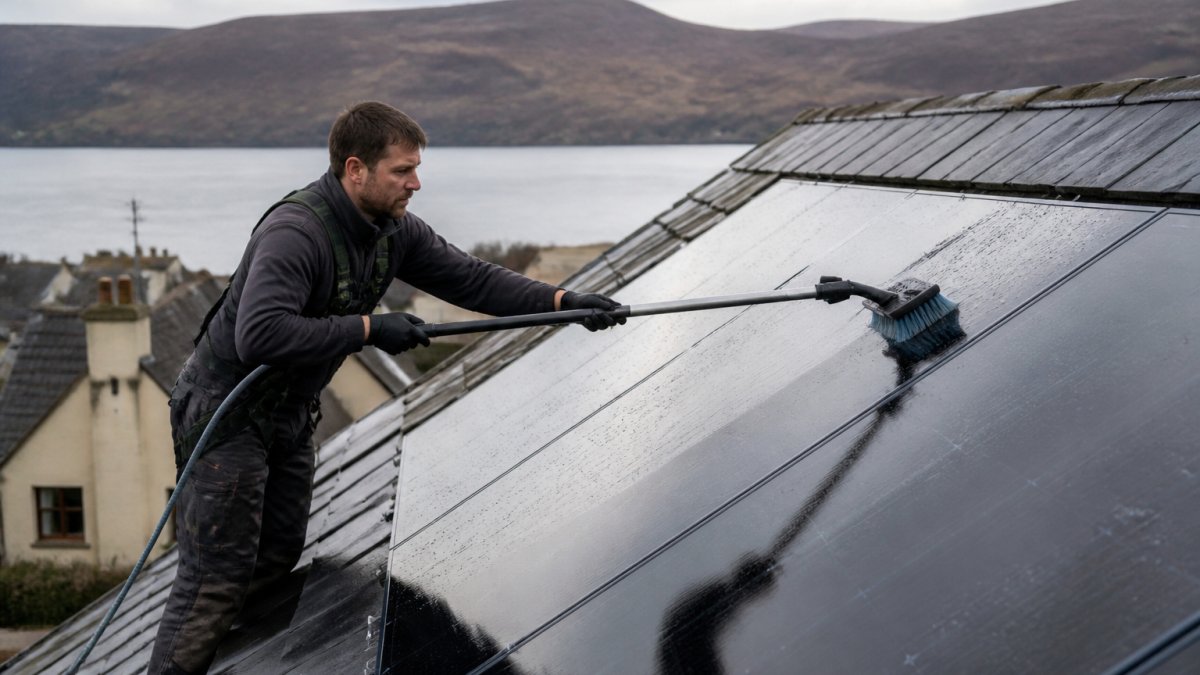
After installation is complete, you'll receive full training on how to monitor your system's performance and maintain it effectively. Most solar systems require minimal maintenance, typically just occasional cleaning of the panels to remove dust and debris. Battery systems may require slightly more attention, though modern lithium systems are remarkably reliable.
Roof Requirements and Technical Considerations
Your roof's structural integrity and orientation are the primary technical factors determining solar suitability. Solar panels work best on roofs facing south, south-east, or south-west, with minimal shading from trees, buildings, or chimneys. North-facing roofs generate significantly less energy and are generally not recommended unless your property has no other suitable surface.
Roof pitch (angle) is less critical than orientation, though roofs between 15 and 50 degrees typically optimise solar generation without requiring additional mounting equipment. Flat roofs work well for solar installation, as panels can be mounted on adjustable frames that orient them toward the sun.
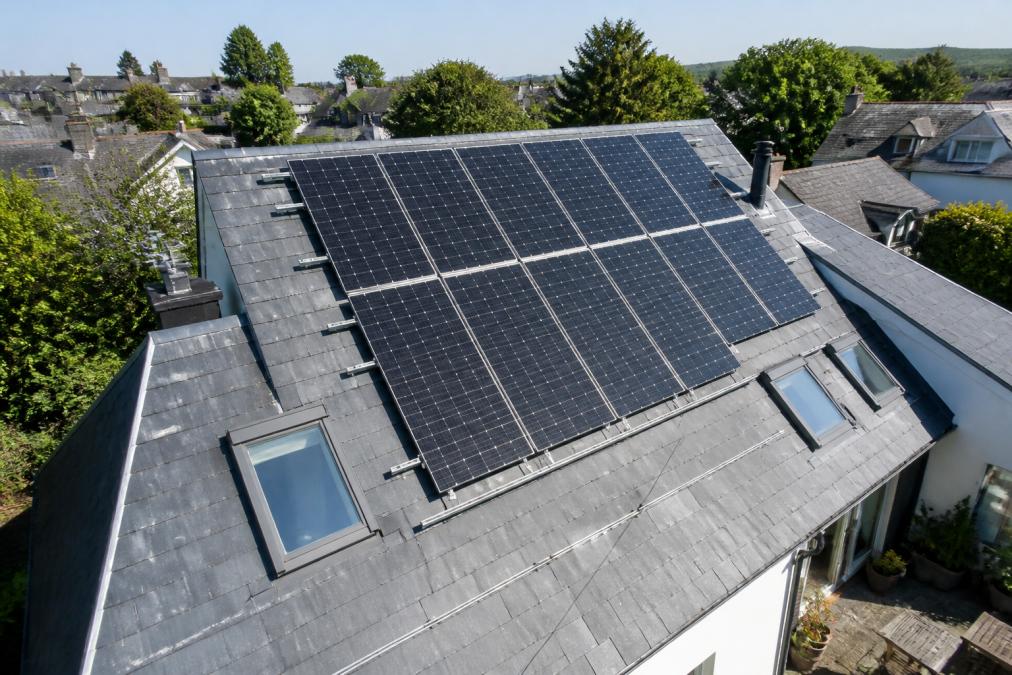
Structural capacity is essential. Your roof must safely support the weight of solar panels, mounting hardware, and any additional loads from wind or snow. Most modern residential roofs built in the last 30-40 years can accommodate standard solar systems without reinforcement, though older properties may require structural assessment. The surveyor conducting your free solar home survey will evaluate your roof's condition and load-bearing capacity, identifying any repairs or reinforcement needed before installation.
Roof material matters less than condition. Solar panels install successfully on slate, tile, asphalt shingle, metal, and flat roofs. However, if your roof requires replacement within the next 5-10 years, it's often more cost-effective to replace it before installing solar. This avoids the expense of removing and reinstalling panels.
Electrical infrastructure is equally important. Your home's electrical panel must have capacity to accommodate the solar inverter and, if applicable, a battery storage system. Older properties with outdated electrical panels may require upgrades, which a qualified surveyor will identify during your free solar home survey. These upgrades are straightforward and essential for safe system operation.
Grid connection requirements depend on your local distribution network operator. Some areas have capacity constraints that require minor network upgrades before solar systems can be connected. Your installer handles these applications, but it's useful to understand that grid connection can take 4-8 weeks after physical installation is complete.
Getting a free solar home survey is the logical first step toward understanding whether solar energy makes sense for your property. The survey provides clarity on technical feasibility, financial potential, and your eligibility for funding schemes, all without any cost or obligation.
Smarter Utility's free survey service removes the guesswork from solar investment. Our MCS-certified team conducts a thorough property assessment and delivers a personalised proposal showing exactly what your home could achieve with solar panels and battery storage. This professional insight helps you make a confident decision about transitioning to renewable energy. Click here for your FREE SURVEY today and discover how solar can power your future.
Frequently Asked Questions
Who is eligible for a free solar home survey in Scotland?
Most homeowners can request a free solar home survey regardless of income or property type. However, eligibility for government-backed solar panel grants Scotland depends on your household income, energy performance certificate rating, and whether your property meets technical requirements. A professional surveyor will assess your roof orientation, structural condition, and electrical systems during the survey to confirm suitability. Tenants and those in shared properties may have restrictions depending on the specific grant scheme.
What does a professional solar home survey involve?
A solar survey includes a roof inspection to assess structural integrity, orientation, and shading; an electrical assessment of your consumer unit and wiring; measurements of available roof space; and analysis of your current energy consumption patterns. The surveyor will also discuss your energy goals and explain how battery storage could complement your solar system. The entire process typically takes 1-2 hours and is completely free with no obligation to proceed with installation.
Is solar worth it in Scotland?
Yes, solar can be worthwhile in Scotland despite lower sunlight levels than southern regions. Modern panels generate electricity even on cloudy days, and combined with battery storage, a system can reduce your electricity bills significantly and lower your carbon footprint. Government grants and the Renewable Heat Incentive make solar more affordable. Your specific savings depend on your roof orientation, household energy use, and whether you add battery storage. A free survey will provide a personalised estimate based on your property.
How do I know if my roof is suitable for solar panels?
Your roof needs adequate space (typically 4-6 square metres minimum), structural strength to support panels, and ideally south or south-west facing orientation. North-facing roofs can still work but generate less energy. A qualified surveyor will assess your roof pitch, materials, age, and any obstructions like chimneys or trees. They'll also check that your electrical system can safely accommodate a solar installation. Even if your primary roof isn't ideal, east or west-facing alternatives may work. The free survey provides a definitive answer for your property.
This article was written using GrandRanker