 how-to
Why Future Proofing Business EV Charging Matters
Table of Contents
- Why Future Proofing Business EV Charging Infrastructure Matters
- The Business Case: Fleet Electrification, Costs and Carbon Goals
- EV Charging Infrastructure Planning: A Step-by-Step Site Assessment
- Building Scalable EV Charging Infrastructure Without Repeat Construction
- EV Charging Load Management: Avoiding Costly Grid Reinforcement
- Smart Charging for Businesses: Software, Interoperability and Resilience
- Total Cost of Ownership: Transparent Scenarios for Phased Rollout
- Conclusion: Plan Once, Scale Confidently
- Frequently Asked Questions
Last Updated: October 9, 2026
Why Future Proofing Business EV Charging Infrastructure Matters
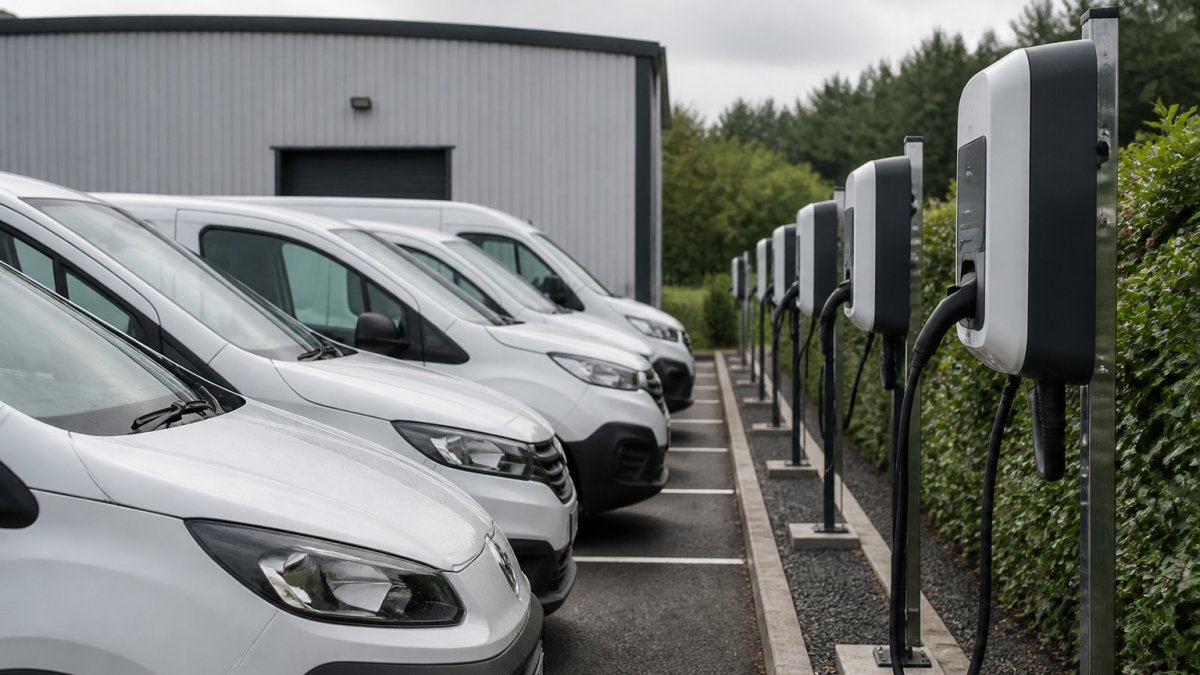
Future proofing EV charging is the practice of designing electrical capacity, hardware and software today so that charging can be scaled later without digging up the site twice. Businesses often install the minimum to satisfy today's fleet, then discover the supply cannot support tomorrow's demand. The cost of retrofitting is always higher than the cost of planning.
EV adoption across UK fleets continues to rise, and charging demand grows with it. A site that works for two vans rarely works for twelve. Below, we break down the business case, the site assessment process, and the cost traps that catch businesses out.
The Business Case: Fleet Electrification, Costs and Carbon Goals
The case for fleet electrification rests on three pillars: lower running costs, emissions reduction, and future-proofing against tightening regulation. Many businesses find that moving a fleet to electric reduces fuel and servicing spend per vehicle, though the savings depend heavily on mileage patterns and charging strategy.
Sustainability commitments increasingly drive board-level decisions. Green transport credentials matter to customers and tender processes, and emissions reduction targets are difficult to hit without addressing fleet vehicles. The UK government guidance on workplace charging sets out the support available for businesses installing charge points.
There is a harder commercial argument too. Charging demand is not static. If your site cannot grow with your fleet, you face either stalled electrification or expensive remedial work.
| Business driver | What it affects | Planning implication |
|---|---|---|
| Fleet costs | Fuel, servicing, downtime | Size supply for full fleet, not pilot |
| Sustainability commitments | Reporting, tenders, brand | Track energy data from day one |
| Growing demand | Vehicles, staff, visitors | Phase hardware, over-spec capacity |
EV Charging Infrastructure Planning: A Step-by-Step Site Assessment
EV charging infrastructure planning starts with a site assessment that measures what you have, what you need, and what you will need later. Skipping this step is the most common and most expensive mistake we see.
Step 1: Audit Electrical Capacity and Grid Connection
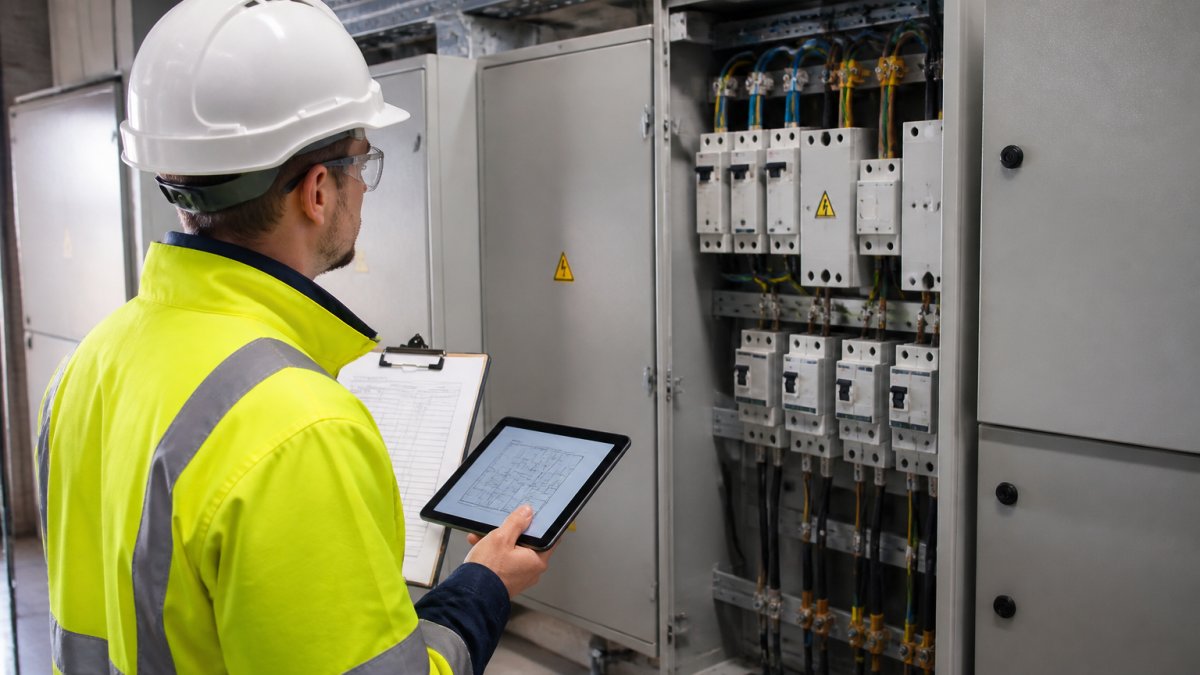
Establish the site's existing supply capacity, the headroom available, and the cost of any grid connection upgrade. A qualified electrician should confirm the distribution board rating, spare ways, and cable routes. Where capacity is tight, load management may remove the need for reinforcement entirely.
Step 2: Map Charging Demand and Use
Estimate how many vehicles charge, when, and for how long. Overnight depot charging looks very different from daytime workplace charging. This forecast drives charger types, charging speeds and the number of charging points required. Use data from existing sites, where available, sharpens the estimate considerably.
Step 3: Phase Deployment and Procurement
Plan the full build, then install it in stages. Phase one proves the model; later phases add chargers to infrastructure already in place. Procurement should prioritise equipment that supports open standards, because OZEV guidance on charge point standards confirms interoperability matters for long-term value.
Building Scalable EV Charging Infrastructure Without Repeat Construction
Scalable EV charging infrastructure is built around one principle: do the disruptive work once. Trenches, ducting, cable routes and supply upgrades are the expensive, disruptive elements. Chargers themselves are comparatively easy to add later.
A common mistake is sizing ducting and cable for the chargers being installed now, not the ones planned in three years. Pulling larger cable through oversized ducting during the initial groundworks costs a fraction of re-excavating a car park.
- Ducting sized for at least double the initial charger count
- Supply capacity reserved for future phases
- Distribution board with spare ways for expansion
- Cable routes documented for future contractors
EV Charging Load Management: Avoiding Costly Grid Reinforcement
EV charging load management balances the power drawn by chargers against the site's available supply, avoiding the need for expensive grid reinforcement. Grid connection upgrades can involve significant capital expenditure and long lead times, and load management frequently removes that requirement altogether.
The mechanism is straightforward once you put numbers to it. A site with a 100 A three-phase supply has roughly 69 kVA of capacity at 400 V. If a fleet of eight vans each needs 7 kW overnight, the naive total is 56 kW, which already consumes most of that headroom before you account for the building's own load.
Three metrics drive the design:
- Peak demand, the highest simultaneous draw the site can support, usually set by the incoming supply fuse or the distribution board rating.
- Diversity, the proportion of connected vehicles likely to be charging at the same moment. A depot where vans return across a two-hour window has lower diversity than one where they all plug in at 18:00.
- Dwell time, how long each vehicle is parked and available to charge. Longer dwell times allow lower power per charger and more vehicles on the same supply.
A worked example makes the trade-off concrete. Ten vans, each needing 40 kWh overnight, with a nine-hour dwell window, require roughly 44 kW of average charging power across the fleet. Spread across ten 7 kW chargers with load management, the site never exceeds its 69 kVA limit, and no grid upgrade is needed.
Smart charging for businesses goes further, shifting charging to off-peak periods and matching demand to on-site generation. Where solar PV and battery storage are installed, load management can prioritise self-generated power, cutting both energy costs and carbon intensity.
Reserve capacity matters as much as peak control. Designing load management to run at 100% of the supply limit leaves no room for a new piece of equipment, a cold snap or a fault. Most practitioners size the charging load to around 70-80% of available capacity, keeping the remainder as headroom for building load growth and future chargers.
Click HERE for your FREE SURVEY today →
The practical outcome is straightforward: more chargers on the same supply, lower operational costs, and no waiting on the network operator. The design work, however, must be done before the first charger is installed, retrofitting load management onto an undersized supply rarely recovers the full saving.
Smart Charging for Businesses: Software, Interoperability and Resilience
Smart charging for businesses depends on software that manages load, schedules sessions, and reports energy use. The hardware matters, but the software determines whether the system stays useful as the fleet grows. This is the area most procurement processes under-specify, and it is where long-term costs hide.
Interoperability and open protocols. Open Charge Point Protocol (OCPP) is the de facto standard for communication between chargers and a central management system. Specifying OCPP 1.6J as a minimum, and OCPP 2.0.1 where available, allows chargers from different manufacturers to work under one platform. The Open Charge Alliance on OCPP maintains the protocol specification.
Data ownership and access. Before signing, establish who owns the charging data, who can export it, and in what format. Energy consumption per vehicle, session times and fault logs are operationally valuable and increasingly feed sustainability reporting. A platform that locks data behind a proprietary dashboard creates a reporting problem later.
Vendor lock-in. Lock-in appears in three places: proprietary communication protocols, proprietary payment systems, and software licensing tied to specific hardware.
Cybersecurity. Chargers are networked devices with payment and user data attached. Access controls, firmware update policies and network segmentation should be specified at procurement, not bolted on afterwards. Practical measures include separating the charging network from the corporate network, enforcing authenticated firmware updates, disabling unused ports and services, and logging access to the management platform.
Resilience and business continuity. Uptime is the operational metric that matters most. A reasonable target for a business fleet is 98% charger availability, measured monthly, with a defined response time for faults. Resilience measures include:
- Offline authentication so vehicles can still charge if the network connection drops.
- Local load control that continues to operate if the central platform is unreachable.
- A maintenance contract with a stated response time, not just a warranty.
- A documented fallback for payment and access if the back office is down.
- Spare capacity or a spare charger so a single failure does not strand a vehicle.
Procurement criteria. When comparing platforms, ask for: OCPP version and certification, OCPI support, API documentation, data export format, firmware update policy, uptime SLA, fault response time, warranty length, and the process for adding chargers from a different manufacturer.
Total Cost of Ownership: Transparent Scenarios for Phased Rollout
Total cost of ownership for charging infrastructure includes capital expenditure, installation, grid works, energy, maintenance and software. Comparing only charger prices produces misleading conclusions.
| Cost element | One-off or recurring | Notes |
|---|---|---|
| Supply and grid works | One-off | Largely avoidable with load management |
| Groundworks and ducting | One-off | Design for final capacity, not phase one |
| Chargers | Phased | Add as demand grows |
| Energy | Recurring | Reduced by smart charging and solar |
| Maintenance and software | Recurring | Drives uptime and longevity |
Phased rollout spreads capital expenditure and lets each phase be justified by actual use. The planning work, however, must cover the whole site from the outset.
Conclusion: Plan Once, Scale Confidently
The challenge is straightforward: most sites are designed for the fleet they have, not the fleet they will have, and future proofing EV charging closes that gap. That gap is where costs accumulate. Smarter Utility designs and installs solar PV, battery storage and EV charging solutions, backed by our accreditation as an MCS approved installer and a free, no-obligation survey that sizes the infrastructure to your actual needs.
Frequently Asked Questions
What does future proofing EV charging infrastructure mean for a business?
It means designing your charging setup so it can grow with your fleet and visitor demand without ripping out cabling or upgrading the grid connection again. Practical steps include running larger-capacity supply cables than today's chargers need, leaving spare ways in distribution boards, and choosing hardware that supports load management from day one. Future proofing EV charging also covers software: open standards such as OCPP allow you to switch back-office providers later without replacing charge points.
How can a business make its EV charging infrastructure scalable?
Start with a site assessment that records your existing electrical capacity, then size the backbone (cabling, containment, distribution) for your expected peak, not your first two chargers. Install active load management so additional charge points can share available power rather than triggering a grid reinforcement. Use modular charge points and standard protocols, and document the design so future phases follow the same plan. This approach to scalable EV charging infrastructure keeps each expansion cheaper than the last.
Can existing business EV charging infrastructure be upgraded?
Often yes, but the cost depends on what was installed first. If the original cabling and distribution were sized for expansion, adding chargers is usually straightforward. If not, you may need new supply cables, an upgraded distribution board, or a higher-capacity grid connection. Load management can sometimes avoid the grid upgrade entirely by capping total site demand. A survey of your existing setup will show which path is cheaper before you commit.
How should a business plan EV charging for staff and visitors?
Separate the two use cases. Staff charging tends to be longer dwell time and can run at lower power, often overnight or across a working day. Visitor charging needs higher power for shorter sessions and clear signage. Plan bay allocation, cable routing and payment or access control for each group, and check what load management can share between them. Building both into one EV charging infrastructure plan avoids ad-hoc installations later.
Get the capacity planning right before the groundworks start, and every later phase becomes simpler and cheaper. Click HERE for your FREE SURVEY today and let our accredited team design a charging system built to scale with your fleet.