 how-to
Solar Panel Maintenance Tips for Scottish Homes
Table of Contents
- Why Solar Panel Maintenance Matters for Scottish Homes
- How Often to Clean Solar Panels: Seasonal Frequency Guide
- Step-by-Step Safety Inspection for Your Solar System
- Solar Inverter Troubleshooting and Monitoring
- Protecting Your Panels: Bird Proofing and Pest Control
- Winter Maintenance: Snow, Ice, and Debris Removal
- Professional Servicing vs. DIY Maintenance
- Frequently Asked Questions
Last Updated: October 3, 2026
Why Solar Panel Maintenance Matters for Scottish Homes
Solar panel maintenance is essential for keeping your system running at peak efficiency. In Scotland's climate, panels face unique challenges: salt spray from coastal areas, heavy rainfall, snow accumulation, and debris from wind. Without proper care, your photovoltaic systems can lose 15-25% of their energy output over time (Degradation and energy performance evaluation of mono-crystalline photovoltaic modules in...).
Most homeowners don't realise how much performance degradation happens silently, you'll notice energy bills creeping up or reduced power output only after months of lost savings have passed.
Regular inspections and cleaning catch small problems before they become expensive repairs, making the difference between a system that pays for itself and one that underperforms for years.
Solar panel maintenance doesn't require specialist skills or expensive equipment, most tasks are DIY-friendly with basic safety precautions.
How Often to Clean Solar Panels: Seasonal Frequency Guide
Clean your panels 2-4 times per year, depending on your location and weather patterns. Coastal areas need more frequent cleaning due to salt corrosion. Rural areas with trees may need cleaning after storms when debris accumulates.
Here's a practical cleaning schedule:
- Spring (April-May): Remove winter debris, pollen, and bird droppings
- Summer (July-August): Light clean after dry spells; check for dust buildup
- Autumn (September-October): Clear fallen leaves and prepare for winter
- Winter (December-February): Remove snow and ice only when safe to do so
Clean immediately if you notice visible dirt, dust, or bird droppings, these block sunlight and reduce efficiency fast. Coastal properties should clean every 6-8 weeks due to salt spray corrosion; inland rural properties can often manage quarterly cleaning unless surrounded by trees.
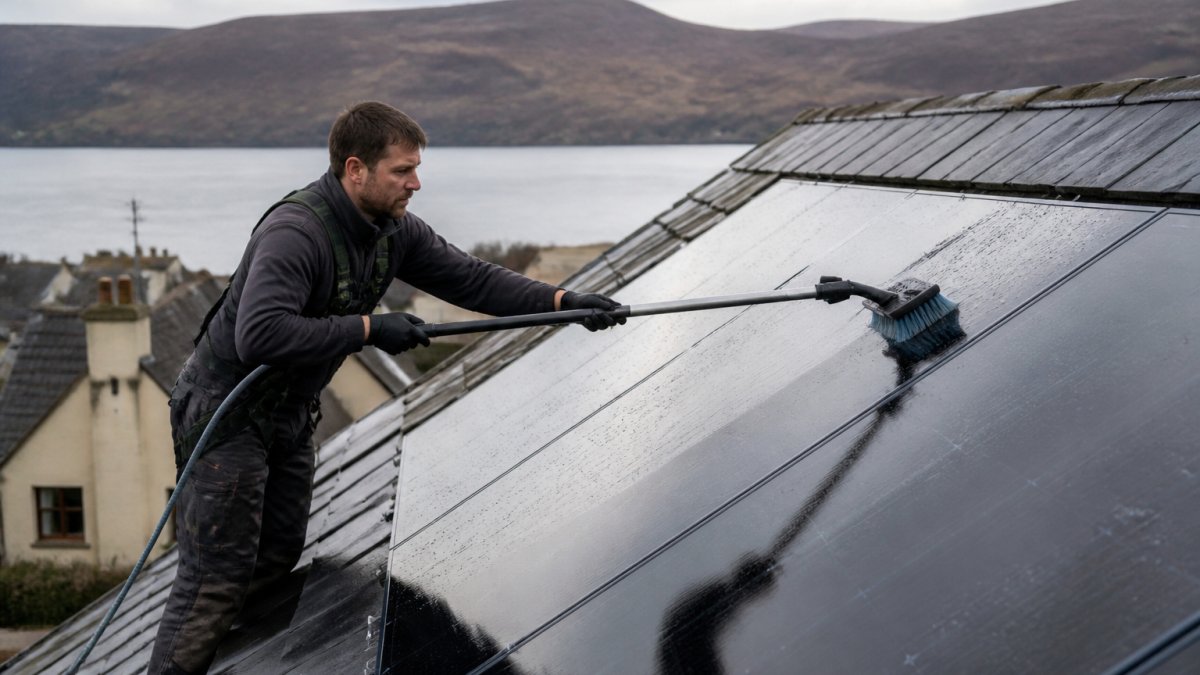
Use a soft brush, distilled water, and mild soap. Never use a pressure washer (it damages the surface) or abrasive materials. Clean in early morning or late evening when panels are cool to avoid thermal shock.
Step-by-Step Safety Inspection for Your Solar System
Before climbing onto your roof, assess the risk honestly, steep Scottish roof pitches are genuinely hazardous.
Understanding Scottish roof pitch and fall risk:
Most Scottish residential properties have roof pitches between 35 and 50 degrees.
If your roof pitch exceeds 40 degrees or you're uncomfortable at heights, do not attempt inspection yourself.
When to hire a professional inspector:
Professional engineers carry public liability insurance, fall-arrest training, and use harnesses and roof anchors to British Standards.
If your roof pitch is 40 degrees or less and you feel confident:
Safety equipment needed: sturdy EN 131 ladder with stabiliser bar, non-slip footwear, work gloves, eye protection, mobile phone, and a second person on the ground.
Start from the ground using binoculars to scan for damage, cracks, or discolouration. If safe and confident, climb for a closer look. Never work alone or in wet/windy conditions.
Visual inspection and micro-crack detection
Micro-cracks are hairline fractures that allow moisture to enter and degrade performance over months. You can't always see them from ground level.
Look for spider-web patterns, discoloured areas, white/dark lines, bubbling at edges, or visible cracks. Document with a photo and contact a professional for thermal imaging, the only reliable way to diagnose micro-cracks.
Check the frame and mounting brackets for rust, corrosion, or loose bolts. Tighten loose bolts carefully, over-tightening can crack the frame.
Checking for salt corrosion and weathering
Salt corrosion is aggressive in coastal areas, etching glass and corroding the frame and wiring. Properties within 2 km of the coast face significantly higher risk.
Signs of salt corrosion:
- White or grey crystalline deposits on the glass or frame
- Rust-coloured staining on the frame or mounting hardware
- Pitting or roughness on the aluminium surface (the frame will feel rough to touch)
- Discolouration around the edges where salt accumulates
- Corrosion on the junction box terminals
Mild corrosion can be cleaned with distilled water and a soft cloth. Severe corrosion (visibly eaten frame or oxidised junction box) requires professional assessment or replacement.
Check junction boxes at the back of each panel. If corrosion has reached them, water can cause electrical faults or arc flash hazards. This is a safety issue requiring professional repair.
Solar Inverter Troubleshooting and Monitoring
Your inverter converts DC electricity from panels into AC power for your home. If it fails, your whole system stops working.
Most modern inverters have a display screen or app showing real-time data: current power output, daily energy yield, and error codes. Check weekly.
If your inverter displays an error code, check the manual, most indicate temporary issues. Low power output despite sunny weather usually means dirty panels, changed shading, an inverter fault, or a tripped breaker.
Inverters may shut down temporarily in summer to cool, this is normal protection. Ensure cooling vents aren't blocked. If output declines steadily despite clean panels and good weather, the inverter may be degrading and needs professional testing.
Protecting Your Panels: Bird Proofing and Pest Control
Pigeons and seagulls nest under solar panels for shelter. Their droppings block sunlight and nesting materials can damage wiring.
Click HERE for your FREE SURVEY today →
Signs of bird activity:
- Bird droppings on panels or roof
- Feathers or nesting material visible
- Sudden drop in system output
- Unusual noise from under the panels
The most reliable solution is mesh or wire screening around the panel edges. Spikes or deterrent strips work best combined with other methods. Netting requires professional installation to avoid trapping birds or creating fire hazards, check with your installer as some methods affect warranty or MCS certification.
Regular cleaning also helps. Bird droppings are acidic and can etch the glass if left for weeks. Remove them promptly.
Winter Maintenance: Snow, Ice, and Debris Removal
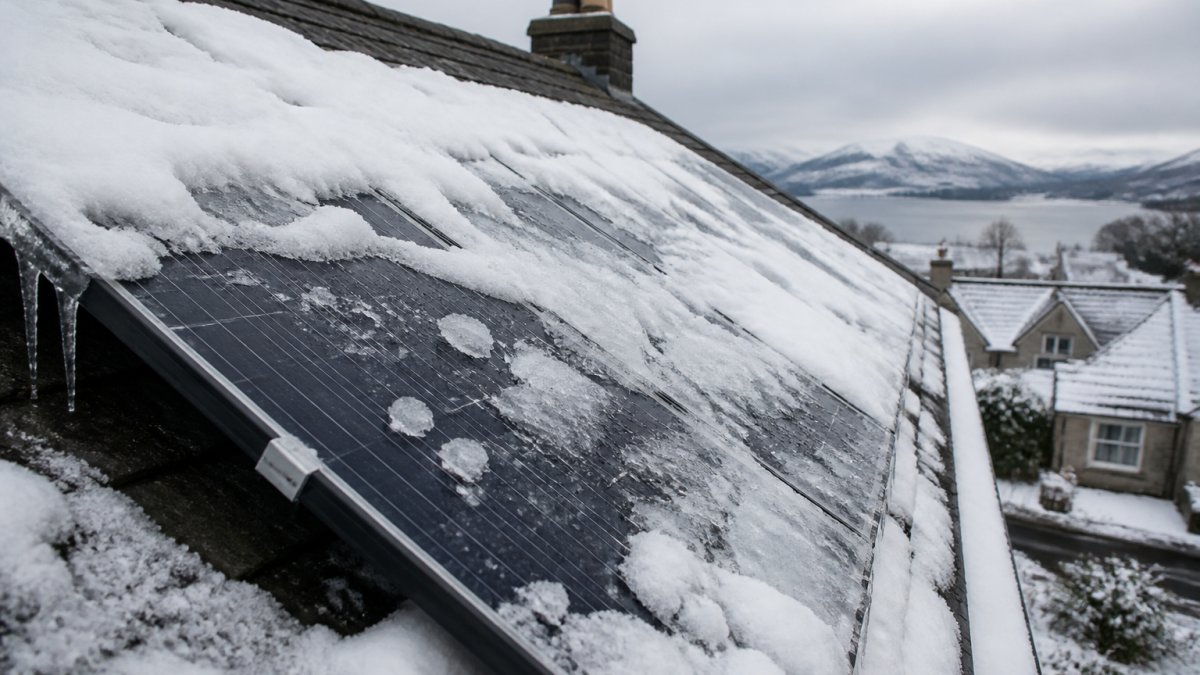
Heavy snow blocks sunlight completely and can damage panels if removed incorrectly. In Scotland, this can mean days or weeks of lost generation during winter.
Safe snow removal:
Never use a shovel or sharp tool on panels. The impact can crack the glass or damage the protective coating. Instead, use a soft brush or plastic scraper.
For thick ice, don't force it. Let it melt naturally or use warm (not boiling) water poured gently. Thermal shock from sudden temperature changes causes micro-cracks.
If your roof pitch exceeds 40 degrees, don't attempt snow removal yourself. The risk of falling is too high. Most snow will slide off steep roofs naturally as it melts.
Debris accumulation is worse in winter. Fallen leaves, twigs, and moss trap moisture against the panels. Check after storms and clear debris promptly.
Professional Servicing vs. DIY Maintenance
You can handle cleaning, visual inspections, and monitoring. These are safe, low-cost tasks that keep your system in good shape and do not affect your warranty.
What maintenance is actually required to keep your warranty valid?
This is where confusion sets in. Most homeowners believe they need annual professional servicing to maintain warranty coverage. In reality, manufacturer warranty requirements vary widely, and many don't mandate servicing at all.
Check your system's warranty documentation. Most reputable manufacturers (such as SMA, Fronius, and Enphase for inverters; Trina, Canadian Solar, and JA Solar for panels) require:
- Panel warranties: Typically cover manufacturing defects and degradation beyond 0.5% per year. They do not require annual servicing. You must keep panels reasonably clean and avoid deliberate damage, but professional servicing is not a condition of the warranty.
- Inverter warranties: Usually 5-10 years. Some manufacturers require annual inspection by an MCS-accredited engineer to maintain the warranty; others do not. Check your inverter's manual or warranty certificate.
- Installation warranty: The installer's workmanship warranty (typically 5-10 years) may require an annual inspection. This is the installer's requirement, not the manufacturer's.
Read your warranty documents carefully. If servicing is required, it will be stated explicitly. If it's not mentioned, servicing is optional, not mandatory.
The difference between maintenance and unnecessary servicing:
There's a difference between genuine maintenance and upselling. Some service providers market annual 'servicing packages' that include tasks you don't need:
- Cleaning panels (you can do this yourself for the cost of a soft brush and distilled water)
- Visual inspections (you can do this with binoculars from the ground)
- Inverter 'diagnostics' (modern inverters display their own fault codes; a technician reading the same data costs £200+)
These are low-value upsells. Genuine professional servicing includes:
- Electrical safety testing: Using a multimeter and insulation tester to check for faults in wiring, earthing, and isolation switches. This requires training and cannot be done visually.
- Thermal imaging: A thermal camera detects micro-cracks and failing cells that are invisible to the eye. This is the only reliable way to diagnose cell-level faults.
- Inverter performance analysis: Comparing actual output against weather data and expected performance to identify degradation or faults.
- Junction box and connection inspection: Checking for corrosion, loose terminals, or water ingress inside sealed components.
- Earthing and surge protection checks: Ensuring your system is properly earthed and surge protectors are functional, critical for safety.
When professional servicing is genuinely worth the cost:
Professional servicing is worth the investment for:
- First-year inspection (if not included with installation): Confirms the system was installed correctly and all components are functioning.
- Troubleshooting unexplained performance drops: If your system is producing less than expected despite clean panels and good weather, thermal imaging and electrical testing can identify the cause.
- Inverter replacement or upgrade: If your inverter is failing, a professional can safely disconnect, test, and replace it.
- Warranty claims: If you need to claim a warranty, the manufacturer may require proof of professional inspection to validate the claim.
- Every 3-5 years (optional but sensible): A thermal imaging inspection can catch micro-cracks before they become expensive failures.
A professional inspection typically costs £150-£400 depending on system size and what's included. Thermal imaging adds £100-£200.
MCS and NAPIT standards:
If you hire a professional, ensure they're accredited by the Microgeneration Certification Scheme (MCS) or NAPIT. These bodies require members to:
- Hold current electrical qualifications (City & Guilds Level 3 or equivalent)
- Carry public liability insurance (minimum £6 million)
- Follow BS 7909 (electrical safety) and BS 7671 (wiring regulations)
- Maintain professional indemnity insurance
An MCS or NAPIT engineer's report carries weight with your insurer and the manufacturer if a warranty claim is needed. A report from an unaccredited 'solar specialist' may not.
Smarter Utility's fully accredited team can review your warranty requirements and recommend a tailored maintenance plan. We distinguish between necessary maintenance and unnecessary upsells, so you invest only in what genuinely protects your system and warranty.
Frequently Asked Questions
How often should I clean my solar panels?
In most conditions, solar panels need cleaning twice yearly: spring and autumn. However, if your property is near the coast, you may need quarterly cleaning due to salt corrosion. Monitor your energy production using your monitoring software, a sudden drop often signals buildup. If you notice visible debris, bird droppings, or moss growth, clean them immediately to maintain peak efficiency and kilowatt-hour yield.
What should I do if my solar inverter shows an error code?
First, check your monitoring software for fault detection details. Common issues include loose connections, poor shading analysis results, or temporary grid faults. Restart the inverter by switching it off for 10 minutes, then back on. If the error persists, note the code and contact a professional, inverter faults require qualified electrical expertise. Never attempt internal repairs yourself, as this may void your warranty and create electrical safety risks.
Will birds damage my solar panels, and how do I stop them?
Birds nesting under panels can reduce system longevity by blocking airflow and causing localised shading, which degrades performance. Pigeon proofing with mesh guards installed around panel edges is the most effective solution. Install these within the first year of system operation to prevent nesting. Professional installers can fit these safely without damaging your photovoltaic systems or electrical connections.
Can I clean my solar panels myself, or should I hire a professional?
DIY cleaning is possible if your roof pitch is gentle and safely accessible. Use non-abrasive soft brushes, deionised water, and avoid high-pressure washers that damage anti-reflective coatings. However, steep Scottish roof pitches present serious safety risks. Most homeowners benefit from professional servicing every 2-3 years, which includes electrical safety checks alongside cleaning. This protects your warranty and ensures fault detection by qualified technicians.