 listicle
5 Best Commercial EV Charging Grants Scotland 2026
Table of Contents
- Quick Comparison: Commercial EV Charging Grants in Scotland 2026
- 1. Workplace Charging Scheme (WCS): Best for Staff and Fleet Charging
- 2. EV Infrastructure Grant for Staff and Fleets: Best for Large-Scale Electrical Upgrades
- 3. Energy Saving Trust Domestic Charge Point Funding: Best for Scottish Residents
- 4. LEVI Fund: Best for Public-Facing Charging Hubs
- 5. EV Chargepoint Grant for Landlords: Best for Rental Property Portfolios
- How to Apply for EV Grants in 2026
- Commercial EV Charger Installation Costs and What Grants Cover
- Frequently Asked Questions
Last Updated: September 23, 2026
Quick Comparison: Commercial EV Charging Grants in Scotland 2026
Finding the right funding for electric vehicle chargepoints can cut your upfront costs dramatically. This guide from Smarter Utility breaks down the five best commercial EV charging grants Scotland 2026 has to offer, so you can match your project to the correct scheme.
| Grant Scheme | Best For | Maximum Funding | Key Restriction |
|---|---|---|---|
| Workplace Charging Scheme | Staff and fleet charging | £500 per socket (40 max) | OZEV-authorised installer required |
| EV Infrastructure Grant | Large-scale electrical upgrades | Up to £20,000 per application | Complex application process |
| EST Domestic Charge Point Funding | Scottish residents | Up to £400 | Domestic use only |
| LEVI Fund | Public-facing charging hubs | Contact for details | Local authority partnership |
| EV Chargepoint Grant for Landlords | Rental property portfolios | Contact for limits | Strict ownership criteria |
1. Workplace Charging Scheme (WCS): Best for Staff and Fleet Charging
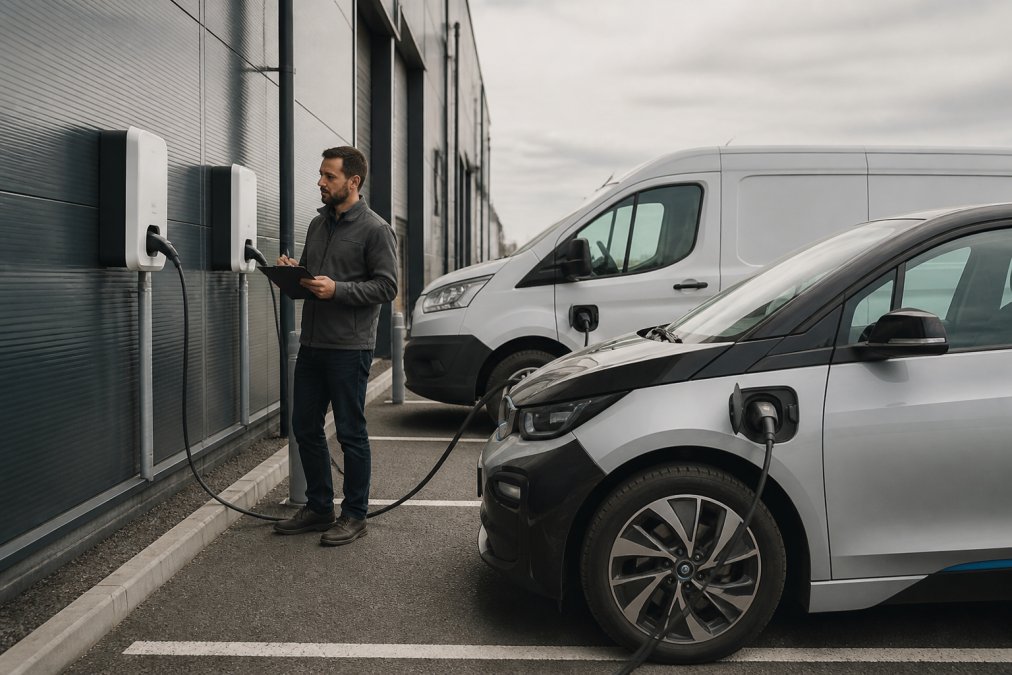
The Workplace Charging Scheme is a voucher-based grant that covers part of the purchase and installation cost of EV chargepoints for eligible organisations. It remains the most straightforward route for most businesses.
Workplace Charging Scheme eligibility
To qualify, your organisation must be registered in the UK and have a need for charging infrastructure for staff or fleet vehicles. You do not need to have an EV already, but you must demonstrate intent to support electric vehicle adoption.
2. EV Infrastructure Grant for Staff and Fleets: Best for Large-Scale Electrical Upgrades
For sites needing substantial groundwork, the EV Infrastructure Grant for Staff and Fleets fills a gap the WCS cannot. It covers the wider costs of installing multiple chargepoints, including cabling, groundworks, and building modifications.
3. Energy Saving Trust Domestic Charge Point Funding: Best for Scottish Residents
The Energy Saving Trust manages a targeted funding scheme for residents in Scotland. It provides up to £400 towards the installation of a home charging point.
4. LEVI Fund: Best for Public-Facing Charging Hubs
The Local Electric Vehicle Infrastructure (LEVI) Fund is the capital pot behind most new public charging hubs, and it is the scheme Scottish businesses most often misunderstand. It is not a grant you apply for as a company. It is a funding stream paid to local authorities, who then procure delivery partners, often private chargepoint operators, installers, or commercial landlords, to build and run the infrastructure.
How the funding actually flows
LEVI is structured as a capital contribution from central government to the local authority, which is then expected to leverage private co-investment. The working assumption across the sector is that public money covers a minority share of total project cost, with the operator or site owner funding the balance through installation, grid connection, and ongoing operation. Exact ratios vary by local authority and by the commercial case for each site, so the only reliable figure is the one in the specific tender documents.
Where it fits alongside other schemes
LEVI funding is typically stacked with the site owner's own capital and, in some cases, with the EV Infrastructure Grant for Staff and Fleets where the hub also serves staff or fleet vehicles. It is rarely used for single-business workplace charging, because the administrative overhead only makes sense at hub scale.
The trade-offs to weigh
Partnership delivery is slower than a self-funded install. Procurement rules, state aid considerations, and council approval cycles can add months. You also give up some control over pricing, branding, and operating hours, because the public funding comes with public-access conditions. For businesses whose primary need is staff charging, the Workplace Charging Scheme remains faster and simpler. LEVI earns its place when you want a public-facing hub, when your site has strategic value to the region, and when you can absorb a longer development timeline in exchange for a substantial reduction in your own capital exposure.
5. EV Chargepoint Grant for Landlords: Best for Rental Property Portfolios
Landlords sit in an awkward spot: the Workplace Charging Scheme is aimed at staff and fleet vehicles, and the domestic schemes are aimed at owner-occupiers. The EV Chargepoint Grant for Landlords exists to fill that gap, and for anyone with a portfolio of rented flats or houses it is usually the only route to funded charging.
Who actually qualifies
The eligibility test is tighter than most landlords expect. The property must be rented out, and the installation must primarily benefit the tenant or leaseholder rather than your own operational needs. You will need to evidence the tenancy arrangement and, in most cases, confirm that the tenant has requested or consented to the installation. Owner-occupied properties, holiday lets used solely by the owner, and commercial premises let to a business do not fit this scheme, they fall under different routes.
The cost picture grants do not show you
This is where most landlord guides stop, and where the real decision actually sits. The grant reduces your capital outlay, but it does nothing for the costs that follow:
- Back-end connectivity and software subscriptions. Smart chargepoints need a network connection and, in many cases, a paid management platform to handle access control, billing, and load balancing. These are recurring annual costs, not one-off.
- Servicing and warranty. Chargepoints have moving parts, seals, and electronics exposed to Scottish weather. An annual inspection is sensible, and out-of-warranty repairs are the landlord's responsibility.
- Insurance and liability. You are installing electrical equipment on a property you do not occupy. Confirm with your insurer that it is covered and that your public liability extends to a tenant using it.
- Tenant turnover and re-commissioning. Each new tenancy may need the chargepoint re-registered to a new user account, which is administrative time you should price in.
Pairing it with on-site generation
For landlords with a suitable roof, the strongest financial case comes from pairing chargepoints with solar PV and battery storage. The chargepoint grant does not fund the generation side, but the combination lets you shift tenant charging onto self-generated electricity, which reduces running costs and strengthens the property's sustainability credentials. This is the angle most landlord-focused guides miss entirely, and it is where the long-term return actually lives.
How to Apply for EV Grants in 2026
The application process varies by scheme, but the core steps remain consistent. Start by confirming your eligibility, then gather your technical specifications and quotes before submitting anything.
- Identify the right scheme for your property type and use case
- Confirm eligibility criteria for your organisation or property
- Obtain quotes from an OZEV-authorised installation contractor
- Submit your application through the relevant application portal
- Wait for approval before commissioning any work
- Complete the installation and retain all documentation
- Claim your grant within the specified timeframe
Commercial EV Charger Installation Costs and What Grants Cover
Commercial EV charger installation costs depend on several factors: the number of chargepoints, whether you need electrical upgrades, and the complexity of the groundworks. Grants cover part of this, but never all of it.
Frequently Asked Questions
Is there a grant available for commercial EV charging points?
Yes. The Workplace Charging Scheme provides up to £500 per socket towards the upfront cost of purchasing and installing chargepoints, with a maximum of 40 sockets per applicant. The EV Infrastructure Grant for Staff and Fleets offers up to £20,000 per application to cover wider costs such as cabling and groundworks. Both are open to eligible businesses, charities, and public sector organisations, and require installation by an OZEV-authorised installer.
What are the eligibility requirements for the Workplace Charging Scheme?
To qualify for the Workplace Charging Scheme, you must be a registered business, charity, or public sector organisation. You need to demonstrate a current or future need for staff or fleet charging, such as company electric vehicles. The site must have off-street parking, and installation must be carried out by an OZEV-authorised installer. You can apply for multiple sites, but the total is capped at 40 sockets per applicant.
Can businesses combine multiple EV charging grants?
In many cases, yes. The Workplace Charging Scheme covers the chargepoint hardware and installation, while the EV Infrastructure Grant for Staff and Fleets can fund the supporting infrastructure like cabling and groundworks. These are designed to work together. However, you cannot claim the same cost twice. Always check the specific rules for each scheme, as combining grants may affect the total funding you receive.
How do I apply for commercial EV infrastructure funding in 2026?
Most commercial EV charging grants in Scotland are applied for through the government's online application portal. You will need to provide details of your business, the site, and the proposed installation. For the Workplace Charging Scheme, you apply for a voucher before work begins. For the EV Infrastructure Grant, you submit a detailed application. An OZEV-authorised installer can guide you through the process and ensure your application meets all requirements.
Are there specific grants for fleet electrification in 2026?
The EV Infrastructure Grant for Staff and Fleets is specifically designed to support fleet electrification by funding the wider infrastructure costs, such as cabling and groundworks, needed to install multiple chargepoints. It provides up to £20,000 per application. This grant is ideal for businesses transitioning their commercial vehicles to electric, as it helps future-proof your site for additional chargepoints as your fleet grows.
The challenge is not finding a grant. It is matching your project to the right scheme and navigating the compliance requirements without losing time or money. Smarter Utility can help you assess your site, identify the funding you qualify for, and design a charging system that works for your fleet and your budget. Get started with Smarter Utility and take the guesswork out of your EV infrastructure project. Click HERE for your FREE SURVEY today.