 how-to
Size Your Home Battery for Future Needs: A 2026 Guide
Table of Contents
- Why Sizing Your Home Battery Correctly Matters
- Calculate Your Average Daily Household Electricity Consumption in the UK
- Factor in Future Energy Demands: EV Charging and Heat Pumps
- Adding EV Charging to Your Home Solar System
- Understand Modular Battery Storage Benefits
- Calculate Your Required Battery Capacity: The Formula
- Plan for Degradation and Long-Term Performance
- Conclusion
Last Updated: August 20, 2026
Why Sizing Your Home Battery Correctly Matters
Getting your home battery sizing right from the start isn't just about meeting today's energy needs, it's about building a system that grows with you. Most homeowners underestimate how their electricity consumption will change over the next five to ten years, then find themselves with an undersized system that can't handle an electric vehicle charger or a heat pump retrofit.
The real cost of undersizing is the expense of retrofitting or replacing equipment that should have been right the first time. Proper home battery sizing means calculating not just your current daily consumption, but projecting realistic additions: an electric vehicle, a heat pump for heating and hot water, or expanded smart home systems. This guide walks you through the sizing process step by step, showing you how to calculate your actual energy requirements and plan for the electrification changes most households will face in the coming years.
Calculate Your Average Daily Household Electricity Consumption in the UK
Your starting point is understanding how much electricity your household actually uses on an average day.
Step 1: Review Your Annual Energy Bills
Gather your electricity bills from the past twelve months and find the annual energy consumption figure, usually stated in kilowatt-hours (kWh). Divide your annual consumption by 365 to get your average daily consumption. For example, if your annual consumption is 3,650 kWh, your average daily consumption is 10 kWh per day. Write this number down, you'll need it for every calculation that follows.

Step 2: Account for Seasonal Variation
Winter months consume significantly more electricity than summer months due to increased heating demands and reduced solar generation. Most energy suppliers break down your bills by season or month. Calculate the average daily consumption for winter (typically October through March) separately from summer (April through September).
If your winter average is 12 kWh per day and your summer average is 8 kWh per day, your winter consumption is 50% higher. For battery sizing purposes, use your winter average daily consumption as your baseline. Your system needs to handle the worst case, not the average case.
Factor in Future Energy Demands: EV Charging and Heat Pumps
The electricity consumption you calculated reflects your current household. But if you're planning a home battery system, you're almost certainly planning for changes. An electric vehicle and a heat pump are the two most common additions, and they fundamentally change your energy requirements.
Electric Vehicle Charging Requirements
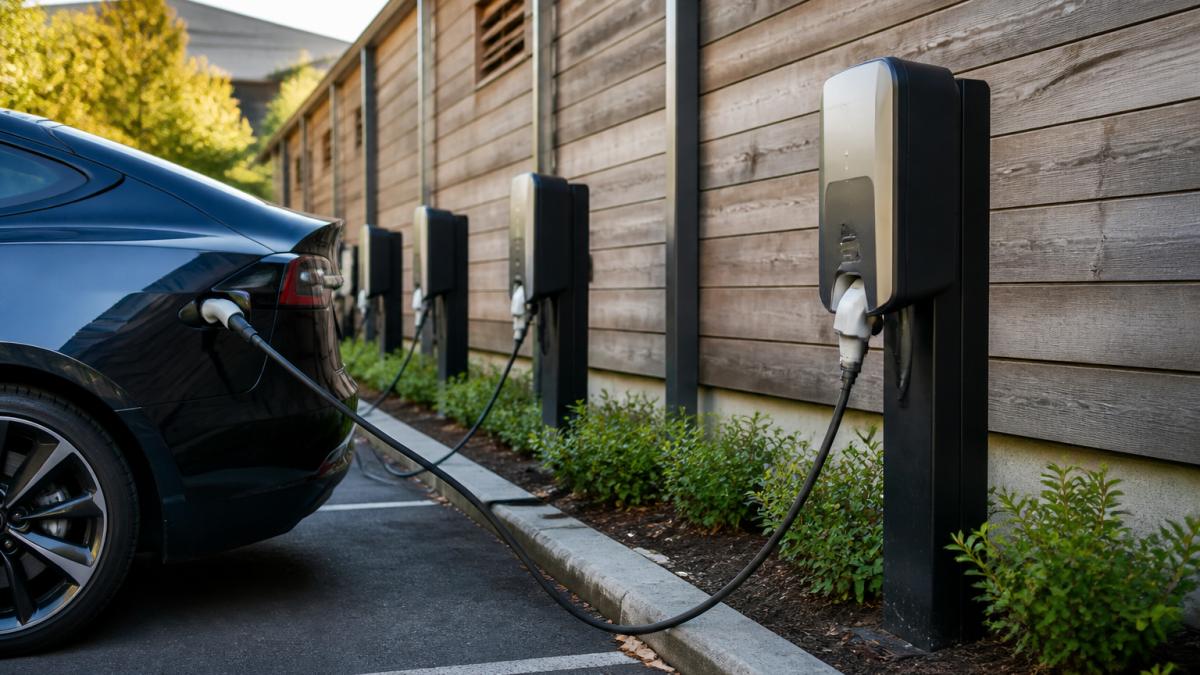
A typical home EV charger (7 kW) can deliver 50 kWh of energy in a single overnight charging session, equivalent to five days of average household consumption. If you're using a home battery to power EV charging, you need enough storage capacity to deliver that power without draining your battery completely.
The practical approach for most households is to charge during daylight hours when solar panels are generating, then use the battery for household consumption in the evening. Calculate your EV charging requirement by dividing your vehicle's battery capacity by the number of days you want to charge over. A 60 kWh EV battery charged over three days requires 20 kWh per day, a figure you must add to your household consumption when sizing your home battery.
Heat Pump Energy Consumption
A heat pump replaces your gas boiler and provides both heating and hot water. While highly efficient, heat pumps do consume electricity. A typical heat pump uses 3-5 kW of electrical input to deliver 9-15 kW of heating output, depending on outside temperature and system design.
In winter, when heating demands are highest, a heat pump can add 8-12 kWh per day to your household consumption. A household currently using 10 kWh per day in winter might use 18-22 kWh per day after a heat pump installation.
This is why sizing for future needs matters. A 10 kWh home battery chosen today becomes inadequate the moment you install a heat pump. The cost of upgrading later is far higher than the cost of installing the right capacity from the start.
Adding EV Charging to Your Home Solar System
When you combine solar panels, a home battery, and EV charging, the system dynamics change significantly. You're managing three competing demands: household consumption, battery charging, and vehicle charging.
The key is understanding your load profile: when each demand occurs and how much power it requires. Solar generation peaks at midday. Household consumption is typically lowest at midday and highest in evening and morning. Most installations use a time-of-use (TOU) tariff strategy: charge your EV during daylight hours when solar generation is high, export excess solar energy to the grid during peak generation, and use battery storage to cover evening household consumption.
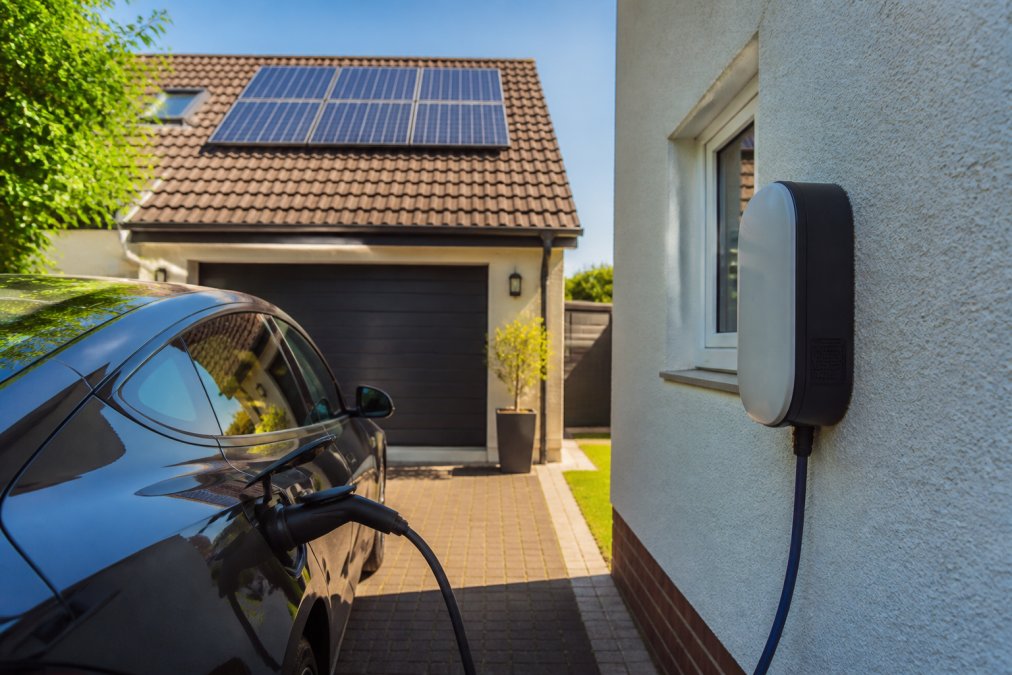
The inverter becomes critical in this setup. It must be sized to handle simultaneous demands: solar generation feeding the home, charging the battery, and powering an EV charger all at the same time. A 5 kW inverter cannot support a 7 kW EV charger drawing full power while the home consumes 2 kW and the battery charges. You need inverter capacity that matches your peak simultaneous load.
Work with an installer who understands these dynamics. Smarter Utility designs systems specifically for this scenario, ensuring your inverter, battery, and solar array are matched to your actual load profile and future additions.
Understand Modular Battery Storage Benefits
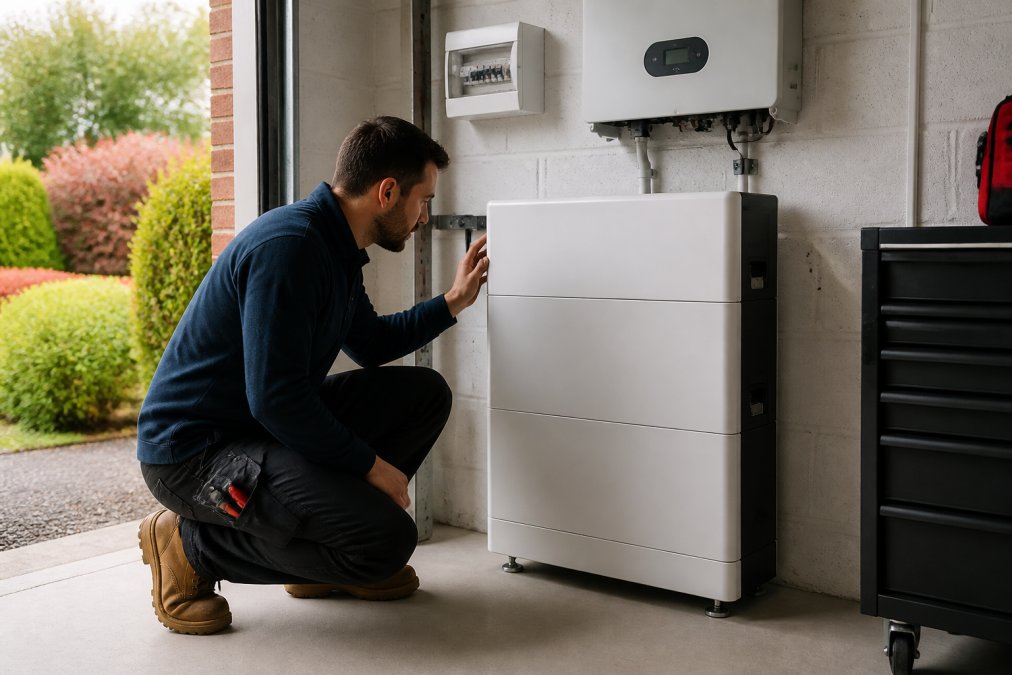
A modular battery storage system gives you flexibility that a fixed-capacity system cannot provide. Instead of committing to a single battery size upfront, you can install an initial capacity and add modules later as your needs evolve.
This approach avoids paying for capacity you don't yet need and allows you to test your system's performance with your actual load profile before investing in additional storage. The trade-off is cost per unit, modular systems typically cost slightly more per kWh than a single large battery because each module includes its own management electronics.
However, the flexibility often justifies the modest cost premium. You can start with 8 kWh of storage, monitor your actual consumption patterns, and add 7 kWh when you install an EV charger or heat pump. This staged approach also spreads capital costs across multiple years.
Verify that any modular system you're considering allows future expansion without replacing existing hardware.
Calculate Your Required Battery Capacity: The Formula
Now you have the data you need: your winter daily consumption, your projected EV charging requirement, and your heat pump energy addition. The formula for calculating required battery capacity is:
Required Battery Capacity = (Daily Consumption + Future Additions) ÷ Depth of Discharge
Click HERE for your FREE SURVEY today →
Let's work through an example:
- Winter daily household consumption: 12 kWh
- Heat pump addition (future): +8 kWh per day
- EV charging (future): +6 kWh per day
- Total projected daily consumption: 26 kWh
Your battery needs to store enough energy to cover a full day without solar generation. A 26 kWh requirement sounds straightforward, but depth of discharge changes this calculation.
Depth of Discharge and Usable Capacity
Depth of discharge (DoD) is the percentage of a battery's total capacity that can be safely discharged without damaging the battery. A battery with 80% DoD can safely discharge 80 kWh of a 100 kWh total capacity. The remaining 20% is a protective buffer that extends battery life.
If your projected daily consumption is 26 kWh and your battery has 80% usable capacity, you need a total capacity of 26 ÷ 0.80 = 32.5 kWh. This is why understanding DoD matters, a 30 kWh battery with 80% DoD provides only 24 kWh of usable storage.
Battery Chemistry: Lithium-Ion vs. LFP
Lithium-ion batteries with nickel-based cathodes (NCA or NMC chemistry) have been the standard for residential storage. They offer high energy density and well-established field data on long-term performance.
Lithium iron phosphate (LFP) chemistry has become increasingly common. LFP batteries tolerate higher depth of discharge (90-95% vs. 80-85%), meaning more usable capacity from the same total capacity. They also tolerate more charge cycles, often reaching 8,000-10,000 cycles before degradation becomes significant, compared to 5,000-8,000 cycles for nickel-based lithium-ion.
For home battery sizing, LFP's higher DoD is advantageous. If you're planning a 26 kWh daily requirement, an LFP system might need 27-28 kWh total capacity (at 95% DoD), while a nickel-based lithium-ion system would need 32-33 kWh total capacity (at 80% DoD).
Cost per kWh of usable capacity is increasingly similar between the two chemistries. LFP's lower total capacity requirement often makes it the more economical choice.
Plan for Degradation and Long-Term Performance
Battery degradation is inevitable. Lithium-ion batteries typically degrade at 0.5-1% per year under normal use conditions. LFP batteries might degrade at 0.3-0.5% per year. After ten years, a battery that started at 100% capacity might be at 90-95% capacity.
If you size your battery to exactly meet your current needs, you'll find it undersized within five years. The solution is to oversize your battery slightly to account for degradation. Add 10-15% to your calculated capacity requirement. If your calculation shows you need 30 kWh, install 33-35 kWh. This buffer ensures your system remains adequate even after a decade of use.
A modular system allows you to add capacity as degradation occurs, extending the life of your installation. You might start with 28 kWh, then add 5 kWh after seven years when degradation becomes noticeable.
Monitor your battery's actual performance against its rated specifications. Most modern batteries include monitoring systems that report state of health. If your battery is degrading faster than expected, it may indicate a problem with your installation, incorrect charging parameters, or a faulty battery module.
Sizing your home battery correctly means looking beyond today's consumption and planning for the electrification that's coming. An EV charger and a heat pump will fundamentally change your household's energy profile. A system sized only for current needs will be inadequate within a few years.
Start with accurate data: your actual winter daily consumption from twelve months of bills. Add realistic projections for future additions. Account for depth of discharge and battery chemistry. Build in a degradation buffer. Then work with an experienced installer who understands how solar generation, battery storage, and EV charging interact in real time.
Smarter Utility designs systems specifically for this complexity, ensuring your battery capacity, inverter sizing, and solar array are matched to your actual needs and future plans. A free home survey identifies exactly what your system requires. Smarter Utility's approach to system design ensures you get the right capacity from day one, with the flexibility to expand as your needs evolve.
| Factor | Winter Daily Consumption | EV Charging Addition | Heat Pump Addition | Total Projected Need |
|---|---|---|---|---|
| Example household | 12 kWh | +6 kWh | +8 kWh | 26 kWh |
| Battery capacity (80% DoD) | 32.5 kWh | |||
| Battery capacity (95% DoD, LFP) | 27.4 kWh | |||
| With 10% degradation buffer | 30.1 kWh (80% DoD) / 30.1 kWh (95% DoD) |
Your home battery sizing determines whether your system grows with you or becomes a constraint. The households that get this right are the ones that planned for change from the start. Those that didn't are the ones retrofitting five years later at double the cost.
According to UK government guidance on home energy storage, properly sized battery systems paired with solar generation can reduce grid demand during peak hours and improve overall energy resilience. This is why sizing matters beyond just your household, it contributes to grid stability and supports the broader transition to renewable energy.
The investment in getting your home battery sizing right upfront pays dividends for the next decade. Smarter Utility's fully accredited MCS installation team ensures your system is designed for your specific needs and future additions. Click HERE for your FREE SURVEY today and discover exactly what capacity your home requires.
Frequently Asked Questions
How do I calculate the battery capacity I need for my home?
Start with your annual energy consumption from your bills, convert to daily kWh, then multiply by your desired days of autonomy (typically 1-3 days). Add 20-30% for future growth. Divide by your battery's depth of discharge (DoD) rating, usually 90% for lithium-ion and 95% for LFP, to get the actual capacity needed. For example, if you use 10 kWh daily and want 2 days of storage with 90% DoD, you need approximately 22-24 kWh of installed capacity.
Does adding an electric vehicle change the battery size I need?
Yes, significantly. Most EVs require 7-10 kWh per 100km of charging. If you charge at home three times weekly, that's roughly 20-30 kWh extra per week. This means you should increase your battery capacity by 3-5 kWh to offset daily EV charging demands, especially if you're using solar generation to cover it. Without this buffer, you'll rely more on grid electricity during peak-rate periods.
Should I size my battery based on current usage or future plans?
Size for future needs. If you're planning to add EV charging, install a heat pump within five years, or expand your home, design your system with that growth in mind. Modular battery storage systems allow you to add capacity later, but sizing correctly upfront avoids inefficiency and prevents undersizing that forces grid reliance. A system designed with 20% headroom for future electrification typically costs less than retrofitting later.
Can I expand my battery storage system later?
Yes, if your inverter and electrical infrastructure support it. Modular battery storage benefits include scalability, most modern lithium-ion and LFP systems allow you to add modules without replacing the entire setup. However, your inverter must have spare capacity, and your home's electrical panel must accommodate the additional load. This is why professional system design at the outset matters: a qualified installer will ensure your setup can grow with your needs.
This article was written using GrandRanker