 how-to
How to Size Home Battery Storage Correctly
Table of Contents
- Understanding Your Daily Electricity Consumption
- What Is Depth of Discharge (DoD) and Why It Matters
- Calculating Usable vs. Nameplate Capacity
- Using a Solar Battery Storage Sizing Calculator
- Matching Battery Size to Your Solar Panel Output
- Accounting for Evening and Overnight Energy Usage
- Planning for Future Energy Needs: EVs and Heat Pumps
- Conclusion
Last Updated: August 24, 2026
Understanding Your Daily Electricity Consumption
Sizing home battery storage correctly starts with one fundamental question: how much electricity does your home actually use? Your electricity bill holds the answer. Look for your average daily consumption in kilowatt-hours (kWh). If you use 15 kWh daily, that's your baseline.

Most people confuse average daily consumption with peak demand. Your home might draw 5 kW at peak, but that doesn't mean you need 5 kWh of storage. Storage is about total energy over time, not instantaneous power.
To calculate accurately, add up your monthly kWh usage from the past year and divide by the number of days. This accounts for seasonal variation. Many homes in Scotland see consumption rise 40-50% during winter compared to summer (gov.uk).
What Is Depth of Discharge (DoD) and Why It Matters
Depth of discharge (DoD) is the percentage of a battery's total capacity you can safely use before recharging. Lithium-ion batteries last longest when you use 80% of their capacity and leave 20% untouched (peer-reviewed research). Some systems allow 90% DoD, but this shortens lifespan.
If your battery has 10 kWh of nameplate capacity but operates at 80% DoD, you actually have 8 kWh of usable energy. That 2 kWh buffer protects the battery's longevity.
Why does this matter for sizing? Because when you calculate how much storage you need, you're calculating usable capacity, not nameplate capacity. If your home uses 12 kWh daily and you want one full day of autonomy, you can't simply buy a 12 kWh battery. At 80% DoD, you'd need a 15 kWh nameplate battery to get 12 kWh of usable storage.
Lithium iron phosphate (LFP) batteries can typically handle 90-95% DoD safely (peer-reviewed research). Traditional lithium-ion chemistries usually max out at 80%. When comparing quotes, always clarify which figure the installer is quoting.
Calculating Usable vs. Nameplate Capacity
Your battery's nameplate capacity is what the manufacturer lists. Your usable capacity is what you can actually draw without damaging the battery.
Formula: Usable Capacity = Nameplate Capacity × DoD Percentage
If you have a 12 kWh battery with 80% DoD:
- Usable capacity = 12 × 0.80 = 9.6 kWh
If you have a 12 kWh battery with 90% DoD:
- Usable capacity = 12 × 0.90 = 10.8 kWh
LFP batteries give you more usable capacity from the same nameplate size.
Work backwards from your actual need. If your home uses 18 kWh daily and you want full autonomy for one day, you need 18 kWh of usable capacity. Working at 80% DoD:
- Required nameplate capacity = 18 ÷ 0.80 = 22.5 kWh
Most homes don't need full daily autonomy. If your evening and overnight consumption is 8 kWh and you want 2 days of backup for cloudy weather, you need 16 kWh of usable capacity:
- Required nameplate capacity = 16 ÷ 0.80 = 20 kWh
Understanding the maths yourself prevents costly mistakes. You'll know immediately if a quote seems wrong.
Using a Solar Battery Storage Sizing Calculator
A solar battery storage sizing calculator automates the nameplate-to-usable conversion and accounts for multiple variables. You input your consumption data and the calculator outputs the recommended battery size.
These tools typically ask for:
- Daily energy consumption
- Desired days of autonomy
- Depth of discharge
- Peak load
- Solar generation capacity
The calculator then recommends a nameplate capacity that accounts for all these factors. The best calculators show both nameplate and usable capacity, preventing confusion between the two.
The limitation of calculators is they work from assumptions. Professional installers use calculators as a starting point, then adjust based on your specific circumstances: roof orientation, shading, local weather patterns, and future plans.
Matching Battery Size to Your Solar Panel Output
If you're installing battery storage alongside solar panels, the battery size must align with your solar generation capacity.
Solar panels generate power during daylight hours. In summer, a 5 kW solar array might generate 25 kWh on a clear day. In winter, the same array might generate only 8 kWh. Your battery needs to be large enough to capture excess solar energy on sunny days and store it for evening use.
Click HERE for your FREE SURVEY today →
If your solar array generates 20 kWh on a typical sunny day and your home uses 15 kWh, you have 5 kWh of surplus to store. A 5 kWh battery would capture this perfectly. A 3 kWh battery wastes 2 kWh of solar generation daily.
Round-trip efficiency also matters. Lithium-ion batteries typically achieve 85-90% round-trip efficiency, meaning 10-15% of energy is lost in the charge-discharge cycle. If you generate 20 kWh and want to store it, you'll actually store about 17-18 kWh usable energy. Oversizing your solar array slightly (10-15% larger than your battery capacity) compensates for efficiency losses and accounts for cloudy days.
Accounting for Evening and Overnight Energy Usage
Most homes draw far more electricity during evening and overnight hours than during the day. This is where battery storage delivers real value.
Calculate your evening and overnight consumption separately from daytime use. If your total daily consumption is 18 kWh but only 5 kWh occurs between 7am and 6pm, then 13 kWh happens between 6pm and 7am. That 13 kWh is what your battery needs to cover.
Your load profile, the pattern of when you use electricity, determines your actual battery requirement. Evening peak loads matter too. If your home draws 3 kW at 6pm, your battery needs sufficient power rating to deliver that instantly.
Time-of-use tariffs are changing how people think about battery sizing. If your electricity rate is higher during evening peak hours and cheaper at night, your battery becomes more valuable. You charge it during cheap hours and discharge it during expensive hours, reducing your bill.
Winter nights are longer and darker. Your battery needs to sustain you from sunset to sunrise without solar generation. A properly sized system accounts for your worst-case month, not your average month.
Planning for Future Energy Needs: EVs and Heat Pumps
If you're planning to buy an electric vehicle or install a heat pump in the next 3-5 years, your battery sizing should account for this now. Adding these loads later means either accepting insufficient capacity or replacing your entire system.
An EV charger adds substantial overnight load. Charging a typical EV requires 40-60 kWh. Most owners charge 20-30 kWh per night, nearly doubling evening energy requirements.
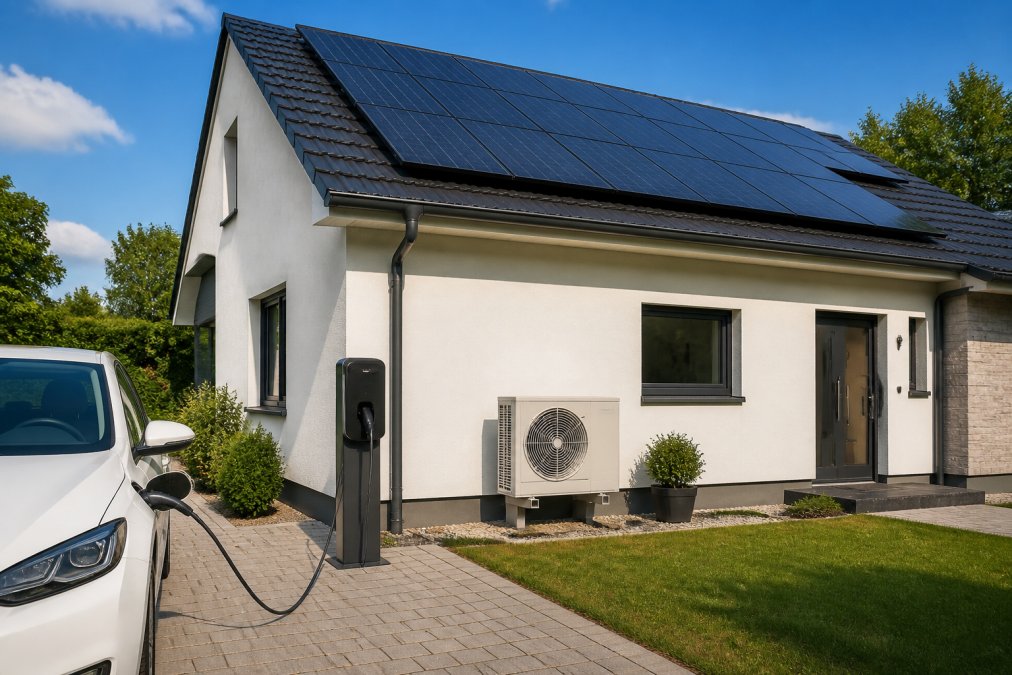
Heat pumps add winter heating load. A heat pump running during cold weather can add 10-15 kWh daily. Combined with higher baseline heating needs in winter, this creates significant seasonal surge.
On a winter evening when you're charging your EV and running your heat pump, your instantaneous power demand could reach 6-8 kW. Your battery needs sufficient power rating to handle this. Your solar array generates almost nothing in winter, so your battery becomes your primary energy source.
A 10 kWh battery sized for today's consumption becomes inadequate when you add an EV and heat pump. Upgrading later is expensive. Sizing correctly now costs less and performs better.
Smarter Utility's design process includes questions about your future plans because these decisions affect sizing today. A free survey allows installers to understand not just your current needs but your trajectory, ensuring your system grows with confidence.
Conclusion
Sizing home battery storage correctly requires understanding your consumption, accounting for battery chemistry limitations, and planning for future loads. Start with your actual electricity bill, calculate your evening and overnight usage separately, and apply the depth of discharge factor to convert nameplate capacity into usable storage.
The most common mistake is undersizing based on average consumption alone. Your battery needs to handle seasonal peaks, future EV charging, and potential heat pump installation.
Smarter Utility's fully accredited design team conducts a free, no-obligation home survey to assess your specific situation, roof orientation, consumption patterns, future plans, and local weather, ensuring your battery system is tailored precisely to your needs.
Click HERE for your FREE SURVEY today and let our team design a battery storage system that works for you, not against you.
Frequently Asked Questions
How do I calculate my daily household electricity consumption?
Start by reviewing your electricity bill, which shows your kWh usage over three months. Divide this by the number of days to find your average daily consumption. For example, if your bill shows 750 kWh over 90 days, your daily average is roughly 8.3 kWh. Cross-check by noting high-use appliances: heating, cooling, and electric cooking typically account for 50-70% of daily consumption. This figure forms the foundation for sizing your battery storage system correctly.
What is the difference between usable and nameplate battery capacity?
Nameplate capacity is the total energy a battery can store (often listed in kWh). Usable capacity is what you can actually draw out safely without damaging the battery. A 10 kWh lithium-ion battery with an 80% depth of discharge (DoD) has only 8 kWh usable. Manufacturers limit DoD to extend battery life and maintain performance over thousands of charge cycles. Always size your battery based on usable capacity, not nameplate, to avoid undersizing your system.
Should I get a 5kW or 10kW battery for my home?
This depends on your daily consumption, solar production, and backup power needs. A 5 kWh battery suits homes consuming 8-12 kWh daily with good solar generation. A 10 kWh battery works better for higher consumption (15+ kWh daily), homes with evening peak loads, or those planning to add an EV charger or heat pump. Calculate your usable capacity by applying your battery's depth of discharge, then ensure it covers 80-100% of your daily evening and overnight usage. A professional survey will determine the right size for your specific needs.
How does seasonal variability affect battery sizing?
Solar generation drops significantly in winter months, meaning your battery must store enough energy to cover longer evening periods and lower daily production. In summer, a smaller battery may suffice because solar output peaks and evening demand is shorter. To future-proof correctly, size your battery for winter performance, typically requiring 20-30% more capacity than summer calculations suggest. This ensures year-round energy independence and prevents undersizing that leaves you reliant on grid power during darker months.
This article was written using GrandRanker