 how-to
How to Find Reliable Solar Installers: 2026 Guide
Table of Contents
- Why Choosing a Reliable Solar Installer Matters
- MCS Certified Solar Installers: The Non-Negotiable Starting Point
- How to Verify Installer Credentials Before You Commit
- Questions to Ask Solar Installers Before Hiring
- Comparing Solar Panel Installation Quotes
- Post-Installation Support and Grid Connection
- Frequently Asked Questions
Last Updated: October 1, 2026
Why Choosing a Reliable Solar Installer Matters
Choosing the wrong solar installer costs far more than money. It costs time, roof integrity, and any chance of a decent return on your investment, which is why reliable solar installers matter so much.
The Real Cost of a Bad Installation
A poorly installed photovoltaic system can underperform for years before anyone notices. By then, the installer is often unreachable, and the warranty is worth nothing.
Common failures we see include undersized inverters, incorrect roof mounting that voids tile warranties, and systems wired so badly they fail electrical inspection. Fixing these problems typically costs more than the original installation.
The real damage is invisible: a system producing 30% less than promised still generates bills you weren't expecting.
MCS Certified Solar Installers: The Non-Negotiable Starting Point
MCS certification is the single most important credential to verify. It proves the installer meets industry standards for design, installation, and safety.
Without MCS certification, you cannot access smart export payments from your energy supplier. You also lose access to most warranty protections and building insurance coverage.
Other Accreditations That Signal Quality
TrustMark registration shows the business has been vetted for consumer protection standards. RECC membership provides additional dispute resolution if things go wrong.
MCS certified installer directory lets you search and verify any installer's credentials directly.
How to Verify Installer Credentials Before You Commit
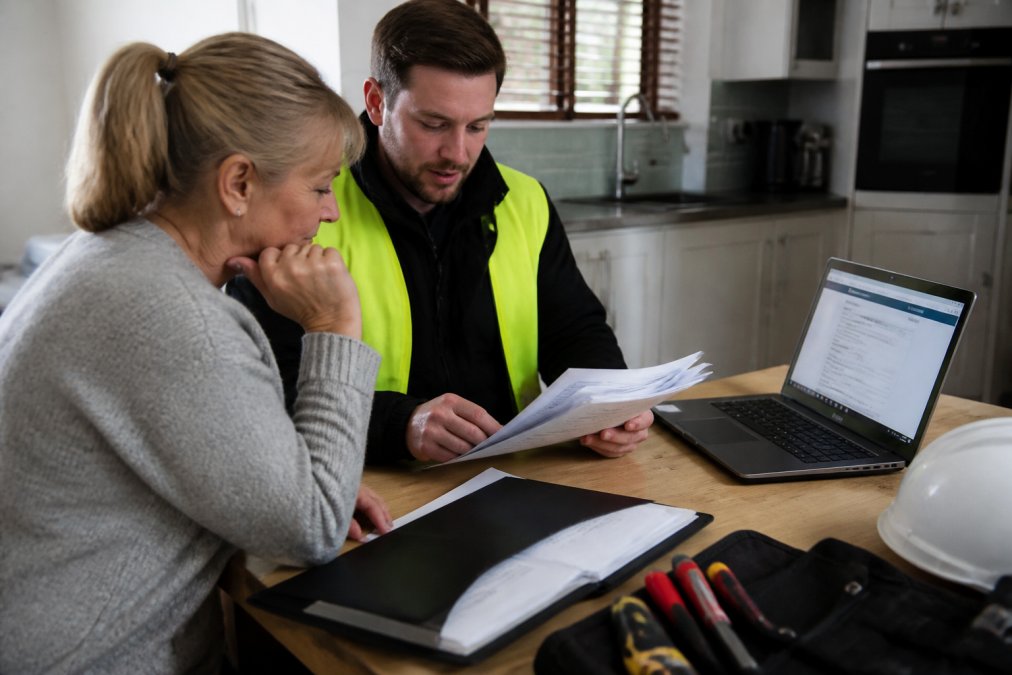
Verification takes about fifteen minutes and can save you thousands. The goal is not to collect paperwork but to confirm that each claim an installer makes can be checked independently, against a live source, before any money changes hands.
Step 1: MCS Registration Number
Ask for the MCS registration number in writing, then search it yourself on the MCS certified installer directory. The number should return a current certificate with an expiry date and a scope that matches the work being quoted. A common pattern is for a business to hold MCS certification for one technology (say, solar thermal) but quote for another (solar PV), the directory entry will show which is which.
Step 2: TrustMark and RECC Membership
TrustMark registration confirms the business has been vetted against consumer-protection standards, including a complaints process and a code of conduct. RECC membership adds a formal dispute-resolution route if something goes wrong after installation. Both are searchable on their respective registers, so treat a logo on a website as a prompt to check, not as proof.
Step 3: Insurance
Ask for a current certificate of public liability insurance and check the policy is in the trading name of the business quoting, not a parent company or a broker. Most domestic installations are covered by policies in the £2 million to £5 million range. If the certificate is more than twelve months old, request the renewed version.
Step 4: Who Actually Does the Work
Ask directly whether the installation will be carried out by directly employed electricians or by subcontractors. Both models can be legitimate, but the answer changes who is responsible if something fails. If subcontractors are used, ask for the name of the electrical contractor and confirm they hold the relevant competent-person registration. Verifying these credentials independently provides an extra layer of security, as the process of finding reliable electricians remains a critical step in ensuring your home energy system meets all safety and performance standards.
Step 5: References You Can Actually Visit
Request two recent local installations and, where possible, visit one. A five-minute conversation with a previous customer about how the installer handled snags, handover, and aftercare tells you more than any glossy case study.
Click HERE for your FREE SURVEY today →
What a Failed Check Looks Like
- The registration number returns no result, or returns a different business name
- The certificate expired more than a few weeks ago and no renewal is shown
- The insurance certificate names a company that does not match the quote
- The installer becomes evasive when asked who employs the electricians
- References are offered only as written testimonials with no contact details
Any one of these is a reason to pause. Two or more is a reason to walk away.
Questions to Ask Solar Installers Before Hiring
The right questions separate competent installers from salespeople. Ask these before any site survey.
- Will you provide a shading analysis and roof orientation report?
- What size system do you recommend, and why that size specifically?
- Who handles DNO approval and grid connection paperwork?
- What happens if the system underperforms your performance guarantee?
- Are you subcontracting any part of the installation?
- What does your aftercare support include in year two and beyond?
Technical Red Flags in Quotes
A quotation without a shading analysis is guesswork. If the installer hasn't measured your roof orientation or checked for obstructions, the performance estimate means nothing.
Comparing Solar Panel Installation Quotes
Comparing quotes properly means normalising what is included before comparing headline prices. A cheaper quote often excludes scaffolding, electrical upgrades, or the DNO application fee, so the only fair comparison is a line-by-line one against a fixed checklist.
| Quote Element | What to Check | Why It Matters |
|---|---|---|
| System size | kWp and annual output estimate | Determines your payback period |
| Panel and inverter models | Specific brands and models | Quality varies enormously |
| Shading analysis | Included or not | Affects real-world performance |
| DNO approval | Who handles it and whether the fee is included | Required before grid connection |
| Scaffolding | Included or extra | Can add significant cost |
| Workmanship warranty | Length and terms | Protects installation quality |
| Deposit and payment schedule | Amount and milestones | Determines your exposure if the installer fails |
What a Bad Quote Looks Like
Most guides tell you what a good quote contains. Fewer explain how to spot a weak one early, which is where the real money is saved. A quote is a red flag if it:
- Gives a total price with no itemised panel, inverter, or mounting system models
- States an annual output figure without a shading analysis or roof orientation measurement
- Specifies inverter capacity with no explanation of how it matches the array
- Omits the DNO application fee, scaffolding, or any electrical remedial work
- Uses vague phrases such as "premium panels" or "industry-leading inverter" instead of model numbers
- Quotes a workmanship warranty in years but not in what is actually covered
Insurance and Deposit Protection
Never pay more than a small deposit upfront. A common approach is staged payments tied to milestones: deposit on order, balance on delivery, further payment on installation complete, and a final retention released after sign-off and handover documentation.
Reading the Numbers, Not the Headlines
Two quotes for the same roof can differ by thousands of pounds without either being dishonest. The differences usually sit in panel tier, inverter type (string versus hybrid), mounting system, and whether monitoring hardware is included. Ask each installer to explain, in writing, why their specification is appropriate for your roof and consumption pattern.
Post-Installation Support and Grid Connection
Reliable solar installers stay reachable after commissioning. The installation isn't finished when the panels go up; it's finished when the system is connected, monitored, and performing as promised.
DNO Approval and Aftercare
Your installer must apply to your Distribution Network Operator for grid connection approval. This is a legal requirement before your system can export electricity.
Frequently Asked Questions
What accreditations should a reliable solar installer hold?
At minimum, an installer should be MCS certified, which proves their products and workmanship meet industry standards and allows you to access Smart Export Guarantee payments. Look for TrustMark registration for consumer protection, and check membership of a trade association such as RECC. For electrical work, they should be Part P registered. These credentials are verifiable through official online databases, so always confirm them yourself rather than relying on a logo in a brochure.
How can I verify if a solar installer is MCS certified?
Visit the MCS certified installer directory online and search by company name or postcode. The database shows the installer's certification status, the technologies they are approved for, and their certification body. Check that the certificate is current and covers the specific work you need, such as solar PV or battery storage. If a company claims MCS certification but does not appear in the directory, treat that as a serious warning sign and look elsewhere.
How do I spot a rogue solar trader?
Warning signs include unsolicited doorstep approaches, pressure to sign on the day, requests for large upfront cash deposits, no physical business address, and quotes that seem unusually cheap compared to others. Rogue traders often subcontract installation to unqualified crews and disappear when problems arise. Always check for MCS and TrustMark registration, ask for recent local references, and never pay more than a small deposit before work begins. If something feels rushed or vague, walk away.
Why is it important to choose a local solar installer?
A local installer can visit your property for a proper site survey, assess roof orientation, shading, and structural suitability in person, and provide faster aftercare if something goes wrong. They are also more likely to understand regional weather patterns and grid connection processes. National companies may subcontract to local crews, which can create accountability gaps. Choosing a local, accredited installer gives you a named contact who stands behind the workmanship guarantee.
Finding reliable solar installers comes down to verification, not trust. Check MCS certification, ask hard questions, and never accept vague quotes. Smarter Utility is Scotland's leading installer of solar PV, battery storage, and EV charging, offering free home surveys and fully accredited design and installation. Get started with Smarter Utility and make an educated decision about your solar investment.