 ultimate-guide
Benefits of Vehicle-to-Grid Charging Explained
Table of Contents
- What Are the Benefits of Vehicle-to-Grid Charging?
- How Does Vehicle-to-Grid Charging Work?
- Lower Energy Bills and New Revenue Streams
- Supporting Renewable Energy and Grid Stability
- V2G Compatible Cars: What You Can Buy Today
- V2G Charger Cost and Realistic Household Economics
- EV Battery Degradation from V2G: What the Evidence Says
- Frequently Asked Questions
Last Updated: October 17, 2026
What Are the Benefits of Vehicle-to-Grid Charging?
Vehicle-to-grid charging lets an electric vehicle push stored electricity back into the grid, turning a parked car into a revenue-generating energy asset. The benefits fall into two camps: savings and income for the driver, and flexibility for the network.
Here is the distinction that matters. A consumer benefit is money in your pocket or power in your home during an outage.
This guide separates them properly, covers how vehicle-to-grid charging works, what compatible cars exist, what a charger costs, and what the evidence says about battery wear.
Consumer Benefits vs Grid Benefits
Consumer benefits are direct and measurable: lower bills, export income, and backup power. Grid benefits are systemic: frequency regulation, peak shaving, and absorbing intermittent renewable generation.
The catch is that grid benefits only become consumer benefits if a tariff or aggregator passes value through. A car capable of exporting power earns nothing if your supplier has no export mechanism in place.
How Does Vehicle-to-Grid Charging Work?
Vehicle-to-grid charging works through a bidirectional charger that converts direct current from the EV battery into alternating current the grid can accept, and back again. The charger communicates with a control system that decides when to import and when to export.
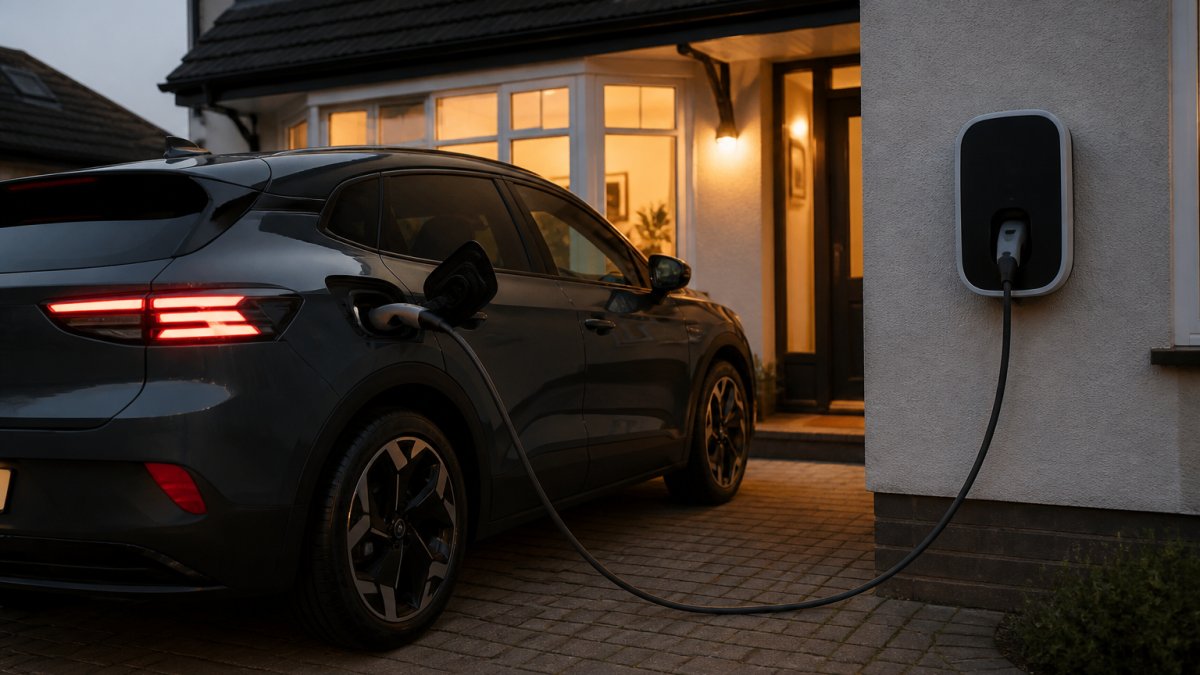
The process depends on three elements working together:
- A compatible vehicle with bidirectional capability enabled in software
- A bidirectional charge point, which costs more than a standard unit
- An aggregator or supplier agreement that pays for exported energy
The Role of Grid Balancing and Frequency Regulation
Grid balancing keeps supply and demand matched second by second. Frequency regulation is the fastest layer of that balancing, and it is where parked EVs hold real value: a battery can respond in milliseconds, faster than most conventional generation.
That speed is why network operators take V2G seriously. But participation requires certification, metering, and a contract. Without those, a bidirectional charger is just an expensive wall box.
Lower Energy Bills and New Revenue Streams
Lower bills come from two mechanisms: charging when electricity is cheap and exporting when it is expensive. Revenue comes from being paid for that export, either through a supplier tariff or an aggregator.
Peak Shaving, Off-Peak Charging and Time-of-Use Rates
Peak shaving means trimming demand during the most expensive hours. Off-peak charging means filling the battery overnight when rates are lowest. Time-of-use tariffs make both worthwhile by pricing electricity differently across the day.
The practical effect is straightforward: charge at the cheap rate, discharge during the expensive window, and let the difference pay for the hardware over time. Whether that maths works depends entirely on the gap between your peak and off-peak rates.
| Benefit | What drives it | What you need |
|---|---|---|
| Lower bills | Off-peak charging, peak avoidance | Time-of-use tariff |
| Export income | Paid export of stored energy | Supplier or aggregator agreement |
| Backup power | Discharging to the home | Vehicle-to-home capability |
| Grid support | Frequency and demand response | Certified participation |
Supporting Renewable Energy and Grid Stability
Renewable integration is where V2G earns its keep at system level. Solar and wind are intermittent, and storage smooths that intermittency. A fleet of plugged-in EVs is distributed energy storage that already exists, needs no new land, and is idle most of the day.
Grid congestion is the second pressure point. Where local networks are constrained, exporting from a parked car can relieve load without new cabling. The National Grid ESO's electricity system operator guidance sets out how flexibility services are procured and what participation involves.
V2G Compatible Cars: What You Can Buy Today
V2G compatible cars remain a short list, and availability shifts as manufacturers enable features by software. The safest approach is to confirm bidirectional capability for your specific model and trim with the manufacturer before ordering.
Broadly, compatibility depends on:
- Whether the vehicle supports bidirectional charging at all
- Whether the function is enabled for your market
- Whether the charger and vehicle use a compatible protocol
V2G Charger Cost and Realistic Household Economics
V2G charger cost sits well above a standard home charge point because the hardware is more complex and installation often needs upgrading. We do not quote a single figure without a survey, because the honest answer depends on your supply capacity, cable run, and existing consumer unit.
A bidirectional unit itself typically costs several times a standard 7 kW smart charge point, and installation commonly adds more again where the consumer unit, earthing arrangement or supply capacity needs work. Treat any advertised "from" price as hardware only until a survey says otherwise.
Click HERE for your FREE SURVEY today →
The four variables that decide payback
The economics rest on four variables, and each one can kill the case on its own:
- The capital cost of charger and installation
- The gap between peak and off-peak electricity prices
- How often the car is actually plugged in
- Whether an export or flexibility payment is available
A car that sits on the driveway plugged in every night is a far better V2G candidate than one that leaves at dawn and returns at nine.
A worked example, with the assumptions stated
If the peak-to-off-peak spread is, say, 20p per kWh, and the system shifts 10 kWh a night within that spread, the gross value is about £2 a night, or roughly £10 a week, before losses.
Run that arithmetic honestly and you can see why payback is measured in years, not months, and why a wide tariff spread and frequent plug-in matter more than a headline export rate.
Peak shaving, off-peak charging and time-of-use rates
Peak shaving means trimming demand during the most expensive hours. Off-peak charging means filling the battery overnight when rates are lowest. Time-of-use tariffs make both worthwhile by pricing electricity differently across the day.
The practical effect is straightforward: charge at the cheap rate, discharge during the expensive window, and let the difference pay for the hardware over time. Whether that maths works depends entirely on the gap between your peak and off-peak rates, and on how much of the battery you are willing to commit each night.
| Benefit | What drives it | What you need |
|---|---|---|
| Lower bills | Off-peak charging, peak avoidance | Time-of-use tariff |
| Export income | Paid export of stored energy | Supplier or aggregator agreement |
| Backup power | Discharging to the home | Vehicle-to-home capability |
| Grid support | Frequency and demand response | Certified participation |
The costs the headline figures leave out
Three costs are routinely missing from consumer-facing V2G claims. Third, opportunity cost: money spent on a bidirectional charger is money not spent on solar, home battery storage or a well-designed standard charge point, each of which may deliver a more certain return for a typical household.
That is why we recommend treating V2G as a decision to make after a proper survey of your supply, tariff, and driving pattern, not before.
EV Battery Degradation from V2G: What the Evidence Says
Battery degradation from V2G is the question that decides most purchases, and the honest answer is that the evidence is still developing. What is clear is that degradation depends on cycle depth, temperature, and how hard the battery is worked. The useful move is to separate what is well understood from what is genuinely uncertain, and to check your warranty before you rely on either.
What drives wear in a lithium-ion pack
Lithium-ion cells age through calendar time and through cycling, and the two interact. The factors that matter most are:
- Depth of discharge. Many shallow cycles are generally gentler than fewer deep ones, which is why a managed export window that nibbles at the top of the battery is different from draining it to empty every evening.
- State of charge. Sitting at a very high or very low state of charge for long periods stresses cells. A V2G schedule that leaves the pack around the middle is kinder than one that parks it full and exports hard.
- Temperature. Heat accelerates ageing, and repeated fast charge or discharge adds heat. A charger that manages current and a car that thermal-manages its pack both help.
- Throughput. Every kilowatt-hour in and out is energy cycled through the cells. Over a year, a heavily used V2G car simply cycles more than one that is only charged.
Managed versus unmanaged exporting
Shallow, managed cycles under an aggregator's control are gentler than repeated deep discharges. Unmanaged exporting is where risk sits: a driver manually draining the pack during peak windows, in hot weather, with no regard to state of charge, is doing the kind of cycling that the evidence links to faster capacity loss.
The practical distinction is control. An aggregator that respects a minimum state of charge, limits depth per event, and avoids exporting when the pack is hot is doing something quite different from a household treating the car as a free battery.
What the warranty actually says
Check your warranty terms explicitly: some manufacturers exclude degradation linked to bidirectional use, and that clause matters more than any headline claim. Look for three things in the wording:
- Whether bidirectional charging is listed as permitted use at all
- Whether any capacity-loss threshold is measured differently for V2G vehicles
- Whether the warranty is voided by export, or merely by unapproved hardware
If the clause is silent, get the answer in writing from the manufacturer before you buy the charger. A warranty that quietly excludes V2G wear turns an apparent saving into a liability.
How to read the evidence sensibly
Most practitioners find that managed, modest V2G use sits within the wear a pack would experience anyway from ordinary charging and driving, while aggressive, unmanaged cycling adds measurable risk. That is a qualified conclusion, not a guarantee, and it is why we treat V2G as a decision to make after a proper survey of your supply, tariff, and driving pattern, not before. A free, no-obligation survey from Smarter Utility covers exactly that, and our accredited team designs the system around your actual usage rather than a generic template.
Frequently Asked Questions
What are the main benefits of vehicle-to-grid charging?
Vehicle-to-grid charging lets an EV battery store and export electricity, so owners can charge on cheaper off-peak tariffs and sell power back during peak demand. It supports grid stability, helps balance intermittent renewable generation, and provides backup power during outages. For households with a suitable charger and compatible car, the main draw is lower electricity costs and a new revenue stream, though earnings depend on your supplier's tariffs and how often the car is plugged in.
Does vehicle-to-grid charging affect battery life?
Evidence so far suggests managed V2G use has a modest effect on EV battery degradation, because modern batteries are built for thousands of charge cycles and V2G systems typically keep the battery within a safe state-of-charge window. The bigger risk is unmanaged, high-frequency cycling in hot conditions. Check your manufacturer's warranty terms before enrolling: some brands explicitly cover V2G, while others restrict it, so confirm in writing before you commit.
Which electric vehicles support vehicle-to-grid charging?
The list of V2G compatible cars is still short and varies by market. Models built on platforms with bidirectional capability, combined with a CHAdeMO or CCS connector and manufacturer approval, are the ones to look for. Availability also depends on your energy supplier and charger supporting V2G, not just the car. Ask the dealer for written confirmation that V2G is enabled for your specific model and software version before buying.
How much does a V2G charger cost, and is it worth it?
V2G charger cost depends on the unit, installation complexity and any electrical upgrades your property needs, so get a tailored quote rather than relying on generic figures. Whether it pays back depends on your mileage, tariff, export rates and how long the car sits plugged in. A free home survey is the practical first step: it confirms whether your supply, parking position and car are suitable before you spend anything.