 How-to
Will a Home Battery Keep Your Lights On in a Power Cut?
Last Updated: November 21, 2026
Quick Summary
A home battery backup system keeps your lights on during a power cut only if it is built for islanded operation, which lets it disconnect from the grid and supply your home independently. Standard grid-tied batteries shut down when the grid fails, so you need backup-capable equipment and a qualified installer.
- Standard grid-tied batteries shut down during outages for safety, protecting engineers working on the street.
- A backup gateway or changeover switch isolates your home from the grid and routes power to selected circuits.
- Solar panels alone are unlikely to power your home in an outage, so treat them as a top-up.
- Choose essential appliances and plan by circuit, keeping high-demand items like showers and cookers off the backup circuit.
- Add the daily energy of essential loads, then add a 20% margin when sizing battery capacity.
Table of Contents
- Why Most Home Batteries Shut Down When the Grid Fails
- Home Battery Backup: What Equipment You Actually Need
- Can Solar Panels Work During a Power Cut?
- Home Battery Backup System for Essential Appliances
- How Long Does a Home Battery Last During a Power Cut?
- Home Battery Storage Capacity Calculator: Sizing Your Backup
- Booking a Backup-Ready Survey for Your Home
- Frequently Asked Questions
Why Most Home Batteries Shut Down When the Grid Fails
A home battery will not keep your lights on in a power cut unless it is built and wired for that job.
Many Scottish homeowners assume any battery connected to solar will carry on working through an outage. In most cases it will not, unless the system includes specific backup capability.
Standard batteries and backup batteries are not the same thing. A standard grid-tied battery needs the grid to be present before it will operate.
What islanded operation means in practice
Islanded operation means your home is temporarily disconnected from the wider grid and powered by your own equipment. The inverter forms its own local supply, drawing from the battery and, where fitted, the solar panels.
In practice, the system must detect the outage, disconnect your home from the grid, and start supplying your circuits. You can see whether we install domestic solar panel systems that can be fitted with battery backup.
Home Battery Backup: What Equipment You Actually Need
A home battery on its own is not always enough. Several pieces of equipment work together to keep a house powered during an outage, and the right combination depends on the system.
A typical backup setup includes:
- A battery module that stores the energy
- A hybrid or backup-capable inverter that converts stored energy for household use and can run in islanded mode
- A backup gateway or changeover switch that separates your backup circuits from the grid when the supply fails
- A dedicated backup circuit that decides which parts of the house stay powered
Not every battery supports all of these. Check the specification sheet before you commit.
Backup gateway and changeover switch
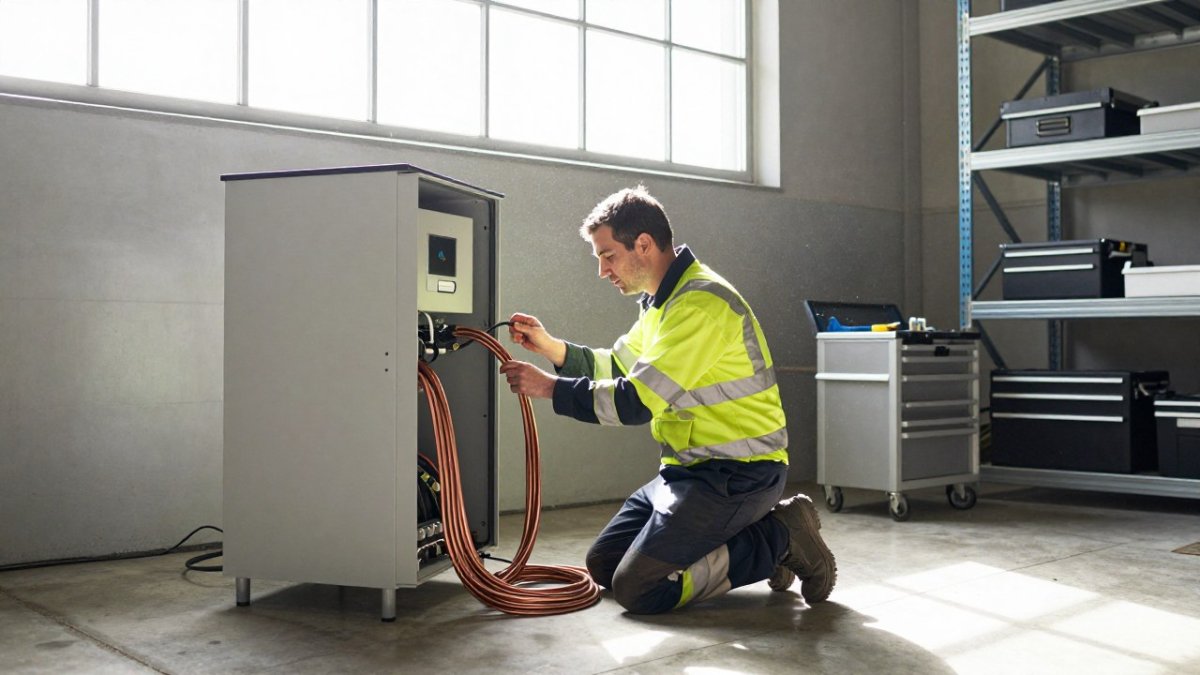
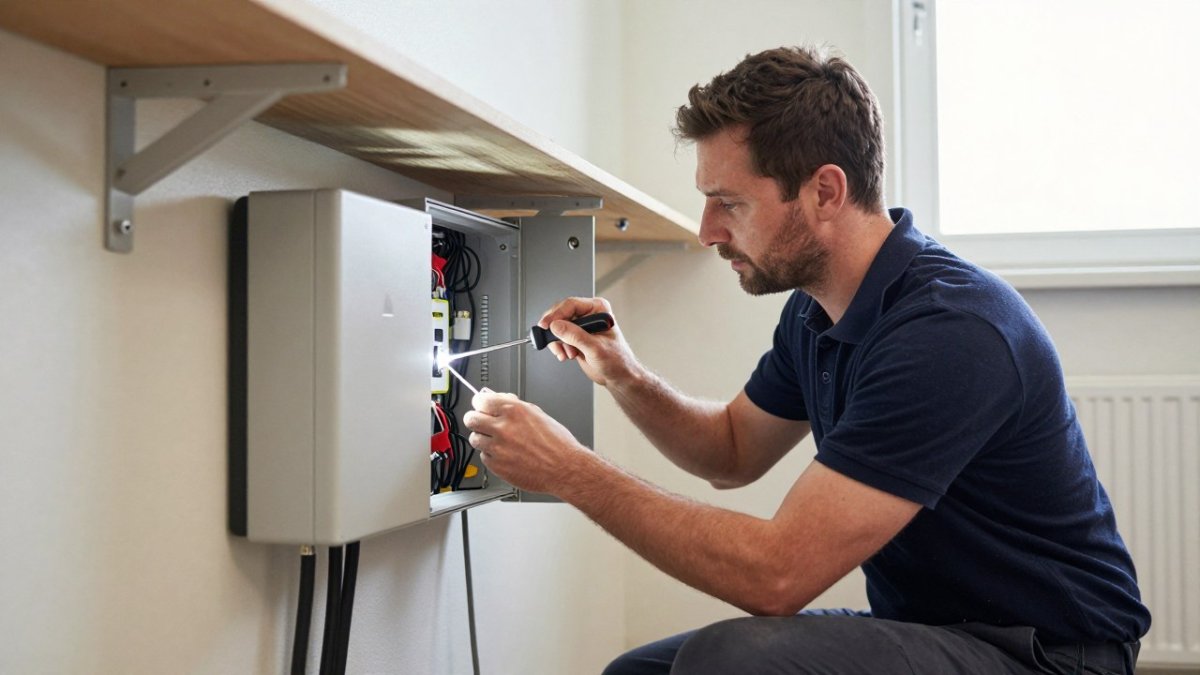
The backup gateway, sometimes called a changeover switch, isolates your home from the grid and routes power to selected circuits.
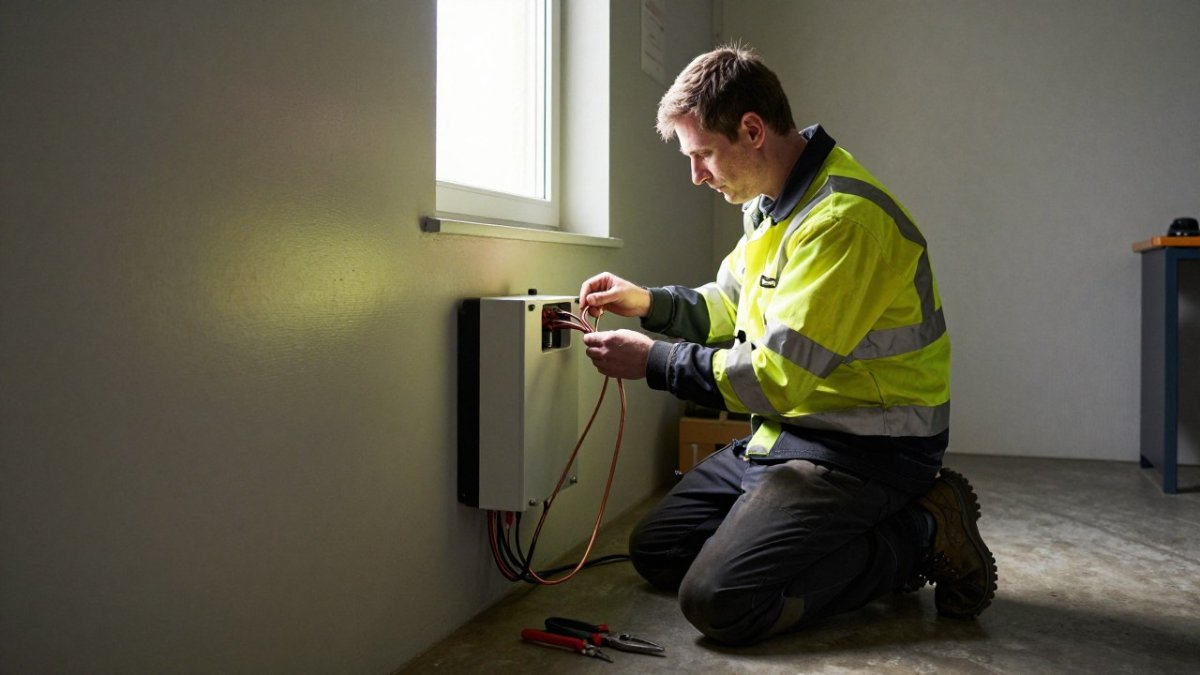
This is also where safety matters most. A qualified installer should carry out the connection work and certify it before use.
Watch out: a battery that is marketed as "backup-ready" may still need extra equipment to work in an outage. Ask for the full list of components and their cost before you accept a quote.
Can Solar Panels Work During a Power Cut?
Solar panels on their own are unlikely to power your home during a grid outage.
With a suitable backup setup, solar can keep generating during an outage, but output depends on weather and time of day.
Treat solar as a top-up rather than a guaranteed supply during an outage. For more detail, read our dedicated explainer on whether solar panels work during a power cut.
Home Battery Backup System for Essential Appliances
Most households do not need the whole house powered during an outage. Choose the essential appliances you want to keep running, then set up a backup circuit covering only those.
Typical essential loads include:
- Fridge and freezer
- Lighting in key rooms
- Wi-Fi router and modem
- Heating controls and circulation pump
- Medical equipment where relevant
- Phone charging and a small radio
Keep high-demand appliances such as electric showers, cookers and tumble dryers off the backup circuit unless your system is rated for them. A typical household kettle can draw well over 2 kW, so even a short run can drain a small battery.
A worked load-planning example
The table below shows how a small essential-load circuit might add up. The wattages are typical label figures for common appliances; check your own labels, because models vary.
| Appliance | Typical power (W) | Hours per day on backup | Daily energy (kWh) |
|---|---|---|---|
| Fridge-freezer | 150 | 24 (duty cycle ~1/3) | 1.2 |
| LED lighting (6 rooms) | 60 | 5 | 0.3 |
| Wi-Fi router and modem | 15 | 24 | 0.36 |
| Gas boiler controls and pump | 100 | 6 | 0.6 |
| Phone and laptop charging | 65 | 3 | 0.2 |
| TV | 100 | 4 | 0.4 |
| Total | ~3.1 kWh |
Typical power (W)
A 5 kWh usable battery would cover that load for roughly a day and a half before efficiency losses, and longer if solar tops it up; a 10 kWh battery would stretch to around three days. Do that arithmetic before you choose a capacity.
Watch out: fridges and freezers have a start-up surge that can be several times their running wattage. A backup inverter must be rated for that surge, not just the steady load, or it will trip when the compressor kicks in.
Prioritising medical and accessibility needs
If anyone in the home relies on powered medical equipment, such as a home oxygen concentrator, a dialysis machine or a stairlift, treat those as first-priority loads and tell your installer at the survey stage. Ask for the equipment's continuous and surge ratings, and check whether the manufacturer recommends a particular waveform or transfer time. Where the consequences of a gap are serious, plan a secondary source such as a small uninterruptible power supply on the critical device, and confirm the plan with the equipment supplier.
Choosing which circuits to back up
Ask the installer to show you the consumer unit and identify which circuits can move to the backup side.
To prioritise your load, list each appliance, note its power rating from the label, and estimate how many hours a day it runs. This helps you choose a system with enough capacity.
How Long Does a Home Battery Last During a Power Cut?
A home battery lasts as long as its stored energy covers your essential load. The runtime depends on the battery's usable capacity, the power your appliances draw, and how much solar charging is available.
As a rough guide, a battery with 10 kWh usable capacity supplying a steady 1 kW of essential load would last around 10 hours in theory. Real results are lower because inverters lose energy in conversion and battery output falls as charge drops. Check the manufacturer's runtime figures for your load, and ask the installer to model it against your own appliances.
Battery condition matters too. Capacity fades with age and cold weather, so ask about the warranty, expected cycle life and cold-weather management before you buy.
Home Battery Storage Capacity Calculator: Sizing Your Backup
Sizing is where many households go wrong. A battery that is too small will run out before the outage ends; one that is too large adds cost you may never use.
Use this simple worksheet to get started:
| Step | What to record | Example |
|---|---|---|
| 1. List essential appliances | Name each item on the backup circuit | Fridge, router, lights |
| 2. Note power ratings | Check the label for watts | Fridge: 150 W |
| 3. Estimate daily hours | Hours each item runs per day | Fridge: 24 hours |
| 4. Calculate daily energy | Power × hours, then divide by 1,000 for kWh | 150 W × 24 h = 3.6 kWh |
| 5. Add a margin | Allow for losses and surges | Add 20% to the total |
Add the daily energy for all essential loads, then add the margin. Compare the result with the usable capacity of the battery you are considering. A system covering one day of essential use, with some solar support, is a sensible starting point for many households.
Why usable capacity is lower than the label
A battery's headline capacity is not what you can draw. Manufacturers usually quote a usable capacity, the portion the system will actually discharge, and that is the figure to use. On top of that, the inverter loses energy in conversion and output falls as the battery approaches empty.
Capacity also fades with age and cycle count, and cold weather reduces what a battery can deliver. A battery in an unheated garage or outbuilding will perform differently from one inside the thermal envelope.
What a backup-ready system costs
Pricing depends on capacity, inverter rating, the gateway and changeover equipment, and the wiring work required. We give a tailored quote after the survey. Ask for a breakdown separating battery, inverter, gateway and labour so you can compare the details of your quote clearly.
UK safety and grid-connection checks
A qualified installer must carry out the connection work to the relevant electrical standards. Your installer should confirm that the work meets the relevant electrical standards and grid-connection requirements, and should provide the certification paperwork.
Watch out: a battery marketed as "backup-ready" may still need a gateway, a changeover switch and dedicated backup circuits to work in an outage.
Treat this as a planning estimate only. A professional survey will give you a more accurate figure. Our team can also explain how the calculation applies to your home.
Booking a Backup-Ready Survey for Your Home
A survey is the most reliable way to find out whether a home battery backup system will work for your property.
We are a fully accredited and approved MCS solar and battery storage installer, and we design each system around your energy needs. You can book a backup-ready survey for your home to start the process.
Pricing depends on the system size, the equipment needed and the installation work, so we give a tailored quote after the survey rather than a fixed figure here. For a deeper look at choosing the right capacity, see our guide to sizing home battery storage correctly.
For background on what residential battery storage is and how it supports essential loads, read our 2026 UK guide to residential battery storage.
Smarter Utility is Scotland's leading installer of solar PV, battery storage and EV charging. Get in touch for your free survey today and find out what backup power can do for your home.
Frequently Asked Questions
Will a home battery work during a power cut?
It depends on the system. Many standard grid-connected batteries shut down during a cut because they are designed to stop feeding power into the grid when it fails, which protects engineers working on the lines. A battery only keeps your home supplied if it supports islanded or backup operation and has the right equipment, such as a backup gateway or changeover switch, to isolate your house from the grid. Before buying, ask your installer to confirm in writing how the system behaves during an outage and which circuits it will power.
Why might a solar battery stop working when the grid goes down?
Most batteries are wired to work alongside the mains and will switch off when the grid is lost, a safety feature known as anti-islanding. Without a dedicated backup arrangement, the inverter cannot form a separate supply for your home. Checking whether your inverter supports backup mode, and whether a changeover switch is included, is the quickest way to find out whether your battery will keep the lights on.
What appliances can a home battery run during an outage?
A home battery can run whichever circuits are connected to its backup output, and this is usually a limited selection rather than the whole house. Essential loads such as lighting, a fridge or freezer, a router, a boiler control and some heating circuits are the usual priorities. High-draw appliances like electric cookers, tumble dryers and electric showers are often excluded because they would drain the battery quickly. List your essentials, check their wattage on the label, and agree the circuits with your installer during the survey.
How much battery capacity do I need for essential appliances?
Start by adding up the daily energy use of the circuits you want to keep running, measured in kilowatt-hours, then decide how many hours of cover you want. A fridge and lighting may need only a few kilowatt-hours for a day, while a heat pump or electric heating will need far more. Multiply your daily essential load by the number of hours you want covered, then allow for the usable capacity of the battery rather than its nominal rating. Your installer can confirm the figure against your actual consumption data.