 how-to
Do Solar Panels Work During a Power Cut?
Last Updated: November 1, 2026
Quick Summary
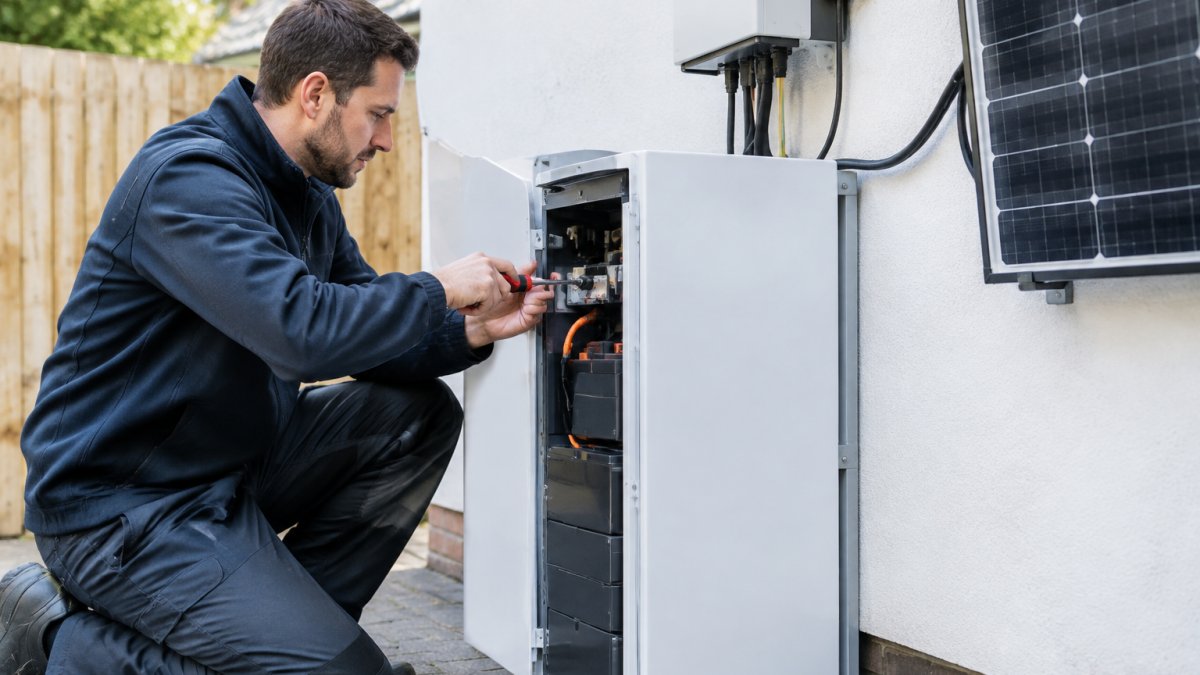
Solar battery backup keeps your home powered during a grid outage by storing surplus energy and releasing it when the grid fails. A backup gateway disconnects your home from the network so the battery can run essential circuits like lighting, broadband and the fridge. Without a battery, a standard grid-connected solar system shuts down during a power cut for safety.
- A standard grid-connected solar system cannot supply power during an outage, even in bright sunshine.
- A hybrid inverter with backup capability, a battery and a transfer mechanism are needed for islanding mode.
- Size your battery around essential loads, not total annual usage, then add 20%.
- A backup gateway detects grid failure and disconnects your home so the battery can power selected circuits.
- Skipping the DNO notification can delay commissioning or breach your connection agreement.
Table of Contents
- Why Solar Battery Backup Matters When the Grid Fails
- Do Solar Panels Work During a Power Cut?
- How Long Does a Solar Battery Last During an Outage?
- Sizing Solar Battery Capacity for a Power Cut
- Backup Gateway and Essential Loads: What They Do
- Setting Up Solar Battery Backup: The Installation Process
- Common Challenges and How to Solve Them
- Book Your Free Home Survey
- Frequently Asked Questions
Why Solar Battery Backup Matters When the Grid Fails
A grid-connected solar system shuts down the moment the power goes out. That surprises most people. The panels keep generating, but the inverter has to switch off to protect engineers working on the lines. So without a battery, a power cut leaves you in the dark.
This guide explains how solar battery backup for power grid outages actually works, what it costs you in capacity, and how to size it correctly. The questions below are the ones homeowners commonly ask.
Storm damage, ageing infrastructure and rising demand all put pressure on the grid. Solar battery storage benefits in Scotland sets out the evidence for homeowners north of the border. A battery changes the equation. It stores surplus daytime generation and releases it when you need it, whether that's at 7pm or during a three-day outage.
Scotland-specific evidence on battery storage benefits
The UK's electricity system is also shifting. More renewables means more variability, and the grid has to balance supply and demand second by second. A home battery helps you ride out the wobbles.
Do Solar Panels Work During a Power Cut?
No. A standard grid-connected solar system cannot supply power during an outage, even in bright sunshine. The inverter must shut down to prevent it feeding electricity into lines that engineers believe are dead.
This is a safety rule, not a technical limitation. It's called anti-islanding, and every grid-tied inverter sold in the UK has to comply. Without it, a solar array could energise a line someone is working on.
Why grid-tied solar shuts down in an outage
So what changes with a battery? The system gains the ability to disconnect from the grid and run independently. That's called islanding mode, and it needs three things: a battery, a suitable inverter, and a transfer mechanism.
- A standard string inverter cannot do this
- A hybrid inverter with backup capability can
- The battery must be sized for your essential loads
- The system needs a dedicated backup circuit
If you already have solar, a retrofit is often possible. read how to retrofit battery storage to existing solar.
How Long Does a Solar Battery Last During an Outage?
How long a battery lasts during an outage depends on its capacity and on what you power.
The honest answer is that it depends on three variables:
- Battery capacity in kilowatt-hours
- Your essential load in watts
- Whether the sun returns to top up the battery
Here's a rough guide for a typical home:
| Essential Load | Power Draw | 5 kWh Battery | 10 kWh Battery | 15 kWh Battery |
|---|---|---|---|---|
| Fridge and freezer | 150 W | 33 hours | 66 hours | 100 hours |
| Plus lighting and broadband | 400 W | 12 hours | 25 hours | 37 hours |
| Plus heating pump | 900 W | 5 hours | 11 hours | 16 hours |
| Whole home average | 2,000 W | 2.5 hours | 5 hours | 7.5 hours |
Sizing Solar Battery Capacity for a Power Cut
Size your battery around your essential loads, not your total annual usage. Work out what you genuinely need to keep running, add up the watts, and multiply by the hours you want cover for.
Do that calculation before you sign anything. Most sizing mistakes come from guessing.
- List every circuit you want on backup
- Note the running watts for each appliance
- Add startup surge for motors and pumps
- Decide your target outage duration
- Multiply watts by hours, then add 20%
Think about the future too. A heat pump or an EV charger will change your load profile significantly. a step-by-step method for sizing a home battery correctly and guidance on sizing for future needs both cover this in more detail.
Backup Gateway and Essential Loads: What They Do
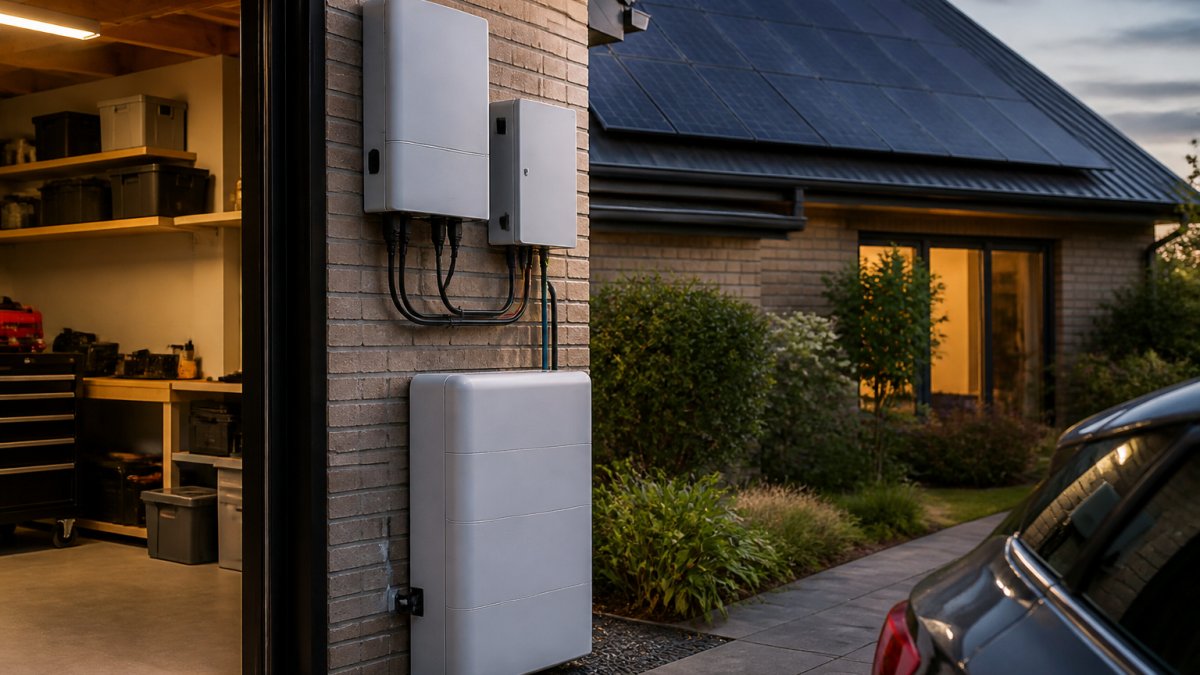
A backup gateway is the unit that detects a grid failure and disconnects your home from the network, allowing the battery to power selected circuits. It's the switch that makes islanding possible.
Click HERE for your FREE SURVEY today →
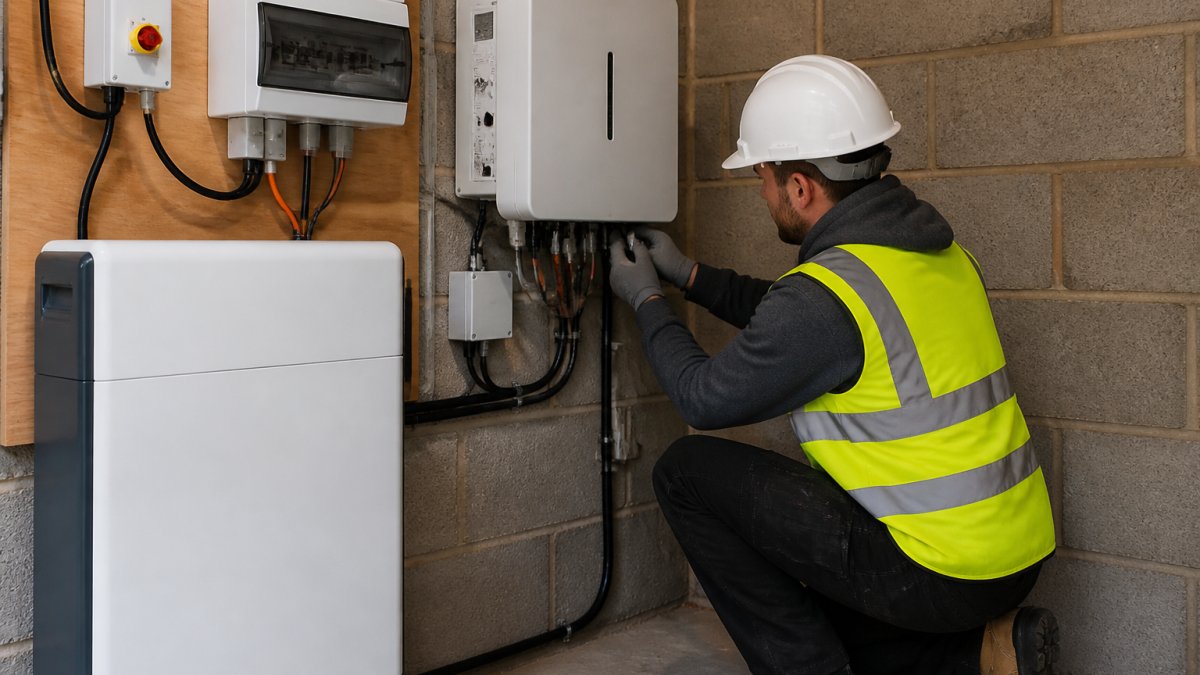
Essential loads are the circuits wired to run during an outage. Typically that's lighting, sockets, broadband, the fridge and the heating controls. Everything else stays off until the grid returns.
The gateway sits between your consumer unit and the meter. When it senses a loss of supply, it opens the connection to the grid and signals the inverter to start islanding. The switchover takes a few seconds.
Not every property can back up the whole house. Older consumer units often need modification, and large loads like electric showers may exceed the inverter's backup rating. A survey will tell you what's feasible.
Setting Up Solar Battery Backup: The Installation Process
The grid connection needs notification before commissioning.
Here's how it runs:
- Survey and design - we assess your roof, consumer unit and load profile
- DNO application - your network operator is notified of the connection
- Mounting - the battery and gateway are fixed in place
- Wiring - backup circuits are separated and connected
- Commissioning - the system is tested in island mode
- Handover - you get a walkthrough and documentation
Watch out: skipping the DNO notification can delay commissioning or breach your connection agreement. It's a paperwork step, but it matters.
Common Challenges and How to Solve Them
A consumer unit with no spare ways or no backup circuit can be a challenge, and older properties may need a board upgrade before a battery can be fitted.
Other issues that can arise include:
- North-facing or small roofs limit generation, so battery sizing matters more
- Single-phase supply caps the inverter size you can install
- Rural voltage fluctuations can trip inverters, so settings need adjustment
- Retrofit cabling can be awkward where walls are solid stone
None of these are dealbreakers. They change the design, not the decision.
Watch out: a battery sized for today's loads will feel small once you add a heat pump or EV charger. Design the system with headroom now.
Book Your Free Home Survey
The only reliable way to size a solar battery backup for power grid outages is a proper survey. Our team assesses your roof, electrics and load profile, then designs a system around your actual needs.
We offer a free, no-obligation home survey. You'll get an honest assessment of what your property can support, a tailored design, and clear answers on whether solar and battery storage makes sense for you.
- Free, no-obligation survey
- Fully accredited MCS installer
- Expert design and installation
Click HERE for your FREE SURVEY today and get a design built around your home.
Frequently Asked Questions
Do solar panels work during a power cut?
Standard grid-connected panels shut down during a power cut to protect engineers working on the lines. To keep power flowing you need solar battery backup with a backup gateway that isolates your home from the grid. With that setup, the battery supplies your essential loads and the panels can recharge it during daylight, so you are not left without power.
How long does a solar battery last during an outage?
It depends on the battery's usable capacity and what you keep running. Adding heating or an EV charger increases the load considerably. Sizing the system around your essential loads is the deciding factor, which is why a survey matters.
What are backup gateway and essential loads in a solar battery system?
The backup gateway is the switch that disconnects your property from the grid during an outage and lets the battery take over. Essential loads are the circuits you choose to keep powered, such as lighting, sockets for the fridge and broadband, and the heating controls. Grouping these on a dedicated consumer unit means the battery is not wasted on high-draw appliances.
Can I add solar battery backup to an existing system?
In many cases yes. Retrofitting a battery and backup gateway to an existing system depends on the existing inverter and consumer unit, which a survey can assess. Older properties with dated electrical panels may need remedial work first, so a free survey is the sensible starting point before committing.
A power cut shouldn't leave you guessing whether your lights will stay on. Smarter Utility designs and installs solar PV, battery storage and EV charging across Scotland, with every system tailored through a free home survey. Get started with Smarter Utility and find out exactly what your property can support.