 how-to
How to Maintain Solar Panels in Scottish Winter
Table of Contents
- What Scottish Winter Does to Solar Panel Performance
- Cleaning Solar Panels in Winter: Safe Methods and Timing
- Snow on Solar Panels: When to Clear It and When to Leave It
- Solar Inverter Winter Maintenance and Fault Diagnosis
- Roof Safety, Electrical Checks and Storm Damage Inspections
- Battery Storage and Winter Energy Use: Getting More From Less Sun
- Your Winter Maintenance Checklist: What to Do and When
- Frequently Asked Questions
Last Updated: October 20, 2026
What Scottish Winter Does to Solar Panel Performance
Learning how to maintain solar panels in Scottish winter starts with realistic expectations. Output drops, but it rarely stops. This guide from Smarter Utility explains what the season actually does to your system, and what you can do about it.
Shorter days are the biggest factor. In midwinter, many parts of Scotland see only around seven hours of daylight, and much of that arrives at a low angle. Panels still generate, just less. According to Energy Saving Trust guidance on solar generation, winter output is naturally lower across the country, and that is normal, not a fault.
Shorter Days, Lower Sun and Realistic Winter Solar Panel Output
Expect a fraction of your summer figures, not a mirror of them. Winter solar panel output typically falls well below peak-season levels because the sun sits low and sets early. A clear, cold day can still produce a respectable reading. A grey, drizzly one will not.
Track your monthly totals rather than daily dips. One bad week means little. A steady pattern tells you far more.
Cold Temperatures, Cloud and Frost: What Actually Reduces Efficiency
Cold itself is not the enemy. Panels actually work a little better in cool conditions than in heat. What hurts is cloud, frost and low sun angles.
- Overcast weather: diffuse light cuts generation, sometimes sharply
- Frost: a thin layer clears quickly once the sun hits it
- Rain: usually harmless, and it rinses light dirt away
- Wind: no effect on output, but worth watching for loose mounts
Cleaning Solar Panels in Winter: Safe Methods and Timing
Cleaning solar panels in winter should be light, infrequent and done from the ground wherever possible. Most Scottish winters bring enough rain to keep panels reasonably clear. Heavy-handed cleaning does more harm than good.
Follow these steps:
- Wait for a mild, dry day with no frost on the roof
- Inspect from ground level first, using binoculars if needed
- Use a soft cloth or soft brush on a long pole
- Rinse with soft water from a garden hose, never a pressure washer
- Work gently and never lean on the panels
- Skip it entirely if the roof is wet, icy or windy
Pressure washing is the classic mistake. It can force water past seals and damage the glass coating. Gentle tools and soft water are all you need.
Tackling Dirt, Leaves, Bird Droppings and Winter Grime
Debris blocks sunlight, and blocked sunlight means lost power. Bird droppings are the worst offender because they stick and shade one cell hard. Leaves and winter grime matter less but still add up.
- Clear leaves from around the array and gutters
- Spot-clean droppings with a soft cloth and water
- Check for grime after storms, especially near trees or farmland
- Never scrape at frozen debris with anything hard
Snow on Solar Panels: When to Clear It and When to Leave It
Snow on solar panels usually clears itself, and most of the time you should let it. Tilted panels shed snow as it thaws, and the sun often does the work within a day or two.
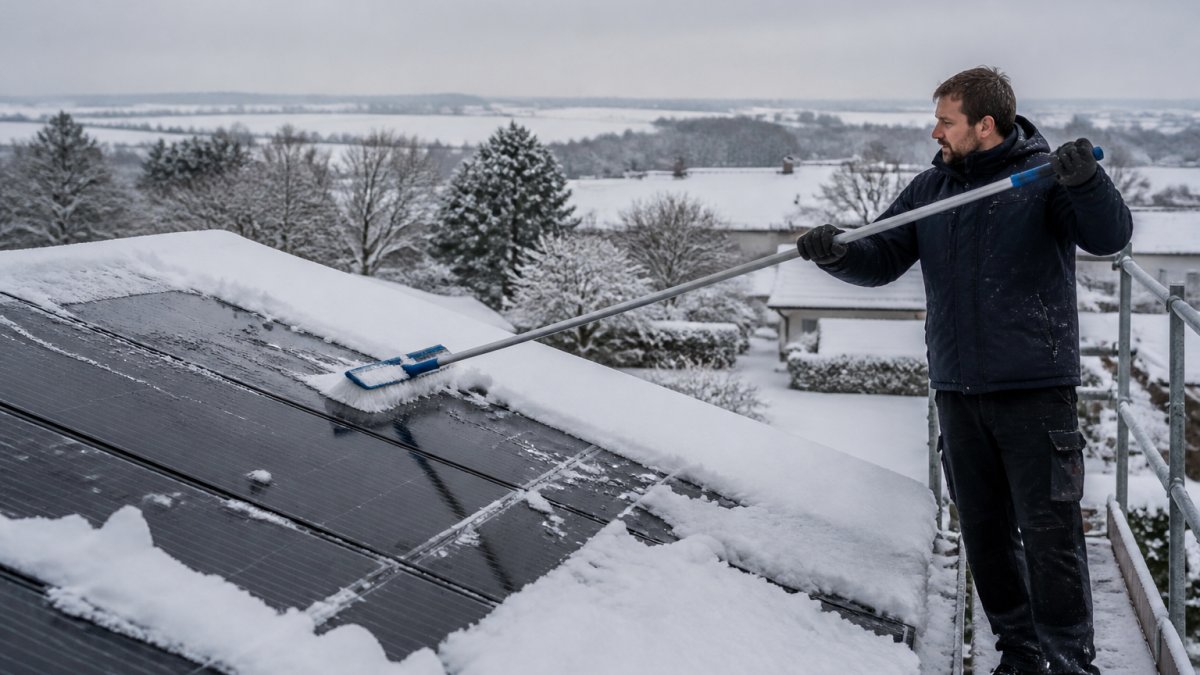
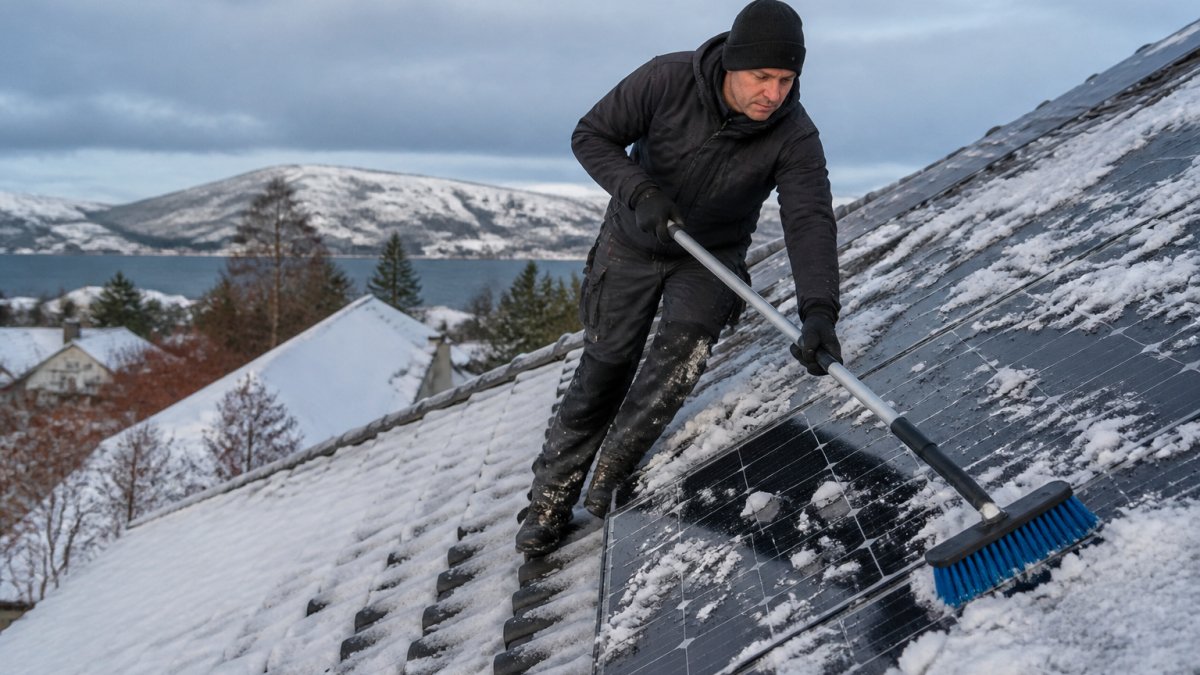
When you do clear it, use a soft snow rake from the ground. Never climb onto a snowy roof, and never use a shovel or anything metal. If the snow has frozen solid, leave it. The risk of damage outweighs the lost generation.
Solar Inverter Winter Maintenance and Fault Diagnosis
Solar inverter winter maintenance is mostly about watching, not touching. The inverter is the box that turns panel output into usable power, and it is your best diagnostic tool. Check the monitoring system or display regularly through winter.
Reading Winter Monitoring Data Without Panicking
A common pattern is a steady, shallow daily curve rather than the tall summer bell shape. On a clear cold day you may still see a respectable midday peak; on a grey drizzly day the curve flattens almost to nothing. Both can be normal.
Use these habits to tell seasonal decline from a fault:
- Compare week-on-week and month-on-month totals, not day-on-day
- Note the time of the first and last reading, shorter daylight shifts both inward
- Check whether every string or optimizer is behaving similarly; one flat string against healthy neighbours is a fault signal
- Record fault codes and the date they appeared before contacting your installer
Warning Signs That Need an Installer
Look for these warning signs:
- Output dropping to zero on clear days when neighbouring systems are generating
- Repeated fault codes or shutdowns
- Unusual noise or a hot casing
- Condensation inside the unit
- Breakers tripping when the system starts up
If you spot a fault, note the code and contact your installer. Do not open the inverter yourself. It holds live electrical components and is not a DIY item. If you smell burning, see scorch marks or notice tripping breakers, isolate the system only if you can do so safely at the dedicated isolator, then call a professional.
According to MCS guidance on maintaining certified solar systems, using accredited installers for servicing protects both your warranty and your safety. Keep a simple log of readings, fault codes and any installer visits, it is useful evidence if a warranty claim arises later.
What You Can Safely Do Yourself
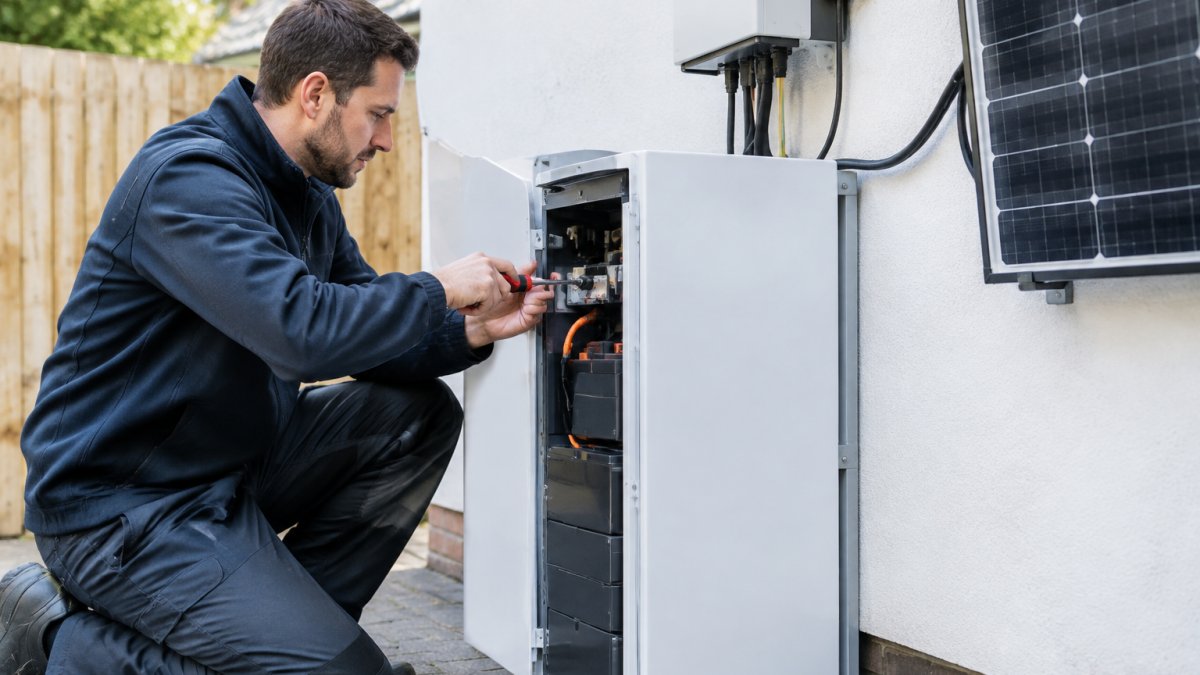
Stick to the outside of the unit: keep vents and surrounding space clear of leaves and snow, check that the casing is secure, and confirm the isolator is accessible. Everything inside the casing, and any work on cabling or connectors, belongs to a qualified person.
Click HERE for your FREE SURVEY today →
Roof Safety, Electrical Checks and Storm Damage Inspections
Roof safety comes before everything else in winter. Wet, icy and windy roofs cause falls, and falls cause serious injury. Do all routine checks from the ground, using binoculars or a phone camera zoom where you need a closer look.
Ground-Level Storm Damage Inspection
After a storm, inspect for:
- Loose mounting hardware or lifted panels
- Cracked glass or damaged frames
- Debris trapped under the array
- Water getting into the inverter or cabling
- Displaced flashing or gaps where the array meets the roof
- Damaged or dangling cabling
Never climb onto a frosty, snow-covered or wet roof to check panels. A slip can cause serious injury, and the inspection is not worth the risk. The Health and Safety Executive guidance on working at height is clear that roof work needs proper planning, which is exactly why we recommend leaving it to accredited installers.
Electrical Checks Belong to a Qualified Person
Electrical checks belong to a qualified person. If you smell burning, see scorch marks or notice tripping breakers, isolate the system if you can safely reach the dedicated isolator and call a professional. Do not poke at connectors, junction boxes or cabling, and never use metal tools near the array.
Documenting Damage for Warranty and Insurance
A calm, well-documented claim is far easier to resolve than a panicked phone call. When storm damage is suspected:
- Photograph the affected area from the ground, with a date stamp if possible
- Note the date and time of the storm and any named weather event
- Save your monitoring data showing the drop in output
- Contact your installer before arranging any repair, so the cause can be recorded
- Check your home insurance policy for storm damage cover and any excess before authorising work
Keep the paperwork together with your MCS certificate and warranty documents. Most installers will ask for photographs and monitoring evidence first, and insurers commonly want proof that damage was storm-related rather than gradual wear.
What Owners Can Safely Do
You can clear leaves from gutters at ground level where it is safe, keep the area around the array clear, and record what you see. Anything involving the roof surface, mounting hardware, cabling or the inverter interior should go to an accredited installer, both for your safety and to protect your warranty.
Battery Storage and Winter Energy Use: Getting More From Less Sun
Battery storage changes how winter feels. With less sun, a battery lets you store what you do generate and use it in the evening, when demand peaks. It will not make up for short days, but it smooths the gap.
A few habits help:
- Shift heavy use, like washing and EV charging, to daylight hours
- Keep an eye on state of charge through the darker weeks
- Expect the battery to cycle less, and plan around it
- Ask your installer whether your system is sized for future additions like a heat pump
Our free home survey includes checking whether your battery is sized correctly for winter demand, not just summer. Getting that right avoids the common mistake of a battery that is too small once the sun fades.
Your Winter Maintenance Checklist: What to Do and When
Here is the routine we recommend, in one place.
| Task | When | Frequency |
|---|---|---|
| Ground-level visual inspection | Monthly | 12 times a year |
| Check inverter readings and fault codes | Weekly | 52 times a year |
| Light clean (soft tools, soft water) | Mild dry day | 1-2 times a season |
| Clear leaves and check gutters | After storms | As needed |
| Clear heavy snow (soft rake only) | Only if snow sits for days | Rarely |
| Storm damage check | After named storms | As needed |
| Professional service | Annually | Once a year |
Print it, stick it on the fridge, and work through it. Routine maintenance beats reactive repairs every time.
Scottish winters ask a lot of a solar system, but they rarely defeat one. The work is mostly observation, gentle cleaning and knowing when to leave things alone. If you would rather hand the job to accredited experts, Smarter Utility offers a free, no-obligation home survey, expert design and professional installation as a fully accredited MCS solar and battery storage installer. Get started with Smarter Utility and keep your system performing through every season. Click HERE for your FREE SURVEY today.
Frequently Asked Questions
Is it worth cleaning snow off solar panels?
Sometimes, but not always. Light dustings of snow often slide off tilted panels as they warm, and heavy accumulations can be left safely if you cannot reach them without climbing. Clear snow only when you can do it safely from ground level with a soft tool, and never use hot water, salt or sharp implements. During the darkest weeks, the generation lost to a snow-covered array is often small, so the priority is avoiding injury rather than chasing every kilowatt hour.
What should a 4kW solar system generate per day in winter?
A 4kW system in Scotland might generate roughly 2 to 5 kWh on a decent winter day and under 1 kWh during the darkest, most overcast weeks. That is far below summer figures, which is why winter solar panel output should be judged across the season rather than day by day. Battery storage and a monitoring system help you see what is actually being produced and where the shortfall is.
Can frost or snow damage solar panels?
Frost and snow rarely damage the panels themselves because they are built to withstand cold and load. The bigger risks come from how you remove snow, from ice dams at the roof edge, and from loose mounting hardware after a storm. Check for cracked glass, slipped clamps or water ingress after severe weather, and call a professional if anything looks wrong rather than climbing up yourself.
How often should solar panels be cleaned in winter?
Most Scottish arrays need little more than a light clean once or twice over winter, plus spot cleaning after storms or heavy bird activity. Check the panels visually from ground level every few weeks and remove leaves and debris from around the frame. Avoid pressure washing, use soft water and a soft cloth or gentle brush, and never clean panels that are hot or covered in ice.