 how-to
Solar Battery Maintenance and Lifespan Expectations Explained
Last Updated: November 4, 2026
Quick Summary
Solar battery maintenance and lifespan expectations are closely linked: most solar batteries last between 5 and 15 years, with lithium-ion and LiFePO4 units typically running 10 to 15 years and lead-acid types needing replacement after 3 to 5 years. A light seasonal routine of cleaning vents, checking connections and monitoring capacity can extend battery life by 3 to 5 additional years.
- Lithium batteries lose roughly 30% of capacity over 10 years, while lead-acid can lose that in half the time.
- Clear dust and debris from vents and fans each spring, as blocked airflow is the most common cause of summer overheating.
- Keep the battery above freezing in winter, because charging below freezing causes permanent damage.
- A five-minute monthly glance at state of charge and capacity retention catches most problems early.
- Warranties generally require maintenance as instructed, so keep your service records to avoid voiding cover.
Table of Contents
- How Long Solar Batteries Last and Why It Varies
- Lithium-ion and LiFePO4 Versus Lead-Acid
- Solar Battery Degradation Factors That Shorten Service Life
- How to Extend Solar Battery Life With a Seasonal Routine
- What a Solar Battery Warranty UK Policy Actually Covers
- Signs Your Battery Is Failing and When to Replace It
- Book a Free Survey to Size and Maintain Your System
- Frequently Asked Questions
How Long Solar Batteries Last and Why It Varies
Most solar batteries last between 5 and 15 years, and the exact figure depends far more on how you treat the battery than on the brand on the box. For a broader UK primer on residential battery storage, start with the basics before diving into lifespan specifics. Industry data from Solar Elios battery lifespan research puts lithium-ion and LiFePO4 units at 10 to 15 years, while older lead-acid types often need replacing after 3 to 5 years. That gap is not marketing spin. It comes down to chemistry, charging habits and where the battery sits.
At Smarter Utility, we size and fit storage systems for homes and businesses across Scotland, and a common question is simple: how long will this actually last? The honest answer is that solar battery maintenance and lifespan expectations are two sides of the same coin. Look after the unit and it can serve you well past a decade. Ignore it and you may be shopping for a replacement years early.
Below, we break down what drives battery life, how solar battery maintenance extends it with a simple seasonal routine, and what your warranty really covers. We also explain the warning signs that mean it is time to act.
Lithium-ion and LiFePO4 Versus Lead-Acid
Battery chemistry is the single biggest factor in how long a storage system lasts. Lithium-ion and LiFePO4 packs are now the default for home storage. They hold their capacity well, need little upkeep, and typically run for 10 to 15 years. Lead-acid batteries cost less upfront but ask far more of you, and they usually give 3 to 5 years with proper care.
The gap shows up in daily use. A lithium battery loses roughly 30% of its capacity over 10 years, according to r/solar community degradation data. A lead-acid bank can lose that much in half the time, and it drops faster if you drain it deeply or skip maintenance.
Here is how the two compare:
| Feature | Lithium-ion / LiFePO4 | Lead-acid |
|---|---|---|
| Typical lifespan | 10-15 years | 3-5 years |
| Maintenance needs | Low, mostly monitoring | High, regular checks |
| Depth of discharge | 80-90% usable | Around 50% usable |
| Weight and size | Lighter, compact | Heavier, bulkier |
| Upfront cost | Higher | Lower |
If you are still weighing up chemistries, our guide on how to choose between lithium-ion and salt water home batteries walks through the trade-offs in more detail.
Solar Battery Degradation Factors That Shorten Service Life
Every battery degrades. The question is how fast, and you have more control over that than you might think. The main solar battery degradation factors are heat, deep discharges, harsh charging cycles and poor ventilation. Get these wrong and a 15-year battery can behave like a 7-year one. But to manage degradation you need to understand what is actually happening inside the cells, because the factors interact rather than act in isolation.
Depth of Discharge and Cycle Life
Depth of discharge is the share of a battery's capacity you use before recharging it. Cycle life is the number of charge and discharge rounds a battery can take before its capacity drops to a set level, often 80% of original capacity.
These two are linked, and the relationship is not linear. Lithium-ion cells generally last longer when they are cycled shallowly rather than drained close to empty every day. That is why a battery rated for a set number of cycles will not last as long in calendar terms if you routinely drain it to 95%. Modern lithium systems manage this for you through a built-in battery management system, but the settings still matter: if your inverter is configured to use the full usable window every day, you are trading cycle life for daily self-consumption.
How Temperature Drives Degradation
Heat is the quiet killer, and it acts on two timescales. At high ambient temperatures, the electrolyte in a lithium cell degrades faster through side reactions, so calendar ageing accelerates even when the battery is idle. Cold is a different problem: charging a lithium battery below freezing can cause lithium plating, which permanently reduces capacity, so most systems block charging at low temperatures.
This is why placement matters as much as chemistry.
Real-World Degradation Curves
Most articles give you a single lifespan range. In practice, degradation follows a curve, and the shape of that curve tells you more than the headline number. Lithium iron phosphate (LiFePO4) home batteries generally lose capacity gradually over their life, while a lead-acid bank tends to decline more steeply if it is cycled deeply.
The curve is not fixed. Shallow cycling, moderate temperatures and conservative charge rates flatten it; deep cycling, heat and aggressive charging steepen it. If you want to know how your own battery is tracking, the monitoring app's capacity-retention figure plotted over time is the closest thing to a real degradation curve you will get without lab equipment.
Other factors that shorten service life:
-
Ambient temperature: heat accelerates calendar ageing and cold blocks safe charging. Keep the unit out of direct sun and in a ventilated spot.
-
Poor voltage regulation: a mismatched inverter can stress the cells over time through overvoltage or ripple.
-
Skipped monitoring: small faults grow into big ones when nobody checks the battery health data.
-
Charge and discharge rate: routinely charging or discharging at the maximum rate generates heat and accelerates wear; limiting the rate in the inverter settings is one of the simplest ways to preserve health.
How to Extend Solar Battery Life With a Seasonal Routine
You can add years to a battery with a light but regular routine. Maintenance alone can extend battery life by 3 to 5 additional years, according to Solar Battery Life Cycle group findings. The trick is to spread the work across the year rather than cramming it into one visit, and to match the tasks to what the season actually does to the battery.
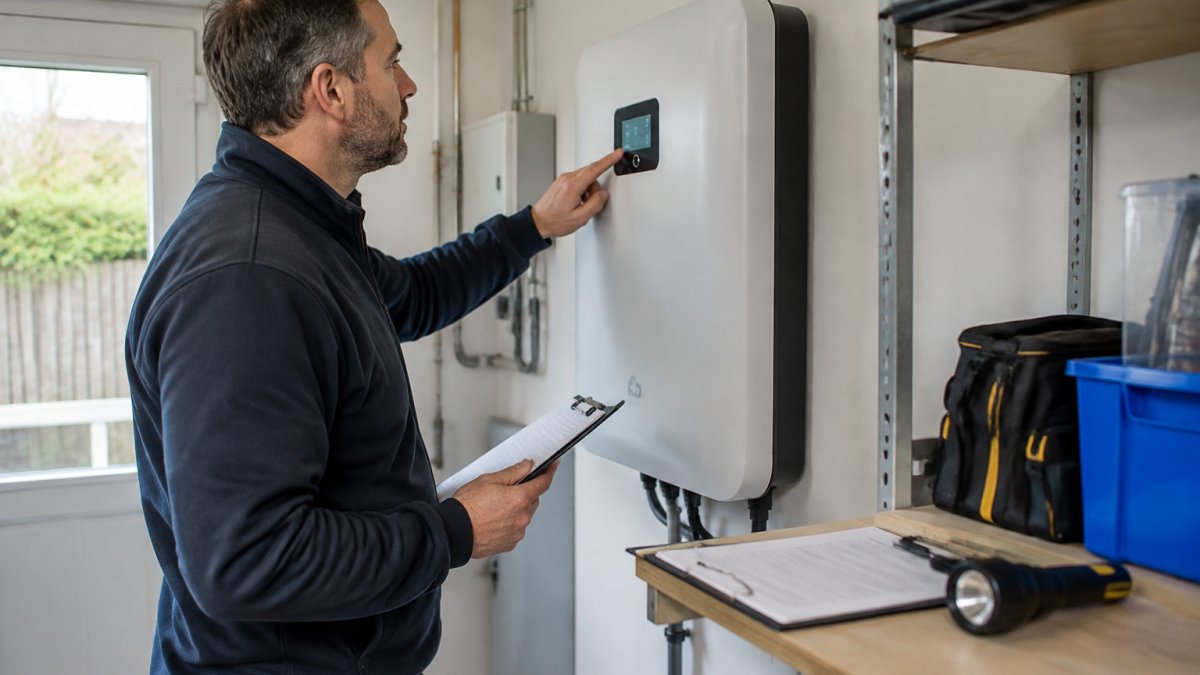
Here is the seasonal checklist we recommend, with the reason behind each task:
- Spring (March to May): clear dust and debris from vents and fans, because blocked airflow is the most common cause of summer overheating. Check for any error codes, confirm the monitoring app is logging data, and inspect the casing for signs of damp after winter. This is also the right time to review your depth of discharge settings before the high-generation months.
- Summer (June to August): watch for overheating. Shade the unit if it sits in a hot spot, check that fans run freely, and note the ambient temperature in the battery's location during a hot spell. If the inverter allows it, consider limiting the charge rate during the hottest weeks to reduce heat generation. This is the season when calendar ageing accelerates fastest.
- Autumn (September to November): tighten connections, look for signs of damp or condensation, and review your depth of discharge and backup reserve settings before winter. Clear any leaves or debris from external vents and confirm the system's cold-weather charging limits are enabled.
- Winter (December to February): keep the battery above freezing, check that backup power still kicks in during an outage, and note any drop in capacity. If the battery is in an unheated outbuilding, confirm the system's low-temperature charge blocking is working, because charging below freezing causes permanent damage.
A common mistake is ignoring the app until something breaks. In practice, a five-minute monthly glance at state of charge and capacity retention catches most problems early, and it means the seasonal tasks become a confirmation rather than a rescue.
What a Solar Battery Warranty UK Policy Actually Covers
A solar battery warranty UK policy usually covers two things: the product itself and its performance over time. The product warranty protects you against manufacturing faults. The performance warranty guarantees the battery will still hold a set share of its original capacity by a certain year.
Read the small print before you buy. Warranties generally require the battery to be maintained as instructed by the manufacturer. Skip the maintenance or let an unqualified person tamper with the system and you may void your cover. Keep your service records.
Watch out: a warranty that promises "10 years" may only guarantee performance for part of that period, so check the capacity retention figure and the warranty period side by side.
Signs Your Battery Is Failing and When to Replace It
A failing battery rarely dies overnight. It usually shows a slow decline first. The clearest signs are a shrinking backup power window, a capacity reading that keeps dropping, and the system switching to grid power more often than it used to.
Look for these signals:
- Your backup power no longer covers the same appliances during an outage.
- The monitoring app shows capacity retention falling faster than expected.
- The unit runs hot, makes new noises, or throws error codes.
- Your electricity bills creep up even though your usage has not changed.
For lead-acid banks, also check electrolyte levels and watch for sulfation, a build-up that cuts capacity. If repairs cost more than a fair share of a new unit, replacement usually makes better sense. For more practical advice, browse the renewable energy blog for guides on solar, batteries and EV charging.
Book a Free Survey to Size and Maintain Your System
The right system, sized correctly and looked after, is what turns a 10-year battery into a 15-year one. Smarter Utility is Scotland's leading installer of solar PV, battery storage and electric vehicle charging solutions. We offer a free, no-obligation home survey so the system matches what you actually use.
Our team offers expert design and professional installation. You can explore our full renewable energy services or arrange a domestic solar panel installation and survey to get started.
Get started with Smarter Utility and book your free survey to size and fit a battery system.
Frequently Asked Questions
How long do home solar batteries typically last?
Most modern lithium-ion and LiFePO4 units run for 10 to 15 years, while lead-acid batteries usually need replacing after 3 to 5 years. Industry figures put the general range at 5 to 15 years depending on chemistry, usage and how well the system is looked after. Lithium batteries typically lose capacity gradually over time, so plan for declining output rather than a sudden failure.
Does a solar battery require regular maintenance?
Lithium systems need little hands-on work: check the battery health monitoring app monthly, keep vents clear and confirm the inverter is reporting normally. Lead-acid units need more attention, including electrolyte levels and terminal checks. Good solar battery maintenance helps protect service life.
What factors reduce the lifespan of a solar battery?
The main solar battery degradation factors are ambient temperature extremes, deep depth of discharge, high charge and discharge rates, and poor thermal management. Repeatedly running a battery to near-empty wears out charge cycles faster than staying within the manufacturer's recommended state of charge window. Inconsistent maintenance and a badly matched inverter also shorten life. Keeping the unit in a stable, ventilated space makes the biggest single difference.
Is it worth maintaining my solar storage system?
Yes. Proper care helps protect battery life. Simple habits, such as monitoring state of charge, avoiding extreme temperatures and booking an annual check, protect capacity retention and system efficiency.