 how-to
7 Long-Term Savings from Home EV Charging Stations
Last Updated: November 2, 2026
Quick Summary
Home EV charging saves money over time through a lower cost per mile, protection from volatile public pricing, and timing charging around cheaper off-peak electricity. In a worked example, the same 8,000 annual miles cost about £325 home-dominant versus about £1,312 public-dominant, and the gap repeats every year.
- Drivers charge privately at home or at a workplace almost 75% of the time, per the IEA.
- An efficient electric car might use around 3 to 4 miles per kWh.
- Check an EV tariff's off-peak window, day rate and smart meter requirement before switching.
- Over 10 years, the worked example shows a saving of about £8,920.
- Lower annual mileage lengthens payback because the upfront cost is spread over fewer saved miles.
Table of Contents
- Why Home EV Charging Saves More Over Time
- Breaking Down Home EV Charging Costs
- Public Charging vs Home Charging Cost: The Real Difference
- Off-Peak EV Charging Tariffs That Cut Bills
- Home EV Charger Installation Cost and Grants
- Smart Charging and Solar: Boosting Long-Term Savings
- Calculating Your Long-Term Savings: A Step-by-Step Framework
- Book Your Free Home Survey with Smarter Utility
- Frequently Asked Questions
Why Home EV Charging Saves More Over Time
Home EV charging is the practice of refuelling an electric car from a dedicated chargepoint at your property, usually overnight, instead of relying on the public network.
Here is the number that matters most. According to the International Energy Agency's Global EV Outlook, drivers charge privately at home or at a workplace almost 75% of the time and use public fast chargers only around 10% of the time.
Below, we break down where those savings come from, how to calculate them for your mileage, and which costs people forget.
Breaking Down Home EV Charging Costs
Two cost buckets decide your long term savings: upfront and running costs. Most people focus on the first and underestimate the second, which is the wrong way round over a decade of ownership.
Upfront Costs: Charger and Installation
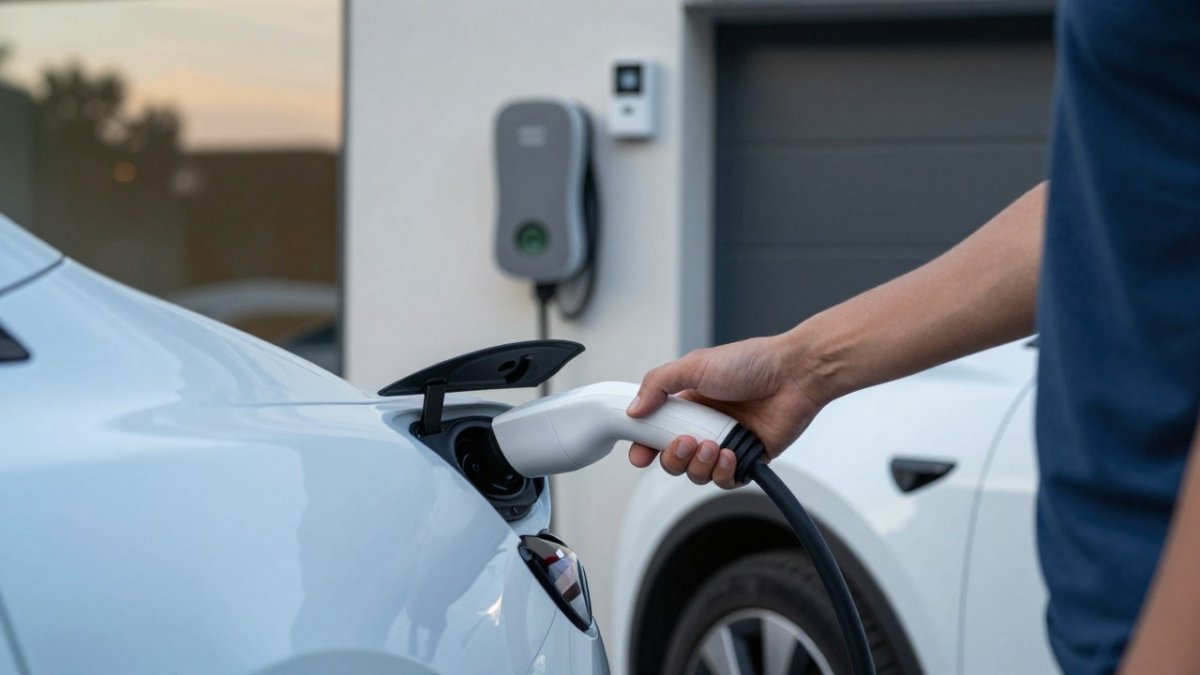
Upfront cost covers the chargepoint itself plus the labour to fit it safely. A 22kW unit only helps if your car can accept that speed and your supply can support it.
Installation cost depends on cable run length, whether your consumer unit needs upgrading, and whether the charger sits on a wall or a freestanding post. Pricing depends on the specifics of your property, so contact Smarter Utility for a quote.
Running Costs: Electricity and Tariffs
Running cost is your electricity rate multiplied by the energy your car uses. A home charging rate on a standard variable tariff is typically higher than an off-peak rate on an EV-specific tariff. That gap is where the savings live.
Your energy use depends on mileage and vehicle efficiency. An efficient electric car might use around 3 to 4 miles per kWh.
Public Charging vs Home Charging Cost: The Real Difference
The public charging network costs more per kWh than home charging, and rapid chargers cost the most: you pay for speed, convenience and the operator's site costs, all of which home charging avoids. Put numbers on the gap rather than trusting a headline.
| Cost factor | Home charging | Public rapid charging |
|---|---|---|
| Cost per kWh | Lower, set by your tariff | Higher, set by the operator |
| Off-peak discount | Available on EV tariffs | Rarely available |
| Convenience | Plug in at home overnight | Plan stops around journeys |
| Control over timing | Full, via scheduled charging | None |
| Annual savings potential | Baseline | Higher annual spend |
A worked annual comparison
Take a driver covering 8,000 miles a year in a car that returns 3.5 miles per kWh. That is about 2,286 kWh of energy to replace each year. The table below shows what that energy costs under three charging patterns. The rates are illustrative and deliberately round, so you can substitute your own tariff and the public prices you actually see.
| Charging pattern | Energy from home | Energy from public rapid | Illustrative annual cost |
|---|---|---|---|
| Home-dominant (90% home, 10% public) | 2,057 kWh at 7p off-peak | 229 kWh at 79p | About £325 |
| Mixed (70% home, 30% public) | 1,600 kWh at 7p | 686 kWh at 79p | About £654 |
| Public-dominant (30% home, 70% public) | 686 kWh at 7p | 1,600 kWh at 79p | About £1,312 |
The same annual mileage costs roughly four times as much when the charging mix flips from home-dominant to public-dominant. That is the mechanism behind the long term savings from home EV charging stations: hundreds of charges a year at the lower rate.
Why the public rate is so much higher
Public rapid charging carries costs a driveway does not: site leases, grid connections sized for high power, equipment maintenance and payment processing. Operators also price for convenience, because a driver on a long journey has few alternatives. Slower public chargers are usually cheaper per kWh than rapid hubs, but still typically above a good off-peak home rate.
The charging-mix assumption most guides hide
Almost every savings claim rests on an assumption about how much charging happens at home. The International Energy Agency's Global EV Outlook figure cited earlier, private charging for roughly three-quarters of charging events, is an average, not a promise. A household with two cars, one used for long commutes, will charge away from home more often than a single-car household doing short local trips.
Off-Peak EV Charging Tariffs That Cut Bills
An off-peak EV tariff charges less for electricity used in a set overnight window, usually somewhere between late evening and early morning. Pairing off-peak charging with garage upgrades for EVs can make overnight charging easier to fit into your routine.
This is the single biggest lever on your long term savings: set the car or charger to start when the cheap rate begins, and it finishes before you leave.
Most suppliers now offer dedicated EV tariffs. Check three things before switching:
- The off-peak window length and exact hours
- The day rate, which may rise to fund the cheap window
- Whether the tariff requires a smart meter and a compatible charger
If your daytime usage is high, a very cheap overnight rate paired with an expensive day rate can cost you more overall. Run the numbers on your whole household, not just the car.
Home EV Charger Installation Cost and Grants
Grant funding can reduce your upfront cost, and eligibility rules change, so confirm current terms on the official government pages before you budget (Electric Vehicle Chargepoint Grant for Renters and Flat Owners).
Check your eligibility carefully with the official government pages before applying.
Treat any grant as a reduction, not a solution, and factor the balance into your payback calculation.
Click HERE for your FREE SURVEY today →
A common mistake is choosing an installer on price alone. Accredited installation protects your warranty and home insurance position, so ask for accreditation before you book.
Smart Charging and Solar: Boosting Long-Term Savings
Smart charging can be scheduled around your tariff, so charging can happen at cheaper times.
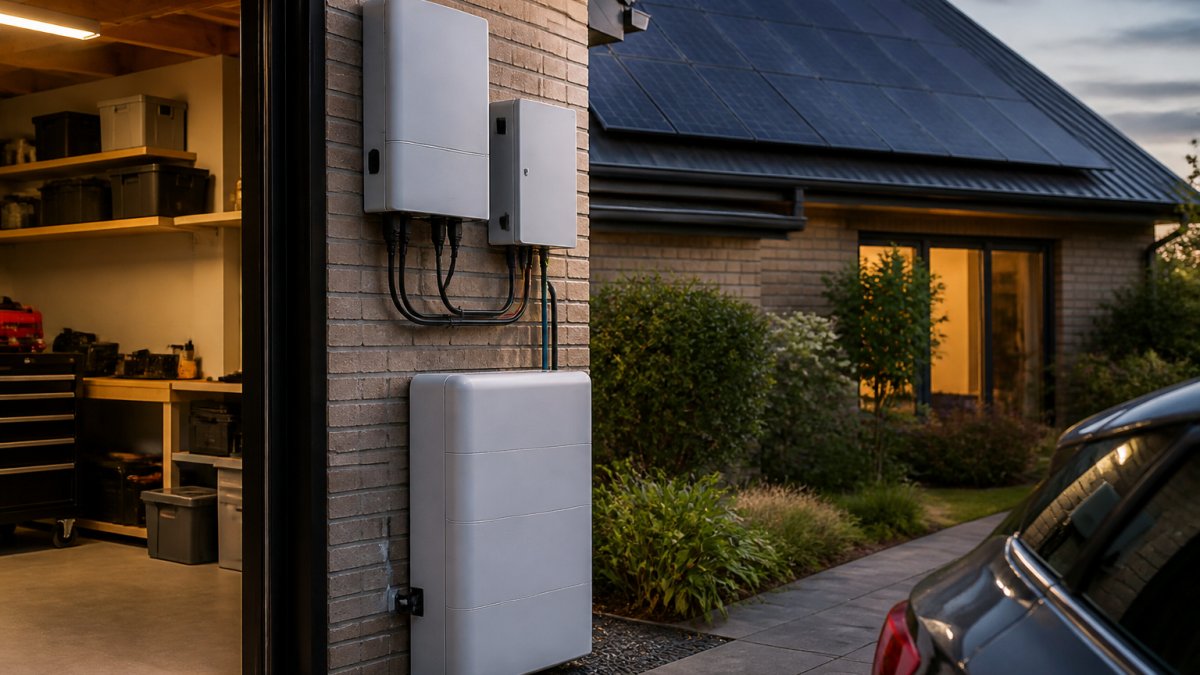
Solar generated on your roof can charge the car directly during daylight, and a battery stores surplus for the evening.
This is where the total cost of ownership picture improves most. Our guide to smart EV charging explains how schedules, tariff integration and solar pairing work in practice.
If you are weighing up whether to install at all, the case for installing an EV charger at home covers the wider benefits before you get into the detail.
Calculating Your Long-Term Savings: A Step-by-Step Framework
Here is the method we would use for any household. It takes ten minutes and makes your assumptions explicit, carrying the calculation across the charger's working life rather than stopping at a single annual figure.
- Estimate annual mileage. Use your last two years of driving.
- Divide by vehicle efficiency. Miles per kWh gives annual energy use.
- Split the energy by charging location. Apply your home rate to the home share and the public rate to the rest.
- Add the fixed costs. Charger and installation, any grant reduction, and ongoing maintenance.
- Project across the ownership period. Multiply annual running costs by the number of years and add the upfront figure.
- Compare against the public-charging counterfactual. Repeat steps 3 to 5 assuming most charging happens on the public network.
- Subtract the two totals. The difference is your long term saving, before any solar or battery contribution.
Worked total-cost-of-ownership scenarios
Using illustrative figures only, here is how the arithmetic behaves over five and ten years for the same 8,000-mile driver at 3.5 miles per kWh (about 2,286 kWh a year). Upfront cost is assumed at £1,000 for charger and installation, with £350 of grant funding applied, leaving £650 net. Maintenance is assumed at £30 a year for a service check and minor wear items.
| Ownership period | Home-dominant running cost | Public-dominant running cost | Net upfront | Maintenance | Home-dominant total | Public-dominant total | Saving |
|---|---|---|---|---|---|---|---|
| 5 years | About £1,625 | About £6,560 | £650 | £150 | About £2,425 | About £6,560 | About £4,135 |
| 10 years | About £3,250 | About £13,120 | £650 | £300 | About £4,200 | About £13,120 | About £8,920 |
The saving grows faster than the years because the upfront cost is paid once while the running-cost gap repeats every year. That is why long term savings from home EV charging stations beat the headline annual figures most guides publish.
The costs people leave out
A complete comparison includes the charger's expected service life, typically around a decade for a well-installed unit but shorter in harsh conditions or with heavy use. It also includes a possible replacement unit, a consumer unit upgrade if your supply was marginal, and any subscription or connectivity fee some smart chargers carry. Individually small, these can add a few hundred pounds across ten years.
Sensitivity: what breaks the saving
Three assumptions do most of the work, and each can move against you.
- Tariff changes. If the off-peak rate rises faster than the public rate, the gap narrows. Re-run the model with the off-peak rate doubled and see whether the payback still holds within your ownership period.
- Charging behaviour. A driver who cannot charge overnight, perhaps because of a shared driveway or a day-rate-only tariff, loses much of the advantage. Model a 50/50 home-and-public split as a stress test.
- Mileage. Lower annual mileage lengthens payback because the upfront cost is spread over fewer saved miles. Very low-mileage drivers should check the numbers before assuming a charger pays for itself.
Watch out: a payback calculation assuming the cheapest off-peak rate, perfect overnight charging and no maintenance is a best case, not a forecast, build in a margin before you commit.
Adding solar and storage to the model
If you have solar panels, the calculation changes again. Self-generated electricity used for charging displaces grid import, so the effective cost per kWh falls towards zero for the share you generate and use directly, and a home battery lets you shift daytime generation into the evening charging window.
If you are weighing up whether to install at all, the case for installing an EV charger at home covers the wider benefits before you get into the detail.
Book Your Free Home Survey with Smarter Utility
The figures above only become real when they are applied to your property, your mileage and your electricity supply. That is what a survey gives you.
As a fully accredited and approved MCS solar and battery storage installer, we design systems around your actual energy needs. Our free, no-obligation home survey lets you make an educated decision before you commit.
If you are ready to move, claim your FREE SURVEY today.
Frequently Asked Questions
How much cheaper is it to charge an electric car at home?
Home charging typically costs significantly less per mile than public rapid charging. The exact saving depends on your electricity tariff and vehicle efficiency. Off-peak rates can be a fraction of standard rates, and most drivers charge overnight. Over a year, this difference adds up to hundreds of pounds. Home charging also avoids premium public charging prices and membership fees.
How long does it take for a home EV charger to pay for itself?
Payback depends on your annual mileage, the gap between home and public charging costs, and any grants received. If you drive 8,000 miles a year and switch from public charging to off-peak home charging, the installation cost can often be recovered within two to four years. A worked calculation using your own tariff and mileage gives a precise figure.
Do smart EV tariffs reduce home charging costs?
Yes. Off-peak EV charging tariffs offer much lower rates for overnight electricity, and smart charging schedules can automatically shift charging to those hours. Some tariffs also provide cashback for charging during specific windows. The reduction can be substantial, but it relies on charging during the cheap periods.
Can solar panels make home EV charging cheaper?
Solar panels generate electricity that can charge your EV at zero marginal cost during daylight hours. Pairing solar with a home battery lets you store excess energy and charge overnight. This reduces reliance on grid electricity and can shorten the payback period for both the solar system and the charger.
The challenge is simple: most households never calculate their real payback, so they either delay a decision that would save them money or buy the wrong system. Get the numbers right first.
Get started with Smarter Utility and book your free, no-obligation home survey today.