 how-to
Do Solar Panels Work During Scottish Snow
Last Updated: October 22, 2026
Quick Summary
Do solar panels work during Scottish snow? Yes, but output drops significantly when snow covers the cells. Snow blocks sunlight from reaching the photovoltaic surface, stopping generation almost completely until the snow melts or slides off. However, snow-free winter days still produce power, and cold temperatures actually improve panel efficiency.
- Snow cover reduces output to 0-5% of clear day output, while light cloud cover still allows 50-70% generation
- A typical 4 kW system in central Scotland generates 8-14 kWh on a snow-free, cold, clear winter day
- Cold temperatures improve solar panel efficiency compared to warm weather, though winter daylight hours are limited
- Most Scottish snow events clear within 1-3 days, and panels tilted at 35-45 degrees shed snow reasonably well
- Let snow melt naturally rather than clearing manually, as the generation lost during typical snow events is small and the risk of damage is real
Table of Contents
- Do Solar Panels Work During Scottish Snow
- How Cold Temperatures Affect Solar Panel Performance
- Solar Panel Output in Winter: Daylight and Weather Impact
- Solar Panels on Cloudy Days: What to Expect
- Solar Panels Covered in Snow: Generation and Shedding
- How to Clear Snow from Solar Panels Safely
- Maximising Winter Generation: Practical Steps for Scottish Homeowners
- Frequently Asked Questions
Do Solar Panels Work During Scottish Snow
Understanding how do solar panels work during Scottish snow is essential: they work, but output drops significantly when snow covers the cells. Snow blocks sunlight from reaching the photovoltaic surface, which means your system generates little to no electricity while the panels remain covered. However, the moment snow melts or slides off, generation resumes.
This is the key distinction most homeowners miss: snow-free winter days still produce power. A cloudy December afternoon generates electricity. A frosty January morning generates electricity. Snow cover stops it temporarily. At Smarter Utility, we help homeowners understand this difference so they can plan realistic winter energy expectations.
The real challenge isn't winter itself. It's understanding what actually happens to your panels across the full season, from clear cold days to heavy snow events.
How Cold Temperatures Affect Solar Panel Performance
Cold temperatures actually improve solar panel efficiency. Panels work better in cold weather than in heat. This sounds counterintuitive, but it's how photovoltaic cells function at the physics level.
Solar panels convert light into electricity more effectively when they're cold. A panel at 0°C generates more power per unit of sunlight than the same panel at 25°C. Scottish winter temperatures are ideal for panel efficiency.
The catch: winter days are short. Panels are efficient when they work, but they work fewer hours. Cold weather boosts efficiency. Short daylight hours limit total generation. Both factors matter.
Most systems see peak efficiency ratings in spring and autumn. Winter efficiency per hour is high. Winter total output is low.
Solar Panel Output in Winter: Daylight and Weather Impact
Winter daylight hours determine your baseline generation potential. In December, Scottish locations receive roughly 6-8 hours of daylight. Compare this to June, which offers 17-19 hours. That's a dramatic reduction in available generation time.
A south-facing panel at 45 degrees tilt receives less direct sunlight in winter because the sun sits lower in the sky. The angle of the sun changes seasonally. Winter sun angles mean light hits panels at a shallower angle, reducing the intensity of light reaching each cell.
Weather patterns compound this. Scotland experiences frequent cloud cover in winter. Clouds reduce the amount of light reaching your panels, even without snow. A cloudy December day produces less than a clear December day. Both produce less than any summer day.
Real-world example: a 4 kW system in central Scotland might generate 12-15 kWh on a clear winter day. The same system generates 40-50 kWh on a clear summer day. The winter day has superior panel efficiency, but fewer hours of sunlight.
Solar Panels on Cloudy Days: What to Expect
Solar panels generate electricity on cloudy days. They don't need direct sunlight. They need light, and clouds allow light through, even if it's diffuse and weaker.
Cloudy day output depends on cloud density. Light cloud cover might reduce generation by 50% compared to a clear day. Heavy cloud cover might reduce it by 75% or more. The panels still work. Output is lower.
This matters in Scotland because winter clouds are frequent. You shouldn't expect zero generation on overcast days. Expect reduced generation. A cloudy winter day still produces power.
Diffuse light, light scattered through clouds, still contains energy. Your panels capture it. The conversion is less efficient per photon than direct sunlight, but the process continues.
| Weather Condition | Expected Output vs Clear Day | Notes |
|---|---|---|
| Light cloud | 50-70% of clear day output | Panels still generate steadily |
| Heavy cloud | 25-50% of clear day output | Significant reduction but not zero |
| Overcast grey sky | 10-25% of clear day output | Minimal but measurable generation |
| Snow cover | 0-5% of clear day output | Light blocked by snow layer |
Solar Panels Covered in Snow: Generation and Shedding
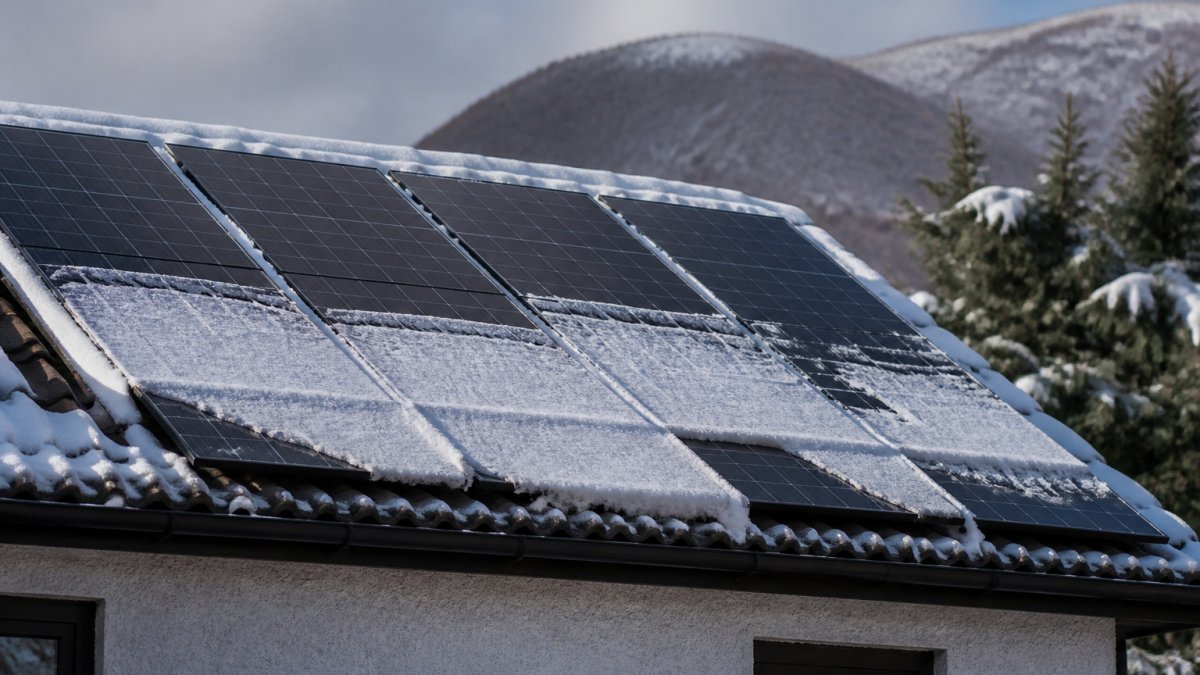
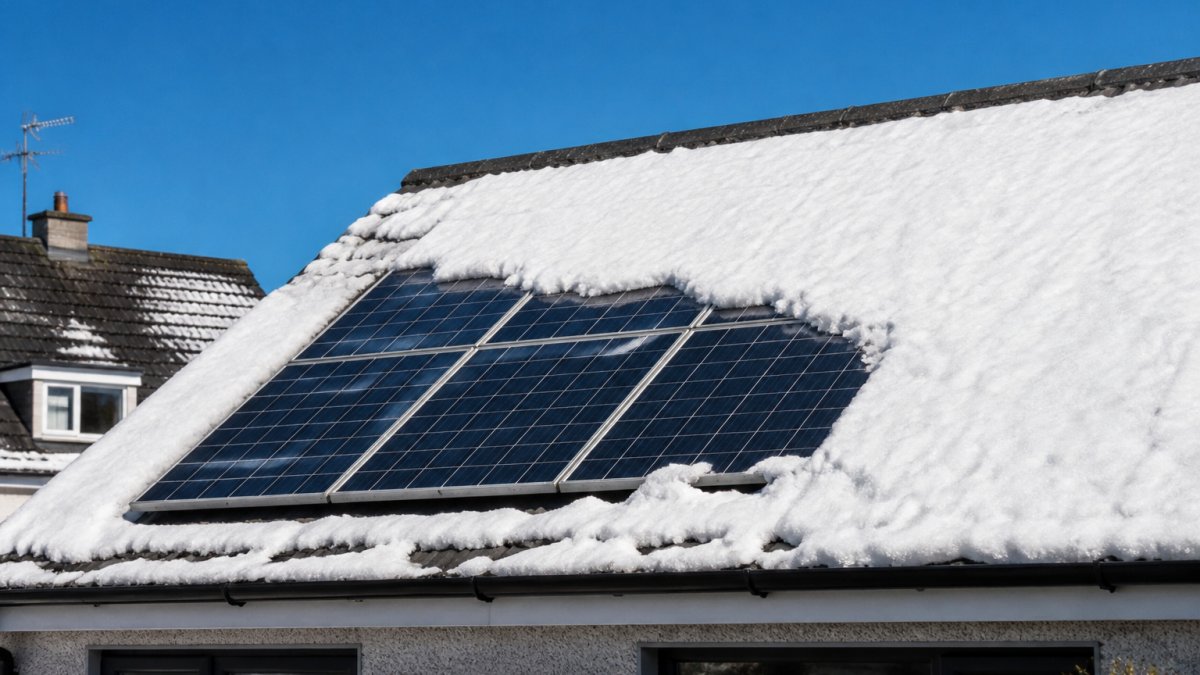
When snow accumulates on your panels, generation stops almost completely. Snow is opaque. It blocks light from reaching the cells. A panel covered in 10 cm of snow generates virtually nothing.
The question becomes: how quickly does snow slide off or melt? This depends on panel tilt, snow type, temperature, and wind.
The shedding mechanism. Snow does not simply melt in place. On a tilted panel, the primary loss mechanism is sliding. Snow accumulates until the weight and the reduced friction at the glass interface allow the mass to slip.
Panels tilted at 35-45 degrees (standard for most installations) shed snow reasonably well once conditions change. Steeper pitches shed faster. A 45-degree roof clears noticeably quicker than a 30-degree roof because gravity overcomes the snow-to-glass bond at a lower accumulated depth.
Realistic generation estimates. These are illustrative ranges for a typical 4 kWp system in central Scotland, not guarantees. They assume a south-facing roof at 35-40 degrees with no shading.
| Snow condition | Typical output on a winter day | Notes |
|---|---|---|
| Heavy snow cover (5 cm+) | 0-1 kWh | Effectively zero until snow clears |
| Light dusting or partial cover | 1-4 kWh | Some diffuse light reaches exposed cells |
| Snow-free, cold and clear | 8-14 kWh | Best winter case; cold boosts efficiency |
| Snow-free, overcast | 2-5 kWh | Diffuse light only |
A user in central Scotland reported that their 4.8 kW system generated 73 kWh in January 2026. That is consistent with a month where snow-free days dominated, or where snow melted quickly between events.
Click HERE for your FREE SURVEY today →
Light snow often slides off within hours if the panel angle is steep enough and temperatures are near freezing. Heavy snow can remain for days if temperatures stay well below freezing. Scottish weather varies. Some winters see frequent snow events.
How to Clear Snow from Solar Panels Safely
Clearing snow yourself is possible but requires caution. Panels are fragile. Improper clearing can cause damage that outweighs any generation lost during a short snow event.
The default advice: let snow melt naturally. Most Scottish snow events are followed by milder weather within days. Melting and sliding happen without intervention. The generation lost during a typical 1-3 day snow cover is small compared with the annual output of a well-designed system, and the risk of damaging panels or injuring yourself on a icy roof is real.
When intervention might be justified. If snow has lain for more than about a week, or if a heavy accumulation is putting load on roof fittings, a gentle clear can be considered. The decision should weigh the value of a few days' generation against the cost of a damaged panel or a fall.
If you choose to clear snow manually, follow these steps:
- Use a soft brush or plastic squeegee, never metal tools
- Work from ground level with an extension pole when possible
- Do not walk on the roof or climb onto the panels
- Clear gently to avoid scratching the glass surface
- Never use hot water, which can crack cold glass
- Avoid standing under the roof edge while snow is sliding
Pressure washers are not recommended. High pressure can damage seals and coatings. The risk outweighs the benefit.
What not to do. Do not use a ladder on snow or ice. Do not chip at ice with a tool. Do not pour hot water or de-icing salt on the panels. Do not attempt to clear snow from a roof with a steep pitch or from a height without proper fall protection.
When to contact an installer. If snow has caused visible damage, if a panel is cracked, or if you are concerned about the weight on the mounting system, contact your installer. Professional clearing services exist and have insurance and proper equipment. Costs vary. For most homeowners, waiting for natural melting is the most practical option.
Maximising Winter Generation: Practical Steps for Scottish Homeowners
You can't control Scottish weather, but you can optimise your system design and expectations.
System orientation matters. A south-facing roof is ideal for year-round generation. South-west or south-east facing roofs still work well.
Tilt angle affects snow shedding. Panels tilted at 40-45 degrees shed snow better than shallow angles. Steeper angles also capture winter sunlight more effectively because the sun sits lower in the sky.
Battery storage adds resilience. A battery system stores energy from clear winter days, allowing you to use that power when snow covers the panels.
Monitor your system regularly. Check generation data weekly during winter. If output drops unexpectedly on a clear day, snow might be the cause.
Plan realistic winter budgets. Don't assume your system will meet 100% of winter electricity needs. Most Scottish systems cover 30-50% of winter consumption. The rest comes from the grid.
Smarter Utility designs systems with winter performance in mind. Our free surveys assess your roof orientation, tilt angle, and shading. We help you understand what to expect from your specific location and roof.
Winter solar generation in Scotland is real but reduced. Your panels work on cold, clear days. They work on cloudy days. Snow temporarily stops them.
The key insight: don't judge your system's performance by winter alone. A well-designed solar installation balances winter output with summer surplus. Over a full year, Scottish systems deliver substantial savings and carbon reduction.
Get started with Smarter Utility and receive a free, no-obligation home survey. We'll assess your roof, explain your realistic winter and summer generation, and design a system tailored to your energy needs.
Frequently Asked Questions
Do solar panels work when covered with snow?
Solar panels covered in snow produce little to no electricity because snow blocks sunlight from reaching the photovoltaic cells. Even light snow cover substantially reduces generation. However, panels often shed snow naturally due to their smooth surface and slight tilt, especially during mild spells or as frost melts. Once snow clears, normal winter generation resumes within hours.
How much does solar panel output drop in winter compared to summer?
Winter output is typically 60-70% lower than summer output due to shorter daylight hours and the sun's lower angle in the sky. A system generating 15-20 kWh daily in summer might produce only 4-6 kWh in winter. Cold temperatures actually improve panel efficiency slightly, but reduced sunlight exposure is the dominant factor. Battery storage can help you use winter generation more effectively.
Should you remove snow from solar panels?
Most snow slides off naturally within days as the sun warms the panel surface. Manual removal carries safety risks, particularly on steep roofs or in icy conditions. Only consider removal if heavy snow blocks panels for extended periods and you can do so safely from the ground using a soft brush or squeegee. Never use sharp tools or walk on a snowy roof, and always prioritise your safety over a few days of lost generation.
Do solar panels still work on cloudy winter days?
Yes, solar panels generate electricity on cloudy days because they use diffuse light, not just direct sunlight. On cloudy winter days, output drops to 10-25% of peak capacity depending on cloud thickness. Panels continue to work throughout daylight hours, but the combination of cloud cover and short winter days means generation is significantly lower than clear summer days. This is why battery storage becomes valuable for winter self-consumption.