 listicle
Grid Energy Alternatives for Industrial Facilities
Table of Contents
- Why Industrial Facilities Are Moving Away from Grid Reliance
- Industrial Solar PV Installation Costs: What to Expect
- Battery Storage Systems for Commercial Energy Resilience
- Renewable Energy Grants for Businesses: Funding Your Transition
- Low Carbon Heat Technologies for Industrial Processes
- Regulatory Compliance for On-Site Energy Generation
- Microgrids vs. Grid Upgrades: A Cost-Benefit Analysis
- Integrating Hydrogen for High-Temperature Industrial Processes
- Frequently Asked Questions
Last Updated: September 15, 2026
Why Industrial Facilities Are Moving Away from Grid Reliance
Industrial operators across Scotland now treat grid energy alternatives as core infrastructure rather than a niche sustainability gesture, driven by rising network charges, constrained grid capacity, and net zero targets. At Smarter Utility, we see facilities that once treated electricity as a fixed overhead now designing their own generation and storage capacity.
The pressure is practical, not ideological. Energy-intensive industries face volatile wholesale prices, while rural and off-gas grid sites contend with weak connections and long reinforcement timelines. The question is no longer whether to diversify supply, but which combination of solar photovoltaic, battery storage, and low carbon heat delivers the best return.
This guide breaks down the main grid energy alternatives available to industrial facilities, covering installation costs, funding routes, compliance obligations, and the trade-offs between microgrids and traditional grid upgrades.
Industrial Solar PV Installation Costs: What to Expect
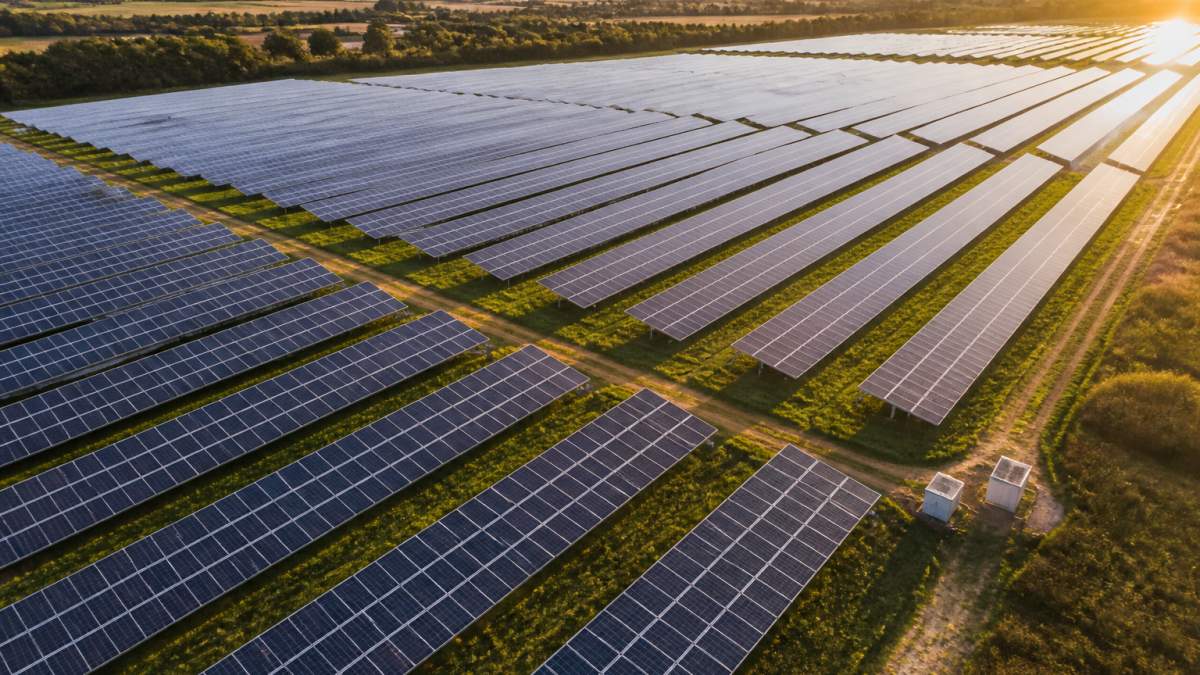
Industrial solar PV installation costs depend on array size, roof structure, grid connection requirements, and whether battery storage is included. No single figure applies across sites, so reputable installers survey each facility, assessing load profiles, roof condition, and export capacity, before quoting.
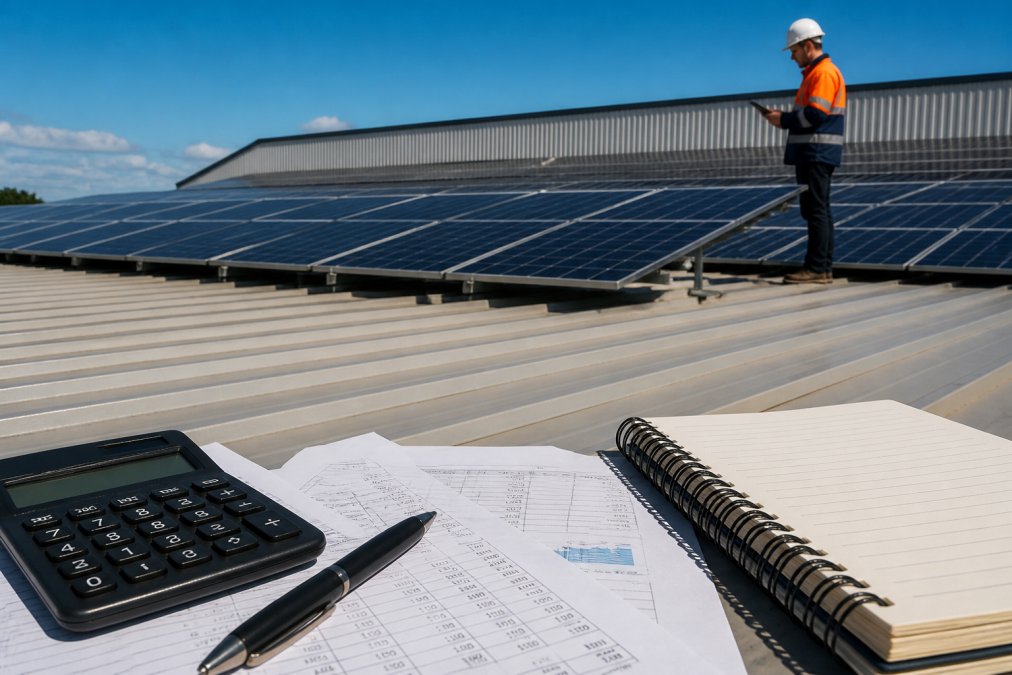
Key Cost Drivers for Commercial-Scale Solar
The biggest variable is scale: a large manufacturing roof costs far more upfront than a small warehouse array, but cost per kilowatt typically falls as capacity rises. Other drivers include:
- Structural reinforcement if the roof cannot bear the additional load
- Inverter selection and whether string or central inverters suit the site
- Connection upgrades required by the distribution network operator
- Whether storage is co-located to capture generation for later use
A common mistake is comparing quotes on headline price alone. The real difference between a cheap quote and a properly specified one usually shows up in connection arrangements and monitoring, not the panels.
A Practitioner's Framework for Building the Business Case
Most published guidance stops at listing cost drivers. Facility managers need to translate those drivers into a capital expenditure case their finance team will approve. This is the framework we use when scoping industrial projects.
1. Establish the avoided cost baseline. Before sizing any generation, calculate what the site pays per unit of energy, including wholesale price, network charges, and any climate change levy. This baseline is the figure your generation must beat, and the number most often missing from grant-led proposals.
2. Separate self-consumption from export. Only generation consumed on site avoids the full retail cost; export is typically paid at a lower rate via a power purchase agreement. A project that looks strong on total generation can look weak once export-heavy assumptions are stripped out.
3. Model the connection cost explicitly. Distribution network operator reinforcement can be the largest line item on a constrained site and is the cost most often underestimated at quotation stage. Ask for the connection offer in writing before signing anything.
4. Stress-test against price scenarios. Run the case at current, lower, and higher energy prices. If it only stacks up at today's peak prices, it is a speculative bet rather than an infrastructure investment.
5. Account for degradation and inverter replacement. Panels lose output gradually, and inverters typically need replacing well before the panels do. A whole-life cost model that ignores these will overstate returns.
Payback Expectations and What Moves Them
Well-specified industrial solar projects in Scotland sit in a payback range that depends heavily on self-consumption ratio and the site's existing energy price. The levers that move payback most, in rough order of impact:
- Increasing the proportion of generation consumed on site rather than exported
- Co-locating storage to capture generation for peak tariff periods
- Securing capital grant support to reduce the upfront outlay
- Avoiding unnecessary connection reinforcement through careful system sizing
Model the project without any grant first. If it clears the organisation's hurdle rate on its own merits, grant funding becomes upside rather than a dependency; projects that only work with grant support are fragile to application failure and scheme changes.
Why This Matters More Than Headline Pricing
We avoid publishing a single cost-per-kilowatt figure because it would be misleading: two sites of identical capacity can differ substantially in cost depending on roof structure, connection arrangements, and whether storage is included. The framework above lets you interrogate any quote and compare proposals like-for-like, more useful than a benchmark that may not apply to your site.
Click HERE for your FREE SURVEY today →
Battery Storage Systems for Commercial Energy Resilience
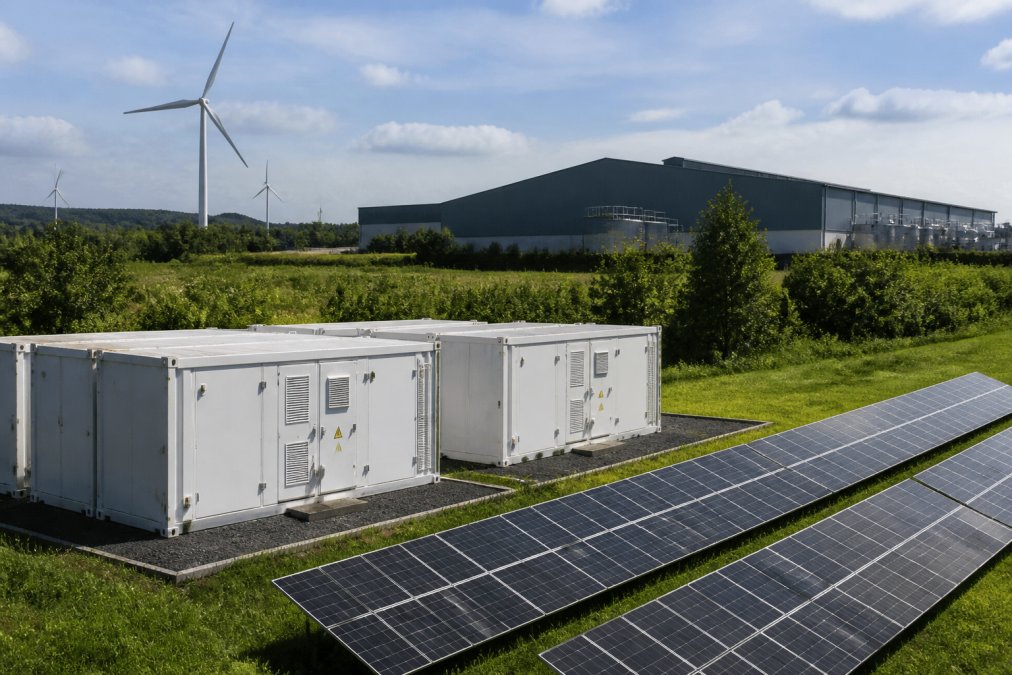
Battery storage systems for commercial energy determine how much generated power you actually use on site, capturing solar output by day and discharging it during peak tariffs or grid constraints. Sizing is where most projects succeed or fail. Optimizing these capacity requirements becomes even more critical when adding battery storage to an existing solar system to ensure the infrastructure remains balanced against shifting industrial loads.
Sizing Storage for Peak Demand and Grid Balancing
Correct sizing starts with interval data: we review half-hourly consumption to identify peak demand periods, then match storage capacity to those peaks rather than total daily usage. Oversized batteries sit idle and tie up capital; undersized ones fail to shave peaks.
Grid balancing and flexibility markets offer extra revenue for sites with controllable storage, though participation depends on your connection agreement and metering setup. Co-locating solar and storage pays off here: the same inverter infrastructure supports both generation and flexible participation.
Renewable Energy Grants for Businesses: Funding Your Transition
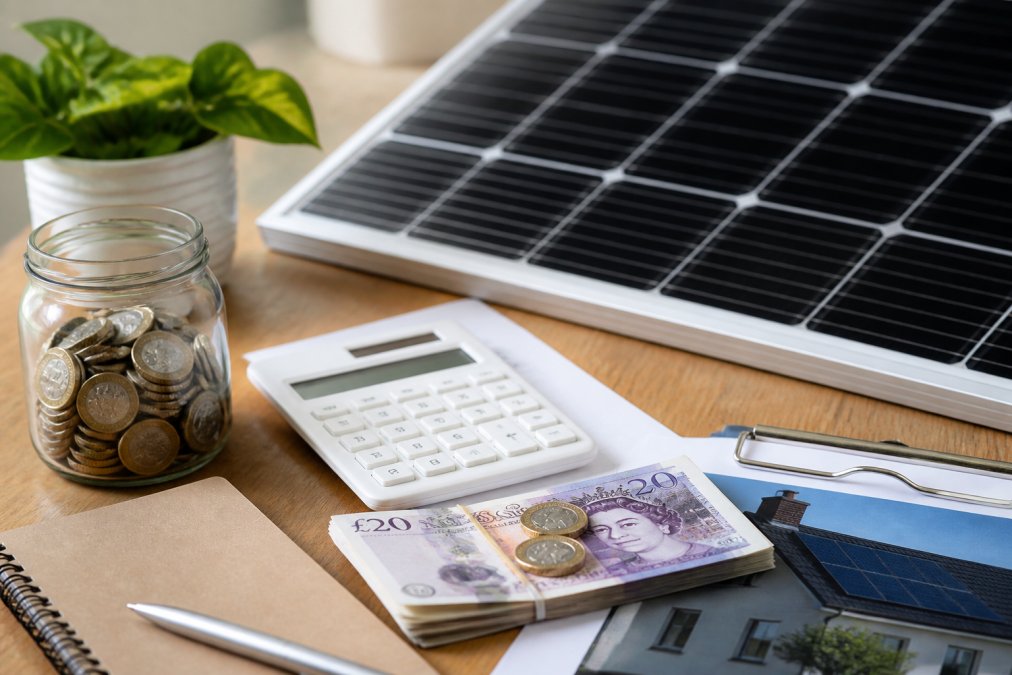
Renewable energy grants for businesses can materially change project economics, but the landscape shifts frequently. Eligibility rules, application windows, and funding levels are set by government and updated regularly, so confirm current terms with the official source before committing capital.
Support falls into two categories: capital grants that reduce upfront installation cost, and ongoing incentives tied to generation or export. For industrial facilities, the most relevant schemes target decarbonisation of heat and industrial processes rather than domestic-scale installations.
UK Government guidance on energy grants and support for businesses
A frequent oversight is assuming a grant is guaranteed before approval. Design and procurement should assume funding may not come through, so the project still stacks up on its own merits.
How to Navigate the Funding Landscape Without Wasting Months
Because scheme terms change, the practical skill is not memorising grants but qualifying for them efficiently.
The Compliance Dimension of Grant-Funded Projects
A Sensible Sequencing for Industrial Facilities
Low Carbon Heat Technologies for Industrial Processes
Heat Pumps and Thermal Storage for Off-Gas Grid Sites
Regulatory Compliance for On-Site Energy Generation
Key obligations typically include:
Microgrids vs. Grid Upgrades: A Cost-Benefit Analysis
| Factor | Grid Upgrade | Microgrid |
|---|---|---|
| Upfront cost | High, no generation | High, generates power |
| Ongoing benefit | Capacity only | Generation and resilience |
| Timeline | Often years | Months |
| Control | Network operator | Facility operator |
| Best for | Dense urban sites | Remote or constrained sites |
Integrating Hydrogen for High-Temperature Industrial Processes
Frequently Asked Questions
What are the most reliable off-grid energy solutions for industrial use?
Reliability depends on your site's load profile and location. Solar PV paired with battery storage systems for commercial energy offers predictable generation and backup power. For high-temperature processes, hydrogen or biomass may be needed. Wind and tidal can supplement solar where conditions allow. A site survey is essential to size the system correctly and ensure security of supply.
How does the Scottish energy strategy support industrial self-generation?
The Scottish Government's energy strategy targets net zero by 2045 and supports decentralised energy through renewable generation capacity. It encourages industrial facilities to adopt low carbon heat and on-site generation. Renewable energy grants for businesses, such as the Scottish Industrial Energy Transformation Fund, help fund feasibility studies and capital projects. These policies reduce the payback period for solar PV and battery storage.
Can industrial facilities in remote areas operate entirely off-grid?
Yes, but it requires careful design. Off-gas grid sites often combine solar PV, battery storage, and backup generators. For continuous high-load processes, 100% off-grid may need oversized generation and storage, which increases industrial solar PV installation costs. A hybrid approach that uses the grid as backup is often more cost-effective. An energy audit will determine the right mix.
What are the benefits of integrating battery storage with industrial solar?
Battery storage systems for commercial energy let you store excess solar generation for use during peak demand or grid outages. This reduces reliance on expensive peak-rate electricity and supports grid balancing. Storage also improves your facility's flexibility participation in demand-side response schemes, which can generate additional revenue. It is key to maximising on-site renewable consumption.
Are there government incentives for industrial renewable energy projects?
Several UK-wide and Scottish schemes exist. The Smart Export Guarantee pays for excess renewable electricity exported to the grid. The Scottish Industrial Energy Transformation Fund supports decarbonisation projects. Enhanced Capital Allowances allow you to offset the cost of energy-efficient equipment against tax. Renewable energy grants for businesses can cover part of the installation cost. Eligibility varies, so check current criteria.