 how-to
Installing EV Charger on Old Electrical Panel: A Step-by-Step Guide
Table of Contents
- Assessing Your Existing Electrical Service Capacity
- Signs Your Electrical Panel Needs Attention
- EICR for EV Charger Installation: Why It Matters
- Consumer Unit Upgrade for EV Charger: Your Options
- Smart EV Charger Load Balancing Solutions
- Step-by-Step Installation Process
- DIY vs. Professional Installation: What You Need to Know
- Conclusion
Last Updated: August 25, 2026
Assessing Your Existing Electrical Service Capacity
Installing an EV charger on an old electrical panel requires understanding your current electrical infrastructure. Most older UK properties have 60-amp or 100-amp main fuses, while modern homes typically feature 100-amp or higher capacity (gov.uk). An EV charger demands sustained load delivery, typically 32 amps for Level 2 charging, which represents a significant portion of older panels' total capacity (peer-reviewed research).
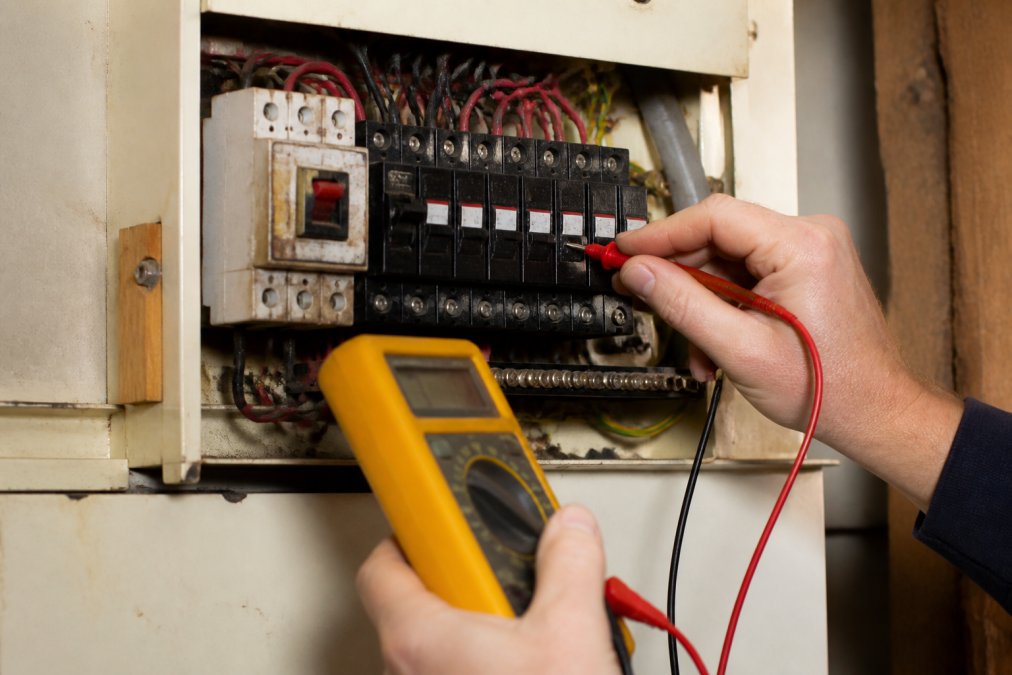
How to check your current amperage and voltage
Your consumer unit's main switch displays your current service capacity, marked as "60A", "80A", or "100A". UK domestic properties operate at 230 volts single-phase. Check your electricity bill or contact your DNO (Distribution Network Operator) using your Electricity Supply Number to confirm your current service agreement and available headroom.
Understanding demand factors is essential when calculating whether your panel can handle an EV charger. Demand factors account for the reality that not all circuits operate simultaneously at full capacity. A typical household with a 100-amp service might have approximately 23 kW of connected load, but the demand factor (usually 0.7-0.9 for domestic properties) means you're unlikely to draw the full amount simultaneously.
Understanding demand factors and load calculation
When installing an EV charger, you must add its continuous duty rating (typically 7.2 kW for a 32-amp Level 2 charger) to your existing peak demand. If your property already operates near maximum capacity during winter months, a charger installation may require upgrading your electrical service capacity. Properties with older 60-amp services almost always require either a service upgrade or load management solutions.
Signs Your Electrical Panel Needs Attention
Older electrical panels often show visible signs of deterioration that indicate they're unsuitable for EV charger installation.
Identifying outdated fuses and circuit breaker issues
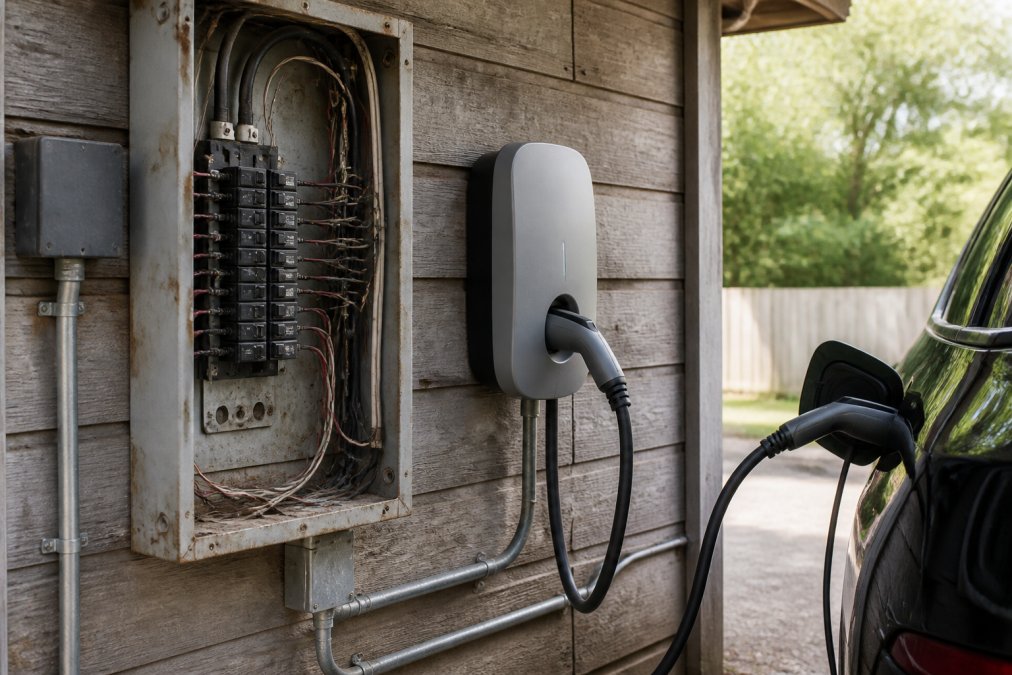
Fused consumer units, common in properties built before the 1980s, use replaceable cartridge fuses rather than modern circuit breakers. These systems are fundamentally incompatible with modern EV charging infrastructure. A fused panel cannot provide the precise protection that an EV charger's EVSE (Electric Vehicle Supply Equipment) requires. Additionally, fuses lack the sensitivity to detect ground faults that modern RCDs (Residual Current Devices) catch instantly.
If your consumer unit contains fuses instead of circuit breakers, visible corrosion or burn marks, loose or discoloured wiring connections, or breakers that trip frequently without clear cause, installation of an EV charger will be blocked until the panel is upgraded. Modern EV chargers integrate with electrical infrastructure through sophisticated communication protocols that older panels simply cannot support.
Safety risks of overloading an old panel
Overloading an electrical panel creates fire risk. When current exceeds the panel's capacity, wiring insulation degrades gradually, eventually exposing live conductors. Old wiring often uses cloth insulation that deteriorates faster than modern PVC. A sustained overload condition accelerates this degradation significantly.
Thermal overload is the primary failure mode. Excessive current generates heat in the panel's main conductors and busbars, damaging insulation and component connections. Ground faults present another critical risk: if an EV charger develops a fault causing current to leak to ground, an old panel without modern GFCI protection cannot detect this immediately.
EICR for EV Charger Installation: Why It Matters
An Electrical Installation Condition Report (EICR) is a comprehensive safety assessment of your entire electrical infrastructure. Before installing an EV charger on an old electrical panel, an EICR identifies whether the existing system is safe to modify.
What an Electrical Installation Condition Report covers
An EICR examines every circuit, cable, protective device, and earthing connection in your property. The electrician tests insulation resistance, verifies that circuit breakers operate correctly, checks that earthing conductors are properly connected, and identifies any circuits operating outside safe parameters. The report classifies findings into three categories: satisfactory, observations requiring attention, and dangerous defects.
For EV charger installation, the EICR specifically evaluates whether your consumer unit can safely accept a new high-load circuit. An EICR is essential before proceeding.
When an EICR is mandatory before installation
Most UK insurers and local authorities now require an EICR before approving EV charger installation on properties older than 20 years. If your property was built before 2004, an EICR is effectively mandatory. The report becomes part of your property's electrical history and provides evidence that you've taken due diligence before modifying your installation. Some mortgage lenders and home insurance providers now explicitly require EICR documentation before approving EV charger installation.
Consumer Unit Upgrade for EV Charger: Your Options
Once your EICR identifies that your existing consumer unit cannot safely support an EV charger, you have two primary upgrade paths: main fuse and circuit breaker replacement, or sub-panel installation.
Main fuse and circuit breaker replacement
Replacing your consumer unit with a modern equivalent is the most straightforward upgrade path. A new consumer unit typically features a higher amperage rating (usually 100-amp or 125-amp capacity), modern RCD protection on all circuits, and individual circuit breakers that meet current electrical standards. Installation involves disconnecting your property from the main supply, removing the old unit, installing the new one, and reconnecting all circuits. This work must be carried out by a qualified electrician and requires notification to your local authority's building control department.
The replacement process typically takes one full working day. Your property will be without electricity during installation, usually 4-8 hours depending on circuit complexity. The new consumer unit provides modern protection throughout your property, not just for the EV charger circuit. However, your DNO must confirm that your incoming service cable can support the new unit's higher capacity.
Installing a sub-panel or additional capacity
A sub-panel installation provides an alternative when main consumer unit replacement isn't practical. A sub-panel is a secondary electrical panel fed from a new circuit in your main consumer unit. The new EV charger circuit connects to the sub-panel rather than to the main unit. This approach avoids disconnecting your entire property during installation.
Sub-panel installation requires running a heavy-gauge cable from your main consumer unit to the sub-panel's location, typically near where the EV charger will be installed. Sub-panels are particularly valuable when the main consumer unit is located far from the EV charger installation point.
Smart EV Charger Load Balancing Solutions
Smart load management systems offer an alternative to expensive electrical upgrades for properties where panel capacity is marginal. These systems dynamically adjust the charger's power draw based on your home's real-time electrical demand, preventing overload while maximising charging speed when capacity is available.
Click HERE for your FREE SURVEY today →
How load management systems protect old panels
A load management device (LMD) monitors your property's total electrical consumption through a sensor installed on your main supply. When your home's demand approaches your panel's safe continuous duty limit, the LMD automatically reduces the EV charger's amperage draw. When demand drops, the charger increases its draw again.
This dynamic load balancing allows older panels to safely support EV charging without physical upgrades. A 100-amp panel that would normally be marginal for a 32-amp charger can safely support one with load management enabled. Load management systems require the charger to be smart-enabled.
Level 1 versus Level 2 charging requirements
Level 1 charging uses standard 230V household circuits (typically 13-amp circuits) and delivers approximately 2-3 kW of power, taking 24-48 hours for a full charge. Level 2 charging uses dedicated circuits with higher amperage capacity (typically 16-32 amps) and delivers 7-22 kW of power, fully charging most EVs in 6-10 hours. Level 2 installation requires either a new dedicated circuit in your consumer unit or a sub-panel installation.
The choice between Level 1 and Level 2 depends on your property's electrical capacity and your charging needs. If you drive fewer than 30 miles daily and can tolerate overnight charging, Level 1 might be acceptable. If you drive 50+ miles daily, Level 2 is essential.
Step-by-Step Installation Process
Installing an EV charger on an old electrical panel follows a structured process that prioritises safety assessment before any physical work begins.
Step 1: Get a professional electrical assessment
Your first action is engaging a qualified electrician to conduct a comprehensive assessment. This assessment specifically evaluates your property for EV charger compatibility, verifies your current service capacity, identifies any existing electrical faults, and determines whether upgrades are necessary. The electrician also surveys your property to identify the optimal charger installation location.
Step 2: Determine whether a panel upgrade is needed
Based on the assessment, the electrician provides a written recommendation: proceed with charger installation using your existing panel, install a sub-panel to add capacity, or upgrade your main consumer unit.
Step 3: Complete any required upgrades
If upgrades are necessary, these are completed before the charger installation. Consumer unit replacement must be notified to your local authority's building control department and requires an inspection after completion. Once upgrades are complete and inspected, your electrical infrastructure is ready for the charger circuit.
Step 4: Install the EVSE and configure smart charging
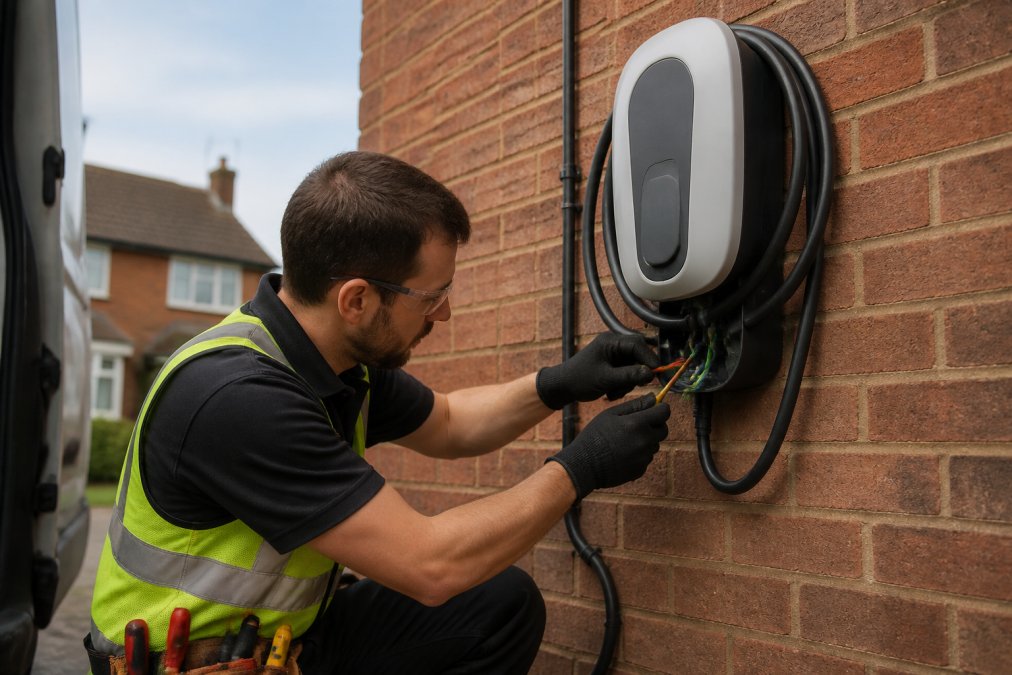
Once your electrical infrastructure is confirmed adequate, the charger installation proceeds. The electrician runs the dedicated circuit from your consumer unit (or sub-panel) to the charger's installation location, installs the wall-mounted EVSE unit, and tests the complete circuit. This phase typically takes one full working day. If you're using a smart charger with load management, the electrician configures the communication settings and tests the load management system's response.
DIY vs. Professional Installation: What You Need to Know
Electrical work on your consumer unit or main supply circuits is not suitable for DIY installation in the UK. Any work involving your main consumer unit, service cable, or circuits feeding the EV charger must be carried out by a qualified electrician registered with a recognised competent person scheme (such as NICEIC or ELECSA). This is a legal requirement under the Building Regulations. Work carried out by unqualified persons voids your property's electrical safety certification and may invalidate your buildings insurance.
A qualified electrician handles all necessary notifications to your local authority's building control department, obtains required inspections, and provides you with a completion certificate. Common mistakes include underestimating the complexity of assessing an old panel, choosing a charger without confirming your electrical infrastructure can support it, improper cable routing, and neglecting to budget for building control inspection and certification. The correct sequence is: assess your electrical capacity first, then select a charger that matches that capacity.
Installing an EV charger on an old electrical panel is achievable, but it requires honest assessment of your infrastructure's capacity before proceeding. Many older properties need upgrades, consumer unit replacement, sub-panel installation, or smart load management to safely support charging. These upgrades simultaneously improve your entire electrical system's safety and capacity for future technologies like heat pumps or battery storage.
At Smarter Utility, we conduct detailed electrical assessments specifically designed to identify the most cost-effective upgrade path for your property. Our fully accredited team provides a free, no-obligation home survey that evaluates your current capacity, recommends the appropriate solution, and explains exactly what's involved. Rather than guessing whether your panel can handle an EV charger, get professional clarity on your options. Building Regulations guidance on electrical installations confirms that all such work requires qualified oversight; we ensure yours meets every requirement. Click HERE for your FREE SURVEY today and discover whether your property is ready for EV charging, or what preparation work will get you there.
===
Frequently Asked Questions
Can I add an EV charger to my existing consumer unit without upgrading it?
It depends on your current electrical service capacity and amperage. Most older panels have limited spare capacity. An EICR inspection will reveal whether your consumer unit can safely support an EV charger or if an upgrade is necessary. Smart load management systems can sometimes allow charging on existing panels by distributing power more efficiently, but this requires professional assessment first.
Do I need an EICR before installing an EV charger?
Yes. An Electrical Installation Condition Report is essential before installing an EV charger on an old electrical panel. The EICR identifies any faults, outdated wiring, or safety issues that could make the installation unsafe. Many installers and electrical code requirements mandate this inspection. It protects both you and the installation team by ensuring the panel can safely handle the additional load.
What's the difference between Level 1 and Level 2 EV charging, and how does it affect my old panel?
Level 1 charging uses a standard 13A socket and delivers roughly 2-3 kW of power, making minimal demands on your electrical infrastructure. Level 2 charging requires a dedicated circuit and typically delivers 7-22 kW, demanding significantly more from your panel. If your old panel lacks spare capacity, Level 1 may be possible without upgrades, while Level 2 usually requires a consumer unit upgrade or smart load management to prevent overloading.
How do I know if my electrical panel is too old to support an EV charger?
Signs include fuses rather than circuit breakers, limited spare capacity, visible corrosion or damage, and a main fuse rated below 100A. Panels over 40 years old often lack the infrastructure for EV charging. A licensed electrician can assess your specific panel, calculate your electrical demand, and determine whether a consumer unit upgrade is mandatory. Some older panels can support charging with smart load balancing, while others require complete replacement.
This article was written using GrandRanker