 blog
How to Choose Between Lithium-Ion and Salt Water Home Batteries
Last Updated: October 24, 2026
Quick Summary
Lithium-ion vs salt water batteries differ fundamentally in energy density and performance: lithium-ion stores 160-200 Wh/kg and dominates residential markets, while salt water stores 110-160 Wh/kg and requires 40-50% more physical space for equivalent capacity. Lithium-ion responds faster to power demands and performs better in cold weather, making it the better choice for most homes today, though salt water offers material cost advantages as manufacturing scales.
- Lithium-ion (LFP) batteries achieve 160-200 Wh/kg energy density versus salt water's 110-160 Wh/kg.
- Salt water systems require roughly 40-50% more volume to store the same usable capacity as lithium-ion.
- Lithium-ion batteries charge and discharge faster, making them better for EV chargers and rapid load changes.
- Salt water batteries lose capacity more dramatically in cold weather, limiting suitability for harsh winters.
- Compare quotes using cost per usable kWh over the warranty period, not sticker price alone.
Table of Contents
- Understanding Lithium-Ion and Salt Water Battery Chemistry
- Energy Density and Storage Capacity: Key Differences
- Salt-Water Battery Costs and Specifications
- Lithium-Ion Home Battery Lifespan and Degradation
- Home Battery Safety Comparison
- Salt-Water Battery Disadvantages and Trade-Offs
- Choosing the Right Battery for Your Home Energy System
- Frequently Asked Questions
Understanding Lithium-Ion and Salt Water Battery Chemistry
The chemistry powering your home battery storage affects performance, cost, and longevity. Learn more about what residential battery storage is and how it works in your home.
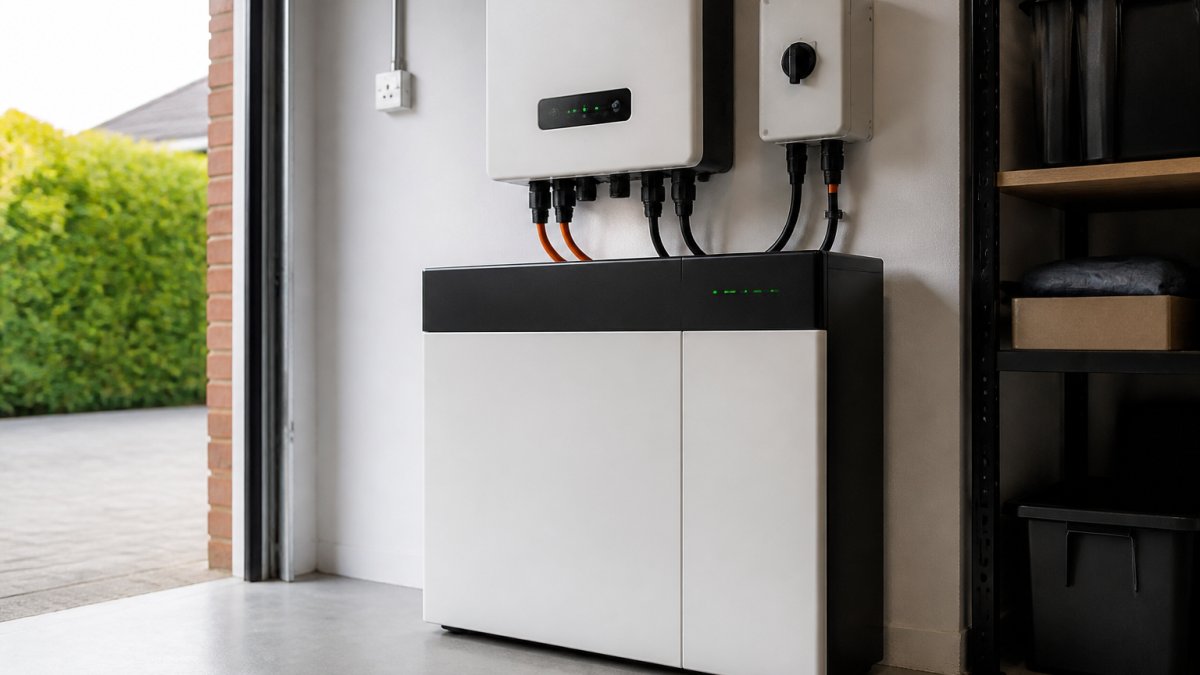
Lithium-ion batteries move lithium ions between two electrodes, releasing electrons that flow through an external circuit to power your home. The chemistry is mature and dominates the residential market. Salt water batteries use sodium ions instead; sodium is far more abundant and cheaper to source, driving recent interest in this alternative for stationary storage.
The key difference lies in how these chemistries perform. According to research comparing battery chemistries, lithium-ion batteries achieve energy densities of 200-250 Wh/kg, while sodium-ion batteries typically reach 110-160 Wh/kg.
The chemistry you select determines how much energy you can store and how efficiently your system performs over its lifetime, so base the decision on your home's actual needs, not marketing claims.
Energy Density and Storage Capacity: Key Differences
Lithium-ion batteries pack significantly more energy into a smaller footprint.
If your home has limited wall space or you're retrofitting, a lithium-ion system might fit where a salt water one wouldn't.
Storage capacity, the total amount of energy a battery can hold, is separate from energy density. What changes is the physical volume each occupies and how efficiently it stores and releases that energy. guidance on sizing home battery systems emphasises that proper sizing depends on your daily energy consumption patterns, not just the chemistry you select.
We recommend how to size home battery storage correctly as your first step, regardless of which chemistry you're considering.
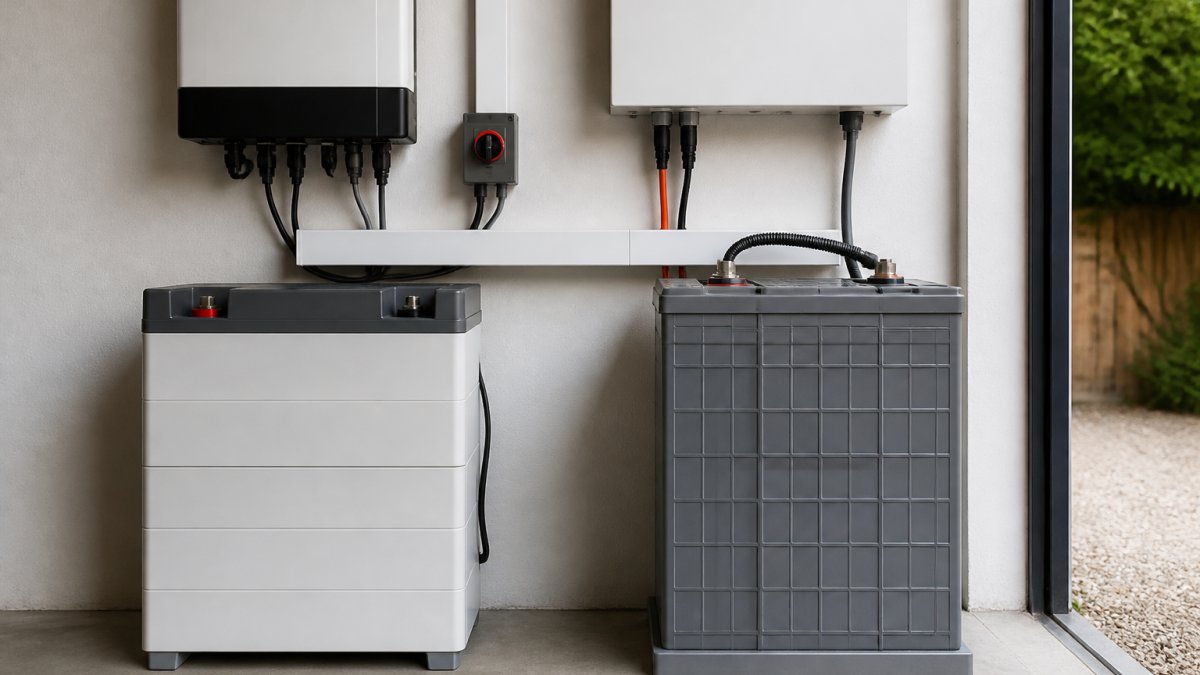
Lithium-ion and salt water batteries store energy with different efficiency, affecting the physical space each system requires.
| Battery Type | Energy Density (Wh/kg) | Physical Space Required |
|---|---|---|
| Lithium-ion (LFP) | 160-200 | Smaller footprint |
| Salt water (sodium-ion) | 110-160 | 40-50% more volume |
Salt-Water Battery Costs and Specifications
Salt water batteries attract interest primarily because of material cost advantages. Sodium carbonate is over 1,000 times more abundant than lithium, and analysis of sodium-ion battery materials suggests that using aluminium foil for both electrodes can reduce material costs by 30-40% compared with lithium-ion designs.
Material savings don't always reach retail prices. Manufacturing maturity, supply chain scale, and competition all shape final pricing, and lithium-ion's years of residential dominance have driven costs down through volume. Salt water remains emerging, with fewer manufacturers and less established distribution.
What actually drives the installed price
A cell-level price comparison is misleading for a homeowner because the battery is only one line item. A typical residential installation also includes:
- the battery modules themselves;
- a compatible inverter or hybrid inverter, if your existing unit cannot accept the battery;
- mounting, enclosure, and cable runs;
- electrical protection and isolation equipment;
- labour for survey, installation, commissioning, and electrical certification;
Because salt water systems are less common residentially, installers may need bespoke enclosures or non-standard inverter pairings. That one-off engineering often absorbs the headline cell-cost saving at the point of sale.
Usable capacity and cost per delivered kWh
When comparing quotes, focus on usable capacity, not nameplate capacity, the portion you can actually draw on within depth-of-discharge limits and reserve margins. A system marketed at 10 kWh may deliver noticeably less.
The more useful metric is cost per usable kilowatt-hour over the warranted life. To calculate it:
- Take the whole-system installed cost, including inverter and labour.
- Divide by the usable capacity in kWh.
- Divide again by the number of years or cycles the warranty guarantees.
This pence-per-warranted-kWh figure lets you compare a cheaper battery with a short warranty against a dearer one with a longer warranty on equal terms, and exposes low headline prices offset by short warranties or conservative usable-capacity figures.
Specifications to request in writing
Before comparing salt water and lithium-ion quotes, ask each installer to confirm in writing:
- nameplate and usable capacity in kWh;
- continuous power and peak power in kW, and for how long the peak can be sustained;
- round-trip efficiency;
- warranted cycle life and the depth of discharge at which it is quoted;
- expected annual degradation and the minimum retained capacity at end of warranty;
- operating temperature range and any derating below or above it;
Salt water batteries typically claim 15,000+ cycles, though independent verification is limited and the depth of discharge isn't always stated. LFP batteries are documented at 6,000-10,000 cycles with extensive real-world validation. A 15,000-cycle claim at shallow depth of discharge isn't directly comparable with a 6,000-cycle claim at a deeper one, always compare like with like.
For a complete picture, request a home battery storage installation quote from a qualified installer. Pricing depends on system size, inverter compatibility, installation complexity, and supply availability.
Lithium-Ion Home Battery Lifespan and Degradation
Lithium-ion batteries, particularly LFP chemistry, have demonstrated reliable performance over extended periods. Most residential systems are warranted for 10-15 years, with expected usable life often extending beyond that timeframe.
Degradation occurs in all chemistries.
Temperature extremes accelerate degradation in lithium-ion systems. Heat stress shortens lifespan significantly, which is why proper thermal management and ventilation during installation matter.
Click HERE for your FREE SURVEY today →
Lithium-ion's maturity means replacement parts, technical support, and recycling infrastructure are established, and qualified technicians are easy to find.
Home Battery Safety Comparison
Safety is a legitimate concern for home energy storage. Lithium-ion and salt water batteries have different risk profiles, but the practical differences are narrower than marketing on either side suggests.
How lithium-ion thermal runaway actually starts
Thermal runaway is a chain reaction where heat generated inside a cell exceeds the rate it can escape, triggered by internal short circuits, overcharging, physical damage, or sustained high ambient temperature. Past a threshold temperature, the reaction becomes self-sustaining and can spread to neighbouring cells.
LFP chemistry is significantly safer than older lithium-cobalt designs because its olivine structure is thermally and chemically more stable, and it has a higher onset temperature for runaway.
Modern residential lithium-ion systems manage this risk through layered controls:
- Cell-level monitoring that tracks voltage and temperature across the pack.
- A battery management system (BMS) that prevents overcharging, over-discharging, and operation outside the safe temperature window.
- Thermal management, whether passive ventilation or active heating and cooling, to keep cells within their operating range.
- Electrical protection such as fuses, isolation, and arc-fault detection on the DC side.
- Enclosure and placement, including separation from sleeping accommodation and combustible materials, and compliance with the relevant installation standard.
What salt water batteries do differently
Salt water batteries use aqueous electrolytes rather than flammable organic solvents. This removes the fuel source that drives a conventional lithium-ion fire, so they will not catch fire in the way a lithium-ion pack can. However, assessment of sodium-ion battery safety notes that limited field data means broad safety claims should be treated cautiously. Aqueous systems can still fail electrically, leak, or suffer performance degradation if improperly managed, and they still depend on a competent BMS and correct installation.
The installation factors that matter more than chemistry
The practical safety difference between modern LFP and salt water systems is narrower than marketing suggests. Both are safe when properly installed, monitored, and maintained, and these installation decisions matter more than the chemistry label:
- Location: a garage, utility room, or dedicated plant space with ventilation is preferable to a cupboard under a stair or a bedroom wall.
- Clearances: respect the manufacturer's minimum distances from walls, ceilings, and other equipment to allow heat dissipation.
- Ventilation: aqueous batteries can vent gas under fault conditions, so the space should not be sealed.
- Temperature: avoid locations that regularly exceed the battery's operating range, such as unshaded south-facing plant rooms or unheated outbuildings that drop below the minimum.
- Electrical protection: confirm the DC isolator, fusing, and cable sizing match the battery's fault current and charge rate.
- Certification and notification: confirm the installer will issue the relevant electrical certification and, where required, submit the DNO connection application.
Your installer's expertise and BMS quality matter more than chemistry: a well-designed LFP system in a suitable location is lower practical risk than a poorly installed aqueous system in a sealed cupboard.
Questions to ask before signing off
- What is the battery's operating temperature range, and how is it derated outside it?
- Does the BMS isolate the pack on over-temperature, over-voltage, and short circuit?
- Where exactly will the unit be mounted, and what clearances and ventilation does the manufacturer require?
- What electrical certification will be issued on completion, and will the DNO be notified if required?
- What does the warranty say about damage caused by heat, water ingress, or incorrect installation?
A short, specific answer to each of these is a better safety signal than any chemistry claim.
Salt-Water Battery Disadvantages and Trade-Offs
Salt water batteries offer material cost advantages but carry meaningful trade-offs that limit their current residential appeal.
The lower energy density means you'll need more physical space.
Charging speed is another constraint: salt water batteries charge and discharge more slowly than lithium-ion.
Performance in cold weather is a particular weakness for salt water batteries.
Supply chain and service infrastructure for salt water batteries remain underdeveloped residentially; finding a qualified technician if something fails may prove difficult.
Choosing the Right Battery for Your Home Energy System
Your choice in lithium-ion vs salt water batteries should rest on three concrete factors: your available space, your budget, and your performance requirements.
If space is limited, typical in retrofit installations or homes with small utility rooms, lithium-ion wins decisively. If you're pairing your battery with an EV charger or solar system, lithium-ion's faster response time ensures seamless integration with alternatives to Tesla Powerwall for homes.
For most residential applications today, LFP lithium-ion remains the better choice. It's mature, reliable, widely available, and supported by established service networks.
Tailor the final decision to your situation.
Choosing between lithium-ion and salt water home batteries requires balancing energy density, cost, space, and long-term performance.
Frequently Asked Questions
How do salt-water and lithium-ion home batteries compare in cost?
Salt-water batteries use inexpensive aluminium foil for both electrodes, potentially reducing material costs by 30-40% compared with lithium-ion. However, salt-water batteries remain less commercially available than lithium-ion systems, which can affect installed pricing. For a true cost comparison, you need to factor in the complete system, inverter compatibility, installation labour, and warranty. Request a tailored quote from your installer to compare lifetime cost per usable kilowatt-hour for your specific home.
Which type of home battery lasts longer?
Lithium-ion batteries, particularly LFP (lithium iron phosphate), typically last 6,000-10,000 cycles. Sodium-ion batteries claim 15,000+ cycles, suggesting a potential lifespan advantage. However, cycle life alone does not determine real-world longevity, thermal management, usage patterns, and degradation rates matter equally. Lifespan depends on how often you charge and discharge, ambient temperature, and system design. Your installer can model expected lifespan based on your actual energy use.
Are salt-water batteries safer than lithium-ion batteries?
Salt-water batteries are often promoted as safer because they do not undergo thermal runaway, the uncontrolled heating that can cause lithium-ion fires. However, little data is currently available on potential sodium-ion safety risks. When compared with LFP (lithium iron phosphate) rather than higher-nickel lithium chemistries, salt-water batteries offer no meaningful safety advantage for low-voltage home applications. Both chemistries, when properly managed, are safe for residential use.
Are salt-water batteries suitable for storing solar energy at home?
Salt-water batteries can store solar energy, but their lower energy density (110-160 Wh/kg) means they require more physical space than lithium-ion systems (160-200 Wh/kg) for the same storage capacity. For homes with limited roof or floor space, lithium-ion may be more practical. Salt-water batteries work best in applications where size and weight are less critical. Discuss your available space and solar output with your installer to determine which chemistry fits your home's layout and energy needs.