 how-to
Solar Panel Planning Permission Rules: A Scotland Guide
Table of Contents
- Do Solar Panels Need Planning Permission in Scotland?
- Permitted Development Rights for Domestic Solar Panels
- Solar Panels on Listed Buildings: Consent Requirements
- Solar Panels in Conservation Areas: Planning Permission
- Solar Panels on Non-Domestic Buildings: Planning Permission
- How to Apply for Solar Panel Planning Permission
- Determining Whether Your Property Needs Permission
- Conclusion
- Frequently Asked Questions
Last Updated: October 12, 2026
Do Solar Panels Need Planning Permission in Scotland?
Whether your solar panel installation needs planning permission in Scotland depends on several factors. Most domestic systems qualify for permitted development rights, so you can install them without applying for planning permission, but this protection doesn't apply to every property or installation type.
Understanding the rules now saves months of delays later. Properties in conservation areas, listed buildings, or other protected locations face stricter requirements, and non-domestic buildings follow different thresholds entirely. The difference often comes down to where your property sits and what type of building you own.
At Smarter Utility, our fully accredited team understands the nuances of solar panel planning permission rules in Scotland and can confirm whether your property needs formal consent before design begins, preventing costly surprises.
The key question isn't whether solar panels are allowed in Scotland, they absolutely are. It's whether your property falls within the permitted development framework or requires formal planning permission.
Permitted Development Rights for Domestic Solar Panels
Permitted development rights allow homeowners to install solar panels without planning permission, provided the installation meets specific conditions. They exist to encourage renewable energy adoption while protecting Scotland's built environment.
To qualify for permitted development, the installation must be on a building used as a single dwelling, the panels must not project above the highest part of the roof, the total area cannot exceed a certain threshold, and the property must not be a listed building, in a conservation area, or within other protected designations.
Size and Projection Limits
Solar panels on pitched roofs must not project more than 200 mm above the highest part of the roof. This measurement is taken from the roof surface to the furthest point of the panel, including any mounting frame. On flat roofs, panels cannot project higher than 1 metre above the roof surface.
The total area of solar panels installed on your property cannot exceed 4 square metres. This applies to the combined area of all panels on the building, not per installation.
These limits maintain visual consistency across residential areas. A small, well-integrated installation is far less likely to affect your property's appearance or your neighbours' views, while larger or more prominent systems require formal planning permission.
Roof-Mounted Installation Rules
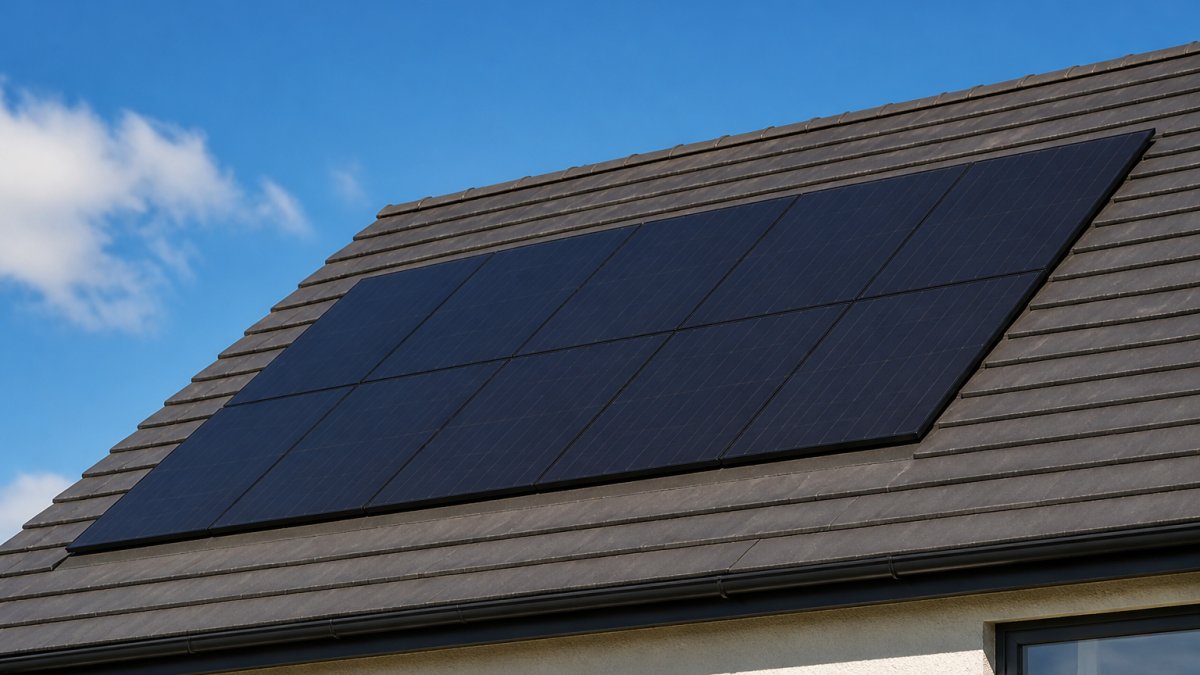
Roof-mounted solar panels are the most common domestic installation type. They qualify for permitted development rights if they meet the projection and area limits, and must be mounted flush or nearly flush to the roof surface rather than on a raised frame.
Pitched roofs are ideal for permitted development: panels sit parallel to the roof slope, naturally limiting projection above the highest point. A standard domestic system on a south-facing pitched roof typically qualifies without planning concerns.
Flat roofs present a different challenge. Panels mounted on flat roofs often need tilting frames to achieve optimal angles for energy generation. These frames can push panels significantly above the roof surface.
Orientation matters less than projection. A north-facing roof can still qualify for permitted development if the panels don't project too far above the roofline; energy generation will be lower, but planning rules don't restrict you based on panel efficiency.
Solar Panels on Listed Buildings: Consent Requirements
Listed buildings face an entirely different planning regime. Because these properties have special architectural or historical significance, any external alterations, including small domestic solar panel systems, typically require Listed Building Consent.
Listed Building Consent is separate from planning permission and must be obtained before installing solar panels on a listed building, regardless of whether the system would qualify for permitted development elsewhere. The local planning authority assesses each application on the building's heritage value and the installation's visual impact.
The assessment considers panel placement, size, colour, and mounting method. Rear-facing panels may be approved more readily than those on a prominent front elevation, and dark-coloured panels blend better with traditional slate or tile roofs than reflective silver frames.
Getting Listed Building Consent typically takes 8-12 weeks and requires detailed drawings, photographs, and a statement explaining why solar panels are necessary and how they'll be integrated sensitively. Many applications succeed, but approval is never guaranteed.
Solar Panels in Conservation Areas: Planning Permission
Properties in conservation areas cannot use permitted development rights for solar panels. You must apply for planning permission before installation, even for small domestic systems that would qualify elsewhere.
Conservation areas protect neighbourhoods of special architectural or historic interest. The planning authority balances renewable energy benefits against preserving the area's character, so the assessment is more rigorous than outside conservation areas, though many applications succeed.
The planning authority considers how visible the panels will be from public spaces. Rear-facing installations or those hidden behind parapets face lower scrutiny than prominent front-facing systems, and traditional slate-grey panels often perform better than bright silver frames.
Applying for planning permission in a conservation area takes 8-13 weeks on average and requires site plans, elevations showing panel placement, and photographs of the building and surroundings.
Many conservation area applications are approved, particularly when panels are positioned sensitively on rear elevations or integrated into roof designs, though some authorities take a stricter approach. Checking with your local planning authority early gives you realistic expectations before committing.
Solar Panels on Non-Domestic Buildings: Planning Permission
Non-domestic buildings, commercial properties, agricultural structures, industrial units, follow different rules entirely. Permitted development rights do not apply in the same way as for domestic properties.
For non-domestic buildings, the capacity threshold is the key measure. Solar panel systems up to 50 kW capacity may qualify for permitted development rights, provided other conditions are met. A 50 kW system is substantially larger than typical domestic installations, which usually range from 3-5 kW.
Even at 50 kW or below, the system must not project excessively above the building surface, and the property must not be in a conservation area or be a listed building, protected locations require planning permission regardless of capacity.
Click HERE for your FREE SURVEY today →
Systems exceeding 50 kW require planning permission. Agricultural buildings, industrial warehouses, and commercial premises often have large roof areas suitable for substantial installations, but these projects need formal consent.
How to Apply for Solar Panel Planning Permission
If your property needs planning permission, the process is straightforward but requires attention to detail. Starting early and gathering the right information prevents delays and refusals.
Step-by-Step Application Process
Step 1: Confirm you need permission. Check your property's designation status via your local planning authority's website.
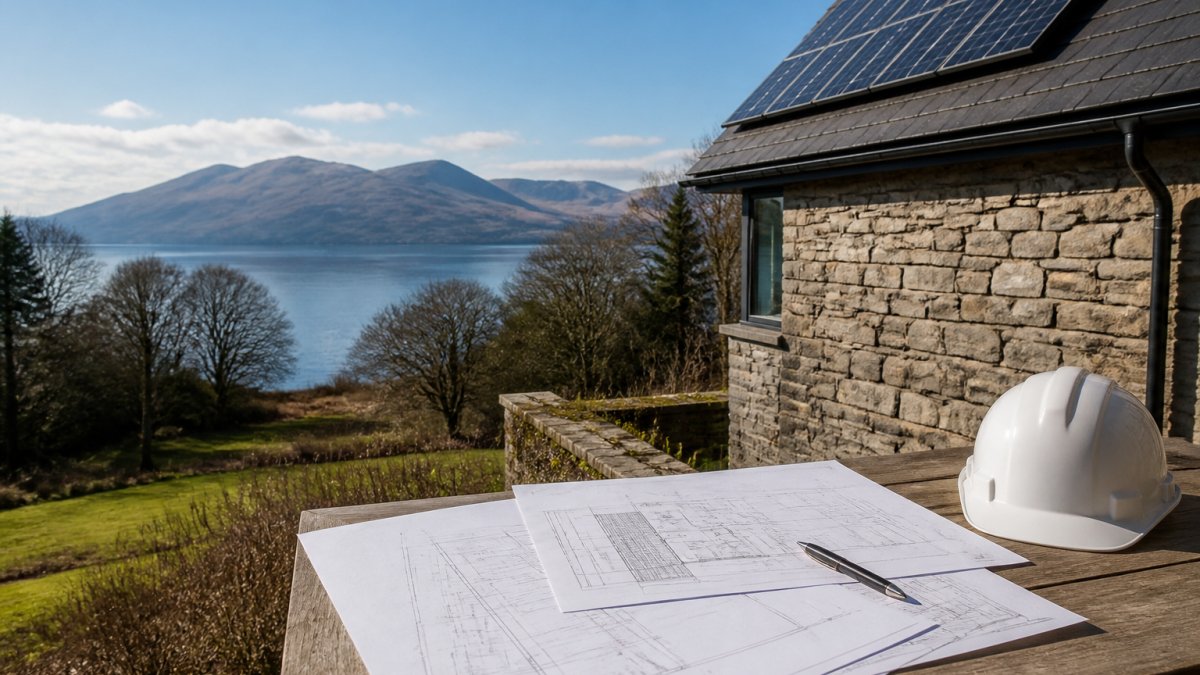
Step 2: Prepare your application documents. You'll need site plans showing the building's location and layout, elevations with the proposed panel placement marked clearly, and photographs of the building's current state.
Step 3: Complete the planning application form. Your local planning authority provides this online. It asks for basic property information, the proposed works, and contact details, and takes 20-30 minutes to complete.
Step 4: Submit your application. Most authorities accept applications online, upload your drawings, photographs, and completed form. Online submission is faster than post and creates a clear record.
Step 5: Pay the application fee. Fees vary by local authority and scale of works. For small domestic solar panel systems, they typically range from £60 to £200.
Step 6: Wait for determination. The planning authority has 8 weeks to decide, during which they may consult neighbours or other agencies.
Step 7: Respond to any requests for information. If the authority needs clarification, respond promptly, delays can extend the timeline significantly.
Required Documentation and Fees
Most planning applications for solar panels require the same core documents. Your installer should provide site plans and elevations as part of their design service; if applying independently, you can sketch them yourself or hire a local architect or surveyor.
Site plans show the property's location within its plot with the building footprint marked. Elevations show the building from each direction with the proposed panel location clearly labelled. Photographs should show the building's current state from the angles where panels will be installed.
Planning fees are non-refundable even if your application is refused, but they're modest compared to the cost of the solar installation itself, a small investment in securing formal consent.
Determining Whether Your Property Needs Permission
The clearest way to determine whether your property needs solar panel planning permission is to check three things: designation status, building type, and proposed installation size.
Check your designation status first. Is your property a listed building, in a conservation area, or in a National Scenic Area or other protected landscape?
If your property has any protected status, you'll need planning permission. Listed buildings require Listed Building Consent. Conservation areas require planning permission. Other protected designations may also trigger requirements.
Confirm the building type. Is it a single dwelling, a flat, or a non-domestic building? Domestic buildings qualify for permitted development rights (subject to other conditions). Non-domestic buildings follow different thresholds.
Measure the proposed installation. For domestic buildings outside protected areas, 4 square metres is the permitted development limit; for non-domestic buildings, it's 50 kW capacity.
If any of these conditions aren't met, contact your local planning authority to confirm your requirements. A five-minute phone call prevents weeks of uncertainty.
Conclusion
Understanding solar panel planning permission rules in Scotland removes a major barrier to going solar. Most domestic properties outside conservation areas and listed buildings can install systems under permitted development rights with no application needed. Protected locations or larger systems require formal consent, but many applications succeed when installations are designed thoughtfully.
At Smarter Utility, our fully accredited team confirms whether your property needs permission, advises on the best installation approach, and guides you through any required applications.
The next step is simple: get your property assessed by professionals who understand the rules. Smarter Utility offers a free, no-obligation home survey that confirms your planning requirements and designs a solar system tailored to your roof, energy needs, and budget. Click HERE for your FREE SURVEY today and take the uncertainty out of going solar.
Frequently Asked Questions
Do I need planning permission for solar panels on my roof?
Most domestic solar panels on pitched roofs qualify for permitted development rights in Scotland and do not need planning permission, provided they meet size and projection limits. However, if your property is listed, in a conservation area, or on a flat roof, you will need planning permission. Check your local planning authority's records or contact them directly to confirm your property's status before installation.
Can I install solar panels on a listed building without consent?
No. Solar panels on listed buildings require listed building consent from your local planning authority, regardless of size or location on the building. This is a separate process from planning permission and exists to protect the building's historic character. You must submit detailed plans showing panel placement, materials, and visual impact before installation begins.
What are the size limits for solar panels under permitted development?
For domestic roof-mounted solar panels, panels must not project more than 200 mm beyond the highest part of the roof, and the total area cannot exceed 4 square metres. If your system exceeds these limits, you will need to apply for planning permission.
Do solar panels in conservation areas need planning permission?
Yes. Solar panels in conservation areas require planning permission even if they would normally qualify for permitted development on other properties. The local planning authority assesses the visual impact on the area's character. Submit a planning application with photographs and technical details showing how the panels will appear from public viewpoints.