 ultimate-guide
What Is Smart EV Charging? A 2026 Guide
Table of Contents
- What Is Smart EV Charging and Why It Matters
- How Smart EV Charging Works
- Smart Charging Types and Control Models
- Off-Peak EV Charging: Scheduling for Lower Costs
- EV Charging Tariffs and Realistic Savings
- Solar EV Charging and Home Battery Integration
- Compatibility, Installation, and Load Management
- Limitations, Cybersecurity, and What to Watch For
- Frequently Asked Questions
Last Updated: October 13, 2026
What Is Smart EV Charging and Why It Matters
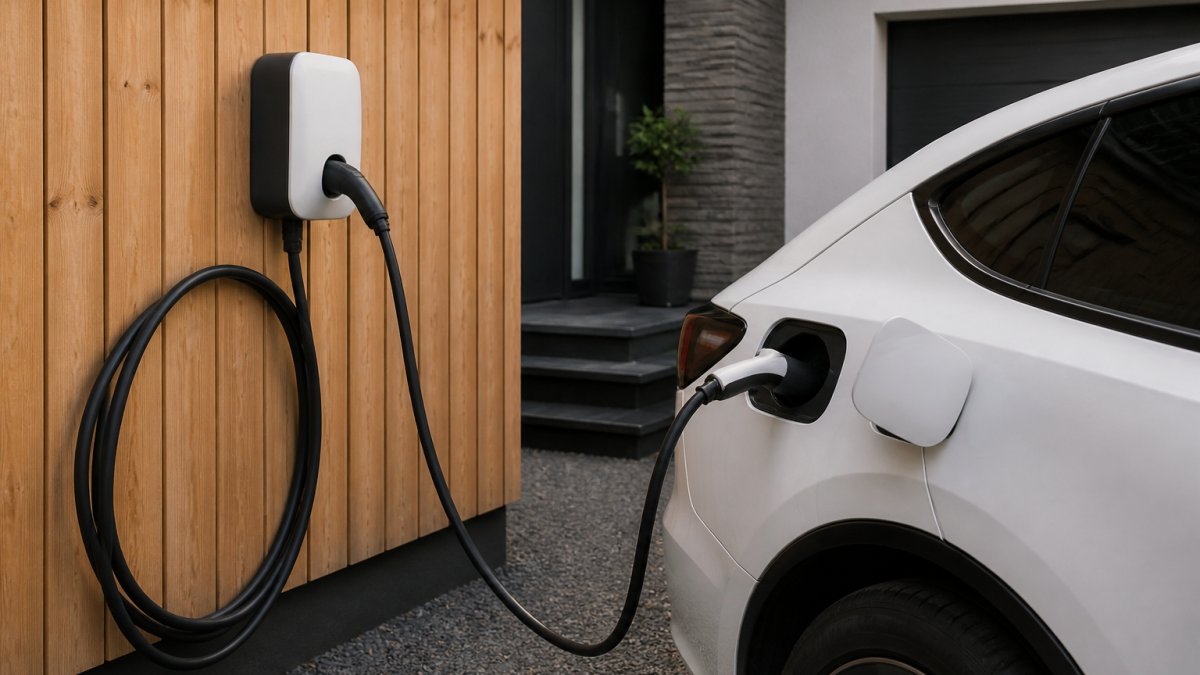
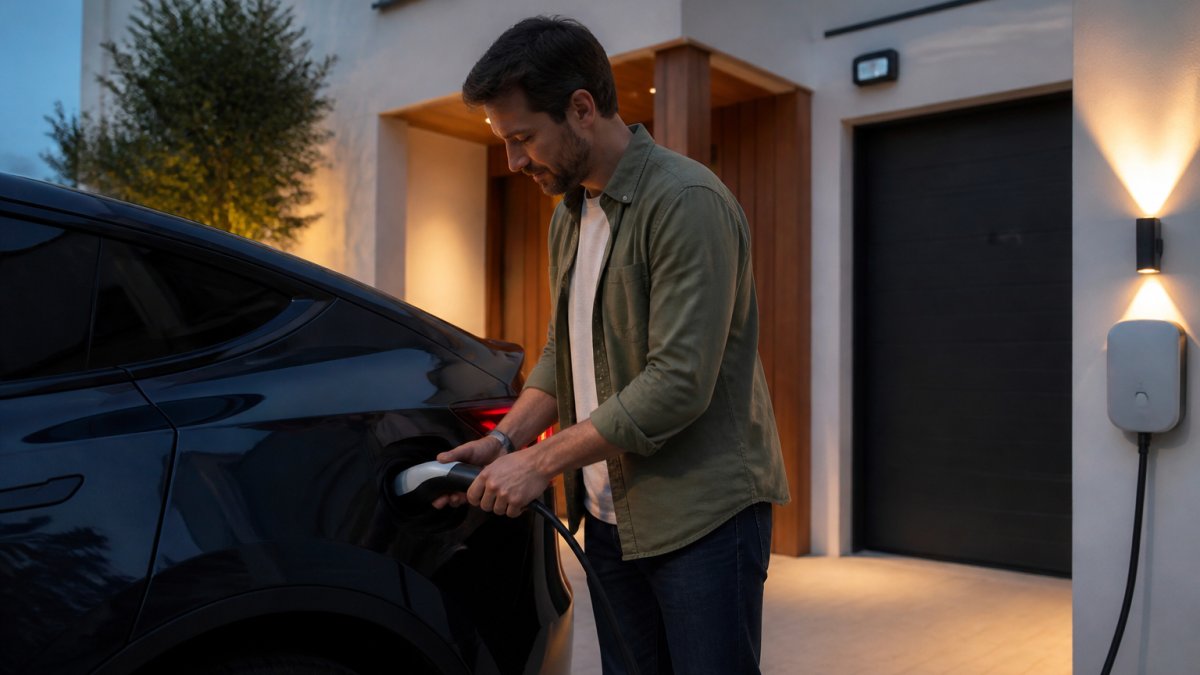
Smart EV charging is the practice of controlling when and how quickly an electric vehicle draws power from the grid, using a connected charger that can schedule sessions, respond to signals, and communicate with your vehicle. At Smarter Utility, we install home charging points across Scotland, and the question we hear most often is simple: what is smart EV charging actually doing that a basic plug-in charger isn't?
The short answer is control. A standard charger delivers power the moment you plug in. A smart charger decides when that power flows, so you charge during cheaper off-peak hours rather than at peak demand.
That distinction matters more than most buyers realise. As EV uptake climbs, household electricity demand rises with it, and the chargers that manage that demand intelligently are the ones that keep bills down without tripping your supply.
How Smart Chargers Differ from Standard Units
A standard charging unit is essentially a safe, weatherproof power outlet for your car. It has no scheduling, no connectivity, and no awareness of what else is drawing power in your home.
Smart chargers add three things:
- Connectivity via Wi-Fi or mobile data
- Scheduling so sessions run at set times
- Load management to avoid overloading your electricity supply
The UK government guidance on electric vehicle chargepoint grants outlines how home chargepoints are supported, and the technical standards behind them are set out by Ofgem's energy regulation framework. The practical difference for you: a standard unit charges your car, a smart unit charges it at the right time.
How Smart EV Charging Works
Smart EV charging works by pairing a connected chargepoint with an app or software platform that tells it when to deliver power. The charger communicates with your vehicle to negotiate charging speed, then follows a schedule or a live signal from your electricity supplier.
The Role of Apps, Wi-Fi, and Vehicle Communication
Your charger needs a stable internet connection, usually home Wi-Fi, to receive schedules and tariff data. Through the charging app you can set departure times, monitor a charging session remotely, and see what each session costs.
Vehicle-charger communication lets the two devices agree on how much power the car can safely accept. This is why maximum charging capacity varies between models, and why a smart charger will slow down rather than push more power than your vehicle or supply can handle.
Smart Charging Types and Control Models
"Smart charging" is used loosely, and that causes real confusion at the point of purchase. Four distinct control models sit under the label, and which one you have determines what your charger can actually do.
| Control Model | What It Controls | Hardware Needed | Typical Use |
|---|---|---|---|
| Scheduled charging | Start and stop times you set | Smart charger with app | Households on a simple off-peak tariff |
| Tariff-responsive (dynamic) charging | Follows live price or carbon signals from your supplier | Smart charger plus a compatible time-of-use tariff and data connection | Homes wanting the cheapest possible window each night |
| Managed charging | A third party (supplier, aggregator or network operator) shifts your session within limits you set | Smart charger with an approved communications standard, plus your consent | Households enrolled in a flexibility scheme |
| Vehicle-to-grid (V2G) | Bidirectional flow, the car exports power back | Bidirectional charger, V2G-capable vehicle, compatible tariff and network approval | Early adopters on specific trial or commercial tariffs |
Scheduled charging is the baseline. You tell the charger when to run and it obeys. Nothing external influences it.
Tariff-responsive charging adds a live input. The charger reads current prices, or, increasingly, carbon intensity, and shifts the session to the cheapest or cleanest hours automatically. This is what most people mean when they say "smart charging", and it is the model that pairs with a time-of-use tariff.
Managed charging is the one most buyers have never heard of.
Vehicle-to-grid charging is the outlier. Instead of only shifting when power flows, it reverses the direction so the car discharges back to your home or the grid.
Most home installations blend scheduled and tariff-responsive control. Dynamic load balancing, covered further down, is a separate function that can sit alongside any of these models, it manages your household supply, not the tariff.
Off-Peak EV Charging: Scheduling for Lower Costs
Off-peak EV charging means running your charging session during the hours when electricity is cheapest, typically overnight. A time-of-use tariff prices electricity differently depending on the time of day, and your smart charger's schedule is what lets you take advantage of it.
Set a departure time in the app, and the charger works backwards to start when rates drop. You wake up to a full battery and a lower bill. The Energy Saving Trust's guidance on charging at home explains how home charging compares with public charging on cost.
The catch: if you need a top-up at 6pm, you'll pay peak rates. Smart charging rewards planning, not spontaneity.
EV Charging Tariffs and Realistic Savings
EV charging tariffs are electricity products built for drivers who charge at home. They typically pair a cheap overnight window, often seven hours or so, with a higher daytime rate. Whether that saves you money depends on one number: how much of your charging you can shift into the cheap window.
A worked example
The figures below are illustrative, using round numbers so you can substitute your own. They are not a quote.
Click HERE for your FREE SURVEY today →
Assume:
- You drive about 8,000 miles a year.
- Your car uses roughly 3.5 miles per kWh, so you need around 2,300 kWh a year for the car.
- Your standard variable rate is about 25p per kWh.
- Your time-of-use tariff charges about 8p per kWh overnight and about 30p per kWh during the day.
| Scenario | Off-peak share | Cost at standard rate | Cost on time-of-use tariff |
|---|---|---|---|
| Almost all charging overnight | 95% | ~£575 | ~£200 |
| Half overnight, half daytime | 50% | ~£575 | ~£440 |
| Mostly daytime charging | 10% | ~£575 | ~£630 |
Three things fall out of that table.
First, the saving is real but it is not automatic. The gap between the best and worst case is roughly £430 a year on these assumptions, larger than most people expect, and entirely down to behaviour.
Second, the daytime rate on a time-of-use tariff is usually higher than a standard variable rate. That is the trade. If you cannot shift your charging, you pay more, not less.
Third, the household matters as much as the car. If your washing machine, dishwasher and tumble dryer also run overnight, the cheap window does more work and the case for the tariff strengthens. If your household is out all day and cooks and washes in the evening, the maths is tighter.
What actually moves the number
- Your off-peak share. This is the dominant variable. Everything else is secondary.
- Your car's efficiency. A larger or less efficient vehicle needs more kWh for the same mileage, so the same percentage saving is worth more in pounds.
- Standing charges and exit fees. Some EV tariffs carry a higher daily standing charge. Over a year that can erode a meaningful slice of the saving, so compare the whole bill, not just the unit rate.
- Public charging. Any rapid charging you do on the road sits outside this calculation entirely and is typically several times the cost per kWh of home charging.
The Energy Saving Trust's guidance on charging at home sets out how home charging compares with public charging on cost. The honest summary is that smart charging rewards planning, and the size of the reward is set by how disciplined your routine is, not by the charger you buy.
Solar EV Charging and Home Battery Integration
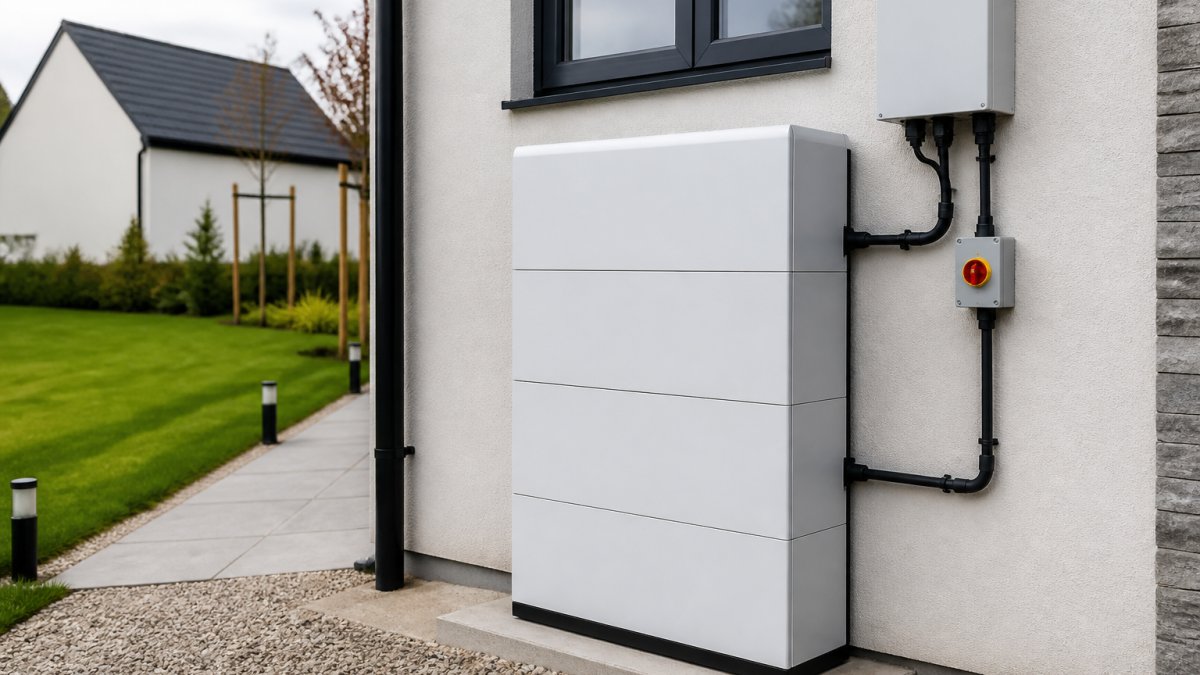
Solar EV charging uses surplus electricity from your solar panels to charge your vehicle instead of exporting it to the grid. Paired with battery storage, it lets you charge from stored solar in the evening rather than buying from your supplier.
This is where system design matters. A solar and battery installation sized for your household consumption today may need headroom if you plan to add a heat pump or a second EV later. We design systems with that expansion in mind, which is one reason we insist on a survey before quoting.
Compatibility, Installation, and Load Management
Compatibility and installation come down to three checks: your electrical supply capacity, your earthing arrangement, and whether the charger can communicate with your vehicle and your tariff.
Not every property needs an upgraded supply, but some do. During our free, no-obligation home survey we assess your existing panel, your incoming supply, and where the unit can be mounted so the cable reaches your parking position.
Avoiding Overloads and Balancing Household Demand
Dynamic load balancing monitors total household electricity demand and reduces charging power when other appliances are running. This prevents the charger from pushing your supply past its limit, which is what causes nuisance tripping.
Without it, a charger running at full output alongside an oven, a heat pump, and a shower can exceed what your supply can deliver. Load management solves that automatically.
Limitations, Cybersecurity, and What to Watch For
Smart charging has real limitations. It depends on a working internet connection, a compatible vehicle, and a tariff that actually rewards shifting load. If any of those is missing, you're paying for features you can't use.
Cybersecurity deserves attention too. A connected charger is a connected device on your home network, and data sharing with apps and suppliers should be understood before you sign up. Choose chargers with a clear privacy policy and keep firmware updated.
Where smart charging falls short is in flexibility. If your routine changes often, fixed schedules become a nuisance, and you'll end up overriding them.
Smart EV charging rewards households that plan their energy use, and it falls flat in homes where nobody sets a schedule.
Frequently Asked Questions
What is the difference between a smart EV charger and a standard charger?
A standard charger delivers power whenever you plug in, with no scheduling or connectivity. A smart charger connects to your home Wi-Fi and lets you schedule charging sessions, monitor energy use through an app, and respond to tariff signals. Many smart units also support dynamic load balancing, which adjusts charging speed to avoid overloading your household electricity supply. This connectivity is what enables off-peak charging and integration with solar panels or battery storage.
Can smart EV charging reduce charging costs?
Yes, when paired with a time-of-use tariff. By scheduling charging sessions during off-peak hours, typically overnight, you pay a lower rate per kilowatt-hour than during peak demand periods. The exact saving depends on your tariff and how much you drive. A smart charger automates this scheduling so you do not need to remember to plug in at the right time. Combining off-peak charging with solar generation can reduce costs further.
Can a smart EV charger use solar panels or home battery storage?
Many smart chargers can be configured to prioritise solar generation. When your panels produce surplus electricity, the charger diverts it to your vehicle instead of exporting to the grid. If you have a home battery, the charger can draw from stored energy during peak periods. This setup requires a compatible inverter and charger, plus configuration during installation. A qualified installer can confirm whether your existing system supports solar EV charging.
Do smart EV chargers automatically charge at off-peak times?
Most smart chargers let you set a charging schedule through their app, so the unit only draws power during your chosen off-peak window. Some models can also respond to dynamic tariff signals, adjusting charging automatically when electricity rates are lowest. You typically set this up once during installation or through the app. The vehicle must remain plugged in for scheduled charging to work, and some cars have their own scheduling features that can work alongside the charger.