 ultimate-guide
Why Install Home Battery Storage in Scotland: 2026 Guide
Table of Contents
- Why Home Battery Storage Makes Sense in Scotland
- How Home Battery Storage Works with Solar Panels
- Home Battery Storage Without Solar: Is It Possible?
- Is Solar Battery Storage Worth It in 2026?
- How Much Does Home Battery Storage Cost?
- Scottish Grants and Funding for Battery Storage
- Cold Weather Performance and Smart Home Integration
- Frequently Asked Questions
Last Updated: September 20, 2026
Why Home Battery Storage Makes Sense in Scotland
Home battery storage is a system that captures electricity, either from solar panels or the grid, and holds it for use when you need it most. For Scottish households, it solves a specific problem: renewable generation peaks when demand is low, and demand peaks when generation is low.
A home generates solar power at midday, exports most of it for a modest return, then buys electricity back at peak rates in the evening. A battery closes that gap.
Ofgem's guidance on smart meters and time-of-use tariffs
The Scottish Energy Context: Prices, Weather, and Grid
Scottish weather is often framed as a drawback for solar. The reality is more nuanced.
Scotland receives enough daylight hours in summer to generate substantial solar output, and cool temperatures actually improve solar photovoltaic efficiency compared with hotter climates. The challenge is distribution, not generation: without storage, most output is exported rather than used.
Meanwhile, electricity prices remain volatile. Ofgem's price cap adjusts quarterly, and households on time-of-use tariffs face sharp peak and off-peak differentials. A battery lets you charge during cheap off-peak windows and discharge during expensive peak pricing, a practice known as energy arbitrage.
How Home Battery Storage Works with Solar Panels
Solar battery storage works by storing surplus solar photovoltaic generation in a lithium-ion battery bank, then releasing it when household demand exceeds generation. An inverter converts DC power from the panels and battery into usable AC electricity for your home.
The sequence is straightforward:
- Solar panels generate electricity during daylight
- Your home consumes what it needs first
- Surplus power charges the battery
- Once the battery is full, excess exports to the grid
- In the evening, the battery discharges to power your home
This raises self-consumption, the proportion of your own generation you actually use. Higher self-consumption means lower bills, because you avoid buying back electricity at retail rates.
Sizing Your System: kWh Capacity and Depth of Discharge
Typical domestic battery capacity ranges from around 5 kWh to 15 kWh, depending on household size and consumption patterns.
Two specifications matter more than headline capacity. Depth of discharge (DoD) is the percentage of a battery's total capacity you can safely use; a 10 kWh battery with 90% DoD gives you 9 kWh of usable energy. Discharge cycle ratings indicate how many charge-discharge cycles the battery should complete before capacity degrades meaningfully.
Sizing too small wastes money on a system that cannot cover evening demand. Sizing too large ties up capital in capacity you rarely use. A proper home survey, which Smarter Utility provides free of charge, matches capacity to your actual consumption data.
| System Size | Typical Household | Best For |
|---|---|---|
| 5 kWh | 1-2 people, low evening use | Flats, small homes |
| 10 kWh | 3-4 people, EV charging | Family homes |
| 15 kWh+ | Large homes, heat pumps | High-consumption properties |
Home Battery Storage Without Solar: Is It Possible?
Home battery storage without solar is entirely possible and increasingly common. The battery charges from the grid during off-peak hours, then powers your home during peak pricing periods.
This approach suits households that cannot install solar, perhaps due to roof orientation, shading, or listed-building restrictions. It also appeals to those on time-of-use tariffs who want to capture the peak-off-peak spread without a generation system.
The trade-off is straightforward. Without solar, every kilowatt-hour stored was first bought from the grid. Your return depends entirely on the tariff differential being wide enough to cover the round-trip efficiency losses, typically 10-15% for lithium-ion systems.
Is Solar Battery Storage Worth It in 2026?
For most Scottish households with suitable roof space, solar battery storage is worth it in 2026, provided the system is correctly sized and paired with an appropriate tariff.
Click HERE for your FREE SURVEY today →
Worth is not a single number.
How Much Does Home Battery Storage Cost?
Home battery storage cost in the UK is usually quoted in two ways: a total installed price, and a cost per usable kilowatt-hour. The second figure is the more useful one, because it strips out the effect of system size and lets you compare quotes fairly.
- Usable capacity versus nameplate capacity. A 10 kWh nameplate battery at 90% depth of discharge gives 9 kWh usable, so compare quotes on usable kWh, not headline kWh.
- Inverter compatibility. If you already have solar, a hybrid or AC-coupled inverter may be needed. If your existing inverter is not battery-ready, replacement adds cost.
- Electrical infrastructure. Older consumer units, a lack of spare ways, or a supply that needs upgrading before a battery can be connected all add labour.
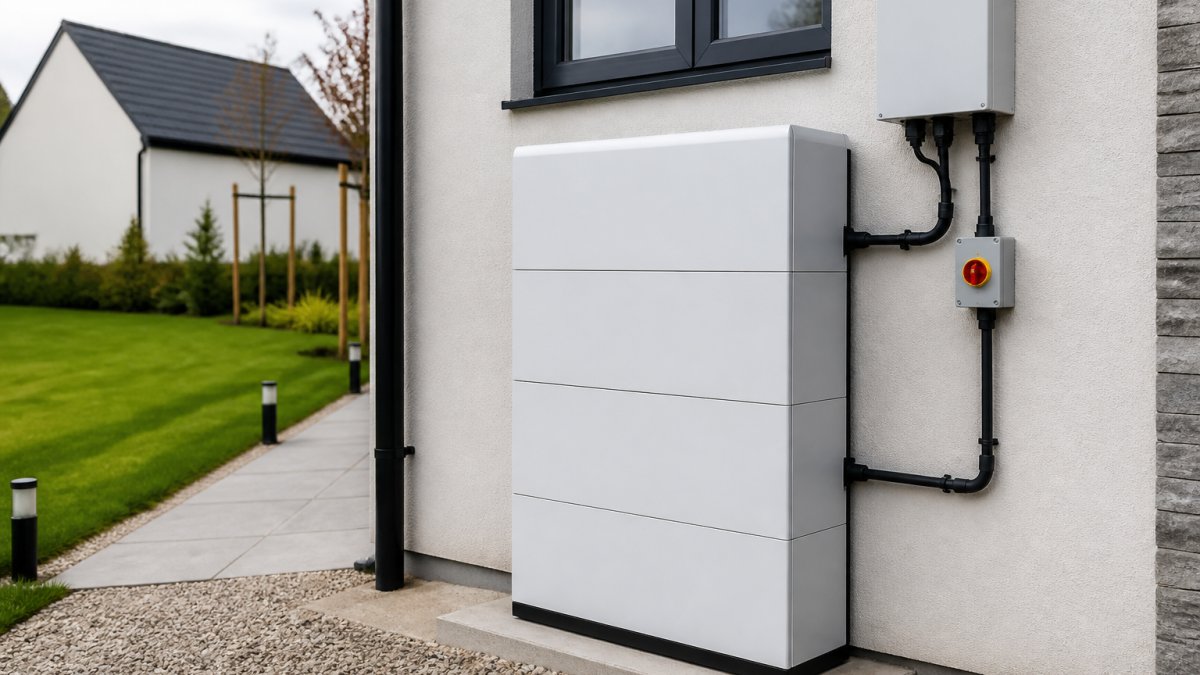
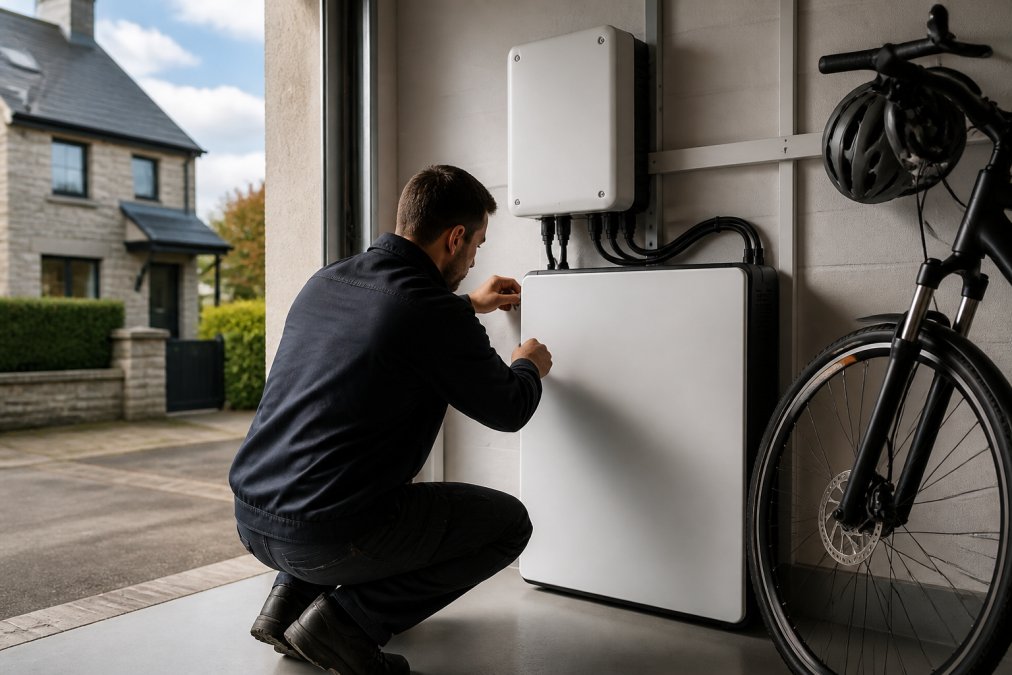
- Location and access. A garage, utility room or externally mounted cabinet changes the cable run, the containment and sometimes the fire separation requirements.
- Backup capability. Powering selected circuits during a power cut needs additional hardware, an automatic transfer arrangement and often a dedicated sub-board, and is priced separately from simple self-consumption.
Installation Costs and Return on Investment
Installation cost is only part of the picture. Return on investment depends on:
- Your tariff differential between peak and off-peak rates
- How much solar you self-consume rather than export
- Battery lifespan and degradation rate
- Available grant funding reducing your upfront outlay
Ofgem's guidance on the price cap and standing charges
Scottish Grants and Funding for Battery Storage
This is the part of the guide most UK-wide articles skip, and it is the part that matters most here. Funding for home battery storage is administered separately from the rest of the UK, and the schemes, caps and eligibility rules change with each funding round.
The main routes
Home Energy Scotland is the primary entry point. It is funded by the Scottish Government and delivered by Energy Saving Trust, and it operates both grant and interest-free loan products for renewable and storage installations. In practice, households usually apply through Home Energy Scotland, receive an offer, then have the work carried out by an installer who meets the scheme's accreditation requirements.
What actually determines eligibility
Across these routes, the same conditions tend to recur:
- Installer accreditation. MCS certification for the solar and battery work is normally required, and for some schemes additional PAS or TrustMark registration applies.
- Property condition. Many schemes require basic energy efficiency measures, loft insulation, cavity wall insulation, draught-proofing, to be in place or installed as part of the same package before storage is funded.
- Means testing. Fuel poverty and low-income criteria apply to the warmer homes routes; the loan products are more broadly available but still capped.
- Owner-occupier status. Most grant funding is not available to private landlords or to new-build properties.
- Timing. Funding rounds open and close. A scheme that was available last quarter may be paused, and a scheme that is closed today may reopen.
How to treat funding in your decision
Funding availability should never be the sole reason to install. Treat it as a reduction in net cost, not a justification on its own. A battery that does not stack up on tariff spread and self-consumption will not stack up because a grant covered part of it.
Home Energy Scotland's grant and loan information
Cold Weather Performance and Smart Home Integration
Cold weather affects battery performance, but less than many homeowners assume. Lithium-ion batteries lose some usable capacity in low temperatures, and charging speeds can slow in near-freezing conditions.
Smart home integration is where 2026 systems have advanced considerably. An energy management system can:
- Automatically charge during off-peak windows
- Discharge during peak pricing without manual input
- Coordinate with EV charging to avoid overloading your supply
- Prioritise battery power for essential circuits during a power cut
Frequently Asked Questions
Is solar power worth it in Scotland?
Yes, solar photovoltaic panels work in Scotland despite the weather. They generate electricity from daylight, not just direct sunshine, so they still produce power on cloudy days. Combined with home battery storage, you can store excess energy for evening use. The key is system sizing and choosing an MCS-certified installer who understands Scottish conditions. A free survey will confirm whether your roof orientation and shading make solar viable for your property.
Can I install home battery storage without solar panels?
Yes. Home battery storage without solar is increasingly common. You charge the battery from the grid during off-peak hours on a time-of-use tariff, then use that stored energy during peak pricing periods. This is called energy arbitrage and can reduce bills without any renewable generation. It also provides power cut protection. You will need a smart meter and a compatible tariff, but no roof work is required.
How long will a 10kWh battery last?
A 10kWh battery typically lasts 10 to 15 years, depending on usage and battery chemistry. Most modern lithium-ion systems come with warranties of 10 years or a specified number of discharge cycles, often 6,000 or more. Depth of discharge affects lifespan: regularly draining to 100% wears the battery faster than staying above 10%. A well-sized system with proper energy management will comfortably see you through a decade of daily cycling.
Do I need planning permission for home battery storage?
In most cases, no. Domestic battery storage is usually permitted development in Scotland, similar to solar panels, provided it meets size and placement rules. However, listed buildings, conservation areas, and flats may have different requirements. If you are installing a large commercial system or siting it away from the property, check with your local authority. Your installer should confirm this during the survey and handle any necessary applications.