 ultimate-guide
EV Charging Point Installation Cost Guide
Table of Contents
- What Affects EV Charging Point Installation Cost
- 7kW vs 22kW Home Charger Costs and Performance
- EV Charger Installation Requirements and Standards
- Energy Saving Trust Scotland Grants and Funding
- Installation Process and Timeline
- Smart Charging, Solar Integration and Long-Term Savings
- Frequently Asked Questions
Last Updated: September 2, 2026
What Affects EV Charging Point Installation Cost
The cost of installing an EV charging point varies dramatically depending on your property type, electrical infrastructure, and local grid capacity. Your final bill depends less on the charger itself and more on what's already in place. The biggest cost drivers are your property type, the distance from your consumer unit to the installation point, and whether your local distribution network operator (DNO) needs to approve or upgrade your grid connection.
Property type and electrical infrastructure
Terraced houses and modern detached properties typically have lower installation costs due to adequate electrical infrastructure. Older Victorian or Edwardian properties present challenges: the consumer unit may be undersized, wiring may not meet current safety standards, and distances from the consumer unit to the charger location can be substantial.
Flats and apartments introduce additional complexity requiring landlord approval, shared electrical infrastructure assessment, and building management coordination. Some apartment blocks have DNO constraints that make installation impossible without significant grid upgrades.
The age and condition of your consumer unit directly affects cost. If your unit is a fused system rather than a modern circuit breaker setup, it will need replacing before installation can proceed.
Distance from consumer unit to installation point
The further your desired charger location is from your consumer unit, the more cable and labour required. A charger mounted directly next to your consumer unit costs less than one positioned at the far end of your driveway. Cable runs exceeding 30 metres require thicker gauge wiring and more complex installation work. Underground cable runs cost more than surface-mounted ones because they require trenching and additional protection.
DNO notification and grid capacity
Your local DNO must be notified before installation if your charger exceeds 3.68kW (gov.uk). The DNO assesses whether your local network can support the additional demand. In areas with constrained grid capacity, they may require network reinforcement before approving your installation, which can delay the project by weeks or months and add substantial costs.
7kW vs 22kW Home Charger Costs and Performance
The choice between a 7kW and 22kW charger determines both your upfront cost and charging speed. A 7kW charger (single-phase) is the standard domestic option. A 22kW charger (three-phase) charges faster but requires three-phase power, which not all properties have.
Charging speed differences
A 7kW charger adds roughly 30 miles of range per hour of charging, providing a full battery overnight for most daily driving (peer-reviewed research). A 22kW charger adds approximately 90 miles of range per hour, suitable for households with multiple vehicles or high mileage requirements.
However, most vehicles can only accept 7kW charging at home because their onboard charger is single-phase. Even with a 22kW wallbox installed, many plug-in hybrids and some battery electric vehicles will charge at 7kW regardless. You gain full 22kW benefit only if you own a vehicle with a three-phase onboard charger, which is less common domestically.
Installation labour and electrical upgrades
A 7kW installation typically requires standard single-phase electrical work. If your consumer unit has spare capacity, installation is straightforward: the electrician installs the wallbox, connects it to your consumer unit, and completes safety certification.
A 22kW installation demands three-phase power. If your property lacks three-phase supply, the DNO must install it, a significant undertaking involving new cabling from the street and consumer unit upgrades. Most installers recommend 7kW for standard domestic properties unless you have specific reasons for 22kW.
EV Charger Installation Requirements and Standards
Installing an EV charger requires compliance with strict electrical safety standards and planning regulations. Your installer must hold appropriate qualifications and the installation must be certified and inspected.
Electrical safety certification and earthing
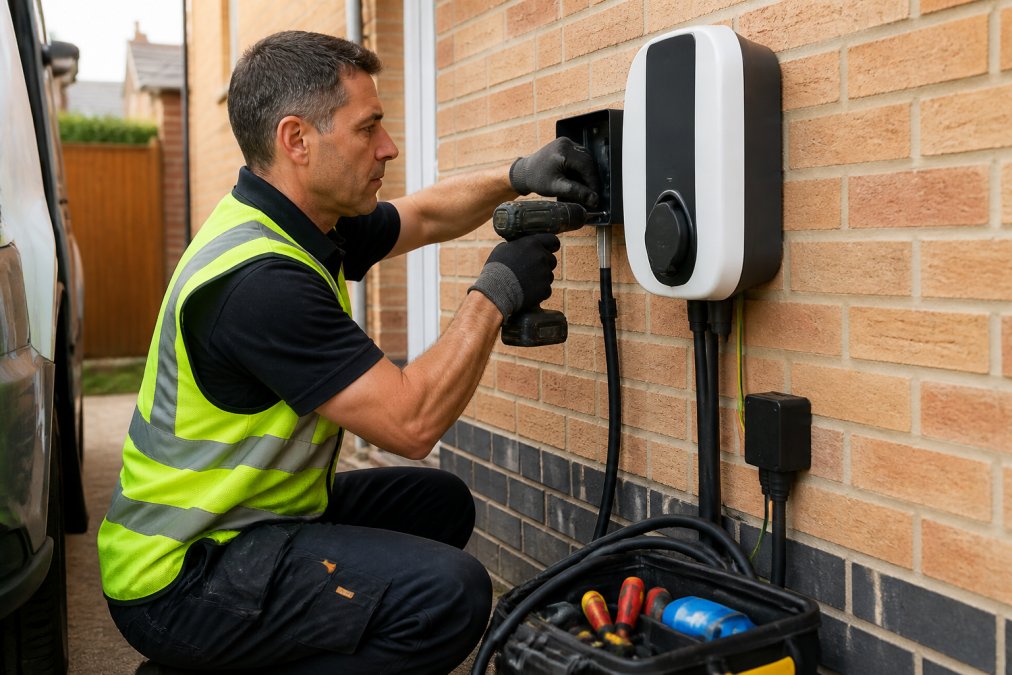
All EV charger installations must comply with BS 7909 and the 18th Edition of the Wiring Regulations (bsigroup.com). Your installer must provide an Electrical Installation Condition Report (EICR) on completion, confirming the installation is safe and meets current standards.
Earthing arrangements are critical. The charger must be properly earthed to protect against electrical faults. Some properties use TN-C-S earthing (combined neutral and earth), which isn't suitable for EV chargers and must be upgraded to TN-S or TT earthing before installation.
The consumer unit may need a new circuit breaker rated for the charger's load. A 7kW charger typically requires a 32-amp breaker; a 22kW charger needs a 63-amp three-phase setup. If your consumer unit lacks spare capacity, upgrading becomes necessary.
Off-street parking and DNO approval
Planning regulations require your charger to be installed on off-street parking. You cannot install on public roads or street parking. This means you need a driveway, parking space on your property, or a designated parking area at an apartment block.
The DNO must approve installations over 3.68kW, checking whether your local network can handle the additional demand. The DNO may require a smart charger that can be remotely controlled to manage demand during peak times. Approval typically takes 4-8 weeks, extending to 12 weeks or longer in areas with known capacity constraints.
Energy Saving Trust Scotland Grants and Funding
The primary source of grant funding for EV charger installation in Scotland is the Office for Zero Emission Vehicles (OZEV) scheme, which provides funding to eligible households to reduce upfront installation costs.
OZEV grant eligibility and application process
The OZEV scheme offers funding toward home charging point installation. Eligibility criteria include owning or having access to a plug-in hybrid or battery electric vehicle, having off-street parking, and being a UK resident. Your installer handles the application on your behalf.
Click HERE for your FREE SURVEY today →
The application process begins with your installer assessing your property's eligibility, confirming off-street parking, electrical capacity, and vehicle eligibility. Once approved, funding is applied as a discount to your installation cost. Funding levels vary depending on charger type and circumstances. Processing times typically range from 2-6 weeks.
Installation Process and Timeline
The installation process from first contact to using your charger typically spans 8-12 weeks.
Pre-installation survey and electrical assessment
Your journey begins with a free survey where qualified installers assess your property's suitability. The electrician inspects your consumer unit, measures distances from the unit to your proposed charger location, checks earthing arrangements, and identifies any upgrades needed.
The surveyor confirms off-street parking availability and recommends the appropriate charger size. They provide a detailed quote and outline the timeline for completion. After the survey, your installer submits a DNO application if required, typically taking 4-8 weeks. During this waiting period, any necessary consumer unit upgrades or electrical work can be planned.
Installation day and commissioning
On installation day, your electrician will mount the wallbox, run cable from your consumer unit, install necessary circuit breakers, and test the system thoroughly. The installation typically takes 4-8 hours depending on complexity.
Once complete, the electrician performs safety testing and certification, providing an Electrical Installation Condition Report confirming the work meets safety standards. Your charger is then ready to use. The entire process from survey to commissioning typically takes 10-14 weeks.
Smart Charging, Solar Integration and Long-Term Savings
Modern EV chargers offer smart charging features that allow you to optimise charging times, reduce electricity costs, and integrate with renewable energy systems.
Off-peak electricity tariffs and load balancing
Smart chargers can be programmed to charge during off-peak hours when electricity rates are lower. If your energy supplier offers time-of-use tariffs, you can set your charger to operate only between 11 PM and 7 AM, reducing your charging costs significantly over a year.
Load balancing allows the DNO to remotely manage your charger's output to prevent grid overload during peak demand. Rather than disconnecting your charger, load balancing reduces its power temporarily. You maintain control over when charging begins; the network operator only adjusts the speed.
Some energy suppliers offer demand-response programs that reward customers for charging during low-demand periods. Smart chargers make participating in these schemes straightforward through automation.
Battery storage and renewable energy integration
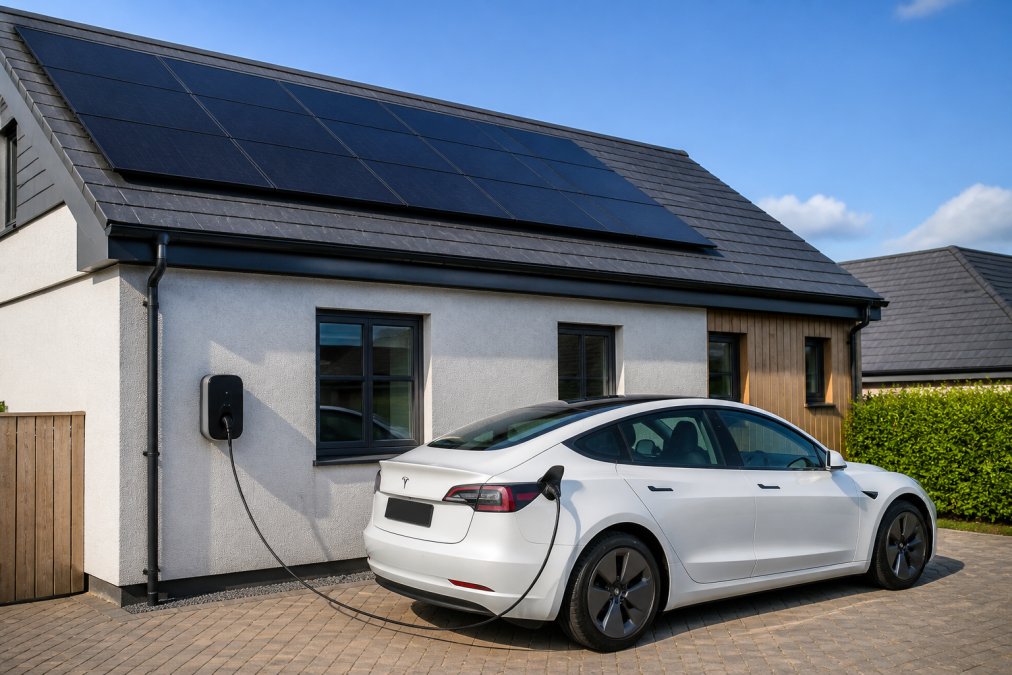
If you have solar panels, a smart charger with battery storage integration allows you to charge your vehicle using your own generated electricity. A battery storage system and smart energy management system coordinate charging between your solar panels, battery, and EV charger, prioritising battery charging with solar generation during daylight and using stored energy to charge your vehicle in the evening.
The financial benefit depends on your electricity tariff and solar generation. Smarter Utility specialises in designing integrated systems that combine solar, battery storage, and EV charging. Our team assesses your property's solar potential, calculates your vehicle charging needs, and designs a system that maximises self-consumption and minimises grid reliance.
Installing an EV charger is a significant investment in your home's energy infrastructure. Understanding the factors affecting cost, from consumer unit capacity to DNO constraints to grant eligibility, helps you make an informed decision and budget accurately.
The process typically takes 10-14 weeks from survey to commissioning, but the long-term benefits justify the wait. Lower fuel costs, reduced carbon emissions, and the convenience of home charging make EV ownership far more practical. Smarter Utility's fully accredited team can guide you through every step, from initial survey through final commissioning. Click here for your free survey today and discover the exact cost and timeline for your property.
Frequently Asked Questions
How much does EV charging point installation cost?
Installation costs vary significantly based on your property's electrical infrastructure, the charger type (3kW, 7kW, or 22kW), and whether upgrades to your consumer unit are needed. Distance from your electrical panel to the installation point, DNO notification requirements, and labour complexity all affect the final price. Request a free survey to receive an accurate quote tailored to your specific situation and property type.
What grants are available for EV charger installation?
The OZEV (Office for Zero Emission Vehicles) grant provides funding support for eligible installations. Energy Saving Trust Scotland grants may also apply depending on your circumstances. Grant eligibility criteria include property ownership, vehicle type, and installation standards compliance. Check current grant eligibility on the Energy Saving Trust Scotland website or discuss options during your installation survey.
What's the difference between 7kW and 22kW charger installation costs?
A 7kW charger typically requires less electrical infrastructure upgrade than a 22kW unit, making installation labour and certification costs lower. However, 22kW chargers deliver faster charging speeds (full charge in 2-3 hours versus 6-8 hours) if your home's electrical supply supports three-phase power. The choice depends on your vehicle type, charging habits, and whether your property can accommodate the higher power demand without costly upgrades.
Do I need a certified electrician to install an EV charger?
Yes, EV charger installation must be completed by a qualified electrician certified in electrical safety standards and EV supply equipment (EVSE) installation. They'll ensure proper earthing arrangements, consumer unit upgrades if needed, and compliance with electrical wiring regulations. DNO notification may also be required. Using an accredited installer protects your safety and maintains warranty coverage.
This article was written using GrandRanker
Frequently Asked Questions
How much does EV charging point installation cost?
Installation costs vary significantly based on your property's electrical infrastructure, the charger type (3kW, 7kW, or 22kW), and whether upgrades to your consumer unit are needed. Distance from your electrical panel to the installation point, DNO notification requirements, and labour complexity all affect the final price. Request a free survey to receive an accurate quote tailored to your specific situation and property type.
What grants are available for EV charger installation?
The OZEV (Office for Zero Emission Vehicles) grant provides funding support for eligible installations. Energy Saving Trust Scotland grants may also apply depending on your circumstances. Grant eligibility criteria include property ownership, vehicle type, and installation standards compliance. Check current grant eligibility on the Energy Saving Trust Scotland website or discuss options during your installation survey.
What's the difference between 7kW and 22kW charger installation costs?
A 7kW charger typically requires less electrical infrastructure upgrade than a 22kW unit, making installation labour and certification costs lower. However, 22kW chargers deliver faster charging speeds (full charge in 2-3 hours versus 6-8 hours) if your home's electrical supply supports three-phase power. The choice depends on your vehicle type, charging habits, and whether your property can accommodate the higher power demand without costly upgrades.
Do I need a certified electrician to install an EV charger?
Yes, EV charger installation must be completed by a qualified electrician certified in electrical safety standards and EV supply equipment (EVSE) installation. They'll ensure proper earthing arrangements, consumer unit upgrades if needed, and compliance with electrical wiring regulations. DNO notification may also be required. Using an accredited installer protects your safety and maintains warranty coverage.