 listicle
Best Electropoint Alternatives in Scotland: 2026 Guide
Table of Contents
- Why Homeowners Are Looking for Electropoint Alternatives
- Quick Comparison: Best Electropoint Alternatives for Home Charging
- Home EV Charger Installation Cost in Scotland
- EV Charger Grant Eligibility: What You Can Claim
- Solar PV and Battery Storage Integration for Lower Running Costs
- Weather-Proofing and Grid Requirements for Rural Properties
- Choosing an Installer and Getting Post-Installation Support
- Frequently Asked Questions
Last Updated: September 10, 2026
Why Homeowners Are Looking for Electropoint Alternatives
Search interest in best electropoint alternatives in scotland has climbed steadily as more drivers move to electric vehicles and discover that one charger brand does not fit every property. The reasons are practical: an installer goes quiet mid-quote, a unit is out of stock, a north-facing wall needs a different mounting plan, or a rural postcode needs a charger built for horizontal rain. At Smarter Utility, we survey homes and businesses and see the same pattern repeatedly. Owners are not chasing novelty. They want a charger that fits their electricity supply, their parking layout and their tariff.
That is exactly what this guide covers. Below, we compare the real options, explain what installation involves, and flag the mistakes that cost people money.
Quick Comparison: Best Electropoint Alternatives for Home Charging
The strongest alternatives to Electropoint are established smart chargers such as the Easee One, Hypervolt Home 3 Pro, Zappi, Ohme Pro and Zaptec Go, each with different strengths for solar, tariffs or tight spaces.
| Charger | Best For | Standout Feature | Watch Out For |
|---|---|---|---|
| Smarter Utility (survey and install) | Whole-property energy planning | MCS accredited design and installation | Service is survey-led, not off-the-shelf |
| Easee One | All-round home charging | Dynamic load balancing | Needs a certified electrician |
| Hypervolt Home 3 Pro | App control and solar | Built-in PME fault detection | Costs more than budget units |
| Zappi | Solar self-consumption | Eco and Eco+ charging modes | Setup is more involved without solar |
| Ohme Pro | Off-peak tariffs | Dynamic tariff integration | Utilitarian design |
| Zaptec Go | Small spaces | Very compact footprint | Needs stable Wi-Fi or 4G |
What to Check Before You Commit
Three checks decide whether a charger suits your property: available supply capacity, cable run distance from your consumer unit, and whether you want solar or battery integration later. A wall-mounted charger is only as good as the circuit behind it. If your incoming supply is limited, load balancing matters more than headline kW output. If your parking sits far from the meter, cable length and trenching drive the cost. Get these assessed before comparing brands, not after.
Home EV Charger Installation Cost in Scotland
Home EV charger installation cost in Scotland depends on cable run length, whether your consumer unit needs work, and the mounting method, so quotes vary widely between properties. Most domestic installations follow a similar pattern: a site survey, a fixed quote, then a half-day to full-day install by a qualified electrician. Where costs rise is in the details. A detached garage 20 metres from the meter costs more to connect than a charger mounted beside the front door. An older property with an outdated fuse board may need remedial electrical work first.
Because pricing depends on your specific supply, layout and chosen hardware, we do not publish flat figures. Smarter Utility provides a free, no-obligation home survey so you get a tailored design and a clear quote before committing.
EV Charger Grant Eligibility: What You Can Claim
Grant eligibility is the single biggest source of confusion we see, because two separate funding landscapes overlap: UK-wide schemes administered through the Office for Zero Emission Vehicles (OZEV), and devolved support delivered through Transport Scotland and Energy Saving Trust programmes. Most buying guides collapse these into one paragraph. They are not the same, and the route you qualify under changes what you can claim and who has to sign it off.
The two routes, and how they differ
UK-wide (OZEV) route. The Electric Vehicle Chargepoint Grant is the main domestic scheme. It is aimed at people who own or rent a qualifying property with dedicated off-street parking, and it is claimed by the installer, not by you, the discount is applied to your invoice. The critical condition is that the installer must be OZEV-approved. If you buy a charger online and hire a non-approved electrician, the grant is simply not available, regardless of how suitable your property is.
Devolved route. Transport Scotland funds a separate programme of home chargepoint support, delivered through Energy Saving Trust, with its own eligibility criteria and its own approved-installer list. Because it is devolved, the qualifying conditions, the application process and the funding pot are set separately from the UK-wide scheme, and the two are not interchangeable. A property that fails one set of criteria may still qualify under the other.
Electric Vehicle Chargepoint Grant guidance Home chargepoint funding and eligibility
The eligibility factors that actually decide the outcome
Four things determine which route applies to you:
- Property type and tenure. Homeowners with a private driveway are the straightforward case. Renters, flat owners and people in shared or tenement buildings face a different process, often requiring landlord or factor consent before any application is made.
- Off-street parking. Dedicated, private parking is the gate. On-street-only properties generally fall outside domestic grant support, and the practical answer there is public charging rather than a home unit.
- Installer approval. The installer must be approved under the specific scheme you are claiming. Approval under one scheme does not automatically mean approval under the other.
- Cross-scheme stacking. You cannot claim the same installation twice. If you have already received support for a chargepoint at the property, a second claim for the same address is normally refused.
Commercial and landlord schemes are separate
If you are a business, a landlord, or installing at a workplace or a property you let out, you are not in the domestic scheme at all. Commercial and landlord routes have their own criteria, their own caps on the number of sockets, and their own approval requirements. Treating a rental property as a domestic installation is one of the most common reasons a claim is rejected.
The order of operations that protects your claim
The sequence matters more than the paperwork:
- Confirm which scheme applies to your property and tenure before ordering hardware.
- Confirm your chosen installer is approved under that specific scheme.
- Get the eligibility confirmed during the survey, in writing, with the scheme named.
- Let the approved installer submit the claim as part of the job.
Because funding pots, criteria and approval lists are reviewed periodically, always verify the current position on the official government and Energy Saving Trust pages before you budget. The mechanism above is stable; the numbers are not.
Solar PV and Battery Storage Integration for Lower Running Costs
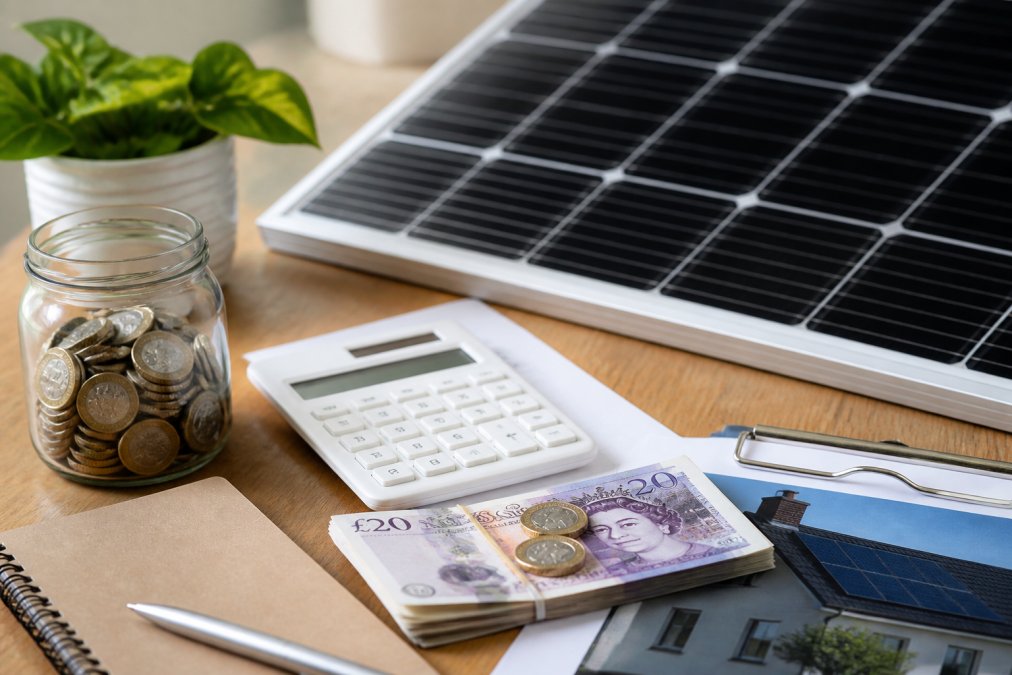
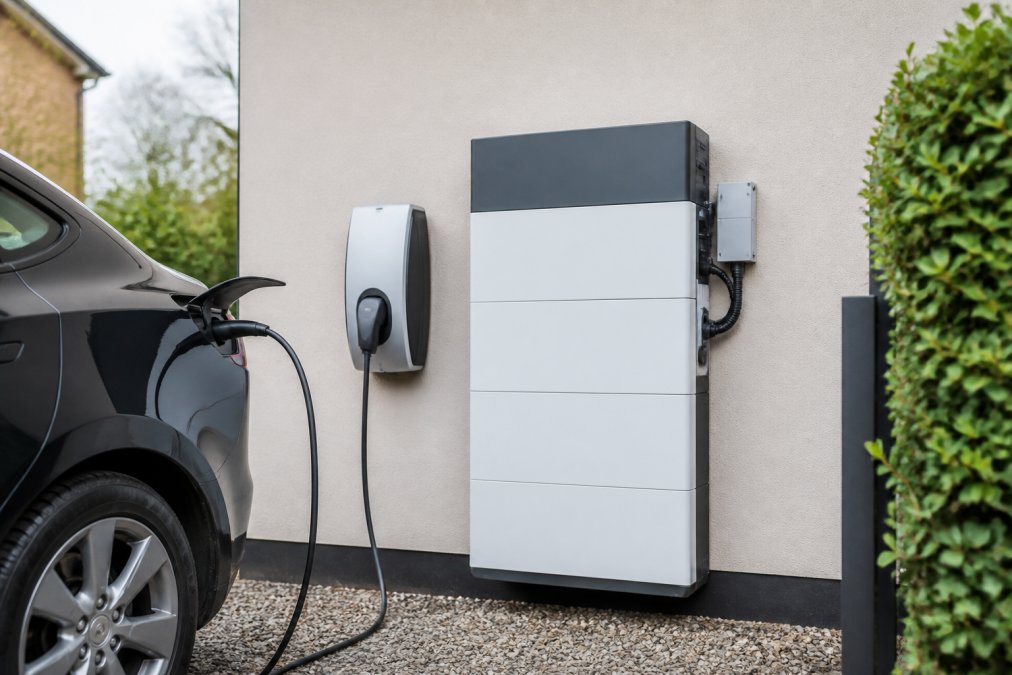
Solar PV and battery storage integration is where running costs fall fastest, because a charger that can see your solar generation will use your own electricity before importing from the grid. The Zappi is built for this, with Eco and Eco+ modes that divert surplus solar to the car. The Hypervolt Home 3 Pro and Andersen A2 also support solar integration. Battery storage changes the maths again: charge the battery on a cheap overnight tariff, then charge the car from the battery during the day.
Smarter Utility designs solar, battery and EV charging as one system rather than three separate purchases. This integrated approach can be beneficial if you plan to add a heat pump later, since the design can account for future load from the start.
Weather-Proofing and Grid Requirements for Rural Properties
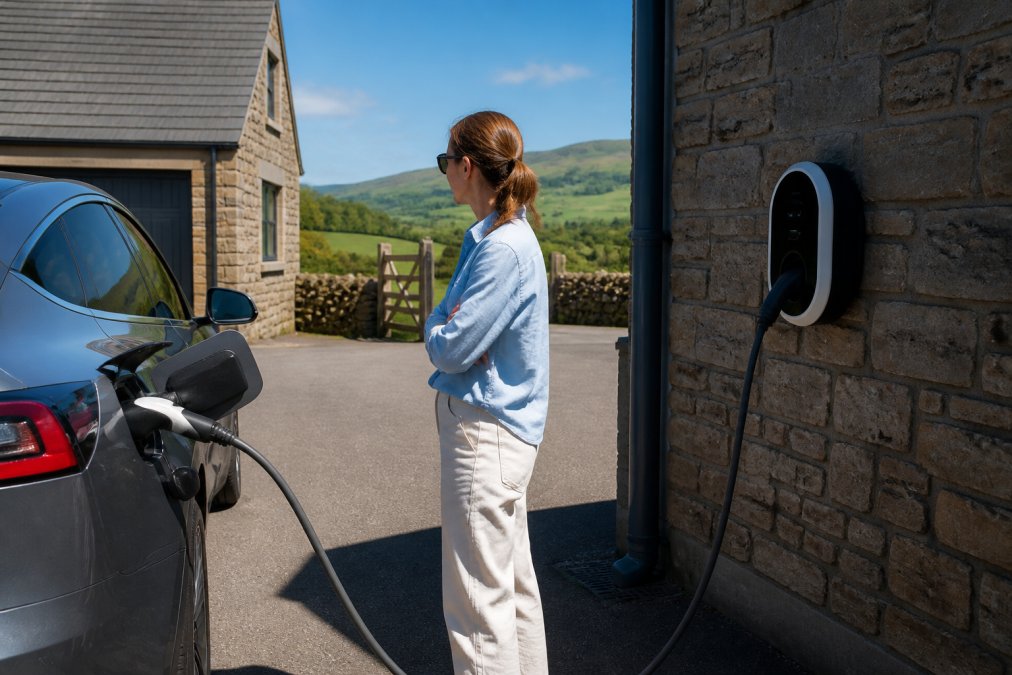
Rural and exposed properties need two things that urban installations rarely demand: hardware that survives the climate, and a grid connection assessment that starts months before the charger is fitted. This is the part most buying guides skip entirely, and it is where rural installations most often go wrong.
Weather-proofing: what the ratings actually mean
The Ingress Protection (IP) rating is the first filter. The first digit is protection against solids and dust, the second against water. For an exposed wall in driving rain, you want a unit rated IP54 or better, IP54 means protected against dust ingress and against water sprayed from any direction, which is the realistic test on a west-facing wall in a Scottish winter (iec.ch). A unit rated IP44 or lower will eventually let water in at the cable entry or the connector holster.
Beyond the headline IP rating, three details decide longevity:
- Cable entry and sealing. The gland and the point where the cable enters the enclosure are the first failure points. A well-sealed entry matters more than a marginally higher IP number.
- Operating temperature range. Cold is less of a problem than the datasheet suggests, but repeated freeze-thaw cycles stress seals and plastics. Check the stated operating range rather than assuming.
- Connector holster and cable management. A holstered connector that keeps the plug off the ground and out of standing water prevents the corrosion that kills connectors early.
On salt air and coastal exposure, the enclosure material and the quality of the fixings matter as much as the electronics. Stainless fixings and a UV-stable enclosure outlast cheap alternatives on an exposed coastal wall. The Zaptec Go, designed in Norway for harsh northern climates, is a sensible pick for coastal or upland sites for exactly this reason, but the principle applies to any unit: buy for the enclosure, not just the app.
Grid capacity and the DNO process
This is the rural issue that catches people out. Where the local distribution network is constrained, common at the end of a long rural spur, your installer must notify the Distribution Network Operator (DNO) before connecting, and in some cases a supply upgrade is required before the charger can be energised.
The process, in order:
- Load assessment. Your installer calculates the existing maximum demand at the property and the additional load the charger will add.
- DNO notification or application. Depending on the outcome, this is either a notification or a formal connection application. The DNO reviews the local network capacity.
- Outcome. Either the connection is approved as-is, approved with a load-limiting device fitted, or refused pending a supply upgrade.
- Supply upgrade (if required). This is the long-lead item. It can take weeks to months depending on the network and the work involved, and it is the single biggest cause of rural installation delays.
A load-limiting device, often called a current-limiting or load-management device, is the usual answer when the network can accept the charger but not at full output. It caps the charger's draw so the property's total demand stays within the agreed limit. That is a real trade-off: you may charge at a reduced rate overnight rather than at the unit's headline output.
What still applies regardless of location
Installation standards and safety regulations apply in full in rural settings, including RCD protection and, where required, earth arrangements suited to the property. A rural postcode is not a lighter-touch regime, if anything, the longer cable runs and older supply arrangements mean more of the installation needs checking, not less.
Choosing an Installer and Getting Post-Installation Support
Post-installation support separates a good installer from a cheap one. Chargers need firmware updates, tariff changes need app reconfiguration, and faults need a phone number that answers. Before you commit, ask three questions: who handles warranty claims, how quickly they respond to a fault, and whether they will service the unit years after fitting. A charger is a long-term fixture, not a one-off purchase.
This is where Smarter Utility differs from buying a box online. As an MCS accredited and approved installer, we design the system around your property, carry out a free no-obligation home survey, and stay reachable after commissioning. If you want a charger that is properly sized, correctly certified and supported long after the van leaves, start with a survey rather than a product page.
Frequently Asked Questions
What is the best home EV charger in Scotland?
The best charger depends on your priorities. The Zappi suits drivers with solar panels because its Eco+ mode uses surplus generation. The Ohme Pro works well for off-peak tariff savings, while the Easee One and Zaptec Go are compact options for tight driveways. All are compliant with UK smart charging rules and work with a Type 2 connection. Choose a unit that supports dynamic load balancing if your property has a limited supply.
Are there government grants available for EV charger installation?
Grant eligibility depends on your property type and whether you have off-street parking. Owner-occupiers and tenants can apply for support toward a smart charge point, while landlords and flat owners may access separate schemes. The charger must be smart-enabled and fitted by an approved installer for a claim to qualify. Check current eligibility criteria before booking, as scheme rules and funding levels change.
How does solar PV integration work with home EV charging?
A solar-compatible charger monitors your generation and diverts surplus power to the car instead of exporting it. The Zappi and Hypervolt Home 3 Pro both support this. Adding battery storage lets you charge from stored solar in the evening, when panels stop producing. This combination reduces the amount you draw from the grid and lowers running costs, particularly for drivers who charge at home during the day.
What is the difference between tethered and untethered EV chargers?
A tethered charger has a cable permanently attached, so you simply plug it into the car. An untethered unit has a Type 2 socket and you use your own cable. Tethered models are quicker to use and keep the cable tidy, but the lead length is fixed. Untethered chargers suit households with more than one EV or a mix of connector types. Both are available across the alternatives listed here.
Choosing a home charger is really a decision about your whole property's energy setup, and getting it wrong is expensive to undo. Smarter Utility designs and installs solar PV, battery storage and EV charging as a single tailored system, backed by MCS accreditation and a free, no-obligation home survey. Get started with Smarter Utility and power your EV from your own roof, with a design built for your supply, your climate and your future plans. Click HERE for your FREE SURVEY today.