 how-to
How Long Does Domestic Solar Installation Take in Scotland?
Table of Contents
- How Long Does Domestic Solar Installation Take in Scotland?
- The Domestic Solar Panel Installation Process, Stage by Stage
- The Full Solar Panel Installation Timeline: Roof, Electrical and Admin Stages
- Solar Battery Installation Time and What It Adds to the Schedule
- What Affects Solar Panel Installation Time: Roof, System Size and Weather
- Grid Connection, Export Approval and Paperwork: The Steps That Sit Outside Your Installer's Control
- How to Prepare Your Home and Avoid Delays
- Conclusion: What a Realistic Timeline Looks Like
- Frequently Asked Questions
Last Updated: October 16, 2026
How Long Does Domestic Solar Installation Take in Scotland?
Most homeowners want a straight answer: how long does domestic solar installation take in Scotland? The physical install usually takes one to three days. The full project, from first enquiry to switch-on, typically runs six to twelve weeks.
At Smarter Utility, we run free home surveys across Scotland and see this gap between "install day" and "whole project" catch people out constantly. The panels go up fast. The paperwork does not.
Here is what actually eats the calendar:
- Scaffolding and delivery: one to two weeks of lead time
- Grid connection and export approval: two to six weeks, sometimes longer
- Installation itself: one to three days on site
The rest of this guide breaks the timeline into stages, so you know what happens when. We cover the domestic solar panel installation process, the solar panel installation timeline, solar battery installation time, and what affects solar panel installation time.
The Domestic Solar Panel Installation Process, Stage by Stage
The domestic solar panel installation process has three phases: design and survey, site preparation, then the physical install. Each phase has its own timeline, and they rarely run back-to-back without gaps.
From initial consultation to signed design
The initial consultation and site survey usually take one to two hours on site. A surveyor checks your roof, your consumer unit, and where cables and the inverter can go.
After that, design work and your quote take a few days to a couple of weeks, depending on how busy your installer is. You then sign off the design and pay a deposit.
Scaffolding, equipment delivery and site preparation
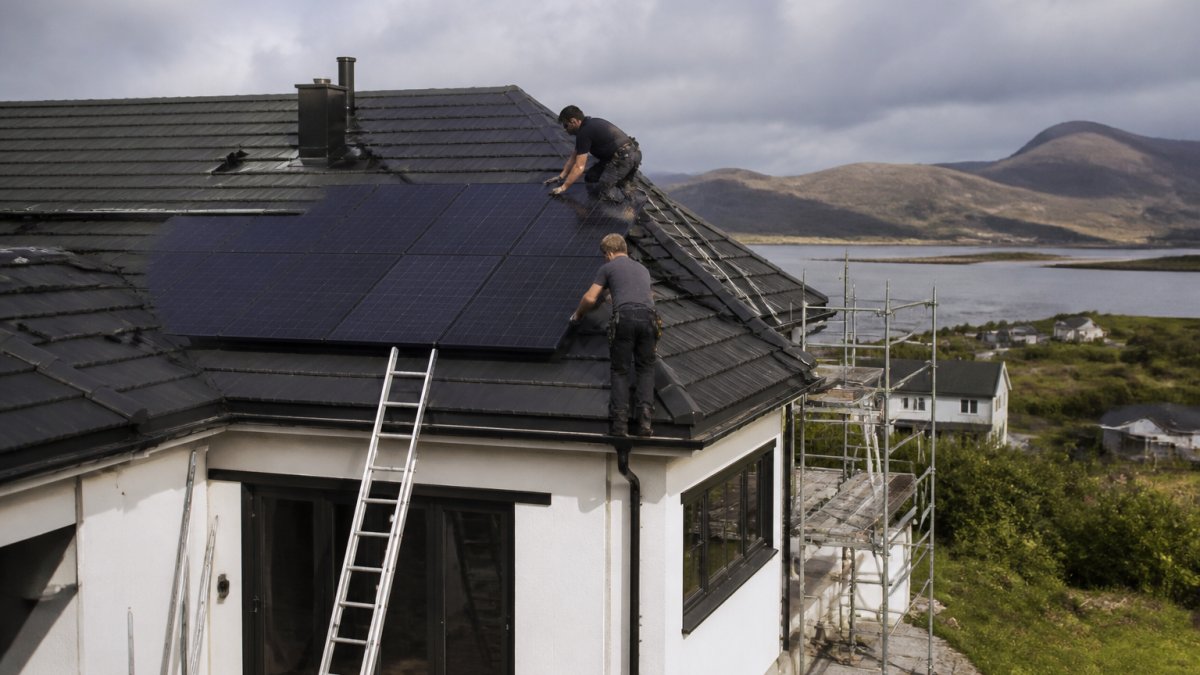
Scaffolding is often the hidden delay. Under the Work at Height Regulations 2005, any roof work needs proper access and edge protection, so a licensed scaffolder must erect it before your installation team arrives.
Equipment delivery follows. Panels, inverter, mounting rails and battery all need to land on site before work starts.
Typical lead times here:
- Scaffolding: three to ten days
- Equipment delivery: one to two weeks
- Site preparation: same day as scaffolding, usually
The Full Solar Panel Installation Timeline: Roof, Electrical and Admin Stages
The solar panel installation timeline splits into three tracks that run partly in parallel: roof work, electrical work, and administration. Roof work is the quickest. Admin is the slowest.
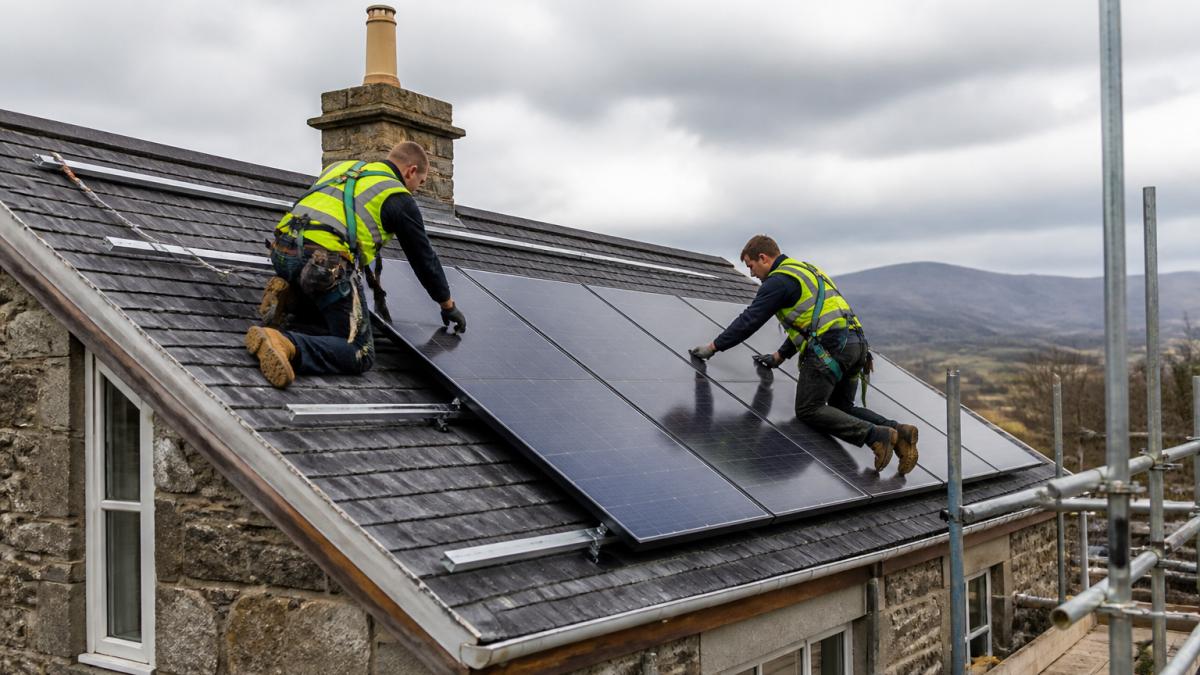
Roof work covers mounting rails and panels. A typical domestic array takes one day.
Electrical work covers wiring, the inverter, the consumer unit, and testing. This usually takes another half day to a full day.
Administration covers planning permission (rarely needed), building standards notification, and grid connection.
What happens after installation: inspection, testing and activation
Once panels are on and wired, your installer tests the system and commissions it. They check insulation resistance, polarity, and that the inverter talks to the grid correctly.
You then wait for your network operator to approve connection and fit an export meter if needed. Activation follows. This is the step most homeowners underestimate.
Solar Battery Installation Time and What It Adds to the Schedule
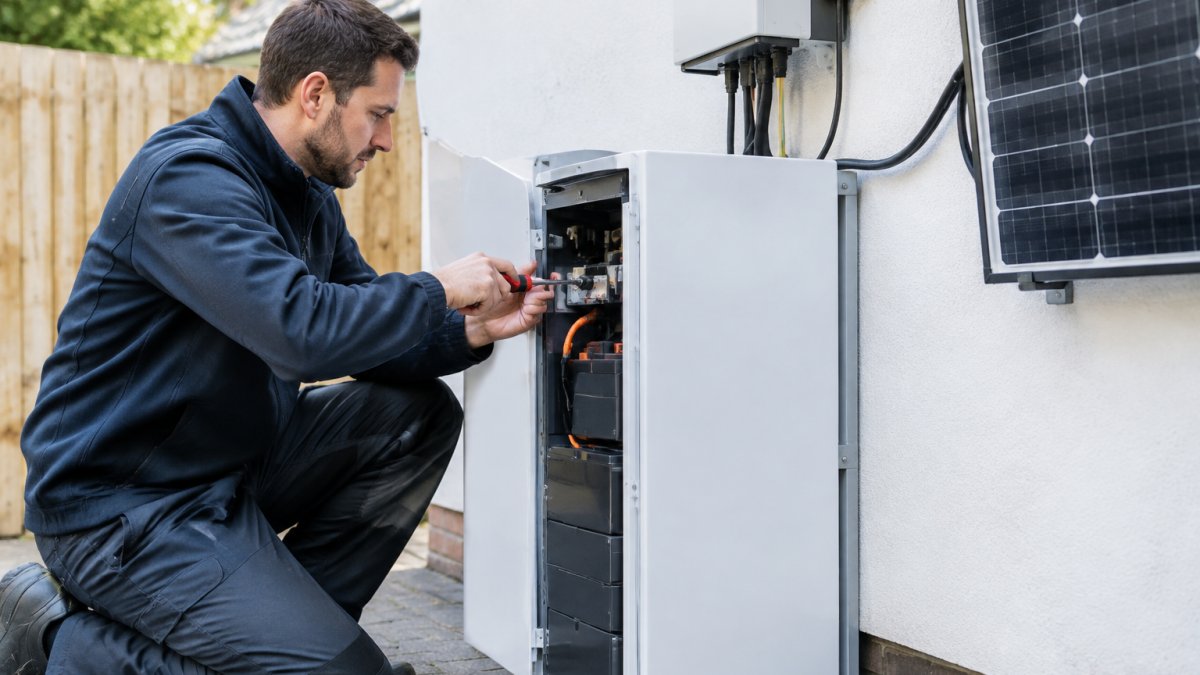
Solar battery installation time adds roughly half a day to a day on site for a straightforward wall-mounted unit.
Here are realistic ranges by configuration, based on what most installers see on Scottish homes:
| Configuration | Extra time on site | Extra admin | Effect on total timeline |
|---|---|---|---|
| Panels only, no battery | None | None | Baseline: six to twelve weeks |
| Panels plus single wall-mounted battery | Half a day | None if declared on the original DNO application | Little or no change |
| Panels plus battery and hybrid inverter | One day | None if declared up front | Little or no change |
| Battery added later, existing system | Half a day to a day | Fresh DNO notification and a new electrical test | Adds two to six weeks |
| Battery in a cold outbuilding or detached garage | One to two days | Possible cable run approval and additional building standards check | Adds one to three weeks |
The key mechanism is the DNO application. If the battery is declared on the original connection application, it is assessed as part of the same submission and adds nothing to the schedule. If you add it afterwards, your installer has to submit a fresh notification, and the DNO clock starts again.
The second mechanism is inverter compatibility. A battery needs either a hybrid inverter that can manage both solar and storage, or an AC-coupled setup with its own inverter. If your original install used a standard string inverter, adding a battery later may mean replacing it, which turns a half-day job into a full day plus new paperwork.
A few practical points that affect the timeline:
- Location matters. A garage, utility room, or plant cupboard is straightforward. A cold outbuilding may need a cable run, which can trigger a separate building standards check and add a week or more.
- Ventilation and clearance. Manufacturers specify minimum clearances and temperature ranges. A cupboard that is too tight or too warm can force a different location and a longer cable run.
- Consumer unit capacity. A battery adds load to your consumer unit. If there is no spare way, the unit may need upgrading, which is a separate electrical job.
- MCS certification. The battery must be included on your MCS certificate for the system to qualify for Smart Export Guarantee payments on the full setup. Adding it later means an updated certificate.
If you are adding a battery later, expect a second visit, a fresh electrical test, and a new DNO notification. Planning it in from the start saves that return trip and keeps the whole project inside the six-to-twelve-week window.
Click HERE for your FREE SURVEY today →
What Affects Solar Panel Installation Time: Roof, System Size and Weather
What affects solar panel installation time comes down to four things: roof, system size, access, and weather. Get these right and the schedule holds. Get them wrong and you lose weeks.
Roof type, condition and access
Slate and tile roofs are straightforward. Flat roofs need different mounts. Fragile or ageing roofs may need repair first, which pushes the whole project back.
Roof access matters too. A steep pitch, a dormer, or a narrow gap between houses slows the team down and may need extra scaffolding.
Seasonal scheduling and daylight hours
Scottish daylight hours swing hard across the year. In winter, installers lose working hours fast, and frost or high winds can stop roof work entirely. Spring and summer give the longest working windows.
Grid Connection, Export Approval and Paperwork: The Steps That Sit Outside Your Installer's Control
Grid connection and export approval sit with your distribution network operator (DNO), not your installer. This is the single biggest source of delay, and no amount of good planning removes it entirely.
What most guides skip is that the paperwork splits into two separate tracks, and they run on different clocks.
Track one: the DNO connection application. Your installer submits this before or alongside the install. The DNO reviews it against the capacity of your local network and either approves, approves with conditions, or asks for more detail.
Track two: building standards and MCS certification. In Scotland, most domestic solar installations are permitted development and do not need planning permission, but they do need to comply with building standards, and your installer should notify the local authority where required.
The practical sequence looks like this:
- Your installer submits the DNO connection application and, where needed, the building standards notification.
- The DNO reviews network capacity at your address and responds.
- If approved, the DNO may require a specific meter or a witness test.
- Your installer commissions the system and issues the MCS certificate and electrical test paperwork.
- You switch to a Smart Export Guarantee tariff with a licensed supplier and start exporting.
The Ofgem guidance on the Smart Export Guarantee sets out how export payments work and what your supplier must offer. Approval timelines vary by operator and by how constrained your local network is.
One more point worth asking about up front: whether your installer chases the DNO application themselves or hands it to you. Some do the whole thing; some expect the homeowner to submit and follow up.
How to Prepare Your Home and Avoid Delays
Preparation is the cheapest way to protect your timeline. Do these before install day and you remove most common hold-ups.
- Clear the loft and route to the consumer unit
- Move cars off the driveway for delivery access
- Confirm scaffolding can be erected without blocking a neighbour
- Check your consumer unit has spare capacity
- Have your energy bills and meter details ready
- Agree a date for the network operator's meter work
- Ask your installer who chases the connection application
The last point matters most. A common mistake is assuming your installer handles everything. Some do. Some do not. Ask, in writing.
Conclusion: What a Realistic Timeline Looks Like
A realistic domestic solar install in Scotland runs six to twelve weeks end to end. Install day itself is one to three days. Everything else is design, scaffolding, delivery, and grid admin.
The homeowners who hit the short end of that range are the ones who book early, prepare their home, and pick an installer who manages the paperwork for them. Smarter Utility handles the full process, from a free, no-obligation home survey through design, installation, and grid connection, as a fully accredited MCS solar and battery storage installer. We also install EV chargers, so one survey can cover solar, battery, and charging together.
Get started with Smarter Utility and get a clear, tailored timeline before you commit to anything.
MCS certified installer directory
Frequently Asked Questions
How long does a typical domestic solar installation take from survey to switch-on?
For most homes, the physical installation itself takes one to three days on site. The full project, from your free survey through design, scaffolding, roof work, electrical wiring, grid connection and final commissioning, usually runs four to eight weeks. Larger systems with battery storage, or properties needing an electrical upgrade, can stretch towards ten to twelve weeks. The variation comes mostly from paperwork and network approval rather than the work on your roof.
Does adding a battery make solar installation take longer?
A solar battery installation adds roughly half a day to a full day on site, depending on capacity and where the unit is mounted. The bigger factor is design time beforehand: your installer needs to size the battery against your electricity use and any future plans, such as an EV charger or heat pump. If the battery is specified from the start, it rarely extends the overall project beyond a week or two.
What can delay a domestic solar installation?
The most common hold-ups are grid connection and export approval, which sit with your network operator rather than your installer. Other causes include poor roof condition discovered during the site survey, scaffolding availability in busy periods, and weather that makes roof access unsafe. Missing paperwork, such as proof of ownership or an outdated consumer unit, also adds time. Booking your survey early in the year gives more slack before winter.
How long does it take to connect a solar system to the grid?
Once your installer submits the application, network approval for a domestic system commonly takes two to six weeks, though it can run longer at peak times. Installation and commissioning can often proceed in parallel, so the grid step does not always add to the total. Your installer will confirm when the system can be switched on and when export payments can begin under your chosen tariff.