 ultimate-guide
Is Solar Worth It in Scotland? A 2026 Cost & Payback Guide
Table of Contents
- How Solar Panels Perform in Scottish Weather
- Solar Panel Installation Costs and What Drives Them
- The Solar Panel Payback Period: When You Break Even
- Solar Panel Grants Scotland: What Financial Support Exists
- Solar Battery Storage Benefits for Scottish Homes
- Grid Export Tariffs vs. Self-Consumption: Which Pays More?
- Pairing Solar with Heat Pumps and EVs
- Post-Installation Monitoring and Maintenance
- Frequently Asked Questions
Last Updated: September 16, 2026
How Solar Panels Perform in Scottish Weather
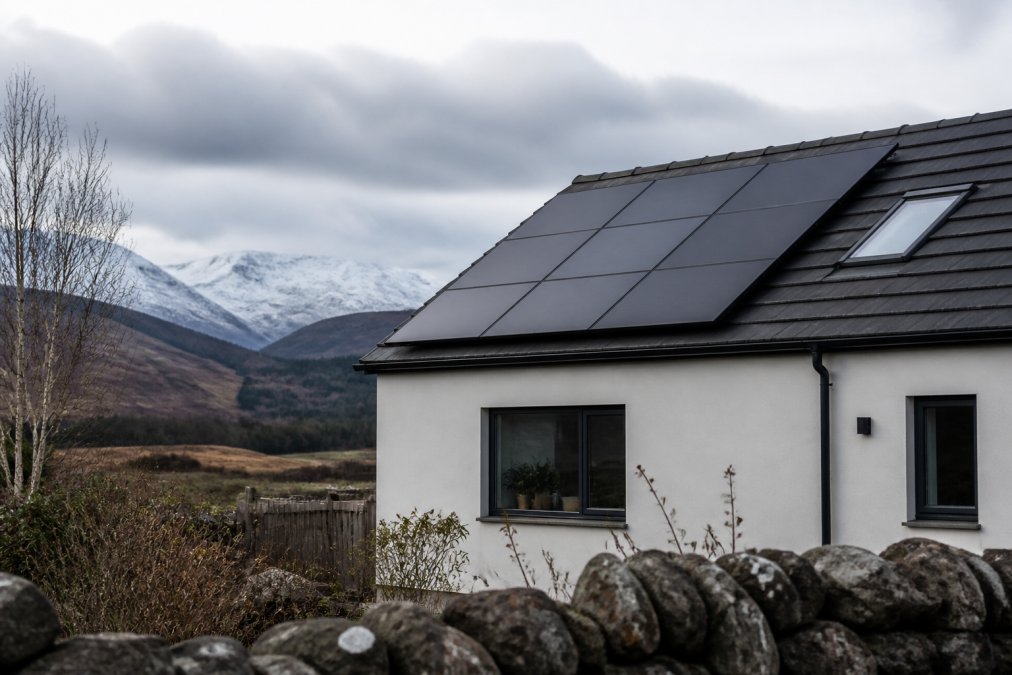
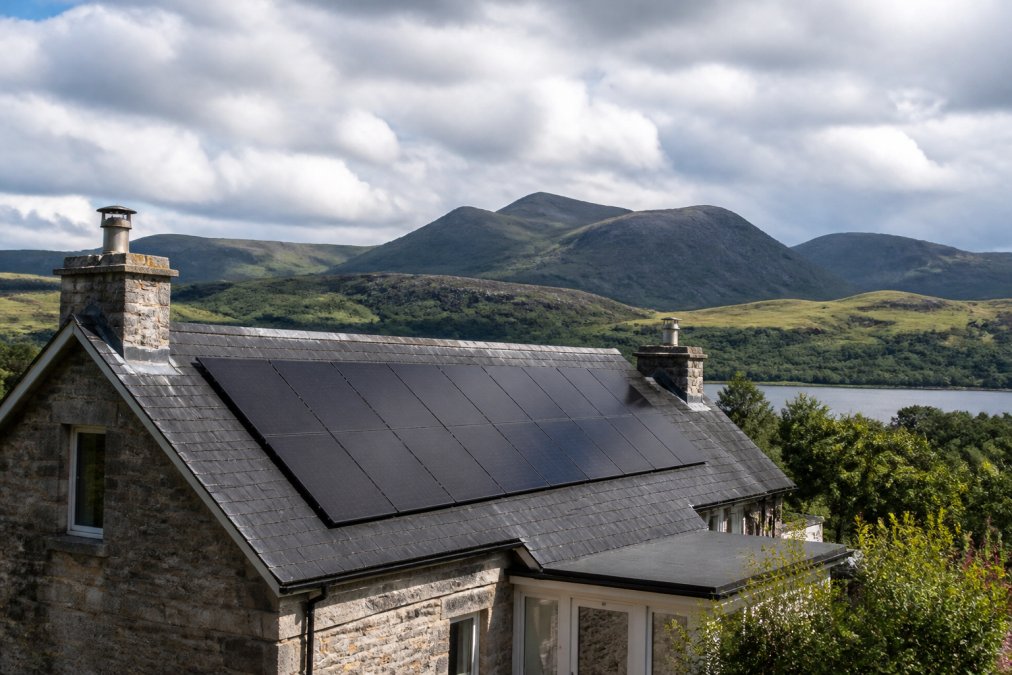
Solar photovoltaic (PV) panels work in Scotland well enough to justify the investment for most homes. Whether is solar worth it in Scotland comes down to three variables: your roof's daylight, how you're paid for exports, and how much of your own generation you consume.
Daylight Hours and Cloud Cover: What Actually Matters
Scotland's summer days are long and winter days short: a June array can produce several times its December output. That seasonal swing is the most important design factor here, and most generic payback calculators ignore it.
Roof Orientation and Pitch in Northern Latitudes
South-facing roofs at 30 to 40 degrees capture the most annual irradiance. East and west-facing roofs still perform acceptably, particularly with modern inverters. North-facing roofs are weakest, though not automatically disqualified if the pitch is shallow.
Solar Panel Installation Costs and What Drives Them
Installation costs depend on system capacity, roof complexity, inverter choice, and whether battery storage is included. Treat any figure quoted without a survey with caution.
The main cost drivers are:
- System capacity in kilowatts peak (kWp), typically 3 to 6 kWp for a domestic roof
- Panel type and efficiency, with higher-output panels costing more per unit
- Inverter selection, including string versus hybrid models
- Battery storage, which is the largest optional line item
- Scaffolding and roof access, which varies by property
- Electrical upgrades, if your consumer unit needs work
The Solar Panel Payback Period: When You Break Even
The solar panel payback period is the time for cumulative savings and export payments to equal your upfront investment. For a well-designed domestic system, payback typically falls between 8 and 14 years, depending heavily on self-consumption.
Three levers shorten payback:
- Higher self-consumption, using your own generation rather than exporting it
- Battery storage, shifting daytime generation to evening use
- Export payments, income from the Smart Export Guarantee
How Energy Price Rises Affect Your Return
Every unit you generate and use yourself avoids a unit bought at retail rates, so when prices rise, the value of self-consumed solar rises too. Solar works as a hedge: it locks in a portion of your electricity at a fixed cost for 25 years or more.
Solar Panel Grants Scotland: What Financial Support Exists
There is no standalone "solar grant" in the way many homeowners expect. Support comes through a legal export payment plus energy efficiency grant and loan schemes, and knowing which is which matters because applying for the wrong one wastes weeks.
The three mechanisms you'll encounter most often are:
- The Smart Export Guarantee (SEG), a legal obligation on licensed electricity suppliers with 150,000 or more domestic customers to pay for renewable electricity you export. It is not a grant and not means-tested. Rates vary widely by supplier, so the tariff you choose matters more than the scheme itself.
- Home Energy Scotland grant and loan funding, administered on behalf of the Scottish Government, this covers a range of energy efficiency and renewable measures. Solar PV and battery eligibility, grant caps and loan terms have changed across funding rounds, so check current terms directly rather than assuming from older guides.
- Council Tax reduction or exemption routes, installing qualifying renewable or energy efficiency measures can sometimes affect your Council Tax banding. This is not a payment, but worth checking with your local authority before you commit.
How the SEG Actually Works in Practice
The SEG replaced the old Feed-in Tariff, and the two are often confused. Under the FiT you were paid for total generation; under the SEG only for what you export. That change is why self-consumption now dominates payback maths.
Key mechanics to understand before you sign anything:
- You must have an MCS-certified installation and a smart meter capable of half-hourly export readings. Without both, no supplier can register you.
- You choose your SEG supplier independently of your import supplier. The best export rate is often not from your import provider.
- Rates are typically fixed for a set term, then variable. Match the term to your expected payback horizon.
- Payment is usually monthly or quarterly, based on metered export. There is no deemed generation element, so a system that exports little earns little, the core argument for a battery.
Eligibility and Practical Pitfalls
Home Energy Scotland schemes are typically means-tested or capped, and the measure mix changes between funding rounds. Grant funding usually covers a portion of the cost up to a fixed cap, with the remainder available as an interest-free or low-interest loan. Confirm current terms before budgeting.
Two pitfalls catch homeowners repeatedly:
- Assuming a grant will cover the battery. Battery storage has been treated differently from solar PV across successive schemes. Check the current measure list rather than relying on a quote from a previous round.
- Commissioning before confirming eligibility. If a scheme requires prior approval, installing first can disqualify you. Get written confirmation of eligibility before work starts.
The Interaction Most Guides Miss
Grants and the SEG are not additive in the way people assume. A grant cuts upfront cost and the SEG raises ongoing income, both shortening payback, but a grant funding a larger system than you need pushes you toward exporting more at a lower SEG rate, lengthening payback. Size the system to your consumption first, then layer support on top.
Solar Battery Storage Benefits for Scottish Homes
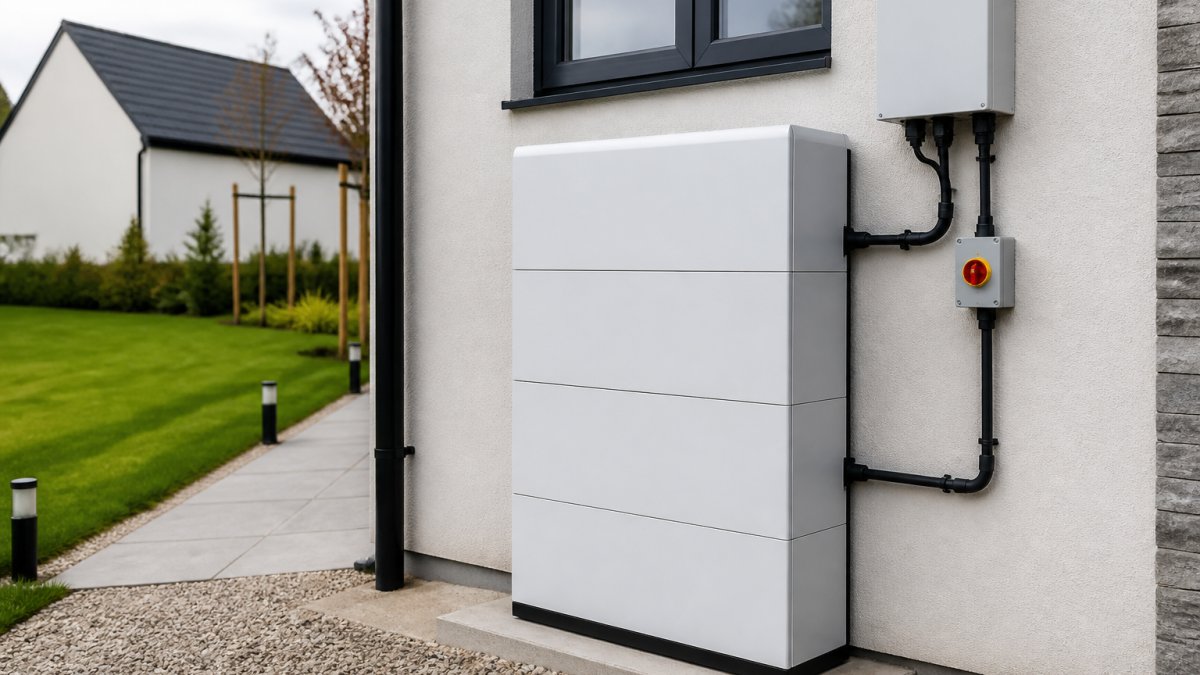
The main solar battery storage benefit is self-consumption: storing surplus daytime generation for the evening, when demand peaks and grid electricity is most valuable to avoid.
Other benefits include:
- Reduced reliance on the grid during peak demand periods
- Backup power during outages, on systems configured for it
- Better utilisation of a heat pump or EV charger in the evening
- Lower exposure to future energy price volatility
Sizing a Battery Correctly for Your Energy Consumption
Sizing is where most installations go wrong: too small a battery dumps energy you could have stored, while too large a one costs more than it will ever save. Review your half-hourly consumption data, identify your evening and overnight baseload, and size the battery to cover that load with a sensible depth of discharge.
Grid Export Tariffs vs. Self-Consumption: Which Pays More?
Self-consumption almost always pays more per unit than export: every kilowatt-hour you use avoids a retail purchase, while every kilowatt-hour exported earns a typically lower SEG rate. That gap is the biggest argument for battery storage.
The decision framework is straightforward:
| Scenario | Best Strategy | Why |
|---|---|---|
| High daytime usage | Self-consume directly | Avoids retail-rate purchases |
| Low daytime, high evening usage | Add battery storage | Shifts generation to peak demand |
| EV charged overnight | Battery plus smart tariff | Charges cheap, discharges at peak |
| Surplus generation year-round | Maximise SEG export | Turns excess into income |
Pairing Solar with Heat Pumps and EVs
This section decides whether is solar worth it in Scotland for a household also decarbonising its heating and transport. The financial case changes materially when you add a heat pump or an EV, because both convert your generation into avoided fossil fuel costs rather than avoided grid electricity alone.
Why the Heat Pump Pairing Is Not Automatic
An air source heat pump (ASHP) runs hardest when it is cold and dark, the opposite of peak solar generation. In a Scottish winter it can draw several kilowatts through the evening peak while your panels produce almost nothing, so without storage solar offsets very little of that load. Maximizing the efficiency of your system during these low-light months requires consistent solar panel maintenance to ensure that every available photon is captured before the sun dips below the horizon.
- A battery is sized to carry summer and shoulder-season generation into the evening. This is the most common route and the one that makes the bundle coherent.
- The heat pump is run on a time-of-use tariff, so it heats the fabric and hot water during cheaper overnight windows rather than at peak. Solar then offsets the daytime baseload, and the tariff handles the rest.
- The property has good thermal efficiency first. A heat pump in a poorly insulated home runs longer and at higher flow temperatures, eroding the running-cost advantage. Fabric-first measures are usually the prerequisite, not an optional extra.
Sizing the Battery Around the Heat Pump
A heat pump adds a meaningful baseload to evening and overnight consumption, changing the battery sizing calculation. A household with no heat pump might be well served by 5 kWh; the same household with an ASHP may need closer to 10 kWh to cover the evening heating load.
EV Charging: The More Flexible Half of the Pair
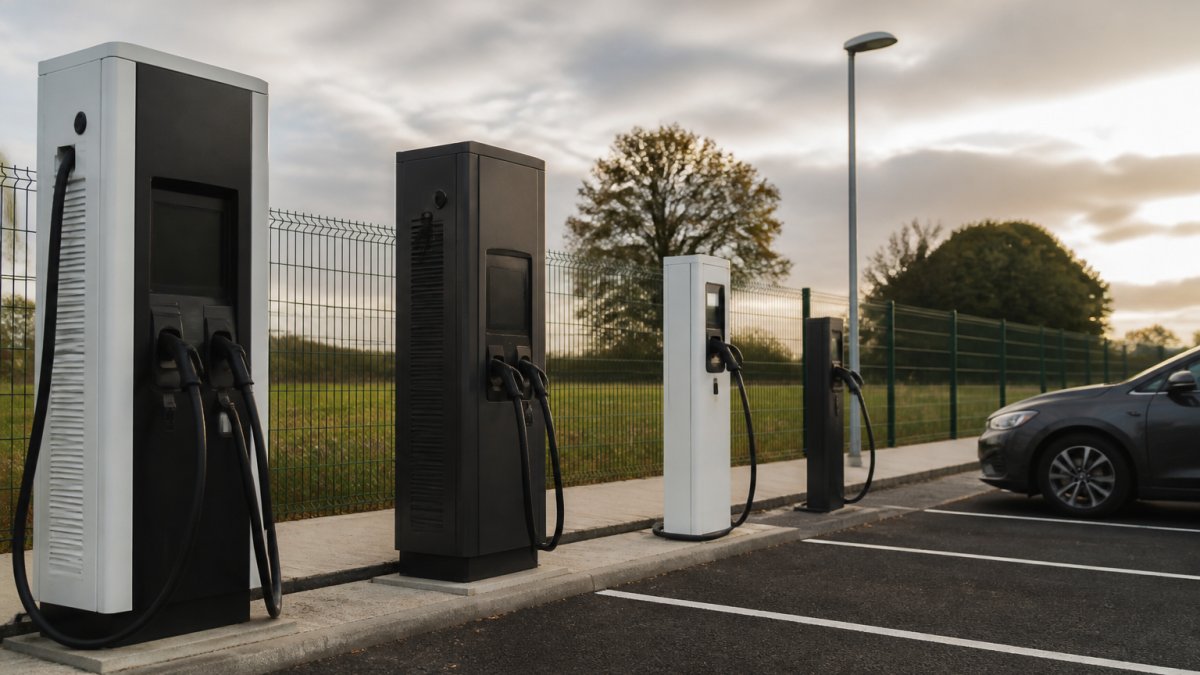
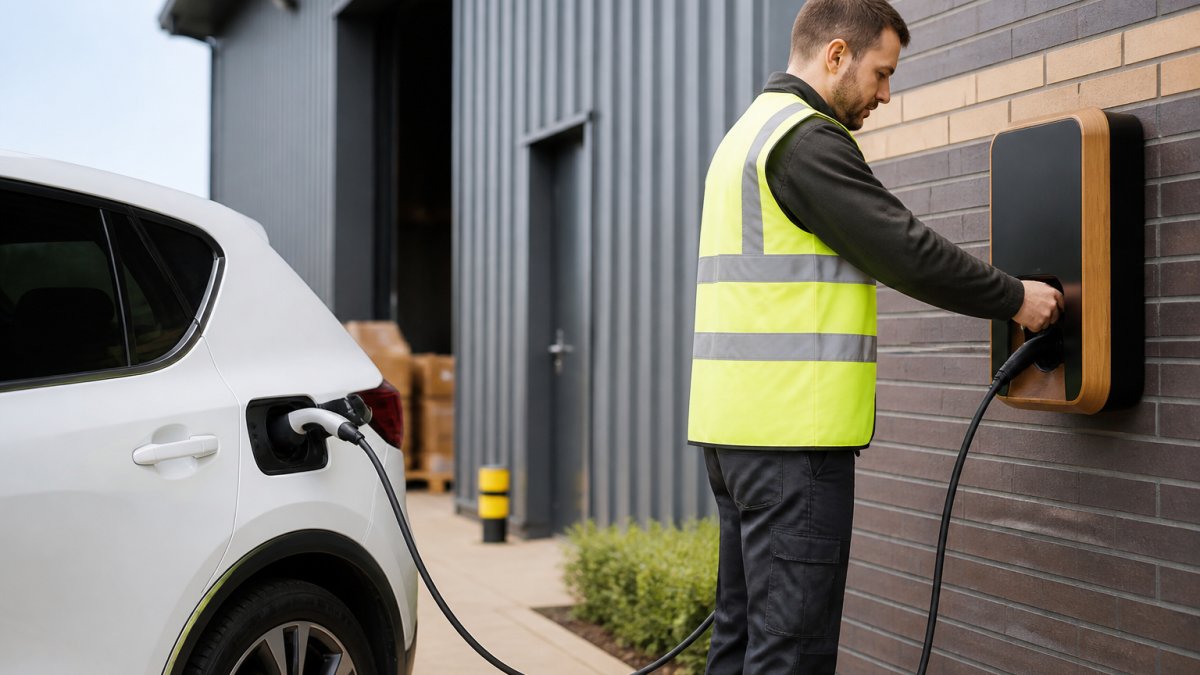
EV charging is easier to align with solar than heating because it is deferrable. If the vehicle is home during the day, direct solar charging is the highest-value use of generation; if not, a battery plus a smart overnight tariff achieves a similar outcome.
The trade-off is between three strategies:
| Strategy | Best for | Trade-off |
|---|---|---|
| Direct daytime solar charging | Home during the day, low mileage | Limited by daylight hours in winter |
| Battery plus overnight smart tariff | Out during the day, higher mileage | Battery cost, but highest avoided cost per mile |
| SEG export plus grid charging | Low mileage, surplus generation | Lowest value per kWh, simplest setup |
The Honest Cost-Benefit View
The bundle is not automatically cheaper than a gas boiler and a petrol car. It is cheaper when:
- The property is thermally efficient enough that the heat pump runs at low flow temperatures.
- The battery is sized from winter consumption data, not summer.
- The household is on a time-of-use tariff that rewards overnight or off-peak consumption.
- The solar array is sized for annual yield, accepting minimal winter output.
Post-Installation Monitoring and Maintenance
If you're weighing up whether solar is worth it in Scotland for your specific property, the honest answer is that it depends on your roof, your consumption, and how you use the energy. A survey removes the guesswork. MCS certification is the standard to insist on from any installer, because it's what makes your system eligible for SEG payments.
Frequently Asked Questions
Do solar panels work during the long winter months in Scotland?
Yes, but output drops. Shorter daylight hours and thicker cloud cover reduce generation between November and February. Panels still produce electricity from diffuse light, so you are not starting from zero. The bigger factor is snow lying on the array, which blocks production entirely until it clears. A well-designed system sized around annual consumption, not winter peaks, delivers reliable savings across the full year.
What government grants or financial support are available for solar installations?
Home Energy Scotland offers interest-free loans for renewable energy systems, including solar PV and battery storage. The Smart Export Guarantee requires licensed electricity suppliers to pay you for surplus electricity exported to the grid. There is no VAT on solar panels and battery storage for residential installations until March 2027. Eligibility rules and loan amounts change, so check current terms before committing.
How does battery storage improve the return on investment for solar systems?
A battery lets you store surplus electricity generated during the day and use it in the evening when demand peaks. Without storage, that surplus is exported at a lower rate than the import price you pay. The solar battery storage benefits include higher self-consumption, protection against peak tariff rates, and partial energy independence during grid outages. Correct sizing matters. An undersized battery wastes surplus; an oversized one adds cost without proportional savings.
What is the solar panel payback period for a typical Scottish home?
Most residential systems in Scotland reach payback in 10 to 15 years, depending on system capacity, roof orientation, electricity usage patterns, and whether battery storage is included. Higher self-consumption and rising energy prices shorten the payback period. Export tariff rates and upfront installation costs also affect the calculation. A free survey that models your specific consumption and roof characteristics gives a more accurate figure than generic estimates.
The challenge with solar in Scotland isn't whether the technology works. It's whether the system is designed around your roof, your consumption, and your plans for a heat pump or EV. A generic quote won't answer that. Smarter Utility is an MCS-accredited installer offering a free, no-obligation home survey, expert design, and tailored battery and solar installation built around your actual energy needs. Get started with Smarter Utility and make an educated decision about solar for your home.