 how-to
How to Maintain Your Home EV Charger: A 2026 Guide
Table of Contents
- How to Maintain Your Home EV Charger: What You Need to Know
- What You'll Need Before You Start
- EV Charger Maintenance Checklist
- How to Clean an EV Charger
- EV Charging Cable Inspection
- Home EV Charger Troubleshooting
- Common Mistakes to Avoid
- Frequently Asked Questions
Last Updated: October 19, 2026
How to Maintain Your Home EV Charger: What You Need to Know
A home EV charger is a wall-mounted unit that safely delivers electricity to your vehicle's battery, and looking after it is simpler than most owners expect. At Smarter Utility, we install solar, battery and charging systems across Scotland. Most avoidable faults start with a cable left coiled in the rain or a unit that has never been wiped down.
The good news: you do not need an electrician's toolkit. You need a cloth, a torch, a few minutes a month, and the discipline to check before you plug in.
Below, we break down exactly how to maintain your home EV charger, section by section, so you can spot a problem before it becomes a repair bill.
What You'll Need Before You Start
Gather your kit first so the job takes minutes rather than an afternoon.
- A soft, damp cloth and a mild soap solution
- A soft-bristled brush or old toothbrush
- A torch for inspecting the connector pins
- A dry microfibre cloth
- Your installer's contact details and warranty paperwork
- A notebook or phone note to log each check
One rule matters more than the rest: switch off the charger at the isolator before you touch anything. Your installer should have shown you where that switch sits. If they did not, find it now, before you need it.
EV Charger Maintenance Checklist
An EV charger maintenance checklist is a short routine you repeat monthly, with a deeper check twice a year. Here is the schedule we recommend to every customer.
| Task | How Often | Time Needed |
|---|---|---|
| Wipe down the outer casing | Monthly | 2 minutes |
| Check the cable for cracks or scuffs | Monthly | 3 minutes |
| Inspect connector pins for dirt or corrosion | Monthly | 3 minutes |
| Test the unit by starting a charge | Monthly | 5 minutes |
| Check the mounting and cable holster | Every 6 months | 5 minutes |
| Book a professional service | Annually | Varies |
The monthly routine takes about fifteen minutes. Do it on the same day each month and it becomes habit. Log the date and anything you spotted, because a pattern of small faults is easier to prove under warranty than a single vague complaint.
How to Clean an EV Charger
Cleaning a home EV charger means wiping the casing with a damp cloth and mild soap, then drying it fully. Never use a hose, jet washer or pressure spray, and never pour water directly over the unit.
Work in this order:
- Switch off at the isolator.
- Wipe the casing with a damp cloth and a little mild soap.
- Dry it with a microfibre cloth, including the edges and seals.
- Brush dust from the connector pins with a soft brush.
- Check the cable holster for grit or water.
- Switch back on and start a short test charge.
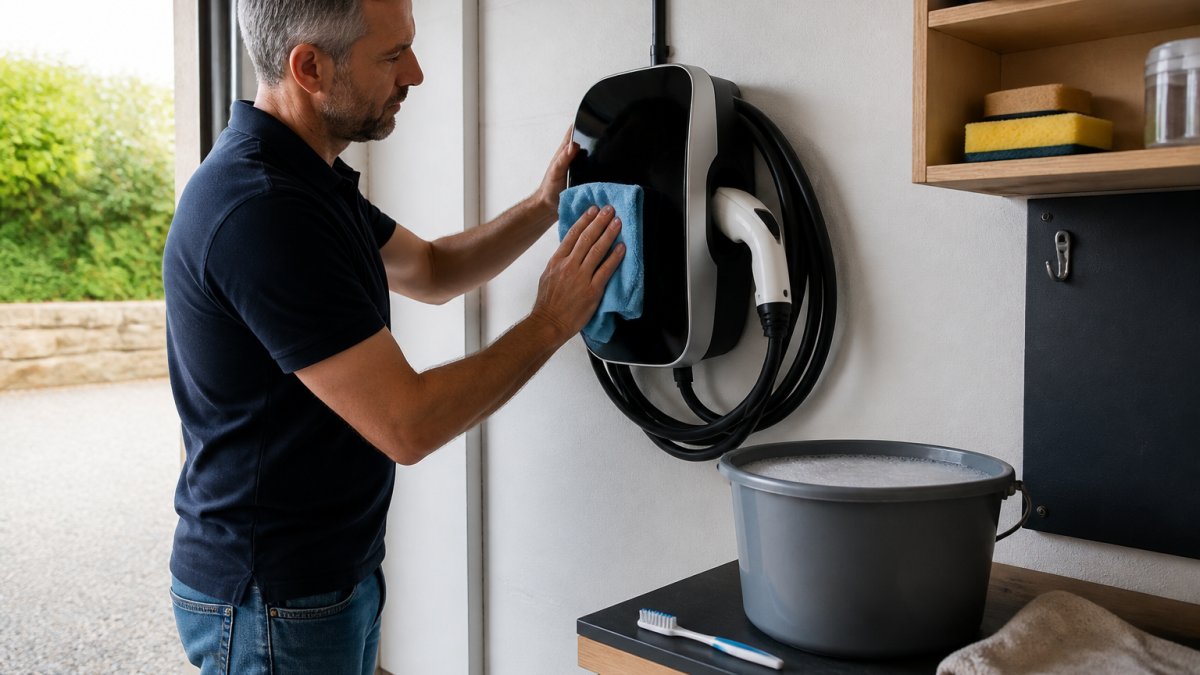
Avoid harsh chemicals, solvents and abrasive pads. They dull the casing and can damage the seals that keep moisture out. If you live near the coast, salt in the air makes a monthly wipe more important, not less.
EV Charging Cable Inspection
An EV charging cable inspection is a two-minute visual check of the cable's full length, both connectors, and the holster. Do it every month and after any incident, such as driving over the cable or a heavy item falling on it.
Look for:
- Cuts, scuffs or exposed inner wire
- Stiff or brittle sections, especially in cold weather
- Bent or discoloured connector pins
- Loose cable glands where the cable enters the unit
- Trapped cable under a door or wheel
Run your hand along the cable as you look. Warmth, soft spots or a bulge mean the cable needs professional attention. Do not use a damaged cable, even for one charge.
Click HERE for your FREE SURVEY today →
Store the cable coiled loosely on its holster rather than draped over a hook or left on the ground. Tight coils stress the inner wires, and a cable left on the driveway is a trip hazard and a theft target.
Home EV Charger Troubleshooting
Home EV charger troubleshooting starts with three questions: is there power, is the cable sound, and is the fault with the car or the unit? Work through them in that order before you call anyone.
Try these steps:
- Check the isolator is switched on and the consumer unit has not tripped
- Unplug and re-seat the connector at both ends
- Try a different charging cable if you have one
- Check the car's own charging schedule and charge limit settings
- Look for a fault light or error code on the unit
- Note the code and the time it appeared
Many "faults" turn out to be a tripped circuit breaker or a car set to stop charging at a certain level. If the unit shows a fault code, note it down. Your installer will ask for it, and it saves a wasted visit.
Common Mistakes to Avoid
The biggest mistake is treating the charger as fit-and-forget equipment. It sits outside in all weather and carries serious current, so it deserves the same attention as a boiler.
Other errors we see often:
- Jet washing the unit. Water gets past the seals and into the electronics.
- Skipping the annual service. Small faults caught early cost far less than a failed unit.
- Ignoring a damaged cable. A cut outer sheath is a shock risk, not a cosmetic issue.
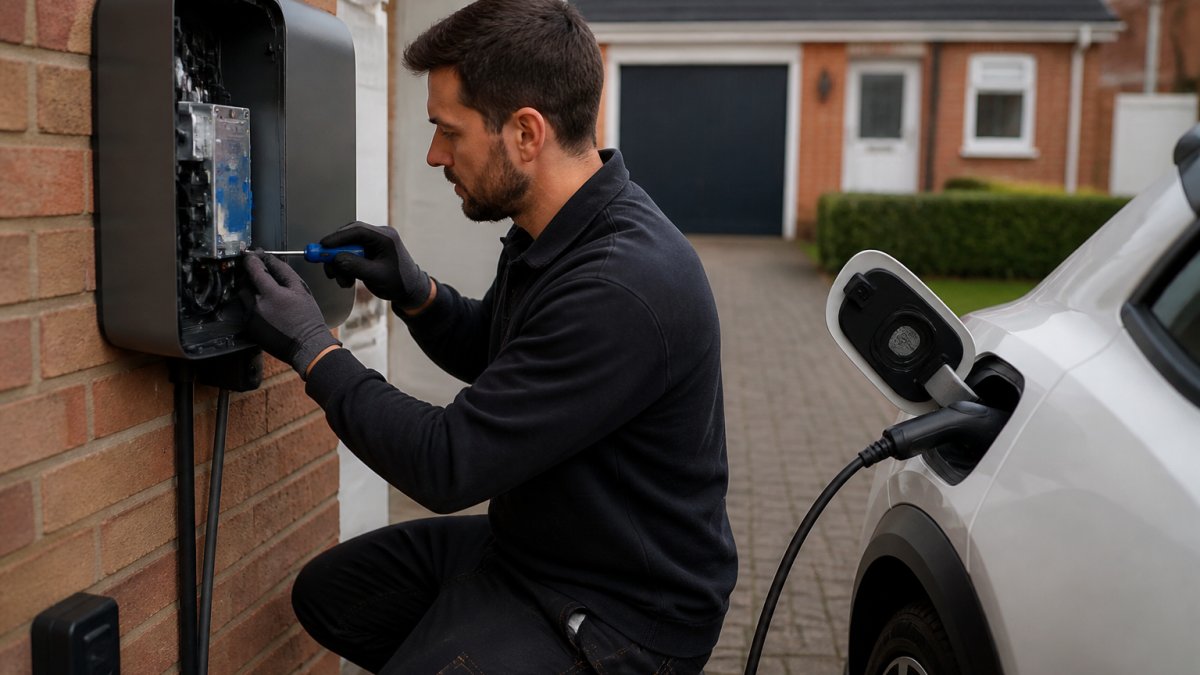
- Letting an unqualified person "have a look." EV chargers are not DIY territory.
- Losing the paperwork. Warranty claims need dates, model numbers and service records.
If your property has an older consumer unit or a long cable run to the driveway, the installation itself may need attention before maintenance even matters. That is exactly the kind of thing our free, no-obligation home survey is designed to catch. Our team is fully accredited and approved as an MCS solar and battery storage installer, so we can check the charger, the supply and any solar or battery setup. You can read the IET guidance on electric vehicle charging installations for the wiring standards installers work to, and the government guidance on installing EV chargepoints for the rules that apply to home installations.
For safety guidance on electrical work in the home, the Electrical Safety First advice on EV charging is a useful plain-English reference to keep alongside your service log.
A charger that is never checked will eventually fail, usually on a morning when you need a full battery. A fifteen-minute monthly routine, a proper annual service, and a quick call when something looks wrong will keep your home EV charger running for years. At Smarter Utility, we design and install solar PV, battery storage and EV charging systems tailored to your property, backed by a free home survey and a fully accredited team. Get started with Smarter Utility and book your free survey today.
Frequently Asked Questions
How often should a home EV charger be serviced?
A professional service every 12 months is recommended. Between services, run through a monthly home EV charger maintenance checklist: check the cable for damage, clean the unit, and test the connector. If you notice frequent tripping, error codes, or slow charging, book a service sooner. Regular servicing helps catch worn cables or loose connections before they cause a breakdown.
Can you clean an EV charger with water?
Yes, but carefully. Use a damp cloth with mild soapy water on the outer casing. Never spray water directly at the unit or use a pressure washer, as this can force moisture into electrical components. The connector pins should be cleaned with a dry, soft brush. Avoid harsh chemicals or abrasive cleaners that could damage the casing or seals. Always switch off the charger at the isolator switch before cleaning.
What should you do if your home EV charger stops working?
Start with basic home EV charger troubleshooting: check the isolator switch is on, look for error lights, and try a different charging cable if you have one. If the charger still doesn't work, switch it off and call a qualified electrician. Do not attempt to open the unit yourself. If your charger is under warranty, contact the installer. For safety, never use a charger that shows signs of burning, smoke, or exposed wires.
Can bad weather damage a home EV charger?
Outdoor-rated chargers are built to withstand rain and snow, but extreme conditions can still cause issues. Water can enter through worn seals or cracked casings, leading to faults. After storms, inspect the unit for damage and check that the cable and connector are dry before use. If you live in an area prone to flooding, consider mounting the charger higher. Regular EV charging cable inspection and cleaning help maintain weather resistance.