 ultimate-guide
Why Install an EV Charger at Home: 2026 UK Guide
Table of Contents
- Why Install an EV Charger at Home: The Core Benefits
- Home EV Charger vs Public Charging: Which Makes Sense?
- How Long to Charge an Electric Car at Home
- Home EV Charger Installation Cost and Available Grants
- EV Charger Installation Requirements: Is Your Home Ready?
- Safety, Standards, and Choosing a Qualified Installer
- Smart Charging, Off-Peak Tariffs, and Renewable Electricity
- Frequently Asked Questions
Last Updated: October 15, 2026
Why Install an EV Charger at Home: The Core Benefits
A dedicated home charging point turns the cheapest, slowest way to refuel an electric car into the most convenient one. According to GOV.UK guidance on electric vehicle chargepoint grants, most charging happens at home overnight, and a properly installed unit is the reason why.
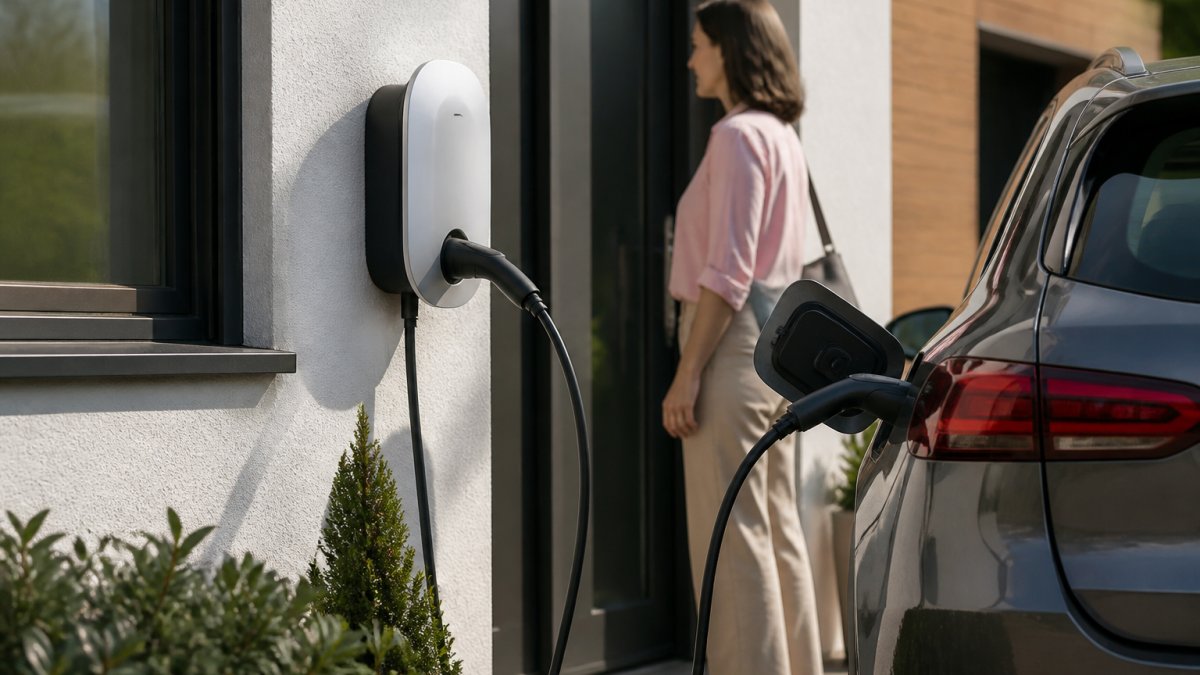
A home EV charger is a wall-mounted charging point, typically rated at 7kW on a single-phase supply, that draws power from your household electricity supply to recharge an electric vehicle's battery.
Smarter Utility installs these units across Scotland. Drivers who charge at home often find they stop thinking about charging at all, as it happens while they sleep.
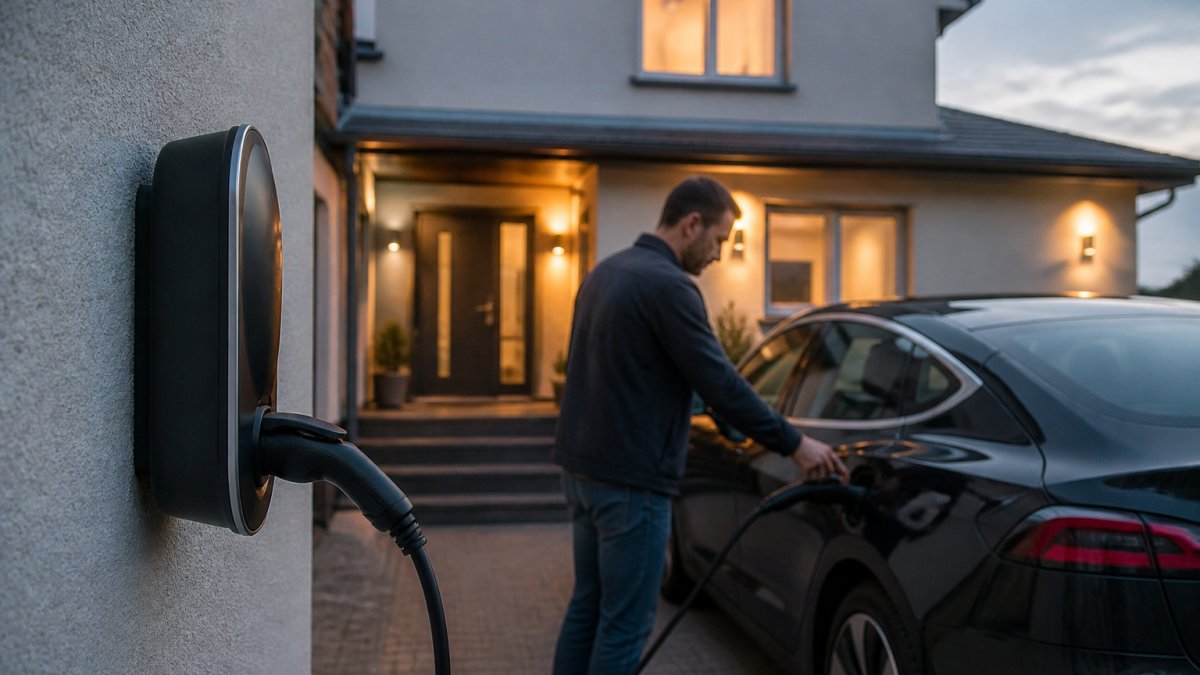
Charging Speed: Dedicated Charger vs Three-Pin Plug
A dedicated 7kW charger adds roughly 30 miles of range per hour of charging. A standard three-pin socket manages closer to 8 miles per hour, and it was never designed for continuous high-current draw.
That gap matters more than it looks. A three-pin plug will recharge a small battery overnight, but on a larger battery it becomes an all-day job.
Cost Savings and Overnight Charging Convenience
Charging overnight on an off-peak tariff is where the savings live. Domestic electricity is almost always cheaper per kilowatt-hour than rapid public charging, and a smart charger can be scheduled to run only during the cheapest window.
Home EV Charger vs Public Charging: Which Makes Sense?
Home charging wins on cost and convenience; public charging wins on distance. The sensible setup uses both, with home charging covering the routine commute and public points reserved for longer journeys.
Public rapid charging is priced at a premium because it delivers high power in a short window.
- Home charging: cheapest per kWh, no queueing, ready every morning
- Public charging: faster per session, essential en route, more expensive per unit
- Workplace charging: useful if available, but not something you control
The practical rule: charge at home whenever the car is parked for more than a few hours.
How Long to Charge an Electric Car at Home
Charging time depends on three things: battery capacity, the charger's power output, and how empty the battery is. A 7kW home charger adds roughly 30 miles of range per hour, so most drivers recover a day's driving in two to three hours.
Realistic Examples by Battery Size and Charger Power
| Battery size | Charger power | Approx. 0-100% | Typical overnight result |
|---|---|---|---|
| 40 kWh | 7kW | 6-7 hours | Full |
| 60 kWh | 7kW | 9-10 hours | Full |
| 80 kWh | 7kW | 12-13 hours | Full or near-full |
| 60 kWh | 3-pin plug | 25+ hours | Partial |
Most homes have a single-phase supply, which caps a standard charger at 7kW. Three-phase properties can support 11kW or 22kW units, but only if the car's onboard charger accepts that rate.
Home EV Charger Installation Cost and Available Grants
Most guides give you a single headline number and leave you to guess the rest. That is not useful, because the true cost of home charging is the sum of several separate items, and the payback depends on how they interact. Here is the full picture, itemised.
The five cost components
- Charger hardware. A basic 7kW smart unit typically sits in the low hundreds of pounds. A unit with load balancing, built-in open-PEN fault detection, or vehicle-to-load capability costs more. Prices vary by brand and feature set, so treat any single figure as indicative only.
- Installation labour and materials. A straightforward install, charger mounted close to the fuse board, short cable run, no groundworks, is the cheapest case. Cost rises with cable run length, whether the cable must cross a driveway or go underground, and whether trunking or conduit is needed.
- Electrical upgrades. If your fuse board has no spare way, or your earthing arrangement needs an earth rod or a unit with protective measures, this is an additional line item. Older properties and properties with a detached garage are the usual candidates.
- Tariff and standing charges. The unit price per kWh on an off-peak tariff is what drives running cost, not the install cost. A time-of-use tariff with a cheap overnight window is the single biggest lever on payback.
- Grant funding. Grant schemes for home chargepoints have changed repeatedly. Eligibility, the rate paid, and the rules on who can apply are updated periodically, so check the current GOV.UK electric vehicle chargepoint grant guidance before you budget.
A worked example you can adapt
Take a driver doing 8,000 miles a year in a car averaging around 3.5 miles per kWh. That is roughly 2,300 kWh of electricity a year. If they charge mostly overnight on an off-peak rate and a smaller share on public rapid chargers, the annual energy cost is dominated by the off-peak share.
Run the same arithmetic with your own annual mileage, your car's efficiency, and your actual tariff rates. The result is the number that matters.
What to ask for in a quote
Ask for a written, itemised quote that separates hardware, labour, materials, and any electrical upgrade. A quote that gives one lump sum cannot be compared with another. Ask specifically:
- Is the cable run length included, and what is the rate per additional metre?
- Is any fuse board work included, and is it priced separately?
- Is an earth rod or protective device included if required?
We do not publish fixed prices because no two properties are the same. What we will do is survey your home for free and give you a written, itemised quote before any work starts.
EV Charger Installation Requirements: Is Your Home Ready?
Most homes are ready, but not all. The survey exists to find the exceptions before anyone drills a hole in your wall. The key checks are electrical capacity, earthing arrangements, and where the cable will physically run. Here is what each one actually involves, so you can assess your own property before you book anything.
Electrical supply and fuse board capacity
A 7kW charger draws around 32 amps continuously. Your installer will confirm the supply can take that load alongside everything else in the house, and will check the fuse board has capacity for a dedicated circuit.
The practical questions are:
Click HERE for your FREE SURVEY today →
- Is there a spare way on the fuse board? If not, a new consumer unit or an additional enclosure may be needed.
- What is the main fuse rating? A 60A supply with an electric shower, an electric oven, and a heat pump may not have headroom for a 32A continuous load without load management.
- Is load balancing needed? A charger with dynamic load balancing monitors the whole-house draw and reduces charging current when other appliances are running. This is often the difference between a straightforward install and a supply upgrade.
Earthing and bonding
Earthing and bonding matter here. If your property has a TN-C-S earthing arrangement, the charger may need an earth rod or a unit with built-in protective measures such as open-PEN fault detection. This is a safety requirement, not an upsell. Your installer should be able to tell you your earthing arrangement from the survey and explain which protective measure applies.
Cable routes and parking
The cable run is the most variable part of the job. A charger on the same wall as the fuse board is cheap. A charger on a detached garage 20 metres away, with the cable needing to cross a paved driveway or go underground, is not. Before the survey, think about:
- Where the car is actually parked most nights.
- Whether the cable can follow an existing route (along a wall, through a loft, in existing ducting).
- Whether any groundworks are needed, and who is responsible for reinstating the surface.
Renters, flats, and homes without off-street parking
If you rent, you need the landlord's written permission before any installation. If you live in a flat with a shared car park, the conversation moves to the factor or residents' committee, and often to a shared or communal charging solution rather than a private unit.
No off-street parking does not automatically rule you out, but it does mean a standard wall-mounted charger has nowhere to go. Options include a communal install, a neighbour-shared arrangement, or relying on public charging.
A pre-survey checklist
Bring these to the survey:
- A photo of the fuse board with the cover on, showing the spare ways.
- A photo of the meter and main fuse.
- The intended charger location and the parking position.
A good installer will use these to give you a realistic quote rather than a best-case one.
Safety, Standards, and Choosing a Qualified Installer
Chargepoint installation is notifiable electrical work, and it must be carried out to the current wiring regulations by a competent person. In practice, that means using an installer registered with a recognised competent person scheme who can self-certify the work.
Ask three questions before you book:
- Which competent person scheme are you registered with?
- Will you provide an electrical installation certificate on completion?
- Does the unit include open-PEN fault detection or will you fit an earth rod?
A qualified installer will answer all three without hesitation. One who deflects is telling you something.
Electrical Safety First guidance on home charging safety is worth reading before you commission any work, particularly on earthing.
Smart Charging, Off-Peak Tariffs, and Renewable Electricity
Smart charging lets the charger talk to your energy tariff and shift demand to the cheapest hours.
This is where a home charger and a solar and battery system start working together.
If you want the environmental case to stack up, charging on a renewable-backed tariff or from your own solar generation is the way to do it.
The barrier is rarely the technology. It is the uncertainty about cost, eligibility, and whether your particular property can take the load.
Frequently Asked Questions
Is it worth having an EV charger at home?
For most drivers with off-street parking, yes. A dedicated home EV charger is faster than a three-pin plug, lets you schedule charging during off-peak electricity rates, and removes reliance on public charging points. If you drive an electric car daily and can charge overnight at home, the convenience and running cost savings usually outweigh the upfront installation cost within a few years.
Can a normal electrician install an EV charger?
Not every electrician is qualified to install an EV charger. In the UK, the installer should hold relevant qualifications and be registered with a competent person scheme such as NICEIC or NAPIT, or be MCS certified for associated renewable work. They must also follow BS 7671 wiring regulations and complete safety checks on earthing and bonding before commissioning the charging unit.
Can I charge my electric car using a normal plug socket?
You can, but it is slow. A standard three-pin plug typically delivers around 2.3 kW, adding roughly 8 to 10 miles of range per hour. A dedicated 7 kW home charger adds around 25 to 30 miles per hour, which is far more practical for overnight charging. Using a three-pin plug long-term also puts sustained load on wiring that may not be designed for it.
How much does it cost to install a home EV charger?
Installation cost depends on your electrical supply, cable run length, and whether a fuse board upgrade or earthing improvements are needed. Government grants may reduce the upfront cost for eligible homes. Smarter Utility offers a free, no-obligation home survey to assess your property and provide an accurate quote based on your specific requirements rather than a generic estimate.