 How-to
How to Understand the EV Charger Installation Process
Last Updated: November 9, 2026
Quick Summary
An ev charger installation is a controlled electrical procedure: a qualified electrician isolates the supply, runs a dedicated circuit from your consumer unit, mounts the charger, then tests everything before signing it off. A survey comes first to check capacity, earthing and DNO notification, and a standard installation usually takes two to four hours.
- The survey checks electrical capacity, earthing arrangement, cable routing, charger location and DNO notification.
- Listed buildings, conservation areas, flats and chargers crossing a public footpath may need planning consent.
- Clear access to the consumer unit and meter cupboard and move the car before the team arrives.
- Commissioning includes earth fault protection, insulation resistance, loop impedance and power rating tests.
- Keep the electrical installation certificate, manufacturer's commissioning record and DNO notification reference.
Table of Contents
- What Happens During an EV Charger Installation
- Why an EV Charger Installation Survey Comes First
- Preparing for Home EV Charger Installation
- How Long Is EV Charger Installation Time?
- EV Charger Commissioning and Safety Checks
- Choosing the Right Charger: Tethered vs Untethered and Smart Charging
- Common Mistakes to Avoid During Installation
- Book Your Free Home Survey with Smarter Utility
- Frequently Asked Questions
What Happens During an EV Charger Installation
Most people picture a quick box on the wall. In reality, an EV charger installation is a controlled electrical procedure with safety checks at every stage. This guide from Smarter Utility walks through the full ev charger installation process explained step by step, so you know exactly what to expect on the day.
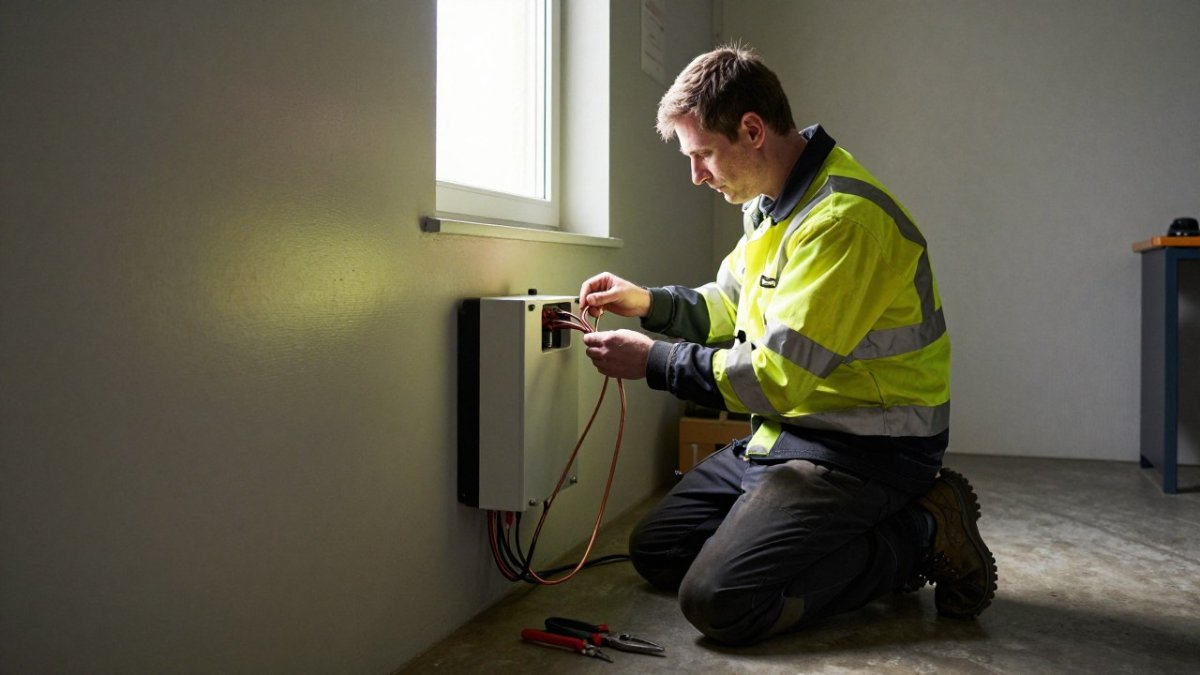
Here is the short version. A qualified electrician isolates the supply, runs a dedicated circuit from your consumer unit, mounts the charger, then tests everything before signing it off. No shortcuts are allowed.
The Role of the Consumer Unit and Earthing
Your consumer unit, often called the fuse board, is where the charger circuit begins.
Earthing matters just as much. Many older properties use a PME earthing arrangement, and the charger must be set up so a fault cannot leave the car body live.
If your board is old, it may need upgrading first. We cover that in our guide on installing an EV charger on an old electrical panel.
Why an EV Charger Installation Survey Comes First
A proper EV charger installation survey comes before any drilling. It is the step that decides whether the job is simple or complex, and it is where the legal and practical boundaries of the installation get set.
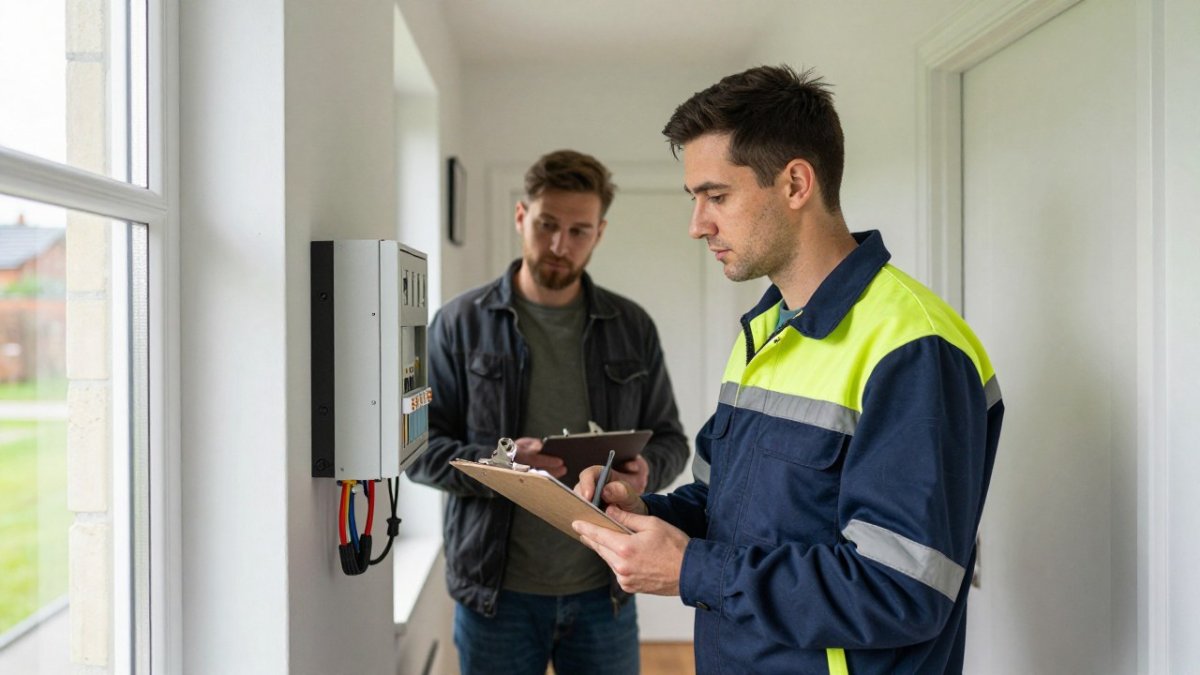
What the Surveyor Checks
The surveyor looks at the whole picture, not just the wall. Expect checks on:
- Electrical capacity: whether your supply and consumer unit can take the extra load, measured against the charger's rated current and the existing demand of the property
- Earthing arrangement: PME or another setup, and what additional protection the charger needs to prevent a fault from leaving the vehicle body live
- Cable routing: the safest and shortest path from the board to the parking spot, including whether the cable will run underground, through a wall, or along an external surface
- Charger location: height, weather exposure, cable reach, and whether the unit will be accessible for maintenance
- DNO notification: whether the local distribution network operator must be told before work starts, and whether the connection needs to be de-rated or upgraded
Capacity is the big one. The survey is where the capacity calculation gets done, based on the existing load and the charger's rating, and it is where any DNO application requirement is identified.
When Planning Permission Is Actually Required
This is the part most guides skip, and it is a genuine pain point. Planning requirements depend on the property and its location. Some situations need consent, and the survey will identify them. These include:
- Listed buildings: consent is almost always required, and the charger must not alter the character of the building
- Conservation areas: the local planning authority may require consent, particularly if the charger is visible from a public road
- Flats and shared buildings: the charger usually needs to be attached to the property or within its curtilage, and freehold or leasehold consent may be needed
- Driveway setups where the charger crosses a public footpath or highway: a licence or permission may be required from the local authority
A good surveyor will flag these early. If they do not ask about the age and status of your building, that is a warning sign. The cost of finding out after the charger is mounted is far higher than asking the question at survey stage.
The DNO Notification Question
Not every installation needs DNO notification, but many do. The trigger is usually the charger's rated output and whether the existing supply can accommodate it without exceeding the agreed capacity. Whether a DNO application is needed depends on the charger's rated output and the existing supply, and this is confirmed at survey stage. The surveyor should tell you who handles the notification, how long it typically takes, and what happens if approval is delayed.
Preparing for Home EV Charger Installation
Preparing for home EV charger installation takes an hour of your time and saves a lot of friction on the day. Clear the route, clear the parking spot, and have your questions ready.
A simple checklist before the team arrives:
- Clear access to the consumer unit and meter cupboard
- Move the car so the driveway is free
- Confirm where you want the charger mounted
- Note your broadband details for smart features
- Ask about the DNO notification and who handles it
For a fuller walkthrough, read our guide on how to prepare for EV charger installation.
How Long Is EV Charger Installation Time?
EV charger installation time is usually two to four hours for a standard installation. A simple job with a short cable run sits at the low end. Older wiring, long cable routes or a board upgrade push it higher.
Here is how the time typically breaks down:
| Stage | Typical Time | What Happens |
|---|---|---|
| Site setup and isolation | 30 minutes | Supply isolated, work area made safe |
| Cable routing and mounting | 1-2 hours | Cable run, charger fixed to the wall |
| Consumer unit work | 30-45 minutes | Breaker and RCD fitted |
| Testing and commissioning | 30-45 minutes | Full safety tests and handover |
Pricing depends on the individual property and the work required, and is confirmed after a survey. For current prices or a quote, visit the Smarter Utility website.
EV Charger Commissioning and Safety Checks
EV charger commissioning and safety checks are what turn a fitted box into a certified, safe installation. The electrician tests the circuit, confirms the protection works, and proves the charger delivers the right power. This is also the stage where the smart features get configured, so it matters for how the charger performs long after the installer has left.
The key checks include:
- Earth fault protection: confirming the RCD or the charger's built-in protection trips within the required time and current, so a fault cannot leave the vehicle body live
- Insulation resistance: proving the cable and connections are sound and free from damage
- Loop impedance: confirming the circuit can clear a fault quickly enough to protect the user and the property
- Fault detection: testing the charger's own safety systems, including any built-in DC leakage detection
- Power rating: confirming the kilowatt output matches the circuit and the charger's rated capacity
What the Tests Actually Prove
Each test answers a specific safety question. Earth fault protection proves that if a fault occurs, the supply disconnects before anyone can be harmed. Insulation resistance proves the cable has not been damaged during routing. Loop impedance proves the protective device will operate fast enough under fault conditions. Power rating proves the charger is delivering what you paid for and not overloading the circuit.
The Documentation You Should Receive
You should receive an electrical installation certificate and the charger's test records. Keep them. They matter if you sell the property or make an insurance claim. A complete handover pack typically includes:
- The electrical installation certificate for the new circuit
- The charger manufacturer's commissioning record or test sheet
- The building regulations compliance certificate, where the work is notifiable
- The charger's user manual and warranty details
- The DNO notification reference, if one was required
If any of these are missing, ask for them before you sign off the job. A common pattern is for installers to hand over the certificate but not the manufacturer's commissioning record, which is the document you need if a warranty claim arises.
Smart Charging Setup at Commissioning
Commissioning is also when the smart features get configured. The installer should connect the charger to your home broadband, pair it with the manufacturer's app, and confirm it responds to schedule changes.
Watch out: if the installer cannot demonstrate the charger responding to a schedule change or a load-management event during commissioning, the smart features may not be configured correctly, and you will only find out when the first cheap-rate window is missed.
Post-Installation Maintenance and Troubleshooting
An EV charger is a connected device and may occasionally need attention. A few practical points:
- Software updates: most smart chargers receive firmware updates over the air. If the app prompts you, let it run; updates often fix charging glitches and improve tariff integration.
- Minor resets: if the charger stops responding, a power cycle at the isolator switch usually clears it. If the fault returns, log it with the manufacturer rather than repeatedly resetting.
- Visual checks: inspect the cable and connector for damage every few months, particularly if the cable is stored outdoors.
- Annual review: a periodic check of the circuit and protection is sensible, especially on older installations where the consumer unit is working hard.
If the charger develops a fault that the app cannot diagnose, contact the installer or manufacturer with the model number and the date of installation. The commissioning records you kept at handover are what make that conversation quick.
Choosing the Right Charger: Tethered vs Untethered and Smart Charging
The tethered vs untethered choice comes down to convenience versus flexibility. A tethered charger has the cable built in.
Smart charging is the bigger decision. A smart charger can shift charging to cheaper off-peak windows, which is where the real running-cost savings sit.
For a structured walkthrough, see our guide on the best home EV charger in Scotland. If you want the basics first, read what smart EV charging is.
Common Mistakes to Avoid During Installation
The most common mistake is choosing on price alone. A cheap quote that skips the survey or the certification often costs more later. The second mistake is ignoring the DNO notification, which can delay or invalidate the job.
A few more to watch for:
- No home survey before the quote
- No electrical installation certificate at handover
- A charger mounted where the cable cannot reach
- No plan for load management on an older supply
- Booking an installer with no accreditation
Before you book anyone, read our guide on how to choose a reliable EV installer.
Book Your Free Home Survey with Smarter Utility
The ev charger installation process explained here is straightforward when it is done properly. The survey comes first, the safety checks come last, and the paperwork proves it was done right.
At Smarter Utility, we are a fully accredited and approved MCS solar and battery storage installer. We offer a free, no-obligation home survey, so the design fits your property and your needs.
A charger that is surveyed, certified and set up for smart charging will serve you for years.
Frequently Asked Questions
How long does it take to install a home EV charger?
Installation time depends on the property and the work the survey identifies. Your installer should confirm a realistic timeframe after the survey.
Do I need a survey before installing an EV charger?
Yes. An EV charger installation survey is essential because the electrician must check your consumer unit capacity, earthing arrangement, cable routing options, and whether a CT clamp can be fitted for load management. The survey also identifies whether your property needs electrical upgrades. Skipping this step risks unexpected costs. Smarter Utility offers a free, no-obligation home survey.
What should I do to prepare for EV charger installation?
Clear access to your consumer unit, meter cupboard, and the intended charger location. Move any furniture or stored items blocking these areas. Decide where you want the charging cable to sit when not in use. If you have a smart meter, note its location so the installer can integrate it. Confirm parking arrangements for the installation van. Preparing for home EV charger installation also means having your Wi-Fi password ready if you are choosing a smart charger.
What checks are carried out after an EV charger is installed?
Commissioning checks confirm the installation is safe and working correctly. Ask your installer which checks they carry out and what documentation you will receive at handover.