 how-to
Reduce Business Electricity Costs: 2026 Guide
Table of Contents
- Understand Your Current Energy Consumption
- Conduct an Energy Efficiency Audit
- Commercial Solar Panel Installation Costs and ROI
- Battery Storage for Industrial Facilities
- Business Energy Efficiency Grants and Support
- Optimise Your Business Energy Contract
- Implement Smart Energy Management Systems
- Conclusion
Last Updated: August 30, 2026
Understand Your Current Energy Consumption
Understanding where your energy goes is the first step to reducing business electricity costs. Review your last 12 months of energy bills to identify seasonal patterns, peak demand periods, and unusual spikes. Many businesses discover they're paying for unused capacity or that consumption surges during specific hours.
Request a smart meter from your energy supplier for real-time consumption data. Real-time monitoring reveals which equipment consumes the most power, exposing waste invisible on monthly bills. Document your current setup: equipment age, heating systems, lighting types, insulation quality, and operational schedules.
Create a spreadsheet tracking consumption against production output. This energy-to-output ratio reveals operational efficiency. If consumption rises but output stays flat, you've identified a problem worth investigating.
| Consumption Data Point | How to Gather | Why It Matters |
|---|---|---|
| 12-month bill history | Request from supplier | Identifies seasonal patterns |
| Real-time usage | Smart meter installation | Shows peak demand periods |
| Equipment inventory | Physical audit | Flags aging systems |
| Energy-to-output ratio | Internal tracking | Measures operational efficiency |
Conduct an Energy Efficiency Audit
An energy efficiency audit is a professional assessment identifying where you're wasting energy. A qualified auditor examines your building envelope, HVAC systems, lighting, hot water systems, and industrial equipment using thermal imaging and power monitoring to quantify losses.
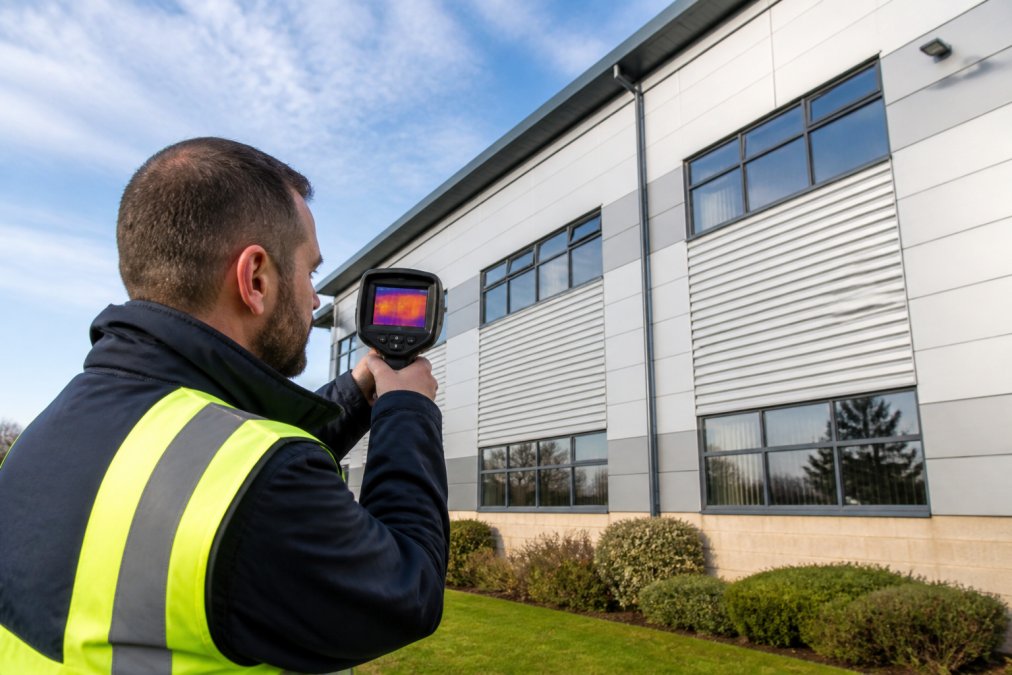
The audit identifies quick wins (low-cost, high-impact changes) and longer-term investments. Air leakage around doors, windows, and ductwork is common; sealing these costs little but reduces heating and cooling demands significantly. Insulation upgrades often pay for themselves within 5-7 years.
Many businesses qualify for government grants to fund audits. Check current schemes in your region, as these can offset audit costs substantially. An audit prevents expensive mistakes and ensures investments deliver real returns.
Commercial Solar Panel Installation Costs and ROI
Solar panels reduce reliance on grid electricity and protect against rising tariffs. For businesses with suitable roof space, commercial solar is one of the most effective long-term strategies to reduce electricity costs.
System Costs and Sizing
Commercial solar system costs depend on installed capacity (measured in kilowatts), roof condition, and installation complexity. A typical commercial system ranges from 5 kW (small retail) to 50+ kW (warehouse or manufacturing).
Installed costs typically range from £1,200 to £1,800 per kW. A 10 kW system might cost £12,000-£18,000 before grants; a 25 kW system £30,000-£45,000. System size should match your consumption profile. An energy audit quantifies consumption and identifies optimal system size.
Payback Period and Return on Investment
For a business with annual consumption of 20,000 kWh, current tariff of 28p per kWh, and a 10 kW solar system (estimated cost: £15,000) generating ~9,000 kWh annually with 70% self-consumption:
Annual savings = (9,000 kWh × 70%) × £0.28 = £1,764
Payback period = £15,000 ÷ £1,764 = 8.5 years
After payback, the system generates electricity at near-zero cost for 25-30 years, delivering ~£1,764 annually in savings. Over 25 years, total savings exceed £44,000.
How Tariff Structure Affects ROI
Time-of-use (ToU) tariffs, where peak-rate electricity costs significantly more than off-peak, affect solar ROI substantially. If your solar system generates primarily during peak hours and 70% of generation coincides with peak rates at 40p/kWh versus off-peak at 18p/kWh, payback extends to approximately 11.5 years. Conversely, if your business operates during off-peak hours, pairing solar with battery storage becomes essential.
Location and Generation Potential
Solar generation varies by location. Scotland receives less annual sunlight than southern England. A 10 kW system in central Scotland generates approximately 8,500-9,500 kWh annually (45% capacity factor), compared to 10,000-11,000 kWh in southern England (50% capacity factor). This 10-15% difference translates to longer payback periods, offset by lower installation costs and Scotland-specific grant schemes that can reduce net costs by 20-40%.
Improving ROI: Battery Storage and Load Shifting
Battery storage systems capture excess solar generation and release it during peak-rate periods, maximizing value. For a business on a ToU tariff, adding a 10 kWh battery system can improve ROI significantly by increasing self-consumption from 70% to 85-90% and displacing expensive peak-rate power.
Battery costs typically range from £400-£600 per kWh installed. A 10 kWh system costs £4,000-£6,000. Adding battery storage might increase annual savings from £1,299 to £1,650 (27% improvement), reducing payback from 11.5 years to 9 years.
Government Support and Tax Incentives
Capital allowances under Corporation Tax allow businesses to claim 100% first-year allowance (FYA) on renewable energy equipment. This means the full installation cost can be deducted from taxable profits in the year of installation, reducing effective cost by your corporation tax rate (typically 19-25%).
For a £15,000 solar system, FYA reduces net cost to £11,250-£12,150 after tax relief, improving payback to 6.4-6.9 years. Many businesses also qualify for grants offsetting 20-40% of installation costs.
Evaluating Solar for Your Business: Key Questions
- What is your annual electricity consumption, and what proportion occurs during peak-rate hours?
- What is your current tariff, and is it fixed or variable?
- Do you have suitable roof or ground space with south-facing, unshaded exposure?
- Are you eligible for grants?
- Is battery storage viable for your consumption profile?
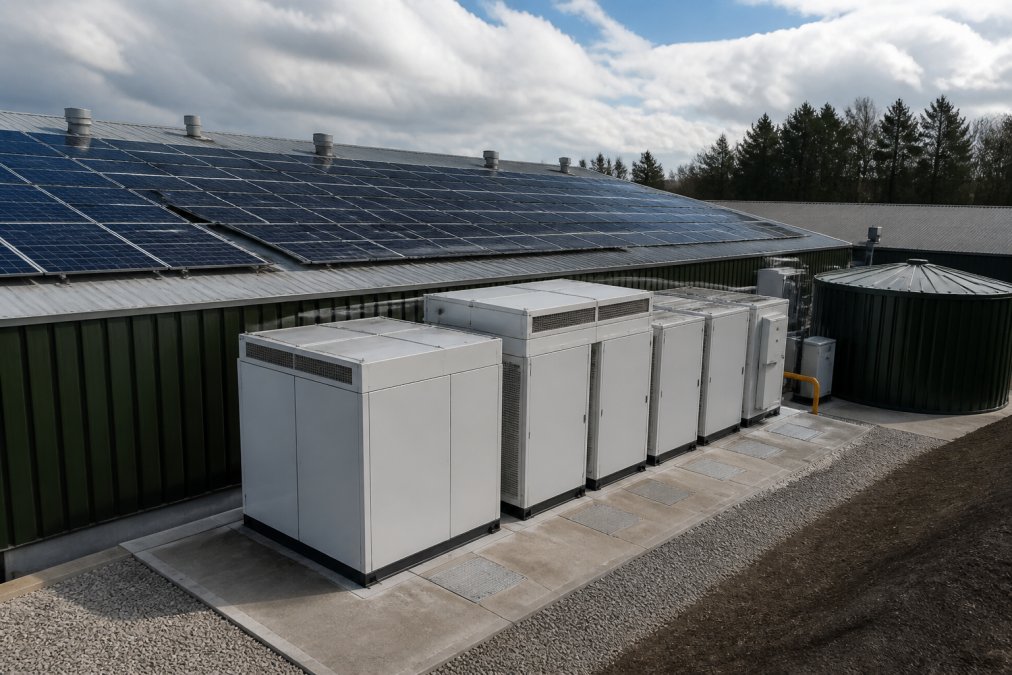
For most businesses with suitable roof space, annual consumption above 15,000 kWh, and grant access, solar payback periods of 6-10 years are achievable. Combined with battery storage and smart energy management, solar becomes part of a comprehensive strategy delivering 25-35% total cost reductions.
Battery Storage for Industrial Facilities
Battery storage systems capture excess solar generation and release it during peak-rate hours when grid electricity costs most. For industrial facilities with high peak demands, storage transforms solar into an excellent investment.
Industrial battery systems store energy in larger quantities than domestic installations, requiring strong infrastructure and professional installation. The primary benefit is peak shaving: reducing maximum power drawn from the grid during expensive peak periods. Even modest reductions in peak demand lower overall bills significantly, as many business tariffs charge premium rates for peak consumption.
Secondary benefits include backup power during outages and improved power quality. Industrial facilities with sensitive equipment benefit from stable voltage and frequency. Some businesses use batteries to defer expensive grid upgrades, saving capital costs.
Click HERE for your FREE SURVEY today →
Battery costs remain substantial, but prices have fallen significantly. Payback periods typically range from 7-12 years, depending on tariff structure and usage patterns. Combined with solar, payback accelerates because the system generates and stores its own fuel.
Business Energy Efficiency Grants and Support
Government and non-government schemes provide capital grants, interest-free loans, and tax incentives for energy efficiency improvements. Support available varies significantly by region.
Scotland-Specific Grant Schemes
The Energy Efficient Scotland: Loan Scheme offers interest-free loans up to £100,000 for energy efficiency improvements to non-domestic buildings, including commercial premises. Eligible measures include heating system upgrades, insulation, renewable energy installation, and energy management systems. Loan repayment terms extend up to 15 years.
The Scottish Enterprise Energy Efficiency Grant provides capital grants of up to 40% of project costs for eligible businesses, particularly those in manufacturing and energy-intensive sectors. Grants typically range from £5,000 to £250,000. Applications require an energy audit demonstrating feasibility and expected savings.
The Local Authority Energy Efficiency Advice programme, delivered through local councils, offers free energy audits and tailored advice to small and medium-sized businesses. Many councils administer top-up grants for specific measures on a first-come-first-served basis.
Building Standards and Net-Zero Compliance
Scotland's Building Standards and the Climate Change (Scotland) Act 2009 create incentives for energy efficiency. Non-domestic buildings must meet minimum energy performance standards. Improving your Energy Performance Certificate (EPC) rating reduces operating costs, enhances property value, and may unlock additional grant eligibility.
The Scottish Government's 2045 Net-Zero Target means many local authorities offer accelerated support for businesses investing in renewable energy and efficiency measures aligned with regional net-zero plans.
Accessing Support: Step-by-Step
- Obtain an energy audit. Most grant schemes require a baseline assessment, and many fund the audit itself.
- Identify eligible measures. Cross-reference audit recommendations against the scheme's eligible list.
- Check business eligibility. Schemes vary by business size, sector, and building type.
- Apply early. Many schemes operate on a first-come-first-served basis with annual budgets.
- Work with accredited installers familiar with Scottish grant schemes.
Combining Schemes for Maximum Funding
You may stack multiple schemes. For example, use an Energy Efficient Scotland: Loan Scheme for solar installation while accessing a local authority grant for LED lighting upgrades. However, schemes typically prohibit double-funding of the same measure.
Verify current eligibility, funding levels, and deadlines before committing:
- Energy Efficient Scotland: Energy Efficient Scotland Loan Scheme
- Scottish Enterprise: Energy Efficiency Grants
- Your local council: Search "[Council name] business energy grants" or contact the business support team directly.
Optimise Your Business Energy Contract
Your energy contract structure determines how much you pay per unit of electricity. Optimizing this contract can reduce costs 10-20% without physical changes to your premises.
Business energy tariffs come in two main types: fixed-rate contracts lock in a price per kilowatt hour for a set period, protecting against price rises but potentially costing more if prices fall. Variable-rate contracts track market prices, offering savings when prices drop but exposing you to increases.
Most businesses benefit from fixed-rate contracts during periods of high price volatility. However, if you believe prices will fall significantly, variable rates may offer better value. Monitor market forecasts and review your contract annually.
Longer contracts (2-3 years) typically offer lower rates than shorter ones (1 year) but lock you in longer. Shorter contracts provide flexibility to switch if better rates emerge. Evaluate your risk tolerance and price outlook when choosing length.
Use energy comparison services for business to benchmark rates from multiple suppliers. Switching suppliers typically takes 4-6 weeks with no downtime. Negotiate directly with suppliers, especially if you have good payment history and stable consumption. Request quotes from at least three suppliers before deciding.
Review your contract annually. Businesses that switch annually often save 5-10% compared to those staying with the same supplier.
Implement Smart Energy Management Systems
Smart energy management systems monitor consumption in real-time, identify waste automatically, and optimize equipment operation. These systems transform energy management from a manual, reactive process into an automated, data-driven one.
Modern systems integrate with building automation, HVAC controls, lighting systems, and equipment sensors, collecting consumption data continuously and analyzing patterns to identify anomalies and inefficiencies. Automated controls optimize equipment operation without manual intervention: heating systems adjust setpoints based on occupancy and weather; lighting dims when natural light is sufficient; equipment powers down during idle periods. These automations reduce consumption 5-15%.
Demand response features help during peak periods by automatically reducing non-critical loads when peak rates are active, shaving peak demand and lowering bills. Integration with renewable energy systems maximizes self-consumption by shifting flexible loads to coincide with solar generation, minimizing grid purchases during expensive peak periods.
Implementation requires professional configuration and integration with existing systems. The system typically pays for itself through energy savings within 3-5 years, then delivers pure benefit.
Reducing business electricity costs requires a structured approach combining consumption monitoring, efficiency improvements, renewable generation, and contract optimization. The biggest opportunity for most businesses is the combination of solar panels with battery storage and smart energy management, delivering 30-40% cost reductions.
Start with an energy audit to identify your specific opportunities. Then prioritize improvements by payback period and available grant support. Smarter Utility offers free, no-obligation surveys to assess your premises, design a tailored solar and battery system, and guide you through available grants. Our fully accredited team ensures every installation is optimized for your energy profile and business goals. Click HERE for your FREE SURVEY today.
Frequently Asked Questions
Should I fix my business energy prices or stay on a variable tariff?
Fixed-rate business energy contracts lock in your price for a set term, protecting you from market volatility. Variable tariffs fluctuate with wholesale costs. Fixed rates suit businesses wanting budget certainty; variable rates can offer savings during low-price periods. Review your usage profile and cash flow forecast before deciding. Fixed contracts typically run 1-3 years, so compare the fixed rate against your expected variable costs over that period.
What government support is available to reduce business electricity costs?
The Industrial Energy Transformation Fund and other government schemes offer grants for energy-saving measures. The Energy Savings Opportunity Scheme (ESOS) requires large companies to conduct energy audits every four years, identifying savings opportunities. The Climate Change Agreements scheme provides relief on Climate Change Levy for eligible businesses. Renewable energy installations, including solar systems, may qualify for capital allowances. Contact your local authority or business energy advisor to check your eligibility for current grants.
How can solar PV installations reduce long-term business electricity costs?
Solar systems generate electricity during daylight hours, offsetting grid consumption and lowering your kWh bills. A commercial solar installation sized to your peak daytime usage can reduce electricity costs by 20-50% annually. Added battery storage lets you store excess solar energy for use during peak-rate periods or after dark, maximising savings. ROI typically occurs within 5-8 years, with systems lasting 25+ years. Your actual savings depend on roof size, orientation, and energy consumption profile.
What are the most effective energy-saving measures for industrial facilities?
Start with HVAC optimisation, LED retrofitting, and space heating controls, these deliver quick wins with 15-30% savings. Upgrade to high-efficiency motors and compressed air systems if applicable. Install smart meters and energy monitoring systems to identify waste in real time. Conduct regular maintenance on heating and cooling equipment. For larger facilities, consider demand-side management to avoid peak-load charges. Combine these measures with renewable energy (solar or battery storage) for the strongest operational efficiency and cost reduction strategy.
This article was written using GrandRanker