 How-to
How to Apply for Home Energy Scotland Grant Funding
Last Updated: November 6, 2026
Quick Summary
To apply for a home energy Scotland grant, contact Home Energy Scotland for an adviser-led referral rather than applying directly. An adviser checks your eligibility, a home energy assessment is completed, and you then receive an invitation code to submit your application with supporting documents. Wait for written approval before any installation work begins.
- You must own or privately rent a Scottish home that is your main residence for most measures.
- Gather your assessment report and an itemised installer quote that matches the recommended measures.
- Submit your application using the invitation code issued by your adviser after the assessment.
- Energy-efficiency grants can cover up to 75% of combined measure costs, capped at £7,500.
- Starting work before written approval can cause your funding claim to be refused.
Table of Contents
- What the Home Energy Scotland Grant and Loan Scheme Covers
- Home Energy Scotland Eligibility: Who Can Apply
- Eligible Measures and Home Energy Scotland Funding for Solar Panels
- Home Energy Scotland Grant Application Documents to Gather
- The Home Energy Scotland Application Process, Step by Step
- Grant Amounts, Loan Repayment and Worked Examples
- Timelines, Common Rejection Reasons and How to Avoid Them
- Book Your Free Survey Before You Apply
- Frequently Asked Questions
What the Home Energy Scotland Grant and Loan Scheme Covers
The Home Energy Scotland Grant and Loan scheme is a Scottish Government-funded programme that helps households pay for energy efficiency improvements and renewable heating (Energy saving home improvements - Home energy and fuel poverty).
The scheme is delivered by Home Energy Scotland, the free advice service funded by the Scottish Government (Home Energy Scotland Grant and Loan). You cannot apply directly to the funder.
Here is what the scheme is designed to do:
- Cut household energy bills and carbon emissions
- Fund insulation, heating and renewable measures
- Combine a grant with an interest-free loan for larger work
The exact rates and caps change, so always confirm current figures with Home Energy Scotland before you budget. Below, we break down eligibility, documents, the step-by-step process and the traps that trip people up.
Home Energy Scotland Eligibility: Who Can Apply
Home Energy Scotland eligibility comes down to three things: the property, who lives there and what work you want funded. You must own or privately rent the home, it must be in Scotland, and it must be your main residence for most measures.
Property and Owner-Occupier Rules
Owner-occupiers get the widest access to funding. The property must be a domestic home, and the work must improve its energy performance. Homes with a poor Energy Performance Certificate rating are often prioritised, because the scheme targets the least efficient properties first.
- You must be the owner-occupier, or a private landlord, or a private tenant with permission
- The property must be connected to the gas grid or off-gas, depending on the measure
- Some measures require a home energy assessment before approval
Landlords, Rural Homes and Island Uplifts
Private landlords can apply for certain measures, but the rules differ from owner-occupier funding. Rural and island homes can attract an uplift, which raises the funding cap because installation costs are higher in remote areas.
Watch out: if you claim a rural or island uplift when your property does not qualify, the application will be rejected. Check your postcode status with an adviser before you build it into your budget.
Eligible Measures and Home Energy Scotland Funding for Solar Panels
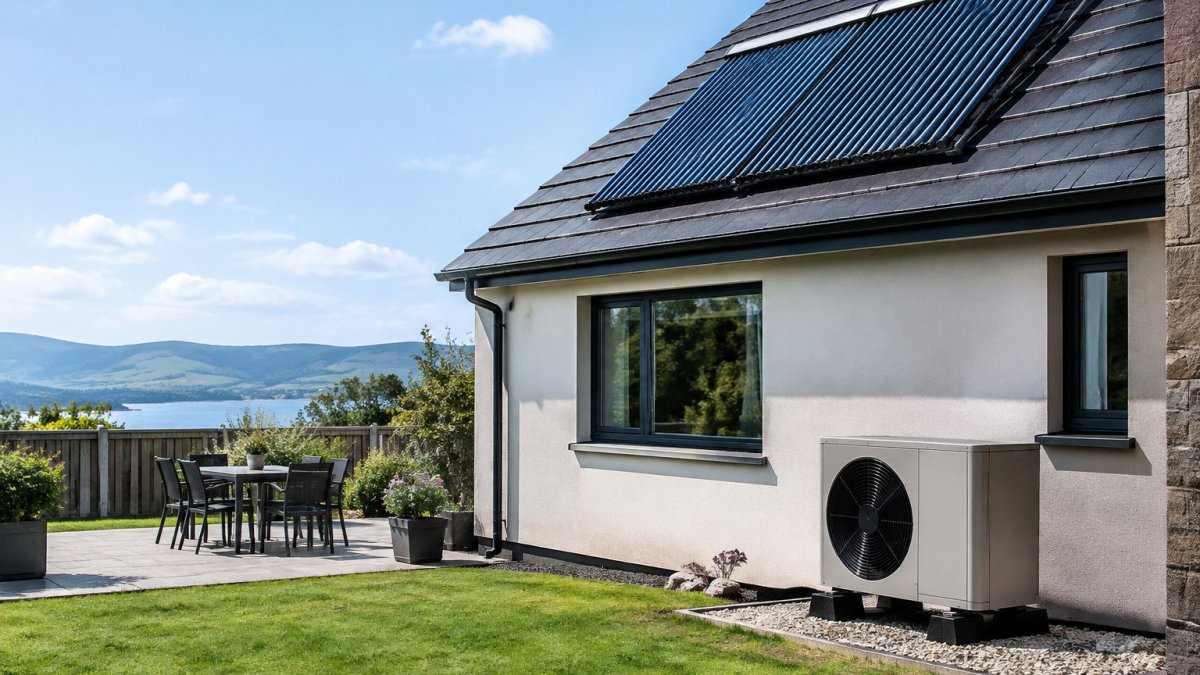
Home Energy Scotland funding for solar panels sits alongside funding for insulation, heat pumps and other renewable heating. Solar PV is a funded renewable measure, and it can be combined with battery storage in some cases.
The main eligible measures include:
- Cavity wall, loft and solid wall insulation
- Air source and ground source heat pumps
- Renewable heating systems
For a deeper breakdown of what solar funding covers and how the schemes compare, read our guide on how to apply for Scottish solar panel grants.
Home Energy Scotland Grant Application Documents to Gather
Home Energy Scotland grant application documents are the most common cause of delay. Missing paperwork stalls your case for weeks, and a document that arrives in the wrong format can send it back to the start of the queue. The useful way to prepare is not one long list but three short ones, matched to the three points where evidence is actually checked: before you speak to an adviser, before you submit the application, and after installation when you claim.
Before you contact an adviser
You do not need a full pack to make the first call, but having these to hand makes the eligibility conversation much faster and avoids a second call.
- Your full property address and postcode, so the adviser can confirm whether a rural or island uplift applies
- Proof that you own the property, or a tenancy agreement plus written landlord permission if you privately rent
- Your most recent energy bills, or a smart meter reading, to show current usage and tariff
Before you submit the application
This is the pack that decides whether your case moves. Keep digital copies in one folder, named clearly, because the application is submitted online against your invitation code.
- The home energy assessment or recommendation report produced for your property, showing the recommended measures
- A written installation quote from an approved installer that matches those recommended measures line by line
- Proof of ownership or tenancy, and landlord permission where relevant, in a legible scan or clear photograph
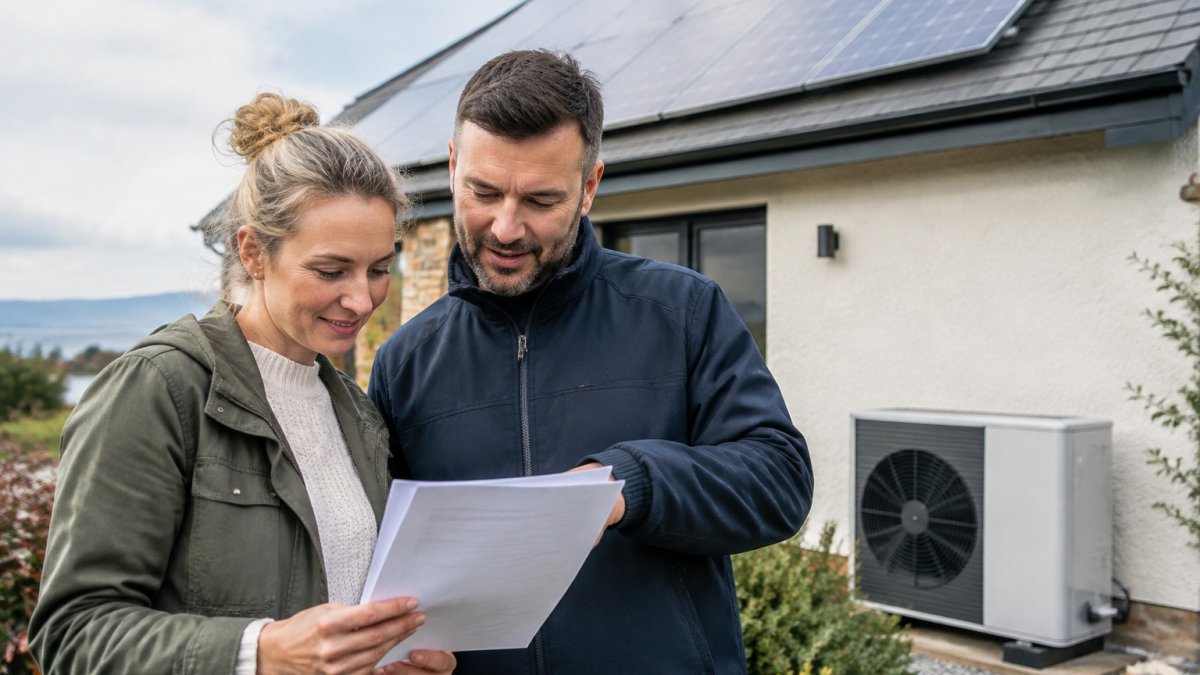
Two documents decide most applications: the assessment report and the installer quote. The quote must match the recommended measures. A clear, itemised quote also makes it easier to verify installer credentials before agreeing that the proposed work matches the assessment report.
Watch out: a quote addressed to a different name, a handwritten estimate, or a quote that has expired can all be treated as missing evidence, so ask for a dated, itemised quote in the applicant's name before you upload anything.
Click HERE for your FREE SURVEY today →
After installation, to claim
- The installer's invoice, marked paid, matching the approved quote and the measures actually fitted
- Any commissioning or handover certificate for heating or renewable measures
- Building standards or electrical certification where the measure requires it
A common pattern is for applicants to hold everything except the paid invoice, then wait weeks for the installer to issue it. Agree the invoicing and certification steps with your installer before work begins, and keep the approval letter alongside the invoice so the claim can be matched to what was authorised.
The Home Energy Scotland Application Process, Step by Step
The Home Energy Scotland application process runs through an adviser-led referral, not a direct form. Follow these steps in order.
- Contact Home Energy Scotland. Call the advice line or use the contact form. An adviser takes your details and property information.
- Complete a home energy assessment. An assessor reviews the property and produces a recommendation report.
- Receive your referral. If you qualify, the adviser issues a referral and an invitation code to apply.
- Submit the application form. Enter your invitation code and upload your supporting documents.
- Wait for approval. Do not book installation until you have written approval.
- Install the measures. Use an approved installer and keep the invoice.
- Claim the funding. Submit the installation invoice and any post-installation paperwork to release the grant.

Do Not Start Work Before Approval
Starting work before approval is the fastest way to lose your funding. The scheme requires approval before installation begins. If you book an installer and the work starts early, the claim can be refused, and you carry the full cost.
Once your approval is in place, choose your installer carefully. Our guide on how to find reliable solar installers covers the questions to ask before you sign.
Grant Amounts, Loan Repayment and Worked Examples
Grant amounts and loan terms depend on the measure, your property and whether an uplift applies. Home Energy Scotland states that energy-efficiency grants can cover up to 75% of combined measure costs, capped at £7,500 (Home Energy Scotland Grant and Loan scheme). An interest-free loan can sit alongside the grant to cover more of the remaining cost, and rural and island homes can attract a higher cap because installation costs are greater in remote areas.
How the pieces fit together
| Stage | What happens | Typical timing |
|---|---|---|
| Adviser call | Details taken, eligibility checked | Same day |
| Home assessment | Property reviewed, report produced | Days to a few weeks |
| Referral issued | Invitation code sent | After assessment |
| Application | Form and documents submitted | Within referral window |
| Approval | Written confirmation | Several weeks |
| Installation | Approved installer completes work | Depends on installer |
| Claim | Invoice submitted, grant released | After installation |
Worked example: grant only
Suppose your combined measures are quoted at £10,000. A grant covering 75% would be £7,500, leaving £2,500. You could cover the balance with savings. If the same work were quoted at £12,000, 75% would be £9,000, but the £7,500 cap applies, so the grant is £7,500 and you fund £4,500 yourself. The cap, not the percentage, becomes the binding limit once costs rise.
Worked example: grant plus interest-free loan
Take a quote of £14,000 for a heat pump and associated insulation. The grant is capped at £7,500. The remaining £6,500 could be met partly or wholly by an interest-free loan, subject to the current loan limit and your ability to repay. If the loan limit were, for example, £5,000, you would borrow £5,000 and fund £1,500 from savings. Repayment is monthly over the agreed term, and because no interest is charged, the amount repaid equals the amount borrowed.
Worked example: rural or island uplift
A rural or island property facing higher installation costs may qualify for a raised funding cap. If the standard cap is £7,500 and an uplift applies, the ceiling moves up, so a £12,000 quote could attract a larger grant than the standard calculation would allow. The exact uplift depends on the measure and the property's postcode status. Do not build the uplift into your budget until an adviser has confirmed your property qualifies, because claiming an uplift you are not entitled to leads to rejection.
What the loan does not cover
The loan is for the eligible measures in your approved quote, not for unrelated work, and it is repaid whether or not the measure performs as you hoped. Budget for the monthly repayment alongside your expected energy savings, and ask the adviser to set out the repayment schedule in writing before you commit. To compare other ways to fund the remaining cost, see our guide on solar panel financing options.
Timelines, Common Rejection Reasons and How to Avoid Them
Timelines stretch when documents are missing or work starts early. Most delays come from a small set of avoidable mistakes.
- Starting work before approval. Wait for written confirmation.
- Quote does not match the assessment. Make sure your installer quotes the recommended measures.
- Missing proof of ownership or permission. Gather documents first.
Accessibility support is available for applicants with additional needs, so ask the adviser if you need help completing forms or the assessment.
Book Your Free Survey Before You Apply
A free home survey gives you the information an application needs: what your property requires, which measures qualify and what the work involves. At Smarter Utility, we carry out free, no-obligation home surveys as a fully accredited MCS solar and battery storage installer.
Book your survey first, then apply with confidence. Book your free home energy survey today, or read our step-by-step guide to the free solar home survey to see exactly what happens on the day.
Frequently Asked Questions
How do I apply for Home Energy Scotland grant funding?
Start by contacting Home Energy Scotland for impartial advice; they issue a referral and an invitation code if your property and plans qualify. You then book a home energy assessment, receive a recommendation report, and get a quote from an approved installer. Submit the application form with your supporting documents, wait for written approval, then have the work done and claim the funding with your installation invoice. Never book installation before approval arrives.
Can I apply for a grant and a loan at the same time?
Yes. The scheme is designed so grant and loan funding can be combined on the same application, which matters for measures like heat pumps or solar and battery systems where the quoted cost exceeds the grant cap. Confirm the current grant percentage and cap with your adviser before you commit to an installer. The interest-free loan element covers the remainder subject to limits, so confirm the split with your adviser before you commit to an installer.
Do I need approval before starting work?
Yes, and this is the most common reason claims fail. Funding is only paid on work approved in writing before installation begins. If you sign a contract or let an installer start early, the application can be rejected and you carry the full cost yourself. Wait for the approval letter, check the approved measures and amounts match your quote, and only then book the installation date with your approved installer.
Is extra funding available for rural homes and islands?
Yes. The scheme includes rural uplift and island uplift, which raise the funding limits for eligible properties in those areas. This recognises higher installation costs in remote areas. Eligibility depends on where the property sits, so confirm your postcode with your energy adviser before budgeting. If you are applying for Home Energy Scotland funding for solar panels or a heat pump, the uplift can make a meaningful difference to the total package.
Applying for funding rewards preparation over speed. Gather your documents, wait for written approval, and use an accredited installer. Get started with Smarter Utility and book your free, no-obligation survey, backed by expert design and professional installation from an MCS-accredited team.