 how-to
North-Facing Solar Panels in Scotland: A Practical Guide
Table of Contents
- Why North-Facing Solar Panels Generate Less Energy
- Is Solar Worth It in Scotland with a North-Facing Roof?
- Solar Panel Tilt Angle Optimisation for North-Facing Roofs
- Solar Battery Storage Benefits for Low-Yield Systems
- Maximising Self-Consumption with North-Facing Panels
- When North-Facing Installation Makes Financial Sense
- Getting Your North-Facing Solar System Right
Last Updated: August 27, 2026
Why North-Facing Solar Panels Generate Less Energy
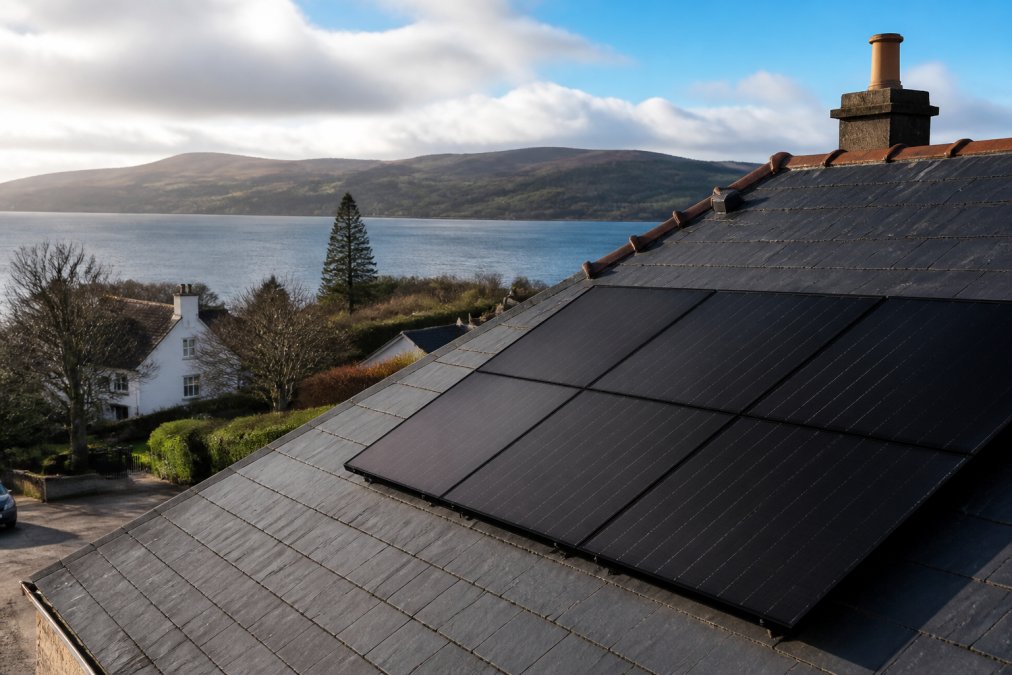
North-facing solar panels in Scotland generate significantly less energy than south-facing counterparts because the sun travels from east through south to west at Scottish latitudes. North-facing roofs receive only diffuse light, indirect radiation scattered through the atmosphere, rather than direct irradiance. This means north-facing installations typically produce 40-60% less annual output than optimally oriented systems (peer-reviewed research).
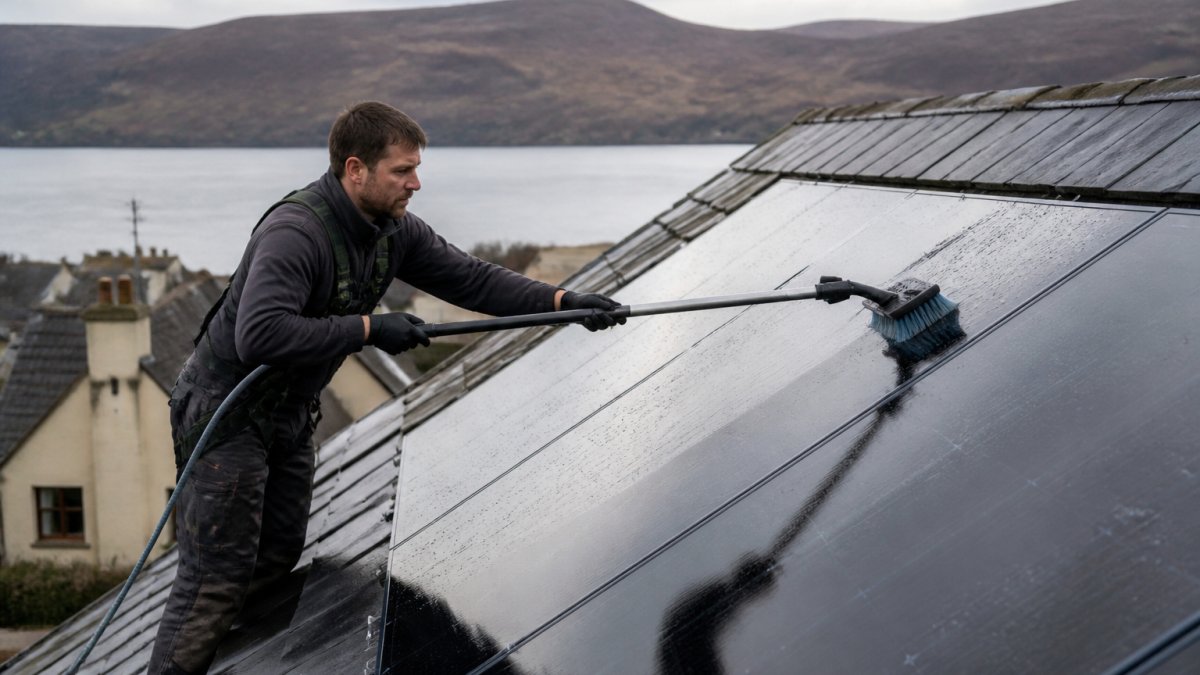
North-facing panels do generate electricity on clear and overcast days thanks to diffuse light penetration. The issue is efficiency relative to investment: a kilowatt-peak (kWp) of north-facing capacity produces far fewer kilowatt-hours annually than the same capacity facing south. Additionally, north-facing roofs are shadier and damper, attracting more algae and lichen accumulation, which reduces irradiance capture and increases maintenance requirements.
At Smarter Utility, we've analysed hundreds of north-facing installations across Scotland. The ones delivering real value aren't competing with south-facing systems on yield alone. They're paired with battery storage, integrated with self-consumption strategies, or installed for grid export during peak generation windows.
Is Solar Worth It in Scotland with a North-Facing Roof?
Whether north-facing solar panels make financial sense depends on your energy consumption pattern and what you're comparing it against. The payback period typically extends beyond south-facing installations due to lower annual output. However, Scotland's feed-in tariff arrangements and self-consumption incentives can shift the economics significantly.
A household consuming most electricity during daylight hours, running a heat pump, charging an electric vehicle, or operating a home office, can achieve reasonable returns even with reduced solar yield. The real question isn't whether north-facing panels are "worth it" in absolute terms, but whether they're worth it for your specific situation.
Battery storage fundamentally changes the equation. Without storage, north-facing systems struggle because they generate when you're least likely to use the energy. With a battery, you capture that lower-yield generation and use it during evening peak demand, improving the financial case considerably.
The environmental case is straightforward: any renewable generation beats grid electricity from fossil fuel sources. The financial case requires honest assessment of your roof's solar potential, consumption profile, and tolerance for a longer payback period.
Solar Panel Tilt Angle Optimisation for North-Facing Roofs
The tilt angle of your solar array is one of the few variables you can control on a north-facing roof to improve performance. For Scottish latitudes, the optimal tilt angle for north-facing panels differs from south-facing systems. You're optimising diffuse light collection and minimising shading rather than maximising peak sun capture. A shallower angle than the roof pitch often performs better, improving annual yield by 15%.
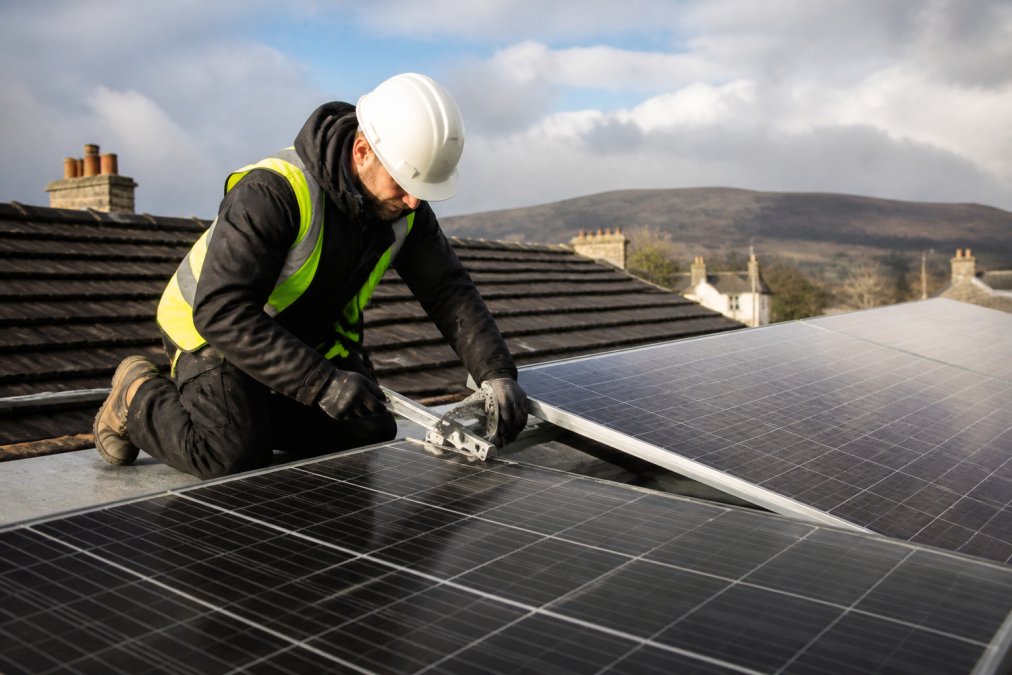
Shading analysis becomes critical before finalising your tilt angle. A north-facing roof already receives less direct sun; any additional shading from chimneys, aerials, or nearby trees compounds the problem. Conduct a detailed shading assessment using solar pathfinding software to identify which times of year and day your array falls into shadow.
Bifacial panels, which generate electricity from both front and back surfaces, can recover 5-10% additional yield compared to standard monocrystalline panels for north-facing roofs, though they cost more upfront (peer-reviewed research). The inverter efficiency also matters more for lower-yield systems, choosing a high-efficiency inverter (96%+ efficiency) protects a higher proportion of your already-limited generation.
Solar Battery Storage Benefits for Low-Yield Systems
Battery storage transforms the economics of north-facing solar systems by decoupling generation from consumption. Without storage, north-facing panels generate electricity at midday when household demand is typically lowest. A battery captures midday generation and releases it when you need it most, addressing the core weakness of north-facing systems: timing mismatch.
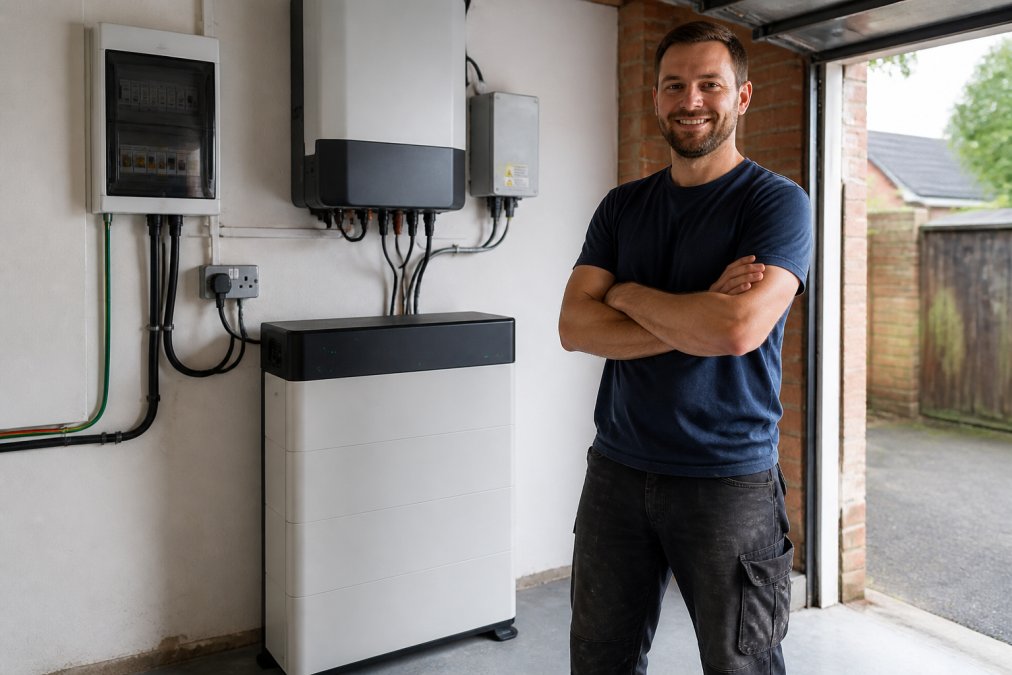
The financial case depends on your electricity tariff structure. On time-of-use tariffs with peak rates during evening hours (typically 4-9 PM), battery storage delivers clear value by avoiding expensive grid imports during those periods. Self-consumption rates improve dramatically with battery storage, rising from 20-30% without a battery to 60-80% with one (peer-reviewed research).
For north-facing installations, size the battery to your average daily self-consumption requirement rather than your peak demand. This ensures the battery charges fully during the generation window and discharges completely during peak-use hours. Modern lithium batteries retain 80-90% of capacity after 10 years, supporting a 15-20 year payback horizon.
Maximising Self-Consumption with North-Facing Panels
Self-consumption, using your own generated electricity rather than exporting it, is the primary lever for improving north-facing system returns. Every kilowatt-hour you consume on-site is a kilowatt-hour you don't import from the grid at full retail rates.
Load shifting, deliberately moving electricity consumption to align with generation, costs nothing and delivers immediate returns. Running appliances during midday when your panels generate most actively, or charging an electric vehicle during daylight hours rather than overnight, can improve system economics by 15-25%.
Click HERE for your FREE SURVEY today →
Heat pump integration amplifies this benefit. Timing heat pump operation for midday when north-facing panels generate most actively captures renewable energy for space heating and hot water. Electric vehicle charging is the highest-value load shift, a typical EV charger draws 7-11 kW during charging, and charging during midday solar generation can represent 3,000-5,000 kWh of annual self-consumed solar generation.
Smart energy management systems automate load shifting by monitoring solar generation, battery state, and consumption patterns, then automatically triggering flexible loads when generation is highest. For north-facing systems, this automation captures value you'd otherwise miss.
When North-Facing Installation Makes Financial Sense
North-facing solar panels are viable in specific scenarios. The strongest case is when south-facing roof space is unavailable or insufficient. A property with a small south-facing roof but large north-facing exposure might generate more total energy from north-facing panels than from a constrained south-facing system.
Properties with high daytime consumption are excellent candidates. A home office, commercial kitchen, or industrial facility running during daylight hours can capture north-facing generation efficiently. Agricultural and rural properties often have large north-facing roof areas on barns or storage buildings that operate during daylight hours, creating natural alignment between generation and consumption.
Retrofits to existing south-facing systems represent another valid scenario. Adding north-facing panels on available roof space expands capacity without requiring south-facing roof modifications. Battery storage makes north-facing systems viable for properties where it wouldn't be otherwise, if battery storage makes economic sense independently, north-facing panels become a worthwhile addition.
Getting Your North-Facing Solar System Right
Proper design and installation are non-negotiable for north-facing systems. Because they operate with lower margins than south-facing alternatives, poor execution turns a marginal project into a loss-making one.
Start with a professional shading analysis using solar pathfinding software to map shadow patterns across your roof throughout the year. Conduct a detailed energy audit to understand your consumption patterns, peak demand hours, and annual electricity usage. For north-facing systems, this information directly affects system sizing and battery requirements.
Inverter sizing requires careful consideration, size it to handle your array's peak output under realistic Scottish weather conditions, not theoretical maximum. Battery sizing should match your self-consumption needs, not your peak demand. Calculate your average daily consumption during peak-rate hours and size your battery accordingly.
Consider hybrid inverters that handle both solar and battery management, optimising energy flow automatically. Work with installers experienced in north-facing installations. Ensure your installer conducts a pre-installation survey covering roof condition, structural load capacity, electrical infrastructure, and grid connection requirements.
Get a written performance guarantee with clear assumptions about weather, shading, and system losses. For north-facing systems, honest projections matter more than optimistic ones.
North-facing solar panels in Scotland are viable when designed thoughtfully and installed by experienced professionals. They'll never match south-facing systems on pure yield, but they can deliver genuine energy savings and carbon reductions when matched to the right property, consumption pattern, and financial structure. Smarter Utility offers free, no-obligation home surveys that evaluate your specific roof orientation, consumption profile, and financial situation. Our fully accredited team can show you exactly whether north-facing panels make sense for your property, and if they do, how to design a system that maximises your returns. Get started with your FREE SURVEY today and make an educated decision about north-facing solar for your home or business.
Frequently Asked Questions
Q: Is it worth putting solar panels on a north-facing roof?
A: North-facing solar panels generate 40-60% less energy than south-facing installations due to lower irradiance and diffuse light conditions. However, they can still be worthwhile if you have high daytime electricity consumption, plan to add battery storage, or combine them with east or west-facing panels. A shading analysis during your free survey will show your specific solar potential and payback period.
Q: How does solar panel tilt angle optimisation improve north-facing performance?
A: Adjusting the tilt angle to match your roof pitch and latitude maximises irradiance capture on a north-facing roof. In Scotland, a shallower angle than the roof pitch often performs better, improving annual output by 15% compared to a steeper angle. Proper mounting angle also reduces algae accumulation and improves maintenance access, extending the system's lifespan.
Q: What are the main solar battery storage benefits for north-facing installations?
A: Battery storage allows you to shift low daytime energy generation to peak evening consumption, reducing grid reliance and maximising self-consumption rates. This is especially valuable for north-facing systems where feed-in tariff payments are modest. A well-sized battery also provides resilience during poor weather and can support future EV charging or heat pump integration.
Q: How do I know if my north-facing roof is suitable for solar?
A: A professional shading analysis identifies obstructions, calculates annual solar yield, and estimates your payback period. North-facing roofs with minimal shading from trees or buildings can still deliver acceptable returns, particularly in Scotland where diffuse light is plentiful. Smarter Utility's free, no-obligation survey includes a full site assessment and financial projections tailored to your roof orientation and energy needs.
This article was written using GrandRanker