 how-to
Is Solar Worth It for Small Roofs: A 2026 Guide
Table of Contents
- Assessing Whether Solar Is Worth It for Your Small Roof
- How Roof Orientation and Sunlight Exposure Affect Returns
- High-Efficiency Solar Panels for Small Roofs: Worth the Premium?
- Understanding Installation Costs and ROI Calculations
- Solar Panel Battery Storage Benefits for Small Systems
- Solar Panel Planning Permission Rules and Roof Suitability
- Making the Final Decision: Is Solar Right for Your Property?
- Frequently Asked Questions
Last Updated: August 31, 2026
Assessing Whether Solar Is Worth It for Your Small Roof
Is solar worth it for small roofs? The answer depends on three factors: your roof's orientation and sunlight exposure, installation costs, and your energy consumption. Many homeowners assume small roofs make solar unviable, a costly mistake.
At Smarter Utility, we've surveyed hundreds of Scottish properties with limited roof space. Success isn't determined by roof size but by understanding your specific situation and sizing your system accordingly. A 3kW photovoltaic array on a south-facing roof with no shading can outperform a 5kW system on a north-west facing property.
This guide covers roof orientation, panel efficiency trade-offs, installation costs, battery storage integration, and planning permission requirements. By the end, you'll know whether solar makes financial sense for your property.
Key factors that determine viability
Three things determine viability: solar irradiance at your location, how much of your roof faces south or south-west, and whether shading blocks direct sunlight during peak generation hours (10 a.m.-3 p.m.).
A shading analysis reveals exactly how much usable roof space you have and what output you can realistically expect. The second factor is self-consumption: if you're home during the day and run appliances when the sun is strongest, you'll use more of the energy your panels generate. Energy you use yourself is worth more than energy you export to the grid, since export tariff rates are currently lower than grid electricity costs.
The third factor is your current energy bill. If you're paying £80 per month for electricity, a small solar system might save you £20-30 monthly. If you're paying £150 monthly, the same system could save £40-50.
How Roof Orientation and Sunlight Exposure Affect Returns
South-facing roofs in the UK receive the most consistent sunlight. South-west and south-east facing roofs perform nearly as well, typically delivering 85-95% of south-facing output (gov.uk). North-facing roofs are essentially unusable for grid-tied solar.
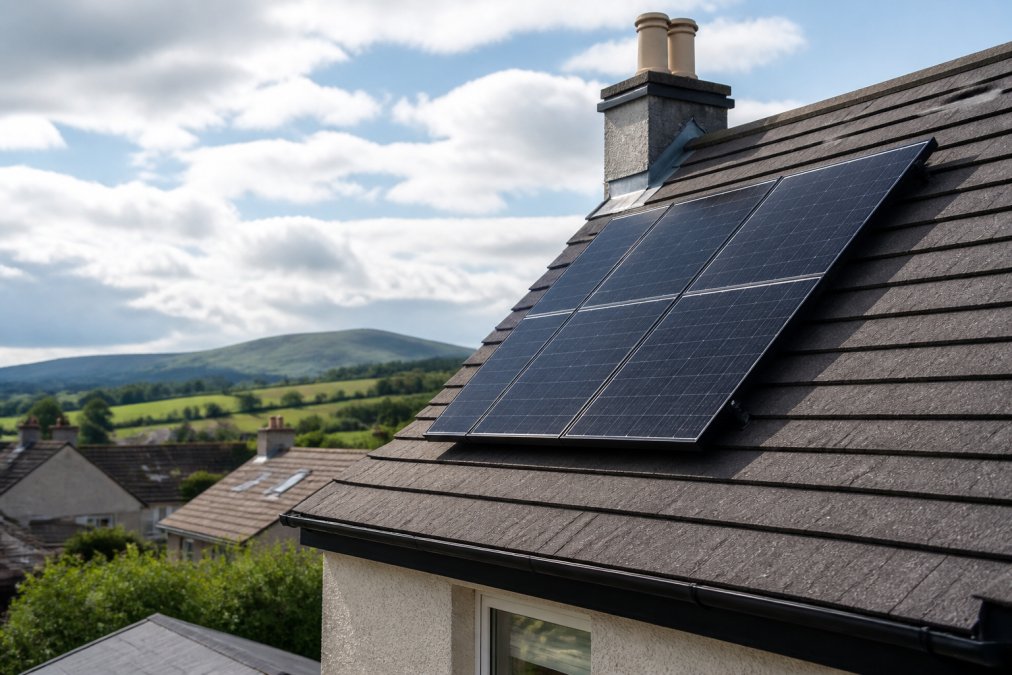
A 35-40-degree pitch is optimal for the UK. Flatter roofs (under 20 degrees) lose efficiency because rain doesn't run off cleanly and debris accumulates. Steeper roofs (over 50 degrees) also underperform.
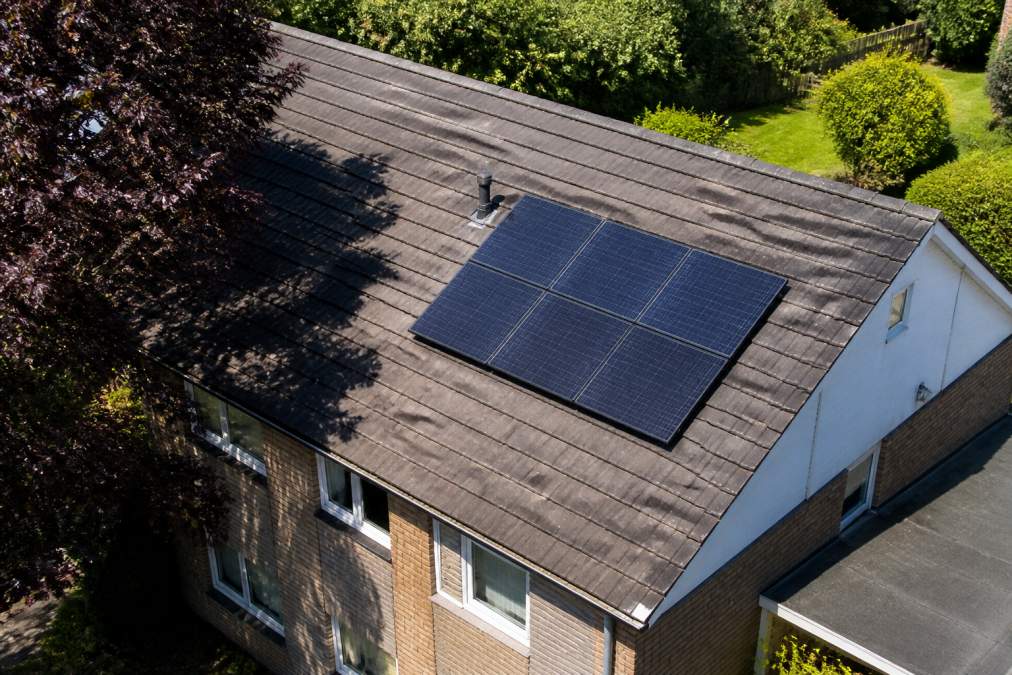
Shading is where most small-roof systems fail. Even partial shading of one panel can reduce the output of an entire string of panels connected in series. Winter sun is lower in the sky, so south-facing roofs may be shaded by objects that don't cast shadows in summer. A professional shading analysis uses satellite imagery and on-site assessment to model sun position throughout the year.
High-Efficiency Solar Panels for Small Roofs: Worth the Premium?
Standard monocrystalline panels are typically 19-21% efficient (peer-reviewed research). Premium panels reach 22-23% efficiency. On a small roof, that 2-3% difference translates to noticeably higher output from the same square metres of space.
A standard 400W panel measures roughly 2.1 square metres. A premium 420W panel in the same footprint delivers 5% more power. If your roof can only fit 8 panels instead of 10, premium efficiency becomes worth paying for. If you have plenty of space, standard panels are more cost-effective.
UK weather, frequent cloud cover and moderate temperatures, is actually favourable for solar performance compared to hotter climates. Your panels will operate closer to their rated output more often.
Understanding Installation Costs and ROI Calculations
Installation cost typically falls into three categories: the panels themselves, the inverter and mounting hardware, and labour plus scaffolding.
Scaffolding and labour expenses
Most residential installations require scaffolding for safety, costing £400-800 for a small roof. Labour to install a 3kW system typically takes 2-3 days. A small system (3-4kW) has a higher cost-per-watt than a larger system (6-8kW) because fixed costs like scaffolding and electrician time are spread across fewer panels.
Return on investment timescales
A typical scenario: a 3kW system on a south-facing roof generates roughly 2,500-2,800 kWh per year in the UK. If you use 50% of that energy yourself and export the rest, you're using about 1,250-1,400 kWh annually. At current grid electricity rates (approximately 28p per kWh), that's worth around £350-390 per year in direct savings. Exported energy generates additional revenue through the export tariff (currently around 7-8p per kWh), adding another £90-110 annually.
Total annual benefit: approximately £440-500 from a 3kW system. If the total installed cost is £6,000-7,000, the payback period is roughly 13-16 years. Electricity prices tend to rise over time, improving the economics significantly.
Solar Panel Battery Storage Benefits for Small Systems
Battery storage transforms the economics of small-roof solar. Without batteries, you're constrained by the export tariff rate (7-8p per kWh). With a battery, you store energy generated during the day and use it in the evening when grid electricity costs 28p per kWh, a 3.5x advantage.
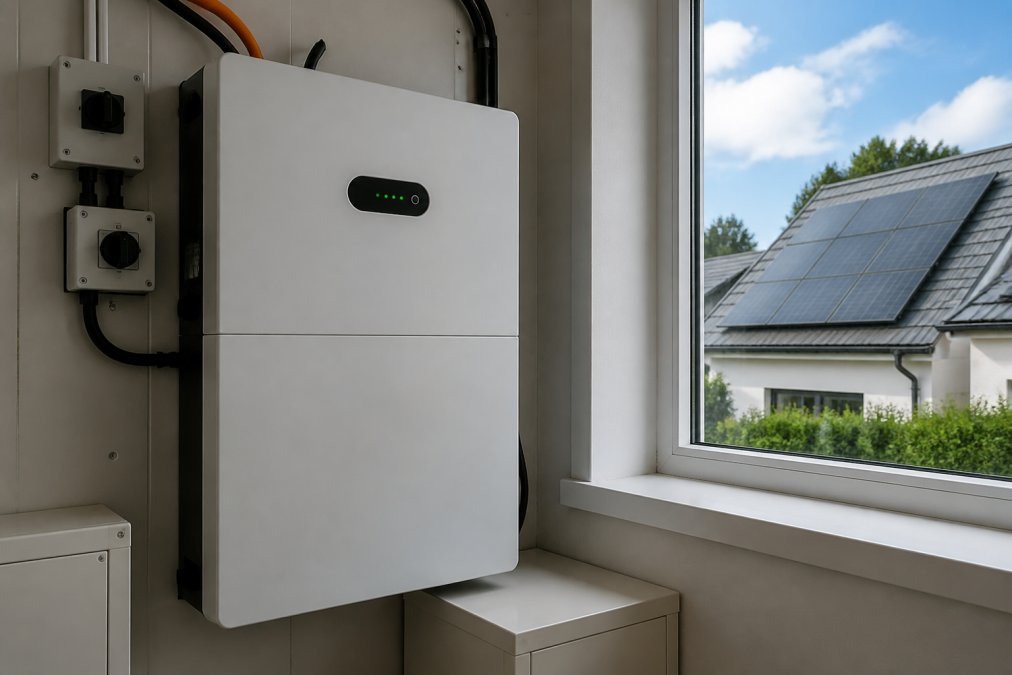
A 5kWh battery paired with a 3kW solar system allows you to capture most of the energy your panels generate and use it when you need it. The trade-off is cost: a 5kWh battery system adds £4,000-5,000 to your installation. However, the maths improve if you have an electric vehicle. For EV owners, battery payback often falls to 10-12 years. Battery storage also provides energy independence during grid outages.
Micro-inverters versus string inverters for limited space
String inverters connect multiple panels in series to a single inverter. Micro-inverters connect one inverter to each panel. For small roofs, this distinction is critical.
Click HERE for your FREE SURVEY today →
A string inverter system is cheaper upfront. A micro-inverter system costs 15-25% more. However, if one panel in a string system is shaded, the entire string underperforms. With micro-inverters, shaded panels operate independently, so the rest of the array continues generating at full capacity.
On a small roof where shading is likely, micro-inverters often justify their premium. On a clear roof with no shading, string inverters are more cost-effective. Micro-inverters also simplify battery integration.
Maximising self-consumption and export tariff earnings
Self-consumption is the percentage of energy your panels generate that you use immediately, rather than exporting to the grid. Maximising this improves your financial return because self-consumed energy is worth the full grid rate (28p per kWh), while exported energy earns only the export tariff (7-8p per kWh).
Strategies to increase self-consumption include running dishwashers, washing machines, and heat pumps during peak solar hours (10 a.m.-3 p.m.), using a smart meter to monitor generation in real-time, installing a battery to store excess generation for evening use, and pairing solar with an EV charger to charge during the day. Most households can increase self-consumption from 30% to 50% simply by timing high-energy tasks to daylight hours.
Solar Panel Planning Permission Rules and Roof Suitability
Most small residential solar installations don't require planning permission in the UK. However, specific rules apply.
When you need formal approval
Planning permission is NOT required if your panels are roof-mounted and flush with the roofline, your system is under 4kW, and your property is not in a conservation area or an area of outstanding natural beauty.
Planning permission IS required if your property is listed or in a conservation area, panels would be visible from a public road and protrude significantly from the roofline, or your local authority has specific restrictions on solar installations. If you're unsure, contact your local authority's planning department before installation.
MCS certification and building regulations
All solar installations must comply with Building Regulations Part P (electrical safety). Your installer must be registered with an approved body, typically the Microgeneration Certification Scheme (MCS).
MCS certification confirms your system meets UK safety and performance standards. Many grid operators require MCS certification to activate export tariff payments. Smarter Utility is fully accredited as an MCS installer, ensuring your system is designed and installed to the highest standards and qualifies for export tariff income from day one.
Building control will inspect your installation to confirm electrical safety and proper integration with your home's existing systems. This typically takes 1-2 weeks after installation is complete.
Making the Final Decision: Is Solar Right for Your Property?
Solar is worth it for small roofs if three conditions are met: your roof receives adequate sunlight (south or south-west facing with minimal shading), your energy consumption is high enough to justify the cost, and you plan to stay in your property for at least 10 years.
If your roof is shaded, faces north, or your energy bills are very low, solar may not deliver acceptable returns. Energy efficiency improvements (insulation, heat pump, smart heating controls) might be a better investment.
If your roof is suitable but you're uncertain about the financial case, ask for a detailed energy yield assessment and ROI projection specific to your property. The decision ultimately comes down to your priorities. If you're motivated primarily by cost savings, solar works best on south-facing roofs with high self-consumption. If you're motivated by carbon reduction and energy independence, battery storage and EV charging integration add value beyond pure financial return.
Ready to find out if solar is right for your property? Smarter Utility's expert team will assess your roof orientation, calculate your potential energy yield, and provide a tailored system design, all free, with no obligation. Our fully accredited MCS installers ensure your system meets all Building Regulations and qualifies for export tariff income. Click HERE for your FREE SURVEY today and discover exactly how much you could save with solar and battery storage designed specifically for your home.
Frequently Asked Questions
Is solar worth it for small roofs with limited south-facing space?
Solar can still be worthwhile on small roofs if you have adequate sunlight exposure, typically 4+ hours of direct sunlight daily. The key is calculating your specific return on investment based on your roof's orientation, shading, and your current energy consumption. A professional survey will assess whether your property meets the minimum viability threshold. Even north-west facing roofs can generate useful energy, though returns take longer to recoup.
How much can I expect to save on energy bills with solar panels on a small roof?
Savings depend on your panel wattage, roof pitch, shading analysis, and energy usage patterns. A small system (2-4 kW) typically reduces annual bills by 20-40% for households with moderate consumption. Battery storage increases savings by capturing daytime generation for evening use and earning from export tariffs when you feed surplus power back to the grid. Your actual payback period depends on installation costs and your location's solar irradiance.
Do I need planning permission for solar panels on a small roof?
Most residential solar installations fall under permitted development rights and do not require formal planning permission. However, exceptions apply if your property is listed, in a conservation area, or if panels exceed certain size limits or protrude significantly from the roofline. Always check with your local authority before installation. MCS-certified installers will verify your specific circumstances and handle any necessary applications as part of the design process.
Are high-efficiency solar panels worth the extra cost on a small roof?
High-efficiency panels (22%+ module efficiency) generate more power per square metre, making them valuable when roof space is limited. However, the premium cost may not justify the investment unless your roof is severely constrained. A cost-benefit analysis comparing standard efficiency panels (19-21%) against premium options will reveal whether the higher upfront cost translates to better overall return on investment for your specific property size and energy needs.
This article was written using GrandRanker