 ultimate-guide
Solar System Design for Future Heat Pumps
Table of Contents
- Why Solar System Design for Future Heat Pumps Matters Now
- How Solar PV and Air Source Heat Pumps Work Together
- Sizing Solar Arrays for Heat Pumps: The Engineering Challenge
- Battery Storage for Heat Pump Efficiency: Bridging Seasonal Mismatch
- Optimising Self-Consumption for Heat Pumps Through Smart Load Shifting
- Building Regulations and System Design: Meeting Future Homes Standard Requirements
- Retrofit vs. New Build: Design Workflows for Different Properties
- Conclusion
Last Updated: August 28, 2026
Why Solar System Design for Future Heat Pumps Matters Now
The Future Homes Standard arrives in 2026, requiring new build properties to integrate renewable generation with efficient heating. Most installers treat solar and heat pump design as separate problems, sizing arrays for summer demand then adding heat pumps without rethinking thermal load profiles. The result: systems that underperform in winter, miss export opportunities, and waste efficiency gains.
Solar system design for future heat pumps demands integrated thermal and electrical planning. It requires understanding seasonal energy mismatch, sizing arrays and storage for year-round thermal demand, and building in flexibility for future additions. Proper design delivers systems that generate revenue through grid export, reduce peak demand charges, and deliver genuine carbon reductions.
This guide covers the engineering realities of combining photovoltaic generation with air source heat pump heating, including sizing methodology, battery storage strategy, smart load shifting, and the regulatory landscape governing these installations.
How Solar PV and Air Source Heat Pumps Work Together
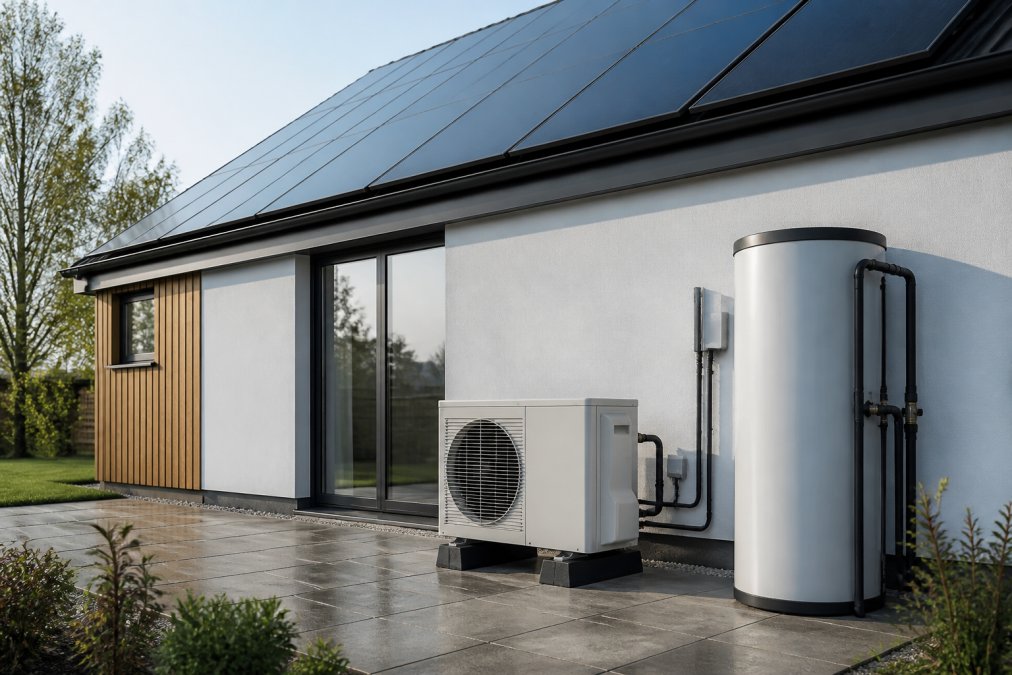
Solar photovoltaic systems convert sunlight into electricity. Air source heat pumps extract thermal energy from ambient air and transfer it to your heating system, delivering three units of heat for every unit of electricity consumed (coefficient of performance of 3.0 or better under standard conditions).
The synergy is obvious on paper: solar generates power, heat pumps use it efficiently. In practice, timing mismatch creates complexity. Solar output peaks in spring and summer when heating demand is lowest. Heat pump demand peaks in winter when solar generation drops to 20-30% of summer output. A system designed purely for summer self-consumption will export excess solar at low tariff rates when it could have charged battery storage instead. A system undersized for winter heating will draw grid power during peak demand periods, when electricity is most expensive.
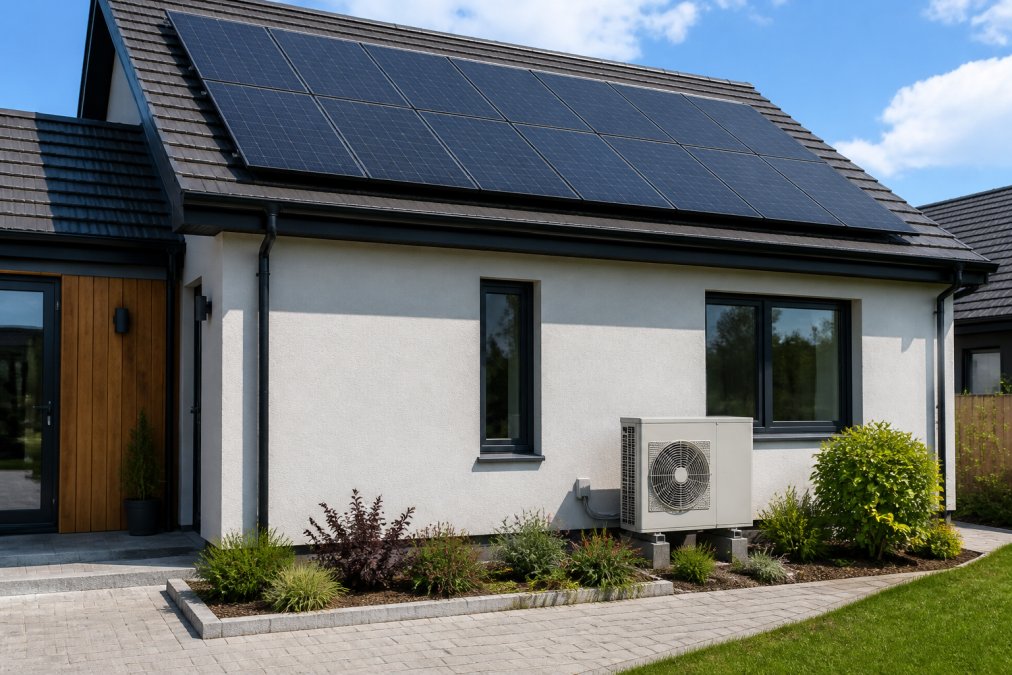
Battery systems and smart management bridge this gap. Battery storage holds summer generation for winter use. Smart inverters shift heat pump operation toward periods of high solar generation. Thermal mass in the building fabric buffers temperature swings and allows load shifting across hours or days.
Your heat pump's coefficient of performance improves when it operates at lower temperature lifts. Underfloor heating systems, which operate at 35-45°C, pair more efficiently with heat pumps than traditional radiators at 55-65°C. Solar system design must account for these thermal characteristics to avoid forcing heat pumps to operate at high temperature lift, which wastes efficiency advantages and increases grid import.
Building Regulations Part L (Conservation of fuel and power) requires new buildings to demonstrate primary energy demand reductions through renewable generation and efficient heating. The Future Homes Standard tightens this further, setting zero-carbon operational energy as the baseline for new homes from 2026 onwards. Solar system design for future heat pumps is now a compliance requirement, not optional.
Sizing Solar Arrays for Heat Pumps: The Engineering Challenge
Sizing a solar array for heat pump systems differs fundamentally from sizing for general electricity demand. You cannot simply calculate annual kWh consumption and divide by annual solar yield.
Heat pump heating demand is concentrated in winter months. A typical household might consume 8,000-12,000 kWh annually for heating, with 70% occurring between November and March. Solar generation in winter is 60-70% lower than summer generation per installed kilowatt-peak. An array sized to meet winter heating demand will massively overgenerate in summer. An array sized for summer self-consumption will leave you importing grid power for winter heating.
The solution involves three parallel calculations:
Winter heating coverage determines minimum array size. Calculate your heat pump's electrical input requirement for winter months (heating demand divided by coefficient of performance). Divide by winter solar yield per kilowatt-peak for your location. This typically requires 8-12 kWp for a well-insulated four-bedroom house in central regions.
Summer self-consumption determines export potential. Calculate summer electricity demand (hot water, appliances, EV charging) plus any battery charging capacity. Size the array to generate excess during peak solar hours without overwhelming your inverter or battery system.
Kilowatt-peak rating must match your electrical infrastructure. Most residential installations in the UK are limited to 3.68 kWp before triggering G99 grid connection requirements. Larger systems require formal grid application and may face constraints. If your thermal demand requires 10 kWp but your grid connection permits 3.68 kWp, battery storage becomes non-negotiable.
Smarter Utility's design process starts with a detailed energy audit: existing heating demand, building fabric performance, future heat pump efficiency, and seasonal load profile. We model multiple array sizes against local solar irradiance data and your specific export tariff terms to maximize winter self-consumption while capturing summer export revenue.
Battery Storage for Heat Pump Efficiency: Bridging Seasonal Mismatch
Battery storage solves the seasonal mismatch problem by holding summer solar generation for winter use. But sizing requires understanding the difference between daily cycling and seasonal storage.
A 10 kWh battery can cycle daily: charge from morning solar, discharge through evening heating demand, recharge the following day. Over a year, this stores roughly 3,650 kWh of energy. But winter heating demand spans months, not days. A single battery cannot store summer energy for winter use at practical scale.
Instead, batteries provide three functions in heat pump systems:
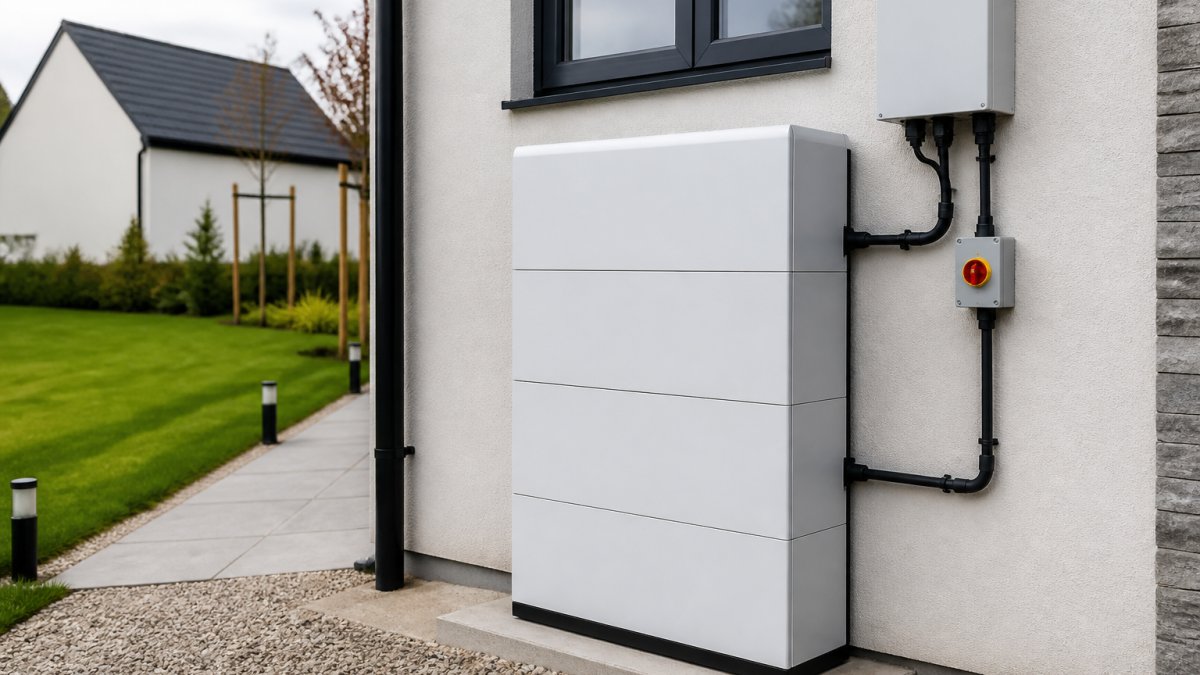
Peak shaving reduces demand charges. Heat pumps draw 5-8 kW during operation. A 10-15 kWh battery can discharge during peak draw windows, reducing grid import during expensive peak periods.
Load shifting moves heat pump operation toward high-solar-generation windows. A smart energy management system monitors solar output, battery state, and heating demand, signalling the heat pump to preheat thermal storage during peak solar hours, reducing grid import during evening demand peaks.
Frequency response and grid services (for larger systems) allows your battery to provide grid stabilization services, earning revenue through grid connection agreements.
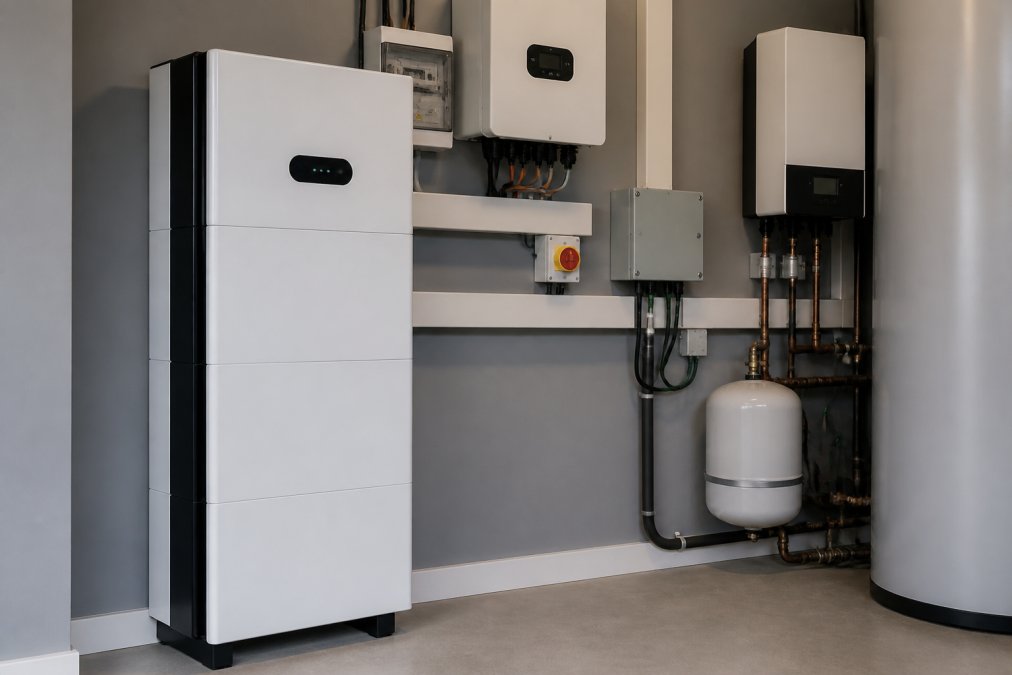
Sizing the battery involves matching daily cycling patterns to your heat pump's operation. A heat pump running for 4 hours daily at 6 kW requires 24 kWh of daily thermal demand. A 10 kWh battery can offset 40% of that demand if charged during peak solar hours.
For seasonal storage, thermal mass in the building fabric provides the real buffer. Concrete slabs, masonry walls, and water tanks absorb heat during warm periods and release it during cold periods, shifting 2-4 hours of heating demand across a day and reducing peak grid import significantly.
Lithium iron phosphate (LFP) batteries offer 5,000-10,000 charge cycles at 80% depth of discharge, suitable for daily cycling. For heat pump systems, LFP is standard because daily cycling is essential to the load-shifting strategy.
Optimising Self-Consumption for Heat Pumps Through Smart Load Shifting
Self-consumption, using solar generation directly rather than exporting to the grid, is the most profitable use of solar energy. Export tariffs (typically 15-25p per kWh in 2026) pay less than grid electricity costs (35-50p per kWh). Maximizing self-consumption improves financial return.
Smart load shifting uses real-time solar generation data to move flexible loads toward high-generation periods. Heat pumps are ideal for this because their thermal load can be served across hours without affecting comfort.
A smart energy management system monitors solar generation (from your inverter), grid import price (from your energy supplier), and heating demand (from your thermostat). It sends control signals to your heat pump:
- High solar, low grid import price: run the heat pump at full capacity to preheat thermal storage. Maximize self-consumption.
- Low solar, high grid import price: reduce heat pump output, rely on thermal mass or stored heat, minimize grid import.
- Moderate solar: balance self-consumption against battery charging.
This requires integration between your solar inverter, battery system, heat pump, and a central controller with read access to your smart meter and write access to your heat pump's scheduling interface.
Click HERE for your FREE SURVEY today →
Thermal storage amplifies this strategy. A well-insulated 300-litre hot water tank can store 20-30 kWh of thermal energy. Your heat pump can charge this tank during peak solar hours, then your radiators or underfloor heating draw from the tank during evening demand peaks, decoupling heat pump operation from heating demand.
Export tariff structure also influences strategy. Time-of-use (ToU) tariffs pay more for evening exports (when grid demand is high) and less for midday exports. A system optimized for self-consumption during midday might earn more revenue by exporting during evening peak hours if the tariff premium is high enough.
Building Regulations and System Design: Meeting Future Homes Standard Requirements
The Future Homes Standard, effective from 2026, requires new buildings to achieve zero-carbon operational energy through renewable generation and efficient heating. This is a building control requirement, not voluntary.
Part L of Building Regulations now mandates that new buildings demonstrate a 75% reduction in primary energy demand compared to a notional building of the same size and function. Solar system design for future heat pumps is the primary mechanism to achieve this. A typical new four-bedroom house with an air source heat pump and 8 kWp solar array will generate 8,000-10,000 kWh annually, offsetting 24,000-32,000 kWh of heating demand.
Building Regulations also set minimum performance standards for heat pump systems: coefficient of performance must be demonstrated through SAP (Standard Assessment Procedure) calculation using conservative assumptions. Your actual performance will typically exceed SAP predictions.
Energy Performance Certificates (EPC) are required for all new buildings, reflecting primary energy demand and accounting for renewable generation. A building with solar and a heat pump typically achieves an EPC rating of A or B, the baseline for Future Homes Standard compliance.
Installation must follow MCS (Microgeneration Certification Scheme) standards if you want to claim export payments under the Smart Export Guarantee. MCS certification requires installer accreditation, design documentation, and annual performance monitoring.
Retrofit vs. New Build: Design Workflows for Different Properties
New build properties offer design flexibility that retrofits don't. A retrofit solar system must work within existing constraints: roof orientation, structural load limits, existing electrical infrastructure, and thermal characteristics of aging building fabric.
New Build Design Workflow:
Start with the building's thermal model (SAP calculation), which defines heating demand and determines heat pump and solar array size in parallel. The architect and MEP engineer can optimize building fabric (insulation, air tightness, thermal mass) to reduce heating demand, allowing smaller arrays and heat pumps.
Electrical design includes capacity for future EV charging (7-22 kW) and battery storage (10-15 kWh). The main distribution board is sized to handle solar generation, heat pump peak demand, and EV charging simultaneously, typically requiring a 100A supply for a four-bedroom house.
Heating system design prioritizes low-temperature heat delivery (underfloor heating or low-temperature radiators at 35-45°C) to maximize heat pump coefficient of performance. Thermal storage is designed into the layout from the start.
Solar array orientation is optimized during architectural design. South-facing roofs at 30-40° pitch are ideal, though east-west split arrays work if roof space is limited.
Retrofit Design Workflow:
Start by surveying the existing building: roof condition, orientation, structural loading capacity, electrical infrastructure, and current heating system. Many older properties have roofs that cannot support solar panels or electrical panels that cannot accommodate solar inverters without expensive upgrades.
Heating system replacement is often the constraint. Removing an old boiler and installing a heat pump requires new pipework, radiator upgrades, and thermal storage. Some retrofits keep the existing boiler as a backup, using the heat pump for base-load heating. This reduces heat pump use and increases carbon footprint.
Solar array size is often limited by roof area or structural capacity. A typical retrofit might achieve 4-6 kWp on a south-facing roof, compared to 8-10 kWp on a new build. Every kWh of generation must be captured and used efficiently.
Battery storage is more valuable in retrofits because it compensates for limited solar generation, shifting solar generation from midday to evening and improving self-consumption rates.
Retrofit projects face regulatory hurdles. Any electrical work must comply with Building Regulations Part P. Solar installations over 3.68 kWp require DNO notification (G99 application). Heat pump installations must include a Building Regulations completion certificate.
Conclusion
Designing a solar system for future heat pumps requires integrated thermal and electrical design, understanding of seasonal energy mismatch, and compliance with the Future Homes Standard framework governing new buildings.
The difference between a system that performs and one that underperforms lies in the design phase. Proper sizing of arrays for winter heating demand, battery storage for load shifting, and smart controls responding to real-time solar generation and grid pricing deliver genuine carbon reductions and financial returns.
Smarter Utility's design process starts with a detailed energy audit and thermal modelling, ensuring your solar system is sized to match your heat pump's actual performance profile. Our fully accredited MCS team handles design, installation, and performance monitoring, ensuring your system meets Future Homes Standard requirements.
Future Homes Standard guidance sets the regulatory baseline. MCS installation standards governs accreditation. Building Regulations Part L defines compliance requirements for new buildings.
Ready to design a solar system that works with your future heat pump? Click HERE for your FREE SURVEY today. Our team will assess your property, model your energy profile, and design a system tailored to your actual heating demand and solar potential.
Frequently Asked Questions
How many solar panels are needed to run a heat pump?
The number depends on your heat pump's coefficient of performance, your property's thermal demand, and seasonal energy profiles. A typical 3-4 kW air source heat pump requires 3-5 kilowatt-peak of solar capacity to meet 40-60% of annual heating demand. However, solar system design for future heat pumps should account for winter shortfalls through battery storage and grid connection. A professional survey calculates your specific requirements based on roof orientation, shading, and heating patterns.
Can a solar PV system fully power an air source heat pump during winter?
No. Winter presents a seasonal energy mismatch: heat pump demand peaks when solar generation is lowest. A 4 kW solar array might generate only 0.5 kW on a winter day, while your heat pump needs 2-3 kW continuously. Battery storage helps, but thermal storage and grid connection remain essential. Sizing solar arrays for heat pumps means designing for summer self-consumption and winter grid support, not complete independence.
What role does battery storage play in a solar and heat pump system?
Battery storage optimises self-consumption for heat pumps by capturing excess daytime solar generation and releasing it during peak heating hours (typically early morning and evening). This reduces grid imports and export tariff losses. For heat pump efficiency, a 5-10 kWh battery typically stores 2-4 hours of heat pump operation, bridging gaps between solar generation and demand. Smart energy management systems coordinate charging, heating, and EV charging to maximise renewable self-consumption.
Should I install solar panels before or after a heat pump?
Install solar first if you're designing now. This lets you size the solar array and battery storage specifically for your heat pump's energy profile from day one, avoiding costly redesigns. If adding a heat pump to an existing solar system, your installer will assess whether the current array is adequate or needs expansion. Smarter Utility's free survey evaluates your property for integrated solar system design that supports future heat pump integration.
This article was written using GrandRanker